

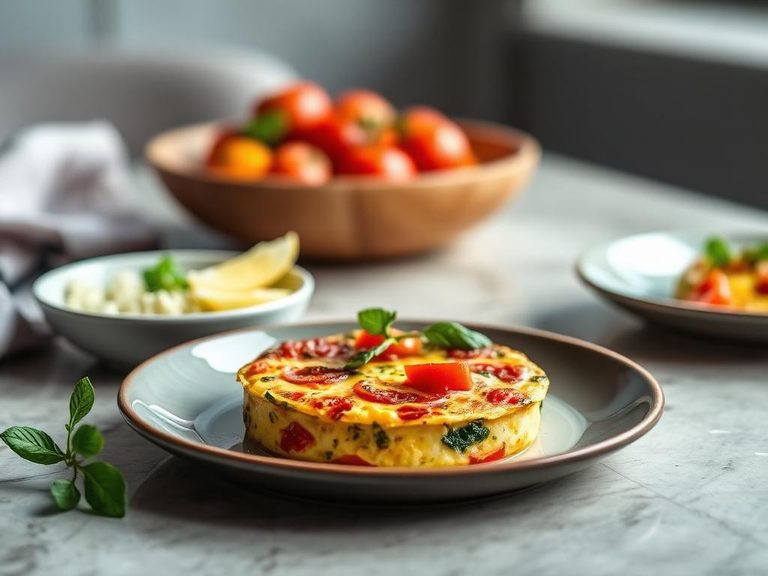
Egg omelet or scrambled egg, with cheese and tomatoes, NS as to fat
Common food
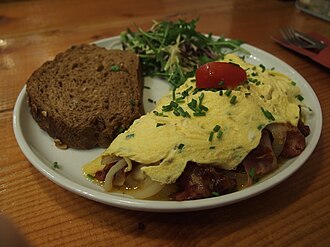
Photo: Wikipedia
A fluffy, savory blend of beaten eggs cooked with melted cheese and juicy tomatoes, creating a tender, slightly custardy texture with pockets of gooey cheese and bright, acidic bursts. This classic combination offers a high-protein, low-carb meal with a satisfying balance of rich and fresh flavors.
Calorie split: 24% protein · 4% carbs · 72% fat
↓ Full nutrition💚 Why it's loved
People adore this dish for its comforting, customizable nature—it's a quick, satisfying meal that feels both indulgent and wholesome. The interplay of creamy egg, savory cheese, and tangy tomato is a universally appealing flavor trifecta.
⚠️ Watch-outs & how to enjoy it better
The high fat content, primarily from egg yolks and cheese, can be a concern for those monitoring saturated fat intake. To counteract, use a mix of whole eggs and egg whites, choose lower-fat cheese, and pair with a large side of leafy greens or whole-grain toast to increase fiber and balance the meal.
Key benefits
- Excellent source of complete protein for muscle maintenance.
- Rich in choline from eggs, essential for brain health.
- Provides lycopene and vitamin C from cooked tomatoes.
- Low in carbohydrates, suitable for low-carb dietary patterns.
- High in calcium from the cheese component.
🍽️ Popular dishes
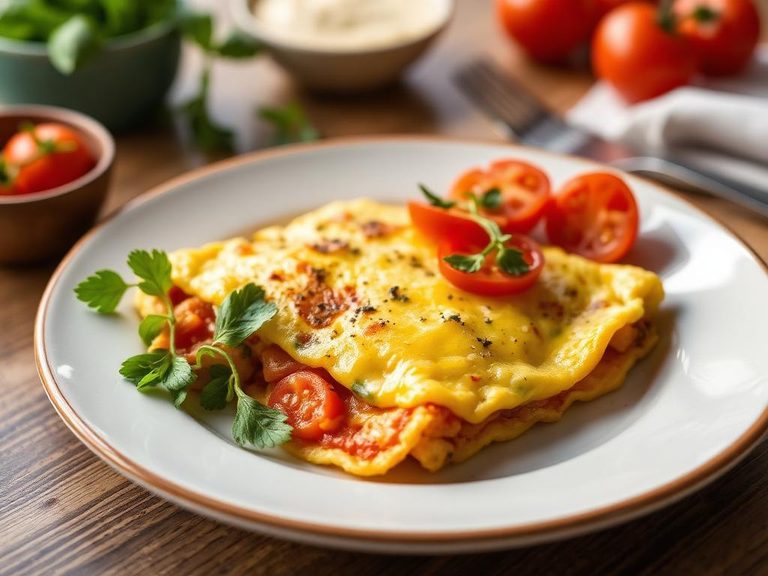
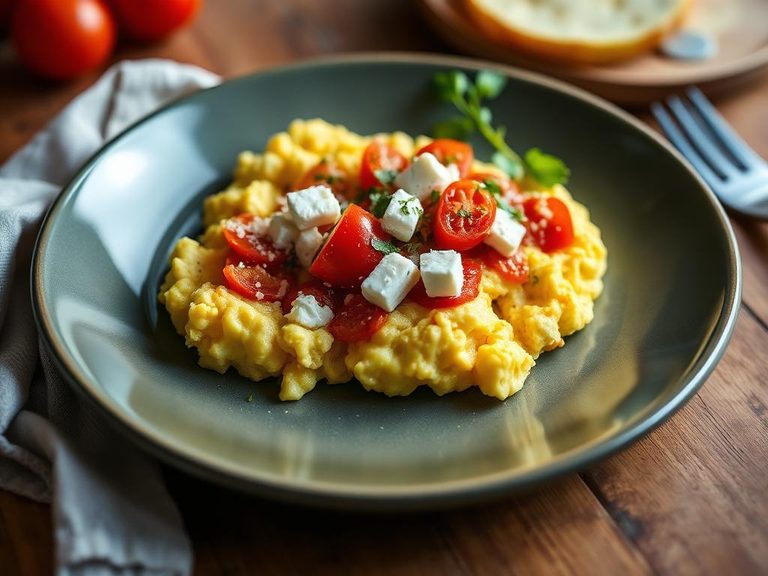
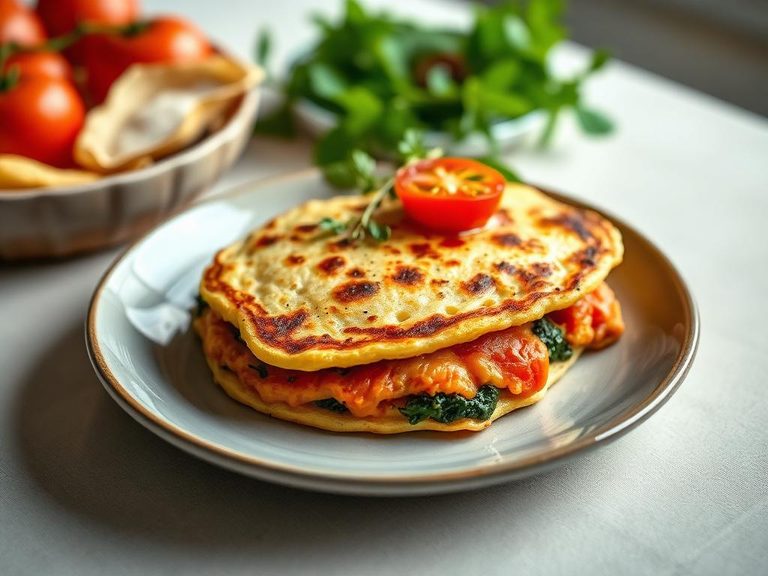

🌍 Where it's eaten
💡 Did you know?
The acidity in tomatoes can actually help break down egg proteins slightly, which can lead to a more tender curd when cooked together, but also means they can become watery if not cooked quickly over high heat.
Full nutrition (USDA data · scales with serving)
| Water | 70.4 g |
| Energy | 186 kcal |
| Protein | 11.4 g |
| Total lipid (fat) | 14.9 g |
| Carbohydrate, by difference | 1.9 g |
| Fiber, total dietary | 0.20 g |
| Total Sugars | 0.83 g |
| Calcium, Ca | 135 mg |
| Iron, Fe | 1.3 mg |
| Magnesium, Mg | 13.0 mg |
| Phosphorus, P | 201 mg |
| Potassium, K | 144 mg |
| Sodium, Na | 305 mg |
| Zinc, Zn | 1.3 mg |
| Copper, Cu | 0.01 mg |
| Selenium, Se | 25.1 ug |
| Vitamin C, total ascorbic acid | 2.1 mg |
| Thiamin | 0.05 mg |
| Riboflavin | 0.33 mg |
| Niacin | 0.08 mg |
| Vitamin B-6 | 0.09 mg |
| Folate, total | 42.0 ug |
| Folic acid | 0.00 ug |
| Folate, food | 42.0 ug |
| Folate, DFE | 42.0 ug |
| Choline, total | 199 mg |
| Vitamin B-12 | 0.75 ug |
| Vitamin B-12, added | 0.00 ug |
| Vitamin A, RAE | 185 ug |
| Retinol | 178 ug |
| Carotene, beta | 68.0 ug |
| Carotene, alpha | 11.0 ug |
| Cryptoxanthin, beta | 10.0 ug |
| Lycopene | 284 ug |
| Lutein + zeaxanthin | 384 ug |
| Vitamin E (alpha-tocopherol) | 1.6 mg |
| Vitamin E, added | 0.00 mg |
| Vitamin D (D2 + D3) | 2.3 ug |
| Vitamin K (phylloquinone) | 5.1 ug |
| Alcohol, ethyl | 0.00 g |
| Caffeine | 0.00 mg |
| Theobromine | 0.00 mg |
Fat & fatty acid profile (per 100g)
| Fatty acids, total saturated | 5.3 g |
| SFA 4:0 | 0.10 g |
| SFA 6:0 | 0.07 g |
| SFA 8:0 | 0.04 g |
| SFA 10:0 | 0.11 g |
| SFA 12:0 | 0.13 g |
| SFA 14:0 | 0.42 g |
| SFA 16:0 | 3.2 g |
| SFA 18:0 | 1.1 g |
| Fatty acids, total monounsaturated | 4.9 g |
| MUFA 16:1 | 0.25 g |
| MUFA 18:1 | 4.7 g |
| MUFA 20:1 | 0.03 g |
| MUFA 22:1 | 0.00 g |
| Fatty acids, total polyunsaturated | 2.7 g |
| PUFA 18:2 | 2.3 g |
| PUFA 18:3 | 0.17 g |
| PUFA 18:4 | 0.00 g |
| PUFA 20:4 | 0.01 g |
| PUFA 20:5 n-3 (EPA) | 0.00 g |
| PUFA 22:5 n-3 (DPA) | 0.00 g |
| PUFA 22:6 n-3 (DHA) | 0.00 g |
| Cholesterol | 313 mg |
Amino acid profile (per 100g)
Estimated from Egg, whole, cooked, omelet — USDA does not publish this profile for Egg omelet or scrambled egg.
| Tryptophan | 0.14 g |
| Threonine | 0.47 g |
| Isoleucine | 0.56 g |
| Leucine | 0.91 g |
| Lysine | 0.77 g |
| Methionine | 0.32 g |
| Cystine | 0.23 g |
| Phenylalanine | 0.57 g |
| Tyrosine | 0.42 g |
| Valine | 0.72 g |
| Arginine | 0.69 g |
| Histidine | 0.26 g |
| Alanine | 0.62 g |
| Aspartic acid | 1.1 g |
| Glutamic acid | 1.4 g |
| Glycine | 0.36 g |
| Proline | 0.43 g |
| Serine | 0.82 g |
FAQ
Can I make this with egg whites only?
Yes, using only egg whites will significantly reduce the fat and calorie content while keeping the protein high. The texture will be lighter and less rich, but the cheese and tomatoes will still provide plenty of flavor.
Why does my tomato make the eggs watery?
Tomatoes release water when cooked. To prevent a soggy omelette, dice the tomatoes and sauté them separately first to evaporate excess moisture, or use firmer, less juicy varieties like Roma tomatoes.
What's the best cheese to use?
Melting cheeses work best. Feta or goat cheese add a tangy, crumbly texture. For a classic melt, use cheddar, mozzarella, or Swiss. For a richer flavor, try Gruyère or fontina.
Nutrient density (calculated · NRF9.3)
Nutrient Rich Foods index: beneficial nutrients (protein, fiber, vitamins, minerals) minus saturated fat, added sugar & sodium, per 100 kcal.
NRF9.3 index — Fulgoni, Keast & Drewnowski, 2009. Computed from USDA nutrients.
Weight-loss friendliness (composite index)
Energy density 1.86 kcal/g · 24% calories from protein · 0.2 g fiber · 0.8 g sugar per 100 g.
Composite of energy density (Rolls et al., 1999), protein & fiber satiety, minus sugar. A calculated heuristic — ranks satiety-per-calorie, not a clinical measure.
Dietary load (calculated from USDA values)
Potential renal acid load. Positive = acid-forming, negative = alkaline-forming.
Sodium-to-potassium ratio: 2.12 (lower is better — aim for ≤ 1)
Sodium:potassium per WHO potassium guidance. Computed from USDA nutrients.