

Duck, Peking
Common food

Photo: Wikipedia
Peking duck is a celebrated Chinese roast duck dish, famous for its lacquered, shatteringly crisp skin and tender, succulent meat. The skin is the star, offering a rich, fatty, and deeply savory flavor, while the meat provides a milder, juicy contrast. Nutritionally, it is a high-fat, moderate-protein dish, with the skin contributing significantly to its calorie and fat content.
Calorie split: 14% protein · 17% carbs · 69% fat
↓ Full nutrition💚 Why it's loved
People adore the exquisite contrast between the paper-thin, crispy skin and the tender meat, often enhanced by sweet bean sauce, scallions, and thin pancakes. It represents a pinnacle of culinary craftsmanship and is a celebratory dish central to Chinese banquets and feasts.
⚠️ Watch-outs & how to enjoy it better
The dish is high in total fat and calories, particularly from the skin, and the accompanying pancakes, sauce, and hoisin can add significant sodium and sugar. Those watching their fat intake or blood sugar should enjoy the skin sparingly, opt for more meat and vegetables in the wrap, and pair it with a light, vinegar-based side salad to aid digestion.
Key benefits
- High-quality protein source for muscle maintenance
- Contains B vitamins like niacin and riboflavin
- Provides minerals such as iron and selenium
- Skin is rich in monounsaturated fats
- A centerpiece of cultural and culinary tradition
🍽️ Popular dishes
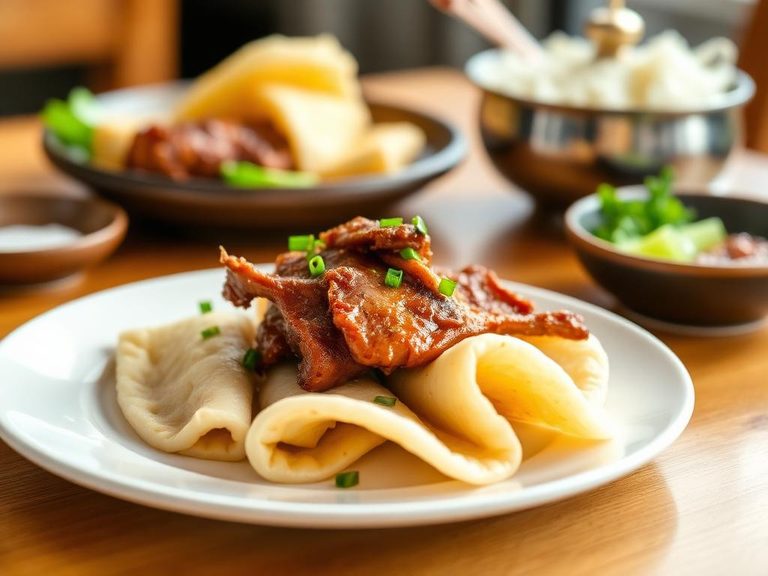
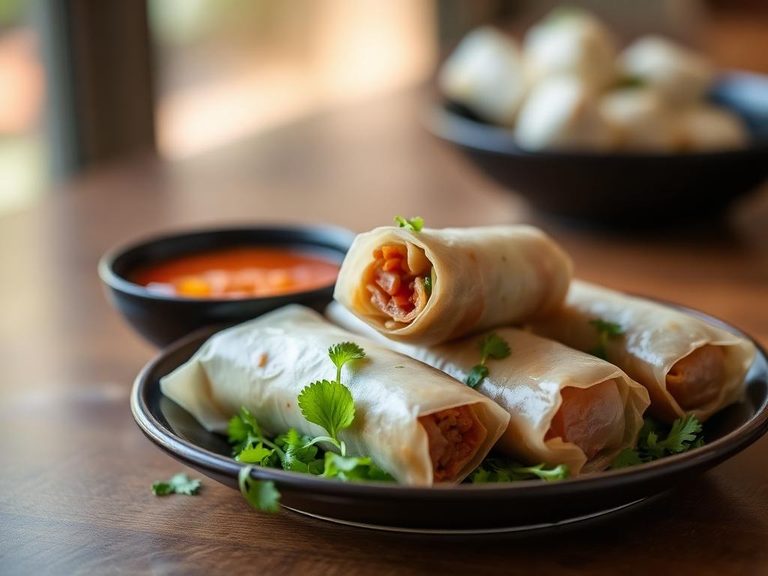
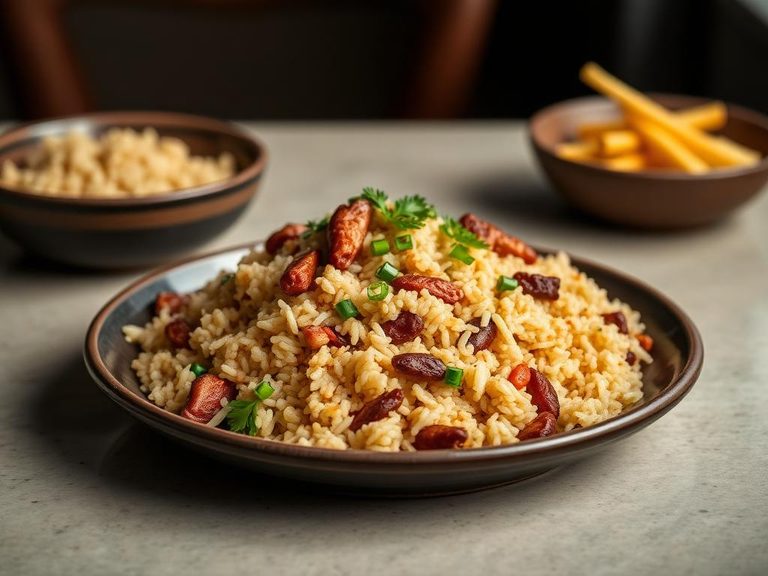
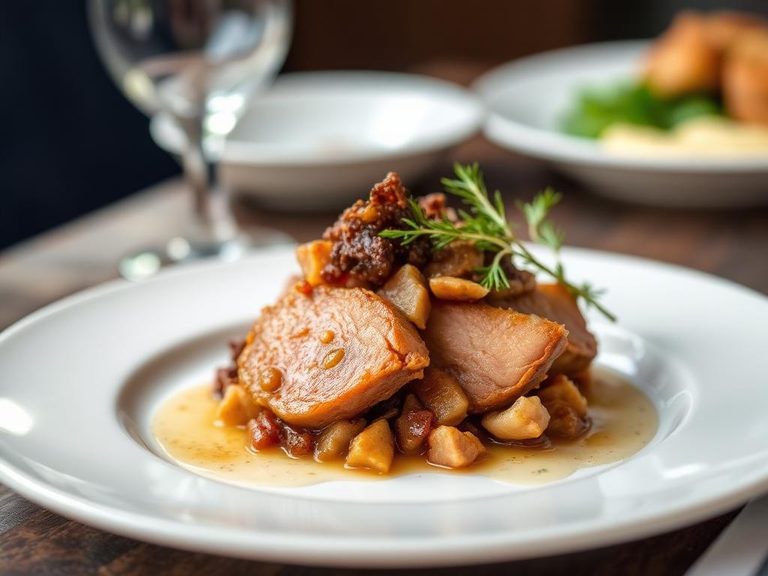
🌍 Where it's eaten
💡 Did you know?
The traditional method for achieving the signature crispy skin involves inflating the duck with air to separate the skin from the fat and meat before roasting, a technique perfected in the imperial kitchens of the Ming Dynasty.
Full nutrition (USDA data · scales with serving)
| Water | 75.4 g |
| Energy | 154 kcal |
| Protein | 5.3 g |
| Total lipid (fat) | 11.8 g |
| Carbohydrate, by difference | 6.5 g |
| Fiber, total dietary | 0.30 g |
| Total Sugars | 4.4 g |
| Calcium, Ca | 9.0 mg |
| Iron, Fe | 0.79 mg |
| Magnesium, Mg | 9.0 mg |
| Phosphorus, P | 45.0 mg |
| Potassium, K | 107 mg |
| Sodium, Na | 287 mg |
| Zinc, Zn | 0.55 mg |
| Copper, Cu | 0.09 mg |
| Selenium, Se | 5.4 ug |
| Vitamin C, total ascorbic acid | 12.2 mg |
| Thiamin | 0.07 mg |
| Riboflavin | 0.10 mg |
| Niacin | 1.4 mg |
| Vitamin B-6 | 0.09 mg |
| Folate, total | 6.0 ug |
| Folic acid | 0.00 ug |
| Folate, food | 6.0 ug |
| Folate, DFE | 6.0 ug |
| Choline, total | 15.3 mg |
| Vitamin B-12 | 0.08 ug |
| Vitamin B-12, added | 0.00 ug |
| Vitamin A, RAE | 17.0 ug |
| Retinol | 16.0 ug |
| Carotene, beta | 9.0 ug |
| Carotene, alpha | 0.00 ug |
| Cryptoxanthin, beta | 0.00 ug |
| Lycopene | 97.0 ug |
| Lutein + zeaxanthin | 0.00 ug |
| Vitamin E (alpha-tocopherol) | 0.92 mg |
| Vitamin E, added | 0.00 mg |
| Vitamin D (D2 + D3) | 0.00 ug |
| Vitamin K (phylloquinone) | 5.3 ug |
| Alcohol, ethyl | 0.00 g |
| Caffeine | 0.00 mg |
| Theobromine | 0.00 mg |
Fat & fatty acid profile (per 100g)
| Fatty acids, total saturated | 3.1 g |
| SFA 4:0 | 0.00 g |
| SFA 6:0 | 0.00 g |
| SFA 8:0 | 0.00 g |
| SFA 10:0 | 0.00 g |
| SFA 12:0 | 0.01 g |
| SFA 14:0 | 0.05 g |
| SFA 16:0 | 2.2 g |
| SFA 18:0 | 0.77 g |
| Fatty acids, total monounsaturated | 5.1 g |
| MUFA 16:1 | 0.30 g |
| MUFA 18:1 | 4.7 g |
| MUFA 20:1 | 0.09 g |
| MUFA 22:1 | 0.00 g |
| Fatty acids, total polyunsaturated | 2.6 g |
| PUFA 18:2 | 2.4 g |
| PUFA 18:3 | 0.24 g |
| PUFA 18:4 | 0.00 g |
| PUFA 20:4 | 0.00 g |
| PUFA 20:5 n-3 (EPA) | 0.00 g |
| PUFA 22:5 n-3 (DPA) | 0.00 g |
| PUFA 22:6 n-3 (DHA) | 0.00 g |
| Cholesterol | 22.0 mg |
Amino acid profile (per 100g)
Estimated from Duck, young duckling, domesticated, White Pekin, leg, meat and skin, bone in, cooked, roasted — USDA does not publish this profile for Duck.
| Tryptophan | 0.37 g |
| Threonine | 1.1 g |
| Isoleucine | 1.4 g |
| Leucine | 2.2 g |
| Lysine | 2.3 g |
| Methionine | 0.71 g |
| Cystine | 0.41 g |
| Phenylalanine | 1.1 g |
| Tyrosine | 1.0 g |
| Valine | 1.4 g |
| Arginine | 1.7 g |
| Histidine | 0.70 g |
| Alanine | 1.7 g |
| Aspartic acid | 2.6 g |
| Glutamic acid | 4.1 g |
| Glycine | 1.5 g |
| Proline | 1.3 g |
| Serine | 1.1 g |
FAQ
What is the best part of Peking duck?
The most prized part is the crispy, lacquered skin, which is often served first on its own or with a simple dip. The tender breast meat is the next most sought-after cut.
How is Peking duck traditionally eaten?
It is typically carved tableside. Diners take a thin pancake, spread a bit of sweet bean sauce, add a few slices of duck with skin, and garnish with julienned scallions and cucumber before rolling it up.
Is Peking duck the same as roast duck?
While it is a type of roast duck, Peking duck is a specific preparation known for its air-dried, maltose-glazed skin and precise roasting technique, resulting in a distinct texture and flavor.
Nutrient density (calculated · NRF9.3)
Nutrient Rich Foods index: beneficial nutrients (protein, fiber, vitamins, minerals) minus saturated fat, added sugar & sodium, per 100 kcal.
NRF9.3 index — Fulgoni, Keast & Drewnowski, 2009. Computed from USDA nutrients.
Weight-loss friendliness (composite index)
Energy density 1.54 kcal/g · 14% calories from protein · 0.3 g fiber · 4.4 g sugar per 100 g.
Composite of energy density (Rolls et al., 1999), protein & fiber satiety, minus sugar. A calculated heuristic — ranks satiety-per-calorie, not a clinical measure.
Dietary load (calculated from USDA values)
Potential renal acid load. Positive = acid-forming, negative = alkaline-forming.
Sodium-to-potassium ratio: 2.68 (lower is better — aim for ≤ 1)
Sodium:potassium per WHO potassium guidance. Computed from USDA nutrients.