

Duck sauce
Common food

Photo: Wikipedia
Duck sauce is a glossy, amber-colored condiment with a sweet-tart profile, often described as apricot or plum jam meets vinegar. It has a smooth, jelly-like texture and is primarily a source of quick energy from its high carbohydrate content, with 60.66g of carbs and 30.54g of sugar per 100g.
Calorie split: 1% protein · 99% carbs · 0% fat
↓ Full nutrition💚 Why it's loved
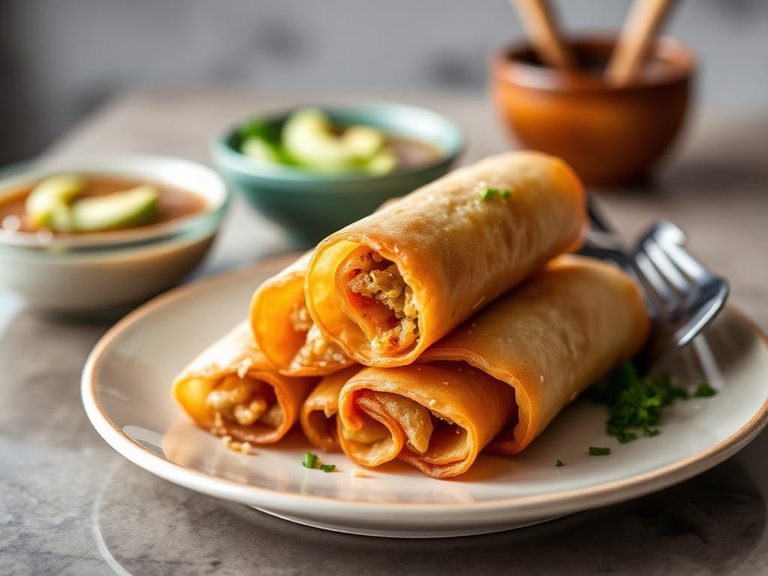
People love it for its addictive sweet-and-sour balance that cuts through richness and adds a glossy finish. Its versatility makes it a staple for dipping crispy appetizers like egg rolls or as a base for quick glazes.
⚠️ Watch-outs & how to enjoy it better
Its very high sugar content can cause rapid blood-sugar spikes, making it unsuitable for large portions by those managing diabetes or insulin resistance. To counteract this, use it sparingly, pair it with protein or fat (like chicken or spring rolls), and always serve it alongside a balanced meal.
Key benefits
- Adds a bright, sweet-tart flavor to dishes
- Provides a quick source of energy from carbohydrates
- Versatile condiment for dipping, glazing, and stir-frying
- Commonly used in Chinese-American cuisine
- Can balance salty or savory flavors
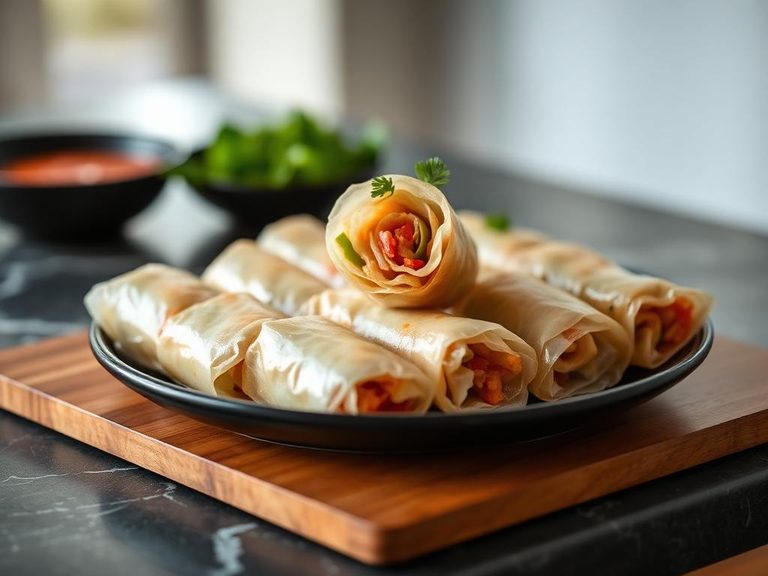
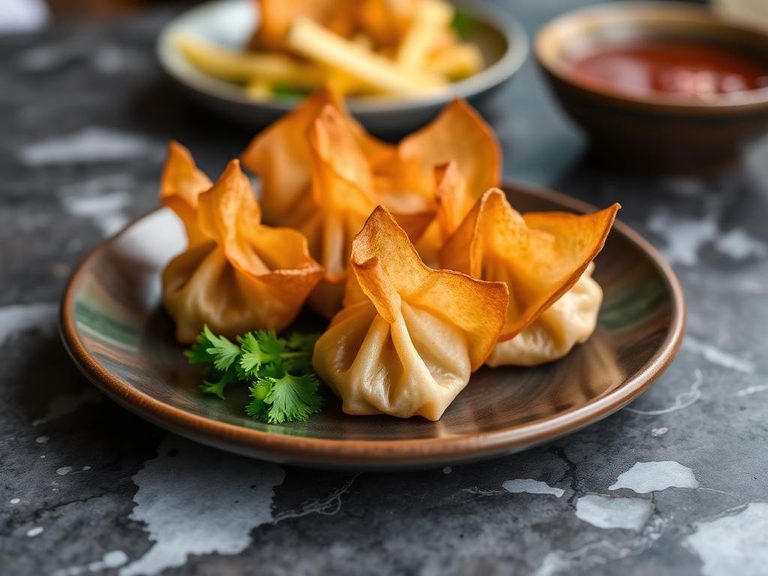
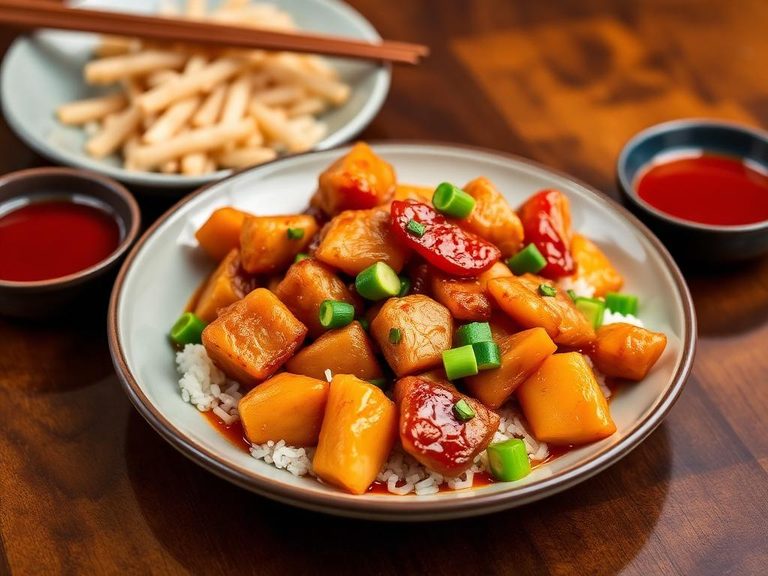
🍽️ Popular dishes
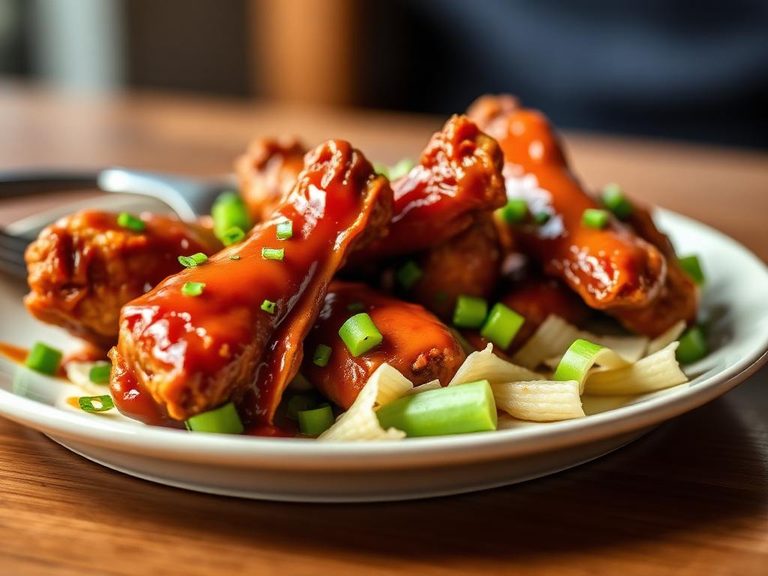
🌍 Where it's eaten
💡 Did you know?
Despite its name, traditional duck sauce contains no duck; the name likely refers to its classic pairing with roast duck in Cantonese cuisine.
Full nutrition (USDA data · scales with serving)
| Water | 37.4 g |
| Energy | 245 kcal |
| Protein | 0.36 g |
| Total lipid (fat) | 0.13 g |
| Carbohydrate, by difference | 60.7 g |
| Fiber, total dietary | 0.60 g |
| Total Sugars | 30.5 g |
| Calcium, Ca | 11.0 mg |
| Iron, Fe | 0.39 mg |
| Magnesium, Mg | 5.0 mg |
| Phosphorus, P | 9.0 mg |
| Potassium, K | 87.0 mg |
| Sodium, Na | 712 mg |
| Zinc, Zn | 0.21 mg |
| Copper, Cu | 0.04 mg |
| Selenium, Se | 1.3 ug |
| Vitamin C, total ascorbic acid | 0.90 mg |
| Thiamin | 0.02 mg |
| Riboflavin | 0.01 mg |
| Niacin | 0.24 mg |
| Vitamin B-6 | 0.03 mg |
| Folate, total | 2.0 ug |
| Folic acid | 0.00 ug |
| Folate, food | 2.0 ug |
| Folate, DFE | 2.0 ug |
| Choline, total | 1.7 mg |
| Vitamin B-12 | 0.00 ug |
| Vitamin B-12, added | 0.00 ug |
| Vitamin A, RAE | 8.0 ug |
| Retinol | 0.00 ug |
| Carotene, beta | 100 ug |
| Carotene, alpha | 0.00 ug |
| Cryptoxanthin, beta | 0.00 ug |
| Lycopene | 0.00 ug |
| Lutein + zeaxanthin | 1.0 ug |
| Vitamin E (alpha-tocopherol) | 0.20 mg |
| Vitamin E, added | 0.00 mg |
| Vitamin D (D2 + D3) | 0.00 ug |
| Vitamin K (phylloquinone) | 0.30 ug |
| Alcohol, ethyl | 0.00 g |
| Caffeine | 0.00 mg |
| Theobromine | 0.00 mg |
Fat & fatty acid profile (per 100g)
| Fatty acids, total saturated | 0.05 g |
| SFA 4:0 | 0.00 g |
| SFA 6:0 | 0.00 g |
| SFA 8:0 | 0.00 g |
| SFA 10:0 | 0.03 g |
| SFA 12:0 | 0.00 g |
| SFA 14:0 | 0.00 g |
| SFA 16:0 | 0.01 g |
| SFA 18:0 | 0.00 g |
| Fatty acids, total monounsaturated | 0.02 g |
| MUFA 16:1 | 0.00 g |
| MUFA 18:1 | 0.01 g |
| MUFA 20:1 | 0.00 g |
| MUFA 22:1 | 0.00 g |
| Fatty acids, total polyunsaturated | 0.03 g |
| PUFA 18:2 | 0.02 g |
| PUFA 18:3 | 0.00 g |
| PUFA 18:4 | 0.00 g |
| PUFA 20:4 | 0.00 g |
| PUFA 20:5 n-3 (EPA) | 0.00 g |
| PUFA 22:5 n-3 (DPA) | 0.00 g |
| PUFA 22:6 n-3 (DHA) | 0.00 g |
| Cholesterol | 0.00 mg |
FAQ
What is duck sauce made of?
The base is typically apricot or plum preserves mixed with vinegar, sugar, and sometimes ginger or chili. The exact recipe varies by brand.
Is duck sauce the same as sweet and sour sauce?
They are similar but distinct. Duck sauce is fruit-based (apricot/plum) and more jelly-like, while sweet and sour sauce is often tomato-based with a more complex, savory-sweet profile.
How should I store duck sauce?
Once opened, keep it refrigerated in a sealed container. Its high sugar content acts as a preservative, but refrigeration maintains freshness and prevents spoilage.
Nutrient density (calculated · NRF9.3)
Nutrient Rich Foods index: beneficial nutrients (protein, fiber, vitamins, minerals) minus saturated fat, added sugar & sodium, per 100 kcal.
NRF9.3 index — Fulgoni, Keast & Drewnowski, 2009. Computed from USDA nutrients.
Weight-loss friendliness (composite index)
Energy density 2.45 kcal/g · 1% calories from protein · 0.6 g fiber · 30.5 g sugar per 100 g.
Composite of energy density (Rolls et al., 1999), protein & fiber satiety, minus sugar. A calculated heuristic — ranks satiety-per-calorie, not a clinical measure.
Dietary load (calculated from USDA values)
Potential renal acid load. Positive = acid-forming, negative = alkaline-forming.
Sodium-to-potassium ratio: 8.18 (lower is better — aim for ≤ 1)
Sodium:potassium per WHO potassium guidance. Computed from USDA nutrients.