Duck, young duckling, domesticated, White Pekin, leg, meat and skin, bone in, cooked, roasted
Whole food · Poultry Products

Photo: Wikipedia
A roasted White Pekin duck leg is a succulent cut where the meat, skin, and bone remain together, offering a rich, savory flavor and a distinctly tender, fall-off-the-bone texture. The skin renders to a crisp, golden-brown layer while the meat stays moist, delivering a classic, aromatic poultry experience. Nutritionally, it's a powerhouse of protein with a notable fat content, primarily from the flavorful skin.
💚 Why it's loved
People adore it for the luxurious contrast between the crispy, rendered skin and the deeply flavorful, tender meat. It's a centerpiece of comfort food and celebratory feasts across many cultures, prized for its satisfying richness.
⚠️ Watch-outs & how to enjoy it better
The primary downside is its high fat and calorie density, especially from the skin, which can be a concern for those managing weight or heart health. To counteract, enjoy it in moderation, remove the skin before eating if desired, and pair it with large portions of steamed or roasted vegetables to add volume and fiber without excess calories.
Key benefits
- Excellent source of complete protein for muscle maintenance.
- Provides healthy monounsaturated fats, similar to olive oil.
- Rich in iron and zinc, essential minerals for energy and immunity.
- Contains B vitamins like niacin (B3) for metabolism support.
- Bone-in cooking enhances flavor and mineral content of the meat.
🍽️ Popular dishes
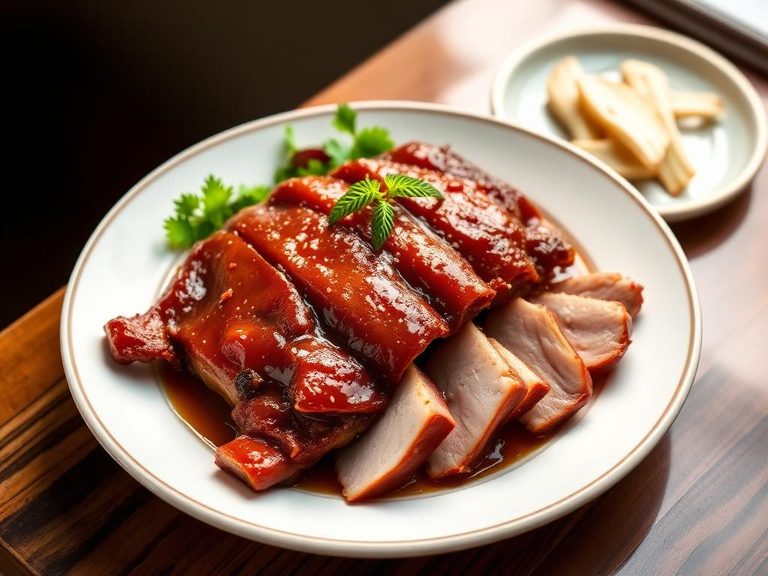
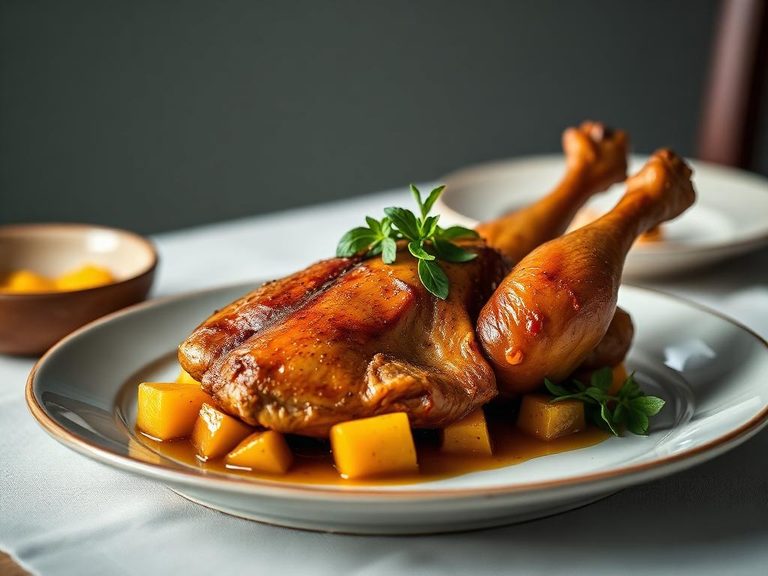
🌍 Where it's eaten
💡 Did you know?
The White Pekin duck breed was brought to the United States from China in 1873, and its fast growth and mild meat revolutionized the American duck industry.
Full nutrition (scales with serving)
| Water | 60.9 g |
| Energy | 217 kcal |
| Energy | 908 kj |
| Protein | 26.8 g |
| Total lipid (fat) | 11.4 g |
| Ash | 1.0 g |
| Carbohydrate, by difference | 0.00 g |
| Calcium, Ca | 10.0 mg |
| Iron, Fe | 2.1 mg |
| Sodium, Na | 110 mg |
| Selenium, Se | 21.8 ug |
| Vitamin C, total ascorbic acid | 1.5 mg |
| Niacin | 5.8 mg |
Fat & fatty acid profile (per 100g)
| Fatty acids, total saturated | 3.0 g |
| SFA 14:0 | 0.07 g |
| SFA 16:0 | 2.3 g |
| SFA 18:0 | 0.61 g |
| Fatty acids, total monounsaturated | 5.6 g |
| MUFA 16:1 | 0.44 g |
| MUFA 18:1 | 5.1 g |
| MUFA 20:1 | 0.06 g |
| Fatty acids, total polyunsaturated | 1.9 g |
| PUFA 18:2 | 1.7 g |
| PUFA 18:3 | 0.08 g |
| PUFA 20:4 | 0.07 g |
| Cholesterol | 114 mg |
Amino acid profile (per 100g)
| Tryptophan | 0.37 g |
| Threonine | 1.1 g |
| Isoleucine | 1.4 g |
| Leucine | 2.2 g |
| Lysine | 2.3 g |
| Methionine | 0.71 g |
| Cystine | 0.41 g |
| Phenylalanine | 1.1 g |
| Tyrosine | 1.0 g |
| Valine | 1.4 g |
| Arginine | 1.7 g |
| Histidine | 0.70 g |
| Alanine | 1.7 g |
| Aspartic acid | 2.6 g |
| Glutamic acid | 4.1 g |
| Glycine | 1.5 g |
| Proline | 1.3 g |
| Serine | 1.1 g |
FAQ
How do I get the skin crispy when roasting a duck leg?
Score the skin in a crosshatch pattern without cutting the meat, pat it completely dry, and roast on a rack at a high temperature (around 400°F/200°C) to allow the fat to render and the skin to crisp.
Is duck leg meat dark or white meat?
It is dark meat. As a bird that flies and walks a lot, its leg muscles are well-used, resulting in darker, more flavorful, and iron-rich meat compared to the breast.
Can I eat the bone?
While you shouldn't chew or swallow the large bone, the small bones and cartilage near the ends become very tender and flavorful when slow-cooked (like in confit) and can be carefully eaten.