

Danish pastry, plain or spice
Common food

Photo: Wikipedia
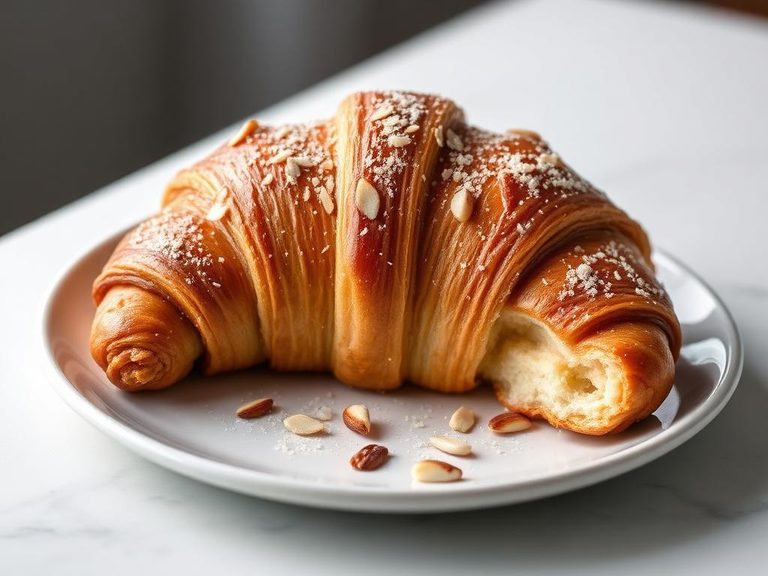
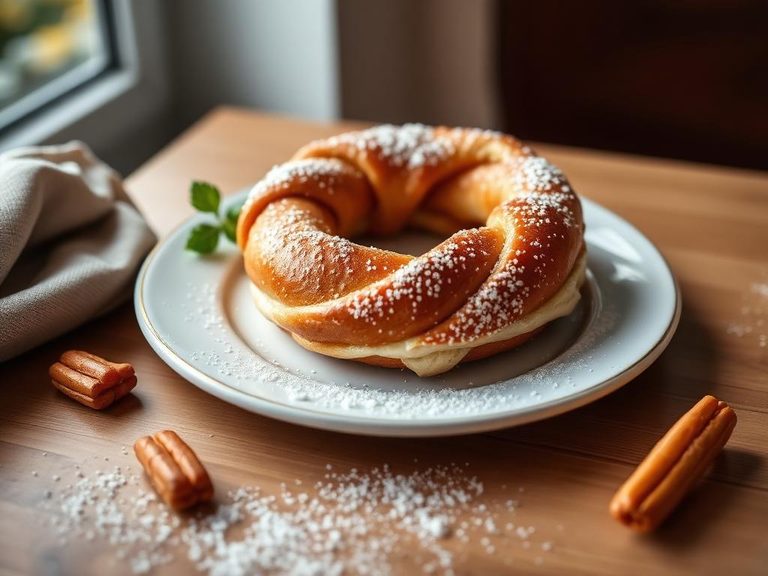
A Danish pastry is a flaky, buttery, laminated dough creation, often swirled with cinnamon, cardamom, or filled with custard and fruit. Its signature texture comes from hundreds of paper-thin layers of dough and butter, creating a rich, tender, and slightly sweet bite. Nutritionally, it is a dense source of energy, primarily from refined carbohydrates and fats.
Calorie split: 7% protein · 44% carbs · 49% fat
↓ Full nutrition💚 Why it's loved
People love it for its irresistible combination of a shatteringly crisp exterior and a soft, buttery interior, often enhanced with sweet glazes or fillings. It's a beloved staple of coffeehouse culture, offering a comforting and indulgent treat for breakfast or a snack.
⚠️ Watch-outs & how to enjoy it better
Its high sugar and refined carbohydrate content can lead to rapid blood sugar spikes, and the high fat and calorie density make it a poor choice for frequent consumption. To mitigate this, enjoy a smaller portion alongside a source of protein (like Greek yogurt) or healthy fat (like nuts) to slow sugar absorption, and consider it an occasional treat rather than a daily item.
Key benefits
- Provides quick energy from carbohydrates
- Contains some protein from wheat flour and dairy
- Source of calcium and phosphorus from butter and milk
- Offers dietary pleasure and cultural connection
🍽️ Popular dishes


🌍 Where it's eaten
💡 Did you know?
Despite its name, the modern Danish pastry likely evolved from the Austrian 'kipferl' technique, which was brought to Denmark by striking bakers during a labor strike in the 1850s.
Full nutrition (USDA data · scales with serving)
| Water | 24.3 g |
| Energy | 403 kcal |
| Protein | 7.0 g |
| Total lipid (fat) | 22.4 g |
| Carbohydrate, by difference | 44.6 g |
| Fiber, total dietary | 1.3 g |
| Total Sugars | 19.8 g |
| Calcium, Ca | 71.0 mg |
| Iron, Fe | 2.0 mg |
| Magnesium, Mg | 19.0 mg |
| Phosphorus, P | 107 mg |
| Potassium, K | 125 mg |
| Sodium, Na | 414 mg |
| Zinc, Zn | 0.72 mg |
| Copper, Cu | 0.10 mg |
| Selenium, Se | 17.0 ug |
| Vitamin C, total ascorbic acid | 0.10 mg |
| Thiamin | 0.30 mg |
| Riboflavin | 0.26 mg |
| Niacin | 2.9 mg |
| Vitamin B-6 | 0.04 mg |
| Folate, total | 68.0 ug |
| Folic acid | 35.0 ug |
| Folate, food | 33.0 ug |
| Folate, DFE | 92.0 ug |
| Choline, total | 21.8 mg |
| Vitamin B-12 | 0.10 ug |
| Vitamin B-12, added | 0.00 ug |
| Vitamin A, RAE | 6.0 ug |
| Retinol | 6.0 ug |
| Carotene, beta | 2.0 ug |
| Carotene, alpha | 0.00 ug |
| Cryptoxanthin, beta | 1.0 ug |
| Lycopene | 0.00 ug |
| Lutein + zeaxanthin | 52.0 ug |
| Vitamin E (alpha-tocopherol) | 0.39 mg |
| Vitamin E, added | 0.00 mg |
| Vitamin D (D2 + D3) | 0.00 ug |
| Vitamin K (phylloquinone) | 9.4 ug |
| Alcohol, ethyl | 0.00 g |
| Caffeine | 0.00 mg |
| Theobromine | 0.00 mg |
Fat & fatty acid profile (per 100g)
| Fatty acids, total saturated | 5.7 g |
| SFA 4:0 | 0.00 g |
| SFA 6:0 | 0.00 g |
| SFA 8:0 | 0.00 g |
| SFA 10:0 | 0.00 g |
| SFA 12:0 | 0.00 g |
| SFA 14:0 | 0.11 g |
| SFA 16:0 | 3.0 g |
| SFA 18:0 | 2.6 g |
| Fatty acids, total monounsaturated | 12.5 g |
| MUFA 16:1 | 0.02 g |
| MUFA 18:1 | 12.5 g |
| MUFA 20:1 | 0.00 g |
| MUFA 22:1 | 0.00 g |
| Fatty acids, total polyunsaturated | 2.9 g |
| PUFA 18:2 | 2.8 g |
| PUFA 18:3 | 0.15 g |
| PUFA 18:4 | 0.00 g |
| PUFA 20:4 | 0.01 g |
| PUFA 20:5 n-3 (EPA) | 0.00 g |
| PUFA 22:5 n-3 (DPA) | 0.00 g |
| PUFA 22:6 n-3 (DHA) | 0.00 g |
| Cholesterol | 21.0 mg |
Amino acid profile (per 100g)
Estimated from Danish pastry, cinnamon, enriched — USDA does not publish this profile for Danish pastry.
| Tryptophan | 0.08 g |
| Threonine | 0.24 g |
| Isoleucine | 0.31 g |
| Leucine | 0.53 g |
| Lysine | 0.30 g |
| Methionine | 0.14 g |
| Cystine | 0.14 g |
| Phenylalanine | 0.35 g |
| Tyrosine | 0.23 g |
| Valine | 0.34 g |
| Arginine | 0.31 g |
| Histidine | 0.16 g |
| Alanine | 0.27 g |
| Aspartic acid | 0.46 g |
| Glutamic acid | 1.9 g |
| Glycine | 0.24 g |
| Proline | 0.64 g |
| Serine | 0.38 g |
FAQ
What makes a Danish pastry different from a croissant?
While both are laminated, Danish dough typically contains eggs, sugar, and milk, making it richer, sweeter, and more tender. Croissant dough is leaner, relying solely on butter, flour, water, yeast, and salt, resulting in a more savory, flaky texture.
Is a Danish pastry a good source of fiber?
No, with only about 1.3g of fiber per 100g, it is very low in dietary fiber. The refined white flour used in most recipes has had the bran and germ removed.
Why does my Danish pastry taste so sweet if the dough itself isn't sugary?
The sweetness primarily comes from the generous amounts of sugar in the fillings (like custard, fruit jam, or cream cheese) and the sweet glazes or icings drizzled on top, not just the dough itself.
Nutrient density (calculated · NRF9.3)
Nutrient Rich Foods index: beneficial nutrients (protein, fiber, vitamins, minerals) minus saturated fat, added sugar & sodium, per 100 kcal.
NRF9.3 index — Fulgoni, Keast & Drewnowski, 2009. Computed from USDA nutrients.
Weight-loss friendliness (composite index)
Energy density 4.03 kcal/g · 7% calories from protein · 1.3 g fiber · 19.8 g sugar per 100 g.
Composite of energy density (Rolls et al., 1999), protein & fiber satiety, minus sugar. A calculated heuristic — ranks satiety-per-calorie, not a clinical measure.
Dietary load (calculated from USDA values)
Potential renal acid load. Positive = acid-forming, negative = alkaline-forming.
Sodium-to-potassium ratio: 3.31 (lower is better — aim for ≤ 1)
Sodium:potassium per WHO potassium guidance. Computed from USDA nutrients.