

Cream puff, eclair, custard or cream filled, not iced
Common food

Photo: Wikipedia
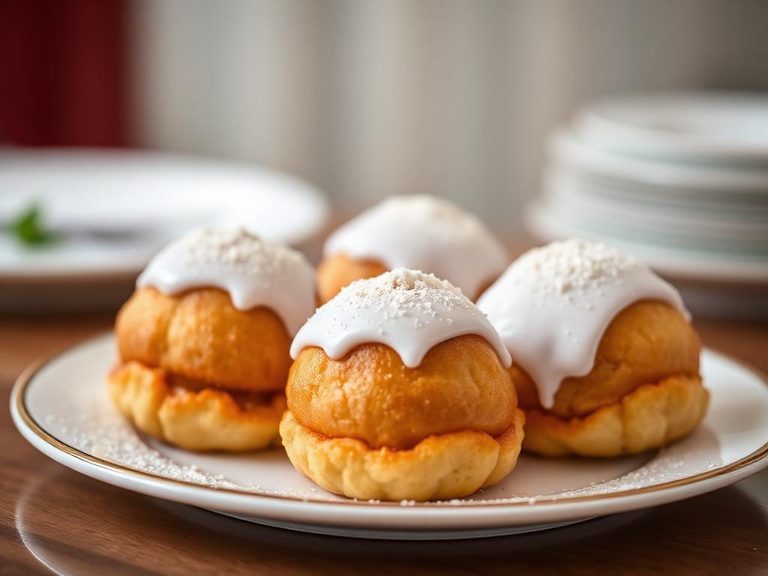
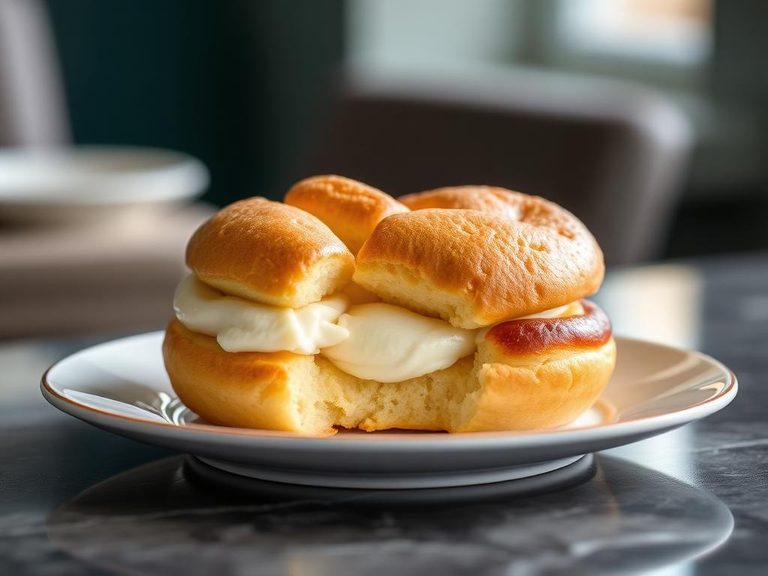
A cream puff or eclair is a light, airy choux pastry shell filled with a rich, smooth custard or whipped cream. Its texture is a delightful contrast: the crisp, slightly chewy exterior gives way to a cool, creamy interior. Nutritionally, it is a high-fat, energy-dense treat, with over 21 grams of fat per 100 grams.
Calorie split: 7% protein · 20% carbs · 73% fat
↓ Full nutrition💚 Why it's loved
People love it for the luxurious contrast of textures and the rich, sweet flavor of the custard filling, which feels like a special treat. Its versatility as a dessert for celebrations and its iconic status in French and Italian pastry make it a beloved classic.
⚠️ Watch-outs & how to enjoy it better
Its high fat and sugar content can contribute to blood-sugar spikes and is not ideal for those monitoring calorie or fat intake. To counteract this, enjoy a smaller portion (like a single, medium-sized puff) and pair it with a source of protein or fiber, such as a handful of nuts or a piece of fruit, to slow digestion.
Key benefits
- Provides quick energy from carbohydrates and fats
- Contains some protein from eggs and dairy in the filling
- Can be a satisfying, small indulgence when portion-controlled
- Offers a source of calcium from the dairy-based custard
🍽️ Popular dishes
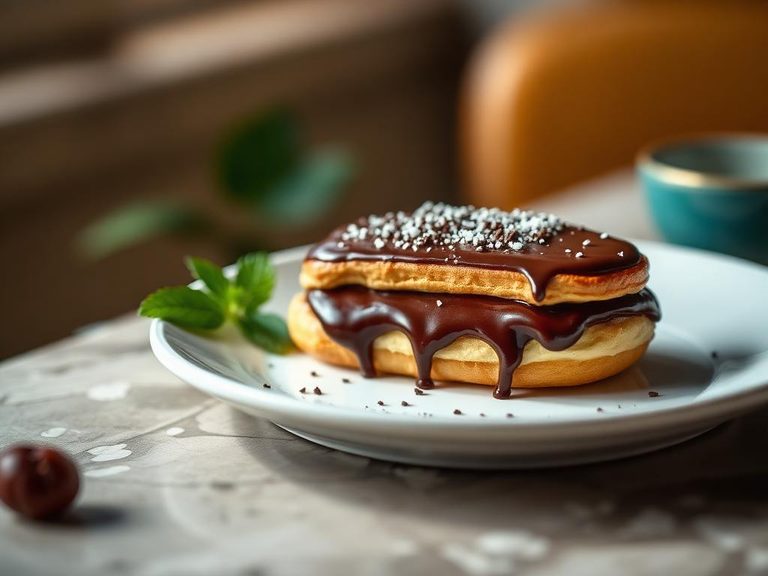
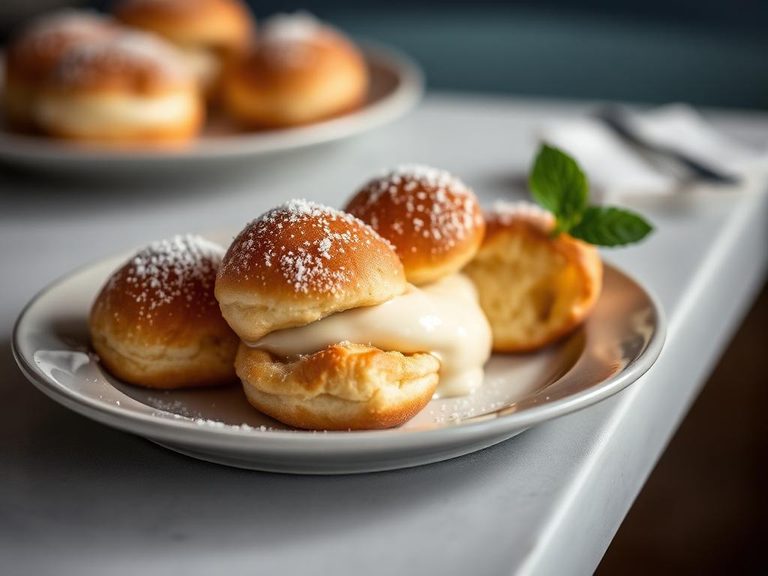
🌍 Where it's eaten
💡 Did you know?
The hollow interior of a cream puff is created by steam: the high moisture content in the choux dough turns to steam during baking, inflating the pastry from within.
Full nutrition (USDA data · scales with serving)
| Water | 60.0 g |
| Energy | 264 kcal |
| Protein | 4.8 g |
| Total lipid (fat) | 21.5 g |
| Carbohydrate, by difference | 12.9 g |
| Fiber, total dietary | 0.40 g |
| Total Sugars | 2.2 g |
| Calcium, Ca | 32.0 mg |
| Iron, Fe | 1.1 mg |
| Magnesium, Mg | 8.0 mg |
| Phosphorus, P | 71.0 mg |
| Potassium, K | 74.0 mg |
| Sodium, Na | 160 mg |
| Zinc, Zn | 0.43 mg |
| Copper, Cu | 0.02 mg |
| Selenium, Se | 9.6 ug |
| Vitamin C, total ascorbic acid | 0.20 mg |
| Thiamin | 0.15 mg |
| Riboflavin | 0.19 mg |
| Niacin | 0.92 mg |
| Vitamin B-6 | 0.03 mg |
| Folate, total | 35.0 ug |
| Folic acid | 18.0 ug |
| Folate, food | 16.0 ug |
| Folate, DFE | 47.0 ug |
| Choline, total | 65.6 mg |
| Vitamin B-12 | 0.18 ug |
| Vitamin B-12, added | 0.00 ug |
| Vitamin A, RAE | 215 ug |
| Retinol | 213 ug |
| Carotene, beta | 21.0 ug |
| Carotene, alpha | 0.00 ug |
| Cryptoxanthin, beta | 4.0 ug |
| Lycopene | 0.00 ug |
| Lutein + zeaxanthin | 111 ug |
| Vitamin E (alpha-tocopherol) | 0.47 mg |
| Vitamin E, added | 0.00 mg |
| Vitamin D (D2 + D3) | 1.0 ug |
| Vitamin K (phylloquinone) | 1.8 ug |
| Alcohol, ethyl | 0.00 g |
| Caffeine | 0.00 mg |
| Theobromine | 0.00 mg |
Fat & fatty acid profile (per 100g)
| Fatty acids, total saturated | 11.5 g |
| SFA 4:0 | 0.44 g |
| SFA 6:0 | 0.33 g |
| SFA 8:0 | 0.20 g |
| SFA 10:0 | 0.47 g |
| SFA 12:0 | 0.55 g |
| SFA 14:0 | 1.8 g |
| SFA 16:0 | 5.5 g |
| SFA 18:0 | 1.9 g |
| Fatty acids, total monounsaturated | 4.7 g |
| MUFA 16:1 | 0.34 g |
| MUFA 18:1 | 4.6 g |
| MUFA 20:1 | 0.03 g |
| MUFA 22:1 | 0.00 g |
| Fatty acids, total polyunsaturated | 1.2 g |
| PUFA 18:2 | 0.83 g |
| PUFA 18:3 | 0.08 g |
| PUFA 18:4 | 0.00 g |
| PUFA 20:4 | 0.03 g |
| PUFA 20:5 n-3 (EPA) | 0.01 g |
| PUFA 22:5 n-3 (DPA) | 0.01 g |
| PUFA 22:6 n-3 (DHA) | 0.00 g |
| Cholesterol | 144 mg |
Amino acid profile (per 100g)
Estimated from Cream puff shell, prepared from recipe — USDA does not publish this profile for Cream puff.
| Tryptophan | 0.11 g |
| Threonine | 0.37 g |
| Isoleucine | 0.43 g |
| Leucine | 0.72 g |
| Lysine | 0.50 g |
| Methionine | 0.24 g |
| Cystine | 0.20 g |
| Phenylalanine | 0.47 g |
| Tyrosine | 0.34 g |
| Valine | 0.48 g |
| Arginine | 0.47 g |
| Histidine | 0.21 g |
| Alanine | 0.42 g |
| Aspartic acid | 0.72 g |
| Glutamic acid | 1.8 g |
| Glycine | 0.30 g |
| Proline | 0.60 g |
| Serine | 0.59 g |
FAQ
What is the difference between a cream puff and an eclair?
A cream puff is typically round and filled with whipped cream or pastry cream, while an eclair is oblong, filled with pastry cream, and usually topped with chocolate icing.
Why is the pastry so light and airy?
The choux dough contains a high proportion of water and eggs. When baked, the water turns to steam, which puffs up the dough and creates a hollow interior.
Is it a good source of protein?
While it contains some protein (about 4.76g per 100g) from the eggs and dairy in the filling, it is primarily a source of fat and carbohydrates and should not be considered a significant protein source.
Nutrient density (calculated · NRF9.3)
Nutrient Rich Foods index: beneficial nutrients (protein, fiber, vitamins, minerals) minus saturated fat, added sugar & sodium, per 100 kcal.
NRF9.3 index — Fulgoni, Keast & Drewnowski, 2009. Computed from USDA nutrients.
Weight-loss friendliness (composite index)
Energy density 2.64 kcal/g · 7% calories from protein · 0.4 g fiber · 2.2 g sugar per 100 g.
Composite of energy density (Rolls et al., 1999), protein & fiber satiety, minus sugar. A calculated heuristic — ranks satiety-per-calorie, not a clinical measure.
Dietary load (calculated from USDA values)
Potential renal acid load. Positive = acid-forming, negative = alkaline-forming.
Sodium-to-potassium ratio: 2.16 (lower is better — aim for ≤ 1)
Sodium:potassium per WHO potassium guidance. Computed from USDA nutrients.