

Corn, frozen, cooked with oil
Common food

Photo: Wikipedia
This is sweet corn kernels, flash-frozen after cooking and then sautéed or tossed in a small amount of oil. The kernels offer a satisfying pop and a juicy, starchy sweetness with a rich, glossy mouthfeel from the oil. It's a convenient, calorie-conscious side dish that delivers a solid dose of carbohydrates for quick energy.
Calorie split: 8% protein · 64% carbs · 27% fat
↓ Full nutrition💚 Why it's loved
People love it for its comforting, nostalgic sweetness and the satisfying 'pop' of each kernel. It's incredibly versatile, acting as a quick side, a vibrant salad ingredient, or a hearty addition to soups and casseroles.
⚠️ Watch-outs & how to enjoy it better
The added oil increases the calorie density, and the natural sugars can cause a rapid blood-sugar spike, especially for those with insulin sensitivity. To counteract this, pair it with a source of protein (like chicken or beans) or healthy fat (like avocado) to slow digestion, and practice portion control by treating it as a side, not the main starch.
Key benefits
- Provides quick-release carbohydrates for energy
- Good source of dietary fiber for digestive health
- Contains essential minerals like magnesium and phosphorus
- Convenient, pre-cooked, and reduces food waste
- The added fat increases satiety and nutrient absorption
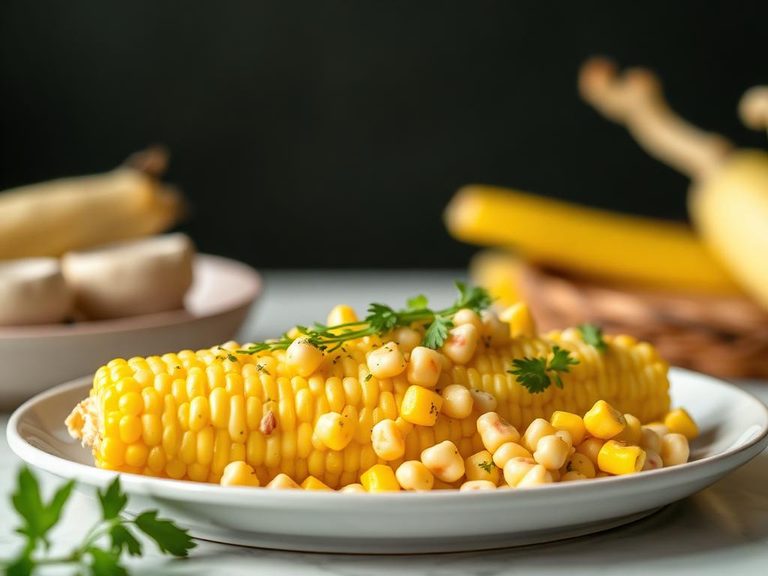
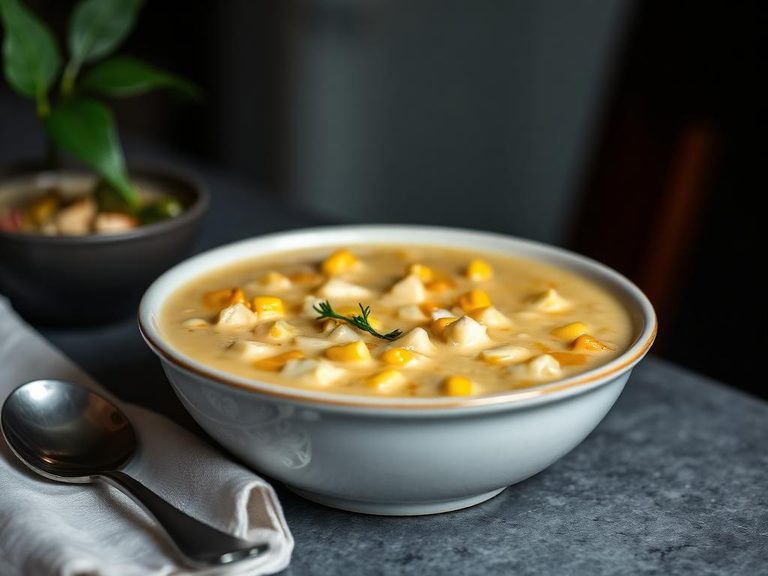
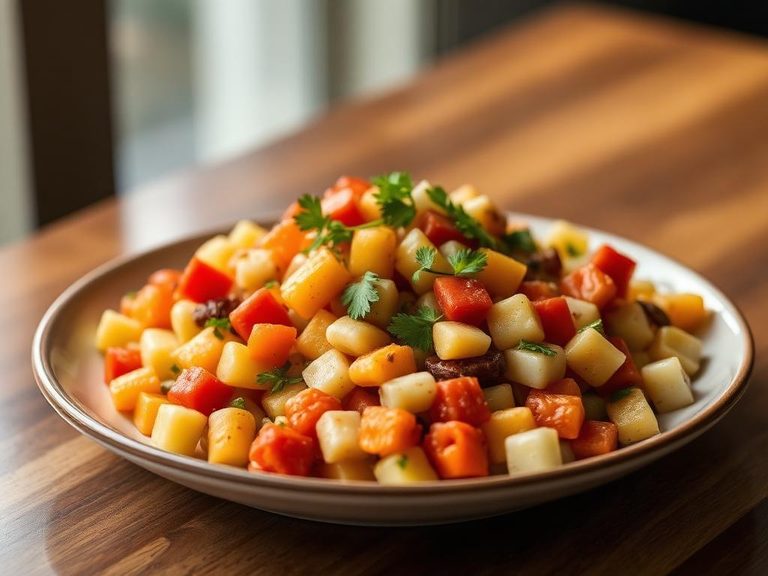
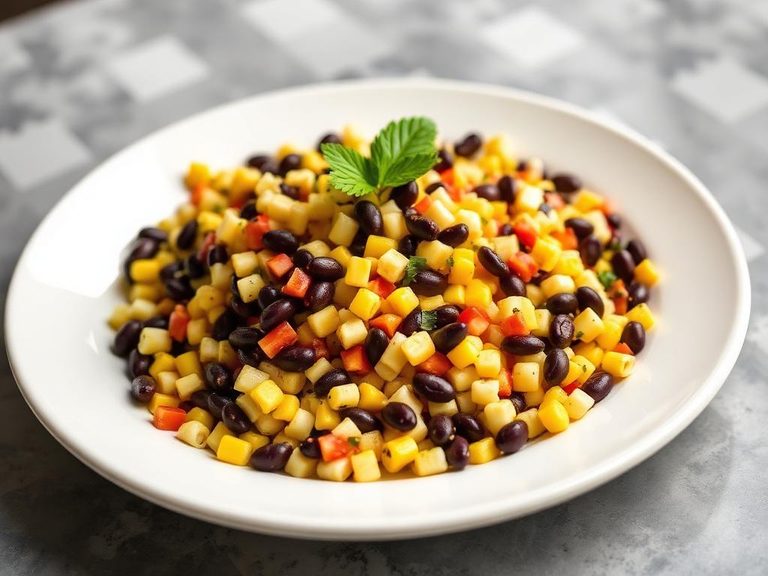
🍽️ Popular dishes

🌍 Where it's eaten
💡 Did you know?
A single ear of corn has an even number of rows, almost always 16, and each silk strand connects to one future kernel.
Full nutrition (USDA data · scales with serving)
| Water | 74.6 g |
| Energy | 105 kcal |
| Protein | 2.5 g |
| Total lipid (fat) | 3.5 g |
| Carbohydrate, by difference | 18.7 g |
| Fiber, total dietary | 2.3 g |
| Total Sugars | 3.0 g |
| Calcium, Ca | 3.0 mg |
| Iron, Fe | 0.46 mg |
| Magnesium, Mg | 27.0 mg |
| Phosphorus, P | 76.0 mg |
| Potassium, K | 226 mg |
| Sodium, Na | 113 mg |
| Zinc, Zn | 0.61 mg |
| Copper, Cu | 0.05 mg |
| Selenium, Se | 0.70 ug |
| Vitamin C, total ascorbic acid | 3.4 mg |
| Thiamin | 0.03 mg |
| Riboflavin | 0.06 mg |
| Niacin | 1.3 mg |
| Vitamin B-6 | 0.10 mg |
| Folate, total | 34.0 ug |
| Folic acid | 0.00 ug |
| Folate, food | 34.0 ug |
| Folate, DFE | 34.0 ug |
| Choline, total | 21.3 mg |
| Vitamin B-12 | 0.00 ug |
| Vitamin B-12, added | 0.00 ug |
| Vitamin A, RAE | 10.0 ug |
| Retinol | 0.00 ug |
| Carotene, beta | 48.0 ug |
| Carotene, alpha | 16.0 ug |
| Cryptoxanthin, beta | 118 ug |
| Lycopene | 0.00 ug |
| Lutein + zeaxanthin | 662 ug |
| Vitamin E (alpha-tocopherol) | 0.62 mg |
| Vitamin E, added | 0.00 mg |
| Vitamin D (D2 + D3) | 0.00 ug |
| Vitamin K (phylloquinone) | 3.2 ug |
| Alcohol, ethyl | 0.00 g |
| Caffeine | 0.00 mg |
| Theobromine | 0.00 mg |
Fat & fatty acid profile (per 100g)
| Fatty acids, total saturated | 0.49 g |
| SFA 4:0 | 0.00 g |
| SFA 6:0 | 0.00 g |
| SFA 8:0 | 0.00 g |
| SFA 10:0 | 0.00 g |
| SFA 12:0 | 0.00 g |
| SFA 14:0 | 0.00 g |
| SFA 16:0 | 0.37 g |
| SFA 18:0 | 0.09 g |
| Fatty acids, total monounsaturated | 1.4 g |
| MUFA 16:1 | 0.01 g |
| MUFA 18:1 | 1.4 g |
| MUFA 20:1 | 0.02 g |
| MUFA 22:1 | 0.00 g |
| Fatty acids, total polyunsaturated | 1.4 g |
| PUFA 18:2 | 1.3 g |
| PUFA 18:3 | 0.14 g |
| PUFA 18:4 | 0.00 g |
| PUFA 20:4 | 0.00 g |
| PUFA 20:5 n-3 (EPA) | 0.00 g |
| PUFA 22:5 n-3 (DPA) | 0.00 g |
| PUFA 22:6 n-3 (DHA) | 0.00 g |
| Cholesterol | 0.00 mg |
Amino acid profile (per 100g)
Estimated from Succotash, (corn and limas), canned, with cream style corn — USDA does not publish this profile for Corn.
| Tryptophan | 0.03 g |
| Threonine | 0.11 g |
| Isoleucine | 0.15 g |
| Leucine | 0.23 g |
| Lysine | 0.15 g |
| Methionine | 0.04 g |
| Cystine | 0.03 g |
| Phenylalanine | 0.13 g |
| Tyrosine | 0.09 g |
| Valine | 0.16 g |
| Arginine | 0.15 g |
| Histidine | 0.08 g |
| Alanine | 0.14 g |
| Aspartic acid | 0.26 g |
| Glutamic acid | 0.40 g |
| Glycine | 0.10 g |
| Proline | 0.10 g |
| Serine | 0.15 g |
FAQ
Is frozen corn as nutritious as fresh?
Often, yes. Flash-freezing locks in nutrients at their peak, so frozen corn can have comparable or even higher levels of certain vitamins than 'fresh' corn that has traveled long distances.
Why is it cooked with oil?
The oil prevents the kernels from sticking together in the bag, enhances mouthfeel, and helps carry fat-soluble vitamins (like vitamin A precursors) for better absorption.
How can I reduce the added fat?
You can rinse the corn in a colander under warm water to remove some surface oil, or choose brands that use minimal or no added oil in their frozen corn products.
Nutrient density (calculated · NRF9.3)
Nutrient Rich Foods index: beneficial nutrients (protein, fiber, vitamins, minerals) minus saturated fat, added sugar & sodium, per 100 kcal.
NRF9.3 index — Fulgoni, Keast & Drewnowski, 2009. Computed from USDA nutrients.
Weight-loss friendliness (composite index)
Energy density 1.05 kcal/g · 9% calories from protein · 2.3 g fiber · 3.0 g sugar per 100 g.
Composite of energy density (Rolls et al., 1999), protein & fiber satiety, minus sugar. A calculated heuristic — ranks satiety-per-calorie, not a clinical measure.
Dietary load (calculated from USDA values)
Potential renal acid load. Positive = acid-forming, negative = alkaline-forming.
Sodium-to-potassium ratio: 0.50 (lower is better — aim for ≤ 1)
Sodium:potassium per WHO potassium guidance. Computed from USDA nutrients.