

Corn chips, plain
Common food

Photo: Wikipedia
Corn chips are thin, crispy slices or strips of corn dough, deep-fried to a golden crunch. They deliver a satisfying, salty, and distinctly corn-forward flavor with a light, airy texture that shatters on the bite. Nutritionally, they are a high-energy, high-carb snack with a significant fat content from frying.
Calorie split: 4% protein · 41% carbs · 54% fat
↓ Full nutrition💚 Why it's loved
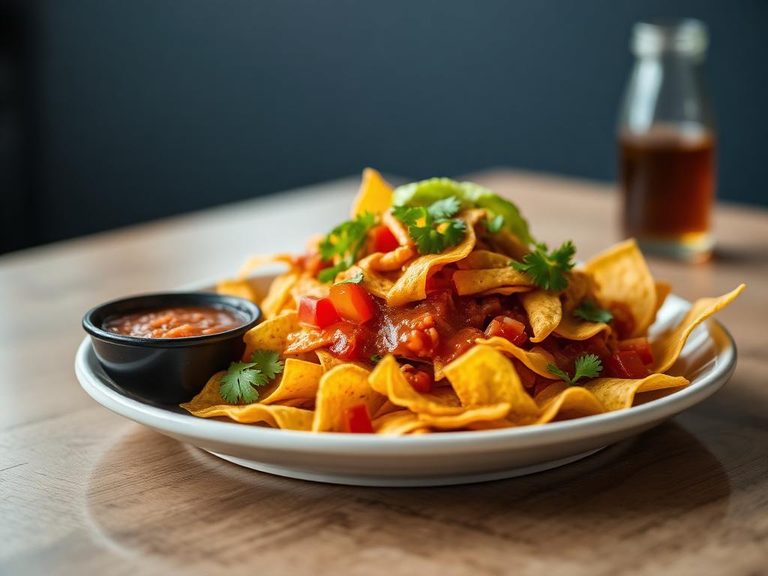
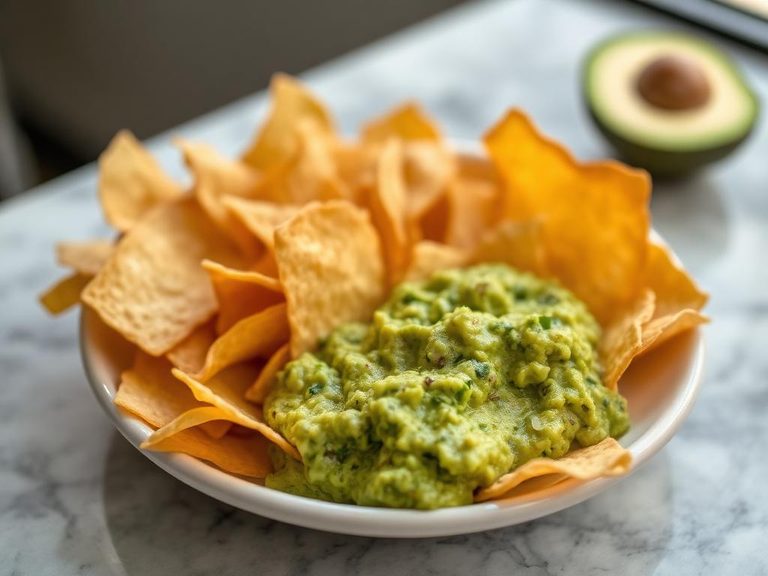
People adore corn chips for their addictive salty crunch and the comforting, earthy flavor of toasted corn. They are the ultimate versatile vehicle for dips like salsa, guacamole, and bean dip, making them a social snack staple.
⚠️ Watch-outs & how to enjoy it better
The high carbohydrate and fat content can lead to blood sugar spikes and is calorie-dense, making portion control important. The frying process and common salt seasoning can be problematic for those monitoring sodium or fat intake. To counteract, pair them with protein-rich dips like black bean dip or guacamole, and practice strict portion control by measuring a single serving.
Key benefits
- Quick source of energy from carbohydrates
- Provides a small amount of dietary fiber
- Gluten-free when made from pure corn
- A staple source of calories in many traditional diets
- Offers a satisfying, crunchy texture for snacking
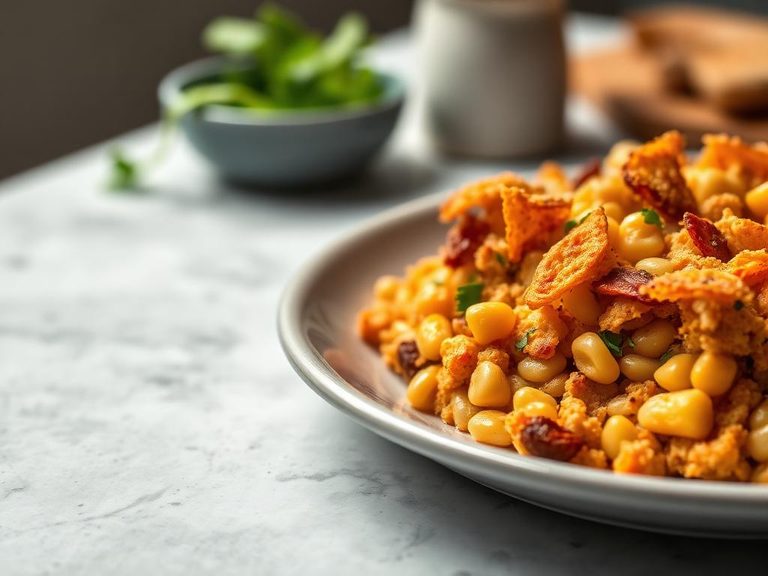
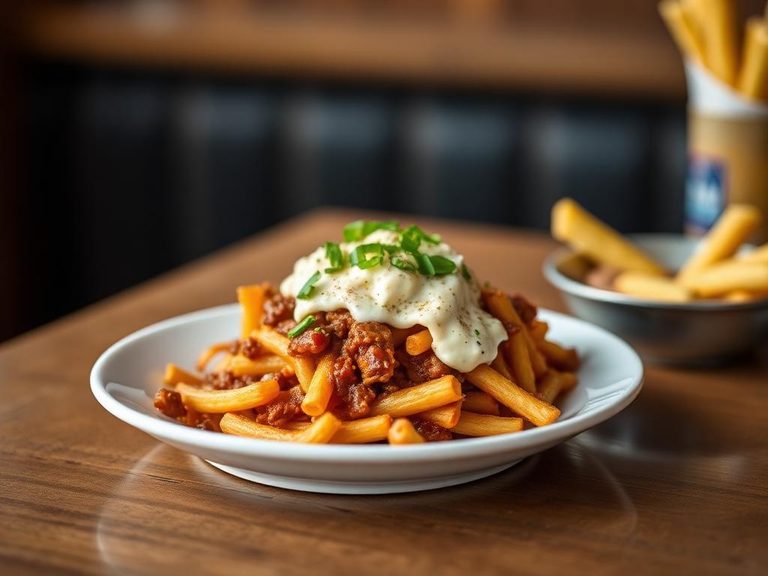
🍽️ Popular dishes
🌍 Where it's eaten
💡 Did you know?
The Frito, a specific type of corn chip, was invented in 1932 and was originally sold from the back of a truck by its creator, Charles Elmer Doolin.
Full nutrition (USDA data · scales with serving)
| Water | 1.1 g |
| Energy | 535 kcal |
| Protein | 6.1 g |
| Total lipid (fat) | 33.1 g |
| Carbohydrate, by difference | 56.8 g |
| Fiber, total dietary | 4.0 g |
| Total Sugars | 0.27 g |
| Calcium, Ca | 137 mg |
| Iron, Fe | 1.2 mg |
| Magnesium, Mg | 71.0 mg |
| Phosphorus, P | 192 mg |
| Potassium, K | 143 mg |
| Sodium, Na | 817 mg |
| Zinc, Zn | 1.3 mg |
| Copper, Cu | 0.10 mg |
| Selenium, Se | 7.5 ug |
| Vitamin C, total ascorbic acid | 0.00 mg |
| Thiamin | 0.05 mg |
| Riboflavin | 0.08 mg |
| Niacin | 0.83 mg |
| Vitamin B-6 | 0.17 mg |
| Folate, total | 8.0 ug |
| Folic acid | 0.00 ug |
| Folate, food | 8.0 ug |
| Folate, DFE | 8.0 ug |
| Choline, total | 12.0 mg |
| Vitamin B-12 | 0.00 ug |
| Vitamin B-12, added | 0.00 ug |
| Vitamin A, RAE | 3.0 ug |
| Retinol | 0.00 ug |
| Carotene, beta | 20.0 ug |
| Carotene, alpha | 2.0 ug |
| Cryptoxanthin, beta | 41.0 ug |
| Lycopene | 0.00 ug |
| Lutein + zeaxanthin | 523 ug |
| Vitamin E (alpha-tocopherol) | 7.2 mg |
| Vitamin E, added | 0.00 mg |
| Vitamin D (D2 + D3) | 0.00 ug |
| Vitamin K (phylloquinone) | 6.2 ug |
| Alcohol, ethyl | 0.00 g |
| Caffeine | 0.00 mg |
| Theobromine | 0.00 mg |
Fat & fatty acid profile (per 100g)
| Fatty acids, total saturated | 4.3 g |
| SFA 4:0 | 0.00 g |
| SFA 6:0 | 0.00 g |
| SFA 8:0 | 0.01 g |
| SFA 10:0 | 0.00 g |
| SFA 12:0 | 0.00 g |
| SFA 14:0 | 0.01 g |
| SFA 16:0 | 3.5 g |
| SFA 18:0 | 0.55 g |
| Fatty acids, total monounsaturated | 9.1 g |
| MUFA 16:1 | 0.03 g |
| MUFA 18:1 | 8.9 g |
| MUFA 20:1 | 0.10 g |
| MUFA 22:1 | 0.00 g |
| Fatty acids, total polyunsaturated | 16.3 g |
| PUFA 18:2 | 16.0 g |
| PUFA 18:3 | 0.28 g |
| PUFA 18:4 | 0.00 g |
| PUFA 20:4 | 0.01 g |
| PUFA 20:5 n-3 (EPA) | 0.01 g |
| PUFA 22:5 n-3 (DPA) | 0.00 g |
| PUFA 22:6 n-3 (DHA) | 0.00 g |
| Cholesterol | 0.00 mg |
Amino acid profile (per 100g)
Estimated from Snacks, corn-based, extruded, chips, plain — USDA does not publish this profile for Corn chips.
| Tryptophan | 0.05 g |
| Threonine | 0.25 g |
| Isoleucine | 0.23 g |
| Leucine | 0.80 g |
| Lysine | 0.18 g |
| Methionine | 0.14 g |
| Cystine | 0.12 g |
| Phenylalanine | 0.32 g |
| Tyrosine | 0.27 g |
| Valine | 0.33 g |
| Arginine | 0.33 g |
| Histidine | 0.20 g |
| Alanine | 0.49 g |
| Aspartic acid | 0.46 g |
| Glutamic acid | 1.2 g |
| Glycine | 0.27 g |
| Proline | 0.57 g |
| Serine | 0.31 g |
FAQ
Are corn chips and tortilla chips the same thing?
Not exactly. While both are made from corn, traditional corn chips (like Fritos) are made from masa corn flour that is fried, resulting in a denser, more crumbly texture. Tortilla chips are typically made from cut and fried corn tortillas, which are thinner and crispier.
Why are corn chips so high in fat?
The high fat content comes from the deep-frying process, where the corn dough absorbs oil to achieve its characteristic crispy texture and rich flavor.
Can corn chips be part of a healthy diet?
Yes, in moderation. They can be enjoyed as an occasional treat, especially when paired with nutrient-dense toppings like fresh salsa, avocado, or bean dip to add fiber, vitamins, and protein.
Nutrient density (calculated · NRF9.3)
Nutrient Rich Foods index: beneficial nutrients (protein, fiber, vitamins, minerals) minus saturated fat, added sugar & sodium, per 100 kcal.
NRF9.3 index — Fulgoni, Keast & Drewnowski, 2009. Computed from USDA nutrients.
Weight-loss friendliness (composite index)
Energy density 5.35 kcal/g · 5% calories from protein · 4.0 g fiber · 0.3 g sugar per 100 g.
Composite of energy density (Rolls et al., 1999), protein & fiber satiety, minus sugar. A calculated heuristic — ranks satiety-per-calorie, not a clinical measure.
Dietary load (calculated from USDA values)
Potential renal acid load. Positive = acid-forming, negative = alkaline-forming.
Sodium-to-potassium ratio: 5.71 (lower is better — aim for ≤ 1)
Sodium:potassium per WHO potassium guidance. Computed from USDA nutrients.