

Cookie, gluten free
Common food

Photo: Wikipedia
A gluten-free cookie is a sweet, crumbly treat made without wheat flour, often using almond, coconut, or rice flour as a base. Its texture ranges from chewy to crisp, with a rich, buttery or sweet flavor profile. Nutritionally, it is high in carbohydrates and sugar, with moderate fat and minimal protein.
Calorie split: 2% protein · 64% carbs · 34% fat
↓ Full nutrition💚 Why it's loved
People love gluten-free cookies for their ability to satisfy sweet cravings without gluten, often featuring rich flavors like chocolate, vanilla, or nuts. They are versatile, fitting into casual snacking, dessert, or even breakfast with coffee.
⚠️ Watch-outs & how to enjoy it better
Gluten-free cookies can be high in sugar and refined carbs, potentially causing blood-sugar spikes, and may contain allergens like nuts or soy. To counteract, pair with protein or healthy fats (e.g., nuts or yogurt), practice portion control, and choose brands with lower sugar content.
Key benefits
- Gluten-free option for those with celiac disease or gluten sensitivity
- Often made with alternative flours that may offer more fiber or nutrients
- Can be a convenient, portable snack or dessert
- Widely available in stores and bakeries for easy access
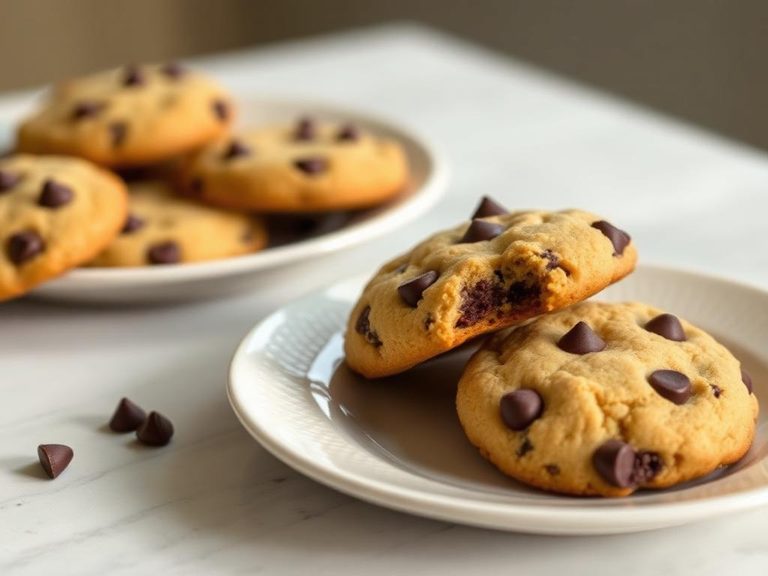
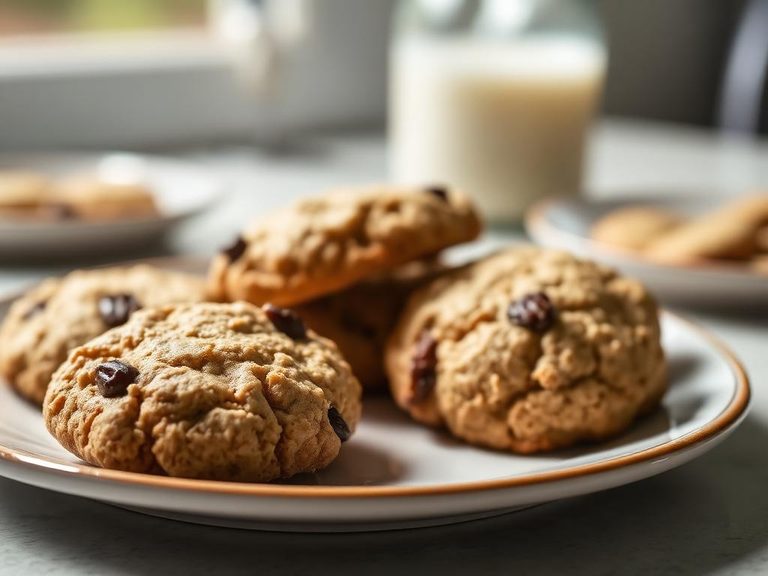
- Allows for creative flavor combinations like chocolate chip or oatmeal
🍽️ Popular dishes

🌍 Where it's eaten
💡 Did you know?
The first known gluten-free cookie recipe appeared in the 1940s, but they only gained mainstream popularity in the 2000s with the rise of gluten-free diets.
Full nutrition (USDA data · scales with serving)
| Water | 2.8 g |
| Energy | 474 kcal |
| Protein | 2.2 g |
| Total lipid (fat) | 17.9 g |
| Carbohydrate, by difference | 76.0 g |
| Fiber, total dietary | 2.5 g |
| Total Sugars | 49.0 g |
| Calcium, Ca | 19.0 mg |
| Iron, Fe | 2.8 mg |
| Magnesium, Mg | 40.0 mg |
| Phosphorus, P | 70.0 mg |
| Potassium, K | 157 mg |
| Sodium, Na | 275 mg |
| Zinc, Zn | 0.66 mg |
| Copper, Cu | 0.26 mg |
| Selenium, Se | 0.00 ug |
| Vitamin C, total ascorbic acid | 0.00 mg |
| Thiamin | 0.05 mg |
| Riboflavin | 0.08 mg |
| Niacin | 0.39 mg |
| Vitamin B-6 | 0.00 mg |
| Folate, total | 0.00 ug |
| Folic acid | 0.00 ug |
| Folate, food | 0.00 ug |
| Folate, DFE | 0.00 ug |
| Choline, total | 19.6 mg |
| Vitamin B-12 | 0.00 ug |
| Vitamin B-12, added | 0.00 ug |
| Vitamin A, RAE | 0.00 ug |
| Retinol | 0.00 ug |
| Carotene, beta | 0.00 ug |
| Carotene, alpha | 0.00 ug |
| Cryptoxanthin, beta | 0.00 ug |
| Lycopene | 0.00 ug |
| Lutein + zeaxanthin | 3.0 ug |
| Vitamin E (alpha-tocopherol) | 2.3 mg |
| Vitamin E, added | 0.00 mg |
| Vitamin D (D2 + D3) | 0.00 ug |
| Vitamin K (phylloquinone) | 25.6 ug |
| Alcohol, ethyl | 0.00 g |
| Caffeine | 6.0 mg |
| Theobromine | 188 mg |
Fat & fatty acid profile (per 100g)
| Fatty acids, total saturated | 7.9 g |
| SFA 4:0 | 0.00 g |
| SFA 6:0 | 0.00 g |
| SFA 8:0 | 0.00 g |
| SFA 10:0 | 0.00 g |
| SFA 12:0 | 0.03 g |
| SFA 14:0 | 0.15 g |
| SFA 16:0 | 6.7 g |
| SFA 18:0 | 0.95 g |
| Fatty acids, total monounsaturated | 6.1 g |
| MUFA 16:1 | 0.03 g |
| MUFA 18:1 | 6.1 g |
| MUFA 20:1 | 0.03 g |
| MUFA 22:1 | 0.00 g |
| Fatty acids, total polyunsaturated | 1.8 g |
| PUFA 18:2 | 1.7 g |
| PUFA 18:3 | 0.06 g |
| PUFA 18:4 | 0.00 g |
| PUFA 20:4 | 0.00 g |
| PUFA 20:5 n-3 (EPA) | 0.00 g |
| PUFA 22:5 n-3 (DPA) | 0.00 g |
| PUFA 22:6 n-3 (DHA) | 0.00 g |
| Cholesterol | 0.00 mg |
Amino acid profile (per 100g)
Estimated from Pie Crust, Cookie-type, Chocolate, Ready Crust — USDA does not publish this profile for Cookie.
| Tryptophan | 0.08 g |
| Threonine | 0.20 g |
| Isoleucine | 0.23 g |
| Leucine | 0.38 g |
| Lysine | 0.24 g |
| Methionine | 0.07 g |
| Cystine | 0.11 g |
| Phenylalanine | 0.28 g |
| Tyrosine | 0.16 g |
| Valine | 0.32 g |
| Arginine | 0.29 g |
| Histidine | 0.11 g |
| Alanine | 0.24 g |
| Aspartic acid | 0.45 g |
| Glutamic acid | 1.3 g |
| Glycine | 0.24 g |
| Proline | 0.42 g |
| Serine | 0.26 g |
FAQ
Are gluten-free cookies healthier than regular cookies?
Not necessarily. They often contain similar or higher sugar and fat content, but they are essential for those with gluten intolerance or celiac disease.
What flours are commonly used in gluten-free cookies?
Almond flour, coconut flour, rice flour, and tapioca starch are popular alternatives to wheat flour.
Can I make gluten-free cookies at home?
Yes, many recipes use simple ingredients like almond flour, eggs, and sweeteners. Experiment with flours and add-ins like chocolate chips or nuts.
Nutrient density (calculated · NRF9.3)
Nutrient Rich Foods index: beneficial nutrients (protein, fiber, vitamins, minerals) minus saturated fat, added sugar & sodium, per 100 kcal.
NRF9.3 index — Fulgoni, Keast & Drewnowski, 2009. Computed from USDA nutrients.
Weight-loss friendliness (composite index)
Energy density 4.74 kcal/g · 2% calories from protein · 2.5 g fiber · 49.0 g sugar per 100 g.
Composite of energy density (Rolls et al., 1999), protein & fiber satiety, minus sugar. A calculated heuristic — ranks satiety-per-calorie, not a clinical measure.
Dietary load (calculated from USDA values)
Potential renal acid load. Positive = acid-forming, negative = alkaline-forming.
Sodium-to-potassium ratio: 1.75 (lower is better — aim for ≤ 1)
Sodium:potassium per WHO potassium guidance. Computed from USDA nutrients.