

Cookie, chocolate or fudge
Common food

Photo: Wikipedia
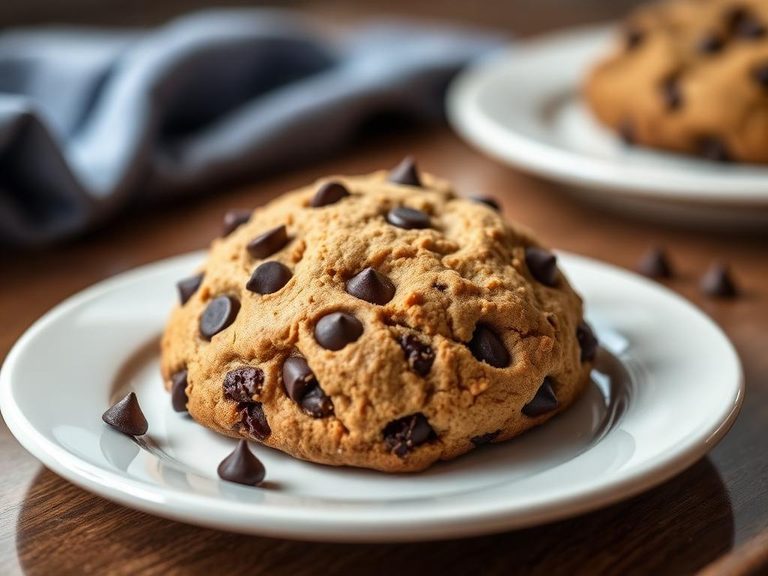
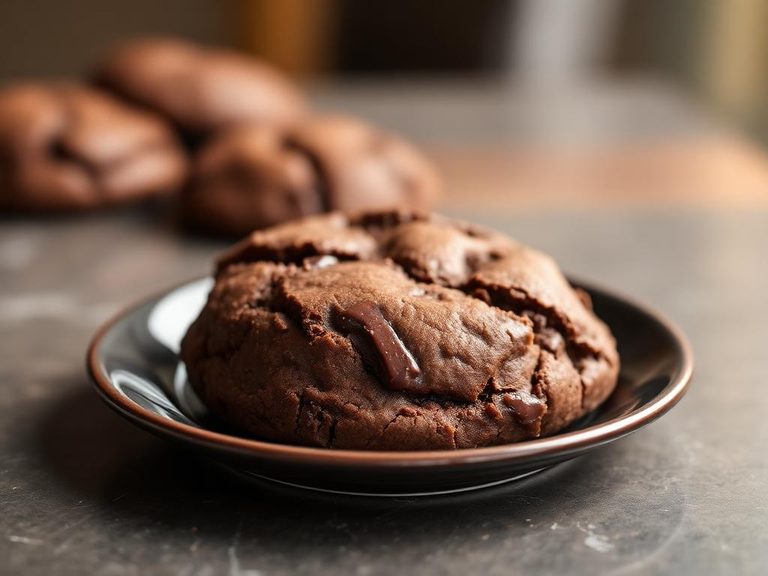
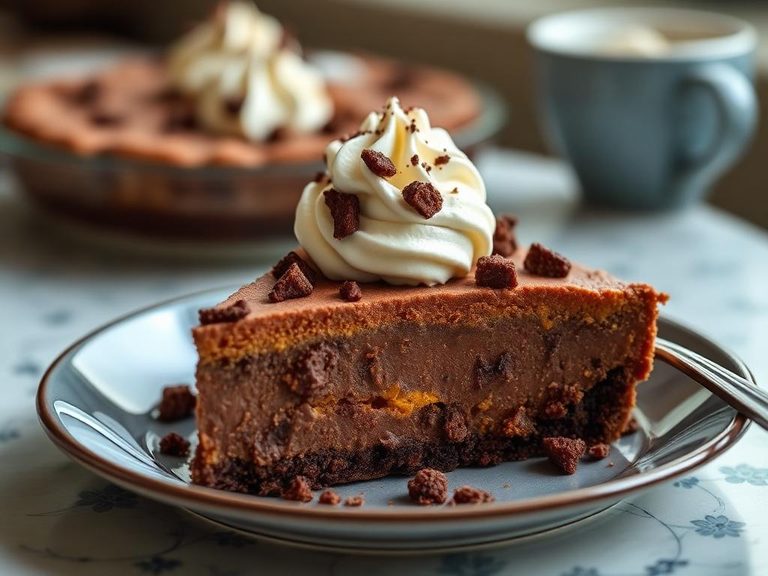
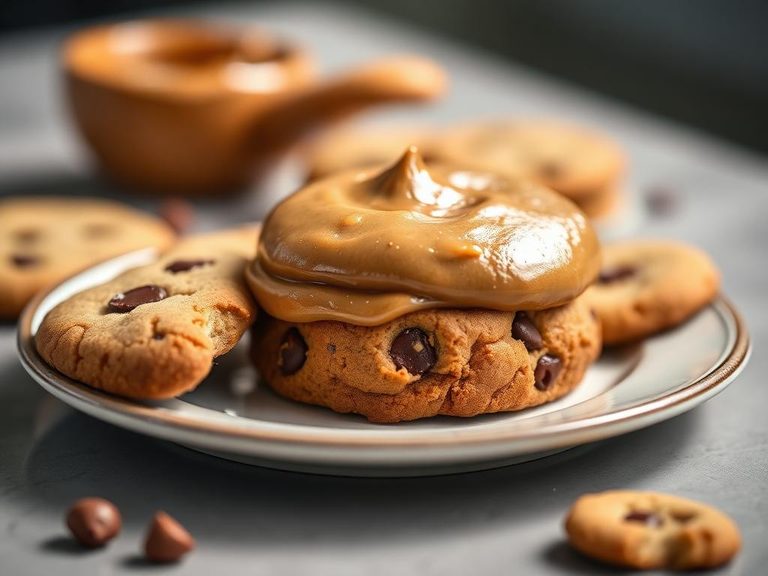
A dense, chewy cookie packed with rich chocolate or fudge chunks, offering a deep cocoa flavor and a satisfyingly soft, melt-in-your-mouth texture. With 433 kcal per 100g, it's an energy-dense treat primarily fueled by carbohydrates and fats. Its high sugar content (37.43g) delivers immediate sweetness, while the 6.6g of protein provides a modest structural element.
Calorie split: 6% protein · 65% carbs · 29% fat
↓ Full nutrition💚 Why it's loved
People love it for the irresistible combination of rich, deep chocolate flavor and a comforting, chewy texture that evokes nostalgia. It's a universally recognized treat, perfect with coffee or milk, and a staple for celebrations, from birthday parties to holiday cookie swaps.
⚠️ Watch-outs & how to enjoy it better
The high sugar and calorie content can cause rapid blood-sugar spikes, making it a cautionary choice for those managing diabetes or seeking sustained energy. It is also a common source of allergens like wheat, eggs, and dairy. To counteract, pair a single cookie with a source of protein or healthy fat (like a handful of nuts or a cheese stick) to slow sugar absorption, and practice strict portion control.
Key benefits
- Quick source of energy from carbohydrates
- Provides some dietary fiber (3.4g per 100g)
- Contains small amounts of protein
- Offers psychological satisfaction and comfort
- Portable and convenient snack
🍽️ Popular dishes
🌍 Where it's eaten
💡 Did you know?
The chocolate chip cookie was invented by accident in the 1930s when Ruth Graves Wakefield, owner of the Toll House Inn, expected chocolate pieces to melt completely into the dough, but they held their shape, creating the iconic chip.
Full nutrition (USDA data · scales with serving)
| Water | 4.5 g |
| Energy | 433 kcal |
| Protein | 6.6 g |
| Total lipid (fat) | 14.2 g |
| Carbohydrate, by difference | 72.7 g |
| Fiber, total dietary | 3.4 g |
| Total Sugars | 37.4 g |
| Calcium, Ca | 31.0 mg |
| Iron, Fe | 4.0 mg |
| Magnesium, Mg | 53.0 mg |
| Phosphorus, P | 132 mg |
| Potassium, K | 210 mg |
| Sodium, Na | 580 mg |
| Zinc, Zn | 1.1 mg |
| Copper, Cu | 0.46 mg |
| Selenium, Se | 5.7 ug |
| Vitamin C, total ascorbic acid | 0.00 mg |
| Thiamin | 0.20 mg |
| Riboflavin | 0.27 mg |
| Niacin | 2.9 mg |
| Vitamin B-6 | 0.05 mg |
| Folate, total | 47.0 ug |
| Folic acid | 39.0 ug |
| Folate, food | 8.0 ug |
| Folate, DFE | 75.0 ug |
| Choline, total | 14.3 mg |
| Vitamin B-12 | 0.09 ug |
| Vitamin B-12, added | 0.00 ug |
| Vitamin A, RAE | 3.0 ug |
| Retinol | 3.0 ug |
| Carotene, beta | 0.00 ug |
| Carotene, alpha | 0.00 ug |
| Cryptoxanthin, beta | 0.00 ug |
| Lycopene | 0.00 ug |
| Lutein + zeaxanthin | 13.0 ug |
| Vitamin E (alpha-tocopherol) | 0.72 mg |
| Vitamin E, added | 0.00 mg |
| Vitamin D (D2 + D3) | 0.00 ug |
| Vitamin K (phylloquinone) | 2.4 ug |
| Alcohol, ethyl | 0.00 g |
| Caffeine | 10.0 mg |
| Theobromine | 354 mg |
Fat & fatty acid profile (per 100g)
| Fatty acids, total saturated | 4.2 g |
| SFA 4:0 | 0.00 g |
| SFA 6:0 | 0.01 g |
| SFA 8:0 | 0.13 g |
| SFA 10:0 | 0.10 g |
| SFA 12:0 | 0.76 g |
| SFA 14:0 | 0.30 g |
| SFA 16:0 | 1.8 g |
| SFA 18:0 | 1.1 g |
| Fatty acids, total monounsaturated | 4.9 g |
| MUFA 16:1 | 0.05 g |
| MUFA 18:1 | 4.8 g |
| MUFA 20:1 | 0.00 g |
| MUFA 22:1 | 0.00 g |
| Fatty acids, total polyunsaturated | 4.2 g |
| PUFA 18:2 | 3.9 g |
| PUFA 18:3 | 0.27 g |
| PUFA 18:4 | 0.00 g |
| PUFA 20:4 | 0.01 g |
| PUFA 20:5 n-3 (EPA) | 0.00 g |
| PUFA 22:5 n-3 (DPA) | 0.00 g |
| PUFA 22:6 n-3 (DHA) | 0.00 g |
| Cholesterol | 2.0 mg |
Amino acid profile (per 100g)
Estimated from Pie Crust, Cookie-type, Chocolate, Ready Crust — USDA does not publish this profile for Cookie.
| Tryptophan | 0.08 g |
| Threonine | 0.20 g |
| Isoleucine | 0.23 g |
| Leucine | 0.38 g |
| Lysine | 0.24 g |
| Methionine | 0.07 g |
| Cystine | 0.11 g |
| Phenylalanine | 0.28 g |
| Tyrosine | 0.16 g |
| Valine | 0.32 g |
| Arginine | 0.29 g |
| Histidine | 0.11 g |
| Alanine | 0.24 g |
| Aspartic acid | 0.45 g |
| Glutamic acid | 1.3 g |
| Glycine | 0.24 g |
| Proline | 0.42 g |
| Serine | 0.26 g |
FAQ
Why do chocolate chips stay solid in cookies while cocoa powder doesn't?
Chocolate chips contain stabilizers like soy lecithin and are designed to hold their shape when heated. Cocoa powder is finely ground and disperses completely into the dough, creating a uniform chocolate flavor without distinct pieces.
What makes a cookie 'fudgy' vs. 'cakey'?
A fudgy texture comes from a higher ratio of fat (butter) and sugar to flour, often with less leavening. A cakey texture uses more flour and leavening agents like baking powder, creating a lighter, more porous crumb.
Is there a nutritional difference between milk and dark chocolate in cookies?
Yes. Dark chocolate typically has a higher cocoa content, offering more antioxidants (flavonoids) and less sugar than milk chocolate. However, in a cookie, the overall nutritional impact is dominated by the dough's sugar and fat.
Nutrient density (calculated · NRF9.3)
Nutrient Rich Foods index: beneficial nutrients (protein, fiber, vitamins, minerals) minus saturated fat, added sugar & sodium, per 100 kcal.
NRF9.3 index — Fulgoni, Keast & Drewnowski, 2009. Computed from USDA nutrients.
Weight-loss friendliness (composite index)
Energy density 4.33 kcal/g · 6% calories from protein · 3.4 g fiber · 37.4 g sugar per 100 g.
Composite of energy density (Rolls et al., 1999), protein & fiber satiety, minus sugar. A calculated heuristic — ranks satiety-per-calorie, not a clinical measure.
Dietary load (calculated from USDA values)
Potential renal acid load. Positive = acid-forming, negative = alkaline-forming.
Sodium-to-potassium ratio: 2.76 (lower is better — aim for ≤ 1)
Sodium:potassium per WHO potassium guidance. Computed from USDA nutrients.