

Chocolate candy, fudge
Common food
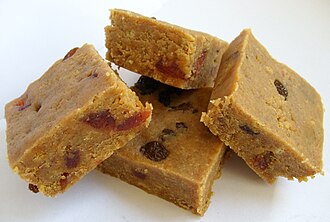
Photo: Wikipedia
Chocolate fudge is a dense, velvety confection made from sugar, butter, and chocolate, often with milk or cream. Its texture is smooth and melt-in-your-mouth, with a rich, sweet flavor that can range from deep cocoa to milky caramel. Nutritionally, it is extremely high in sugar (76g per 100g) and calories, offering minimal protein or fiber.
Calorie split: 2% protein · 80% carbs · 18% fat
↓ Full nutrition💚 Why it's loved
People love fudge for its luxurious, comforting texture and intense sweetness, which makes it a beloved treat during holidays and celebrations. Its versatility allows for endless flavor variations, from classic chocolate to maple walnut, appealing to a wide range of tastes.
⚠️ Watch-outs & how to enjoy it better
Fudge is extremely high in sugar and calories, which can lead to rapid blood-sugar spikes and is a concern for those managing diabetes or weight. To counteract this, practice strict portion control (e.g., a 1-inch square) and pair it with a source of protein or fat (like a handful of nuts) to slow sugar absorption. Those with lactose intolerance or dairy allergies should also be cautious due to common ingredients like butter and milk.
Key benefits
- Quick source of energy from carbohydrates
- Provides a small amount of calcium from dairy ingredients
- Can offer a mood boost through chocolate's compounds
- Versatile base for flavor additions like nuts or fruit
🍽️ Popular dishes
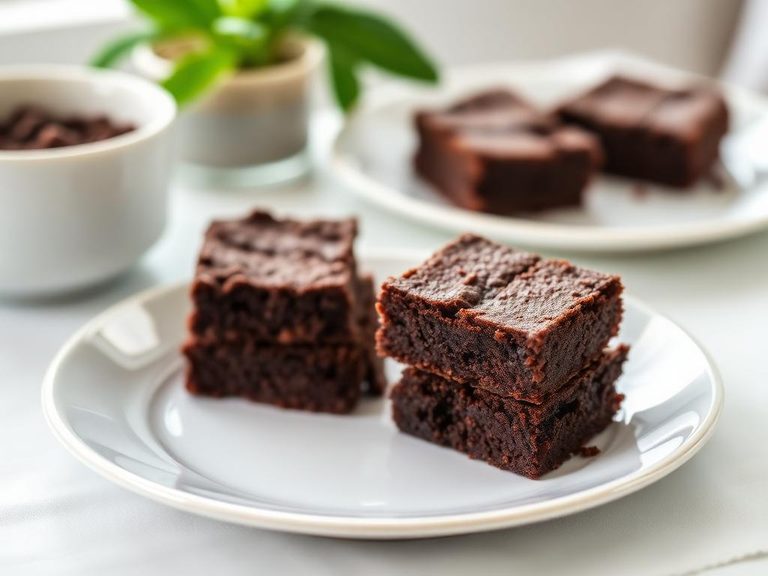
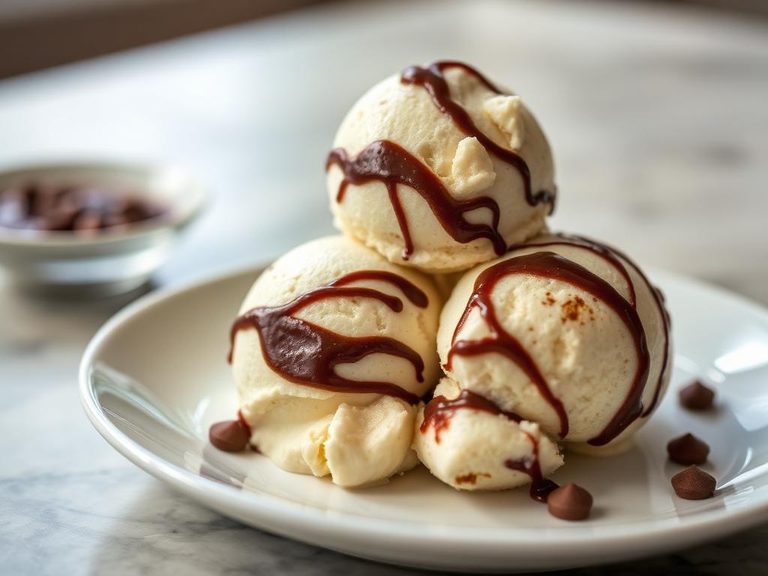
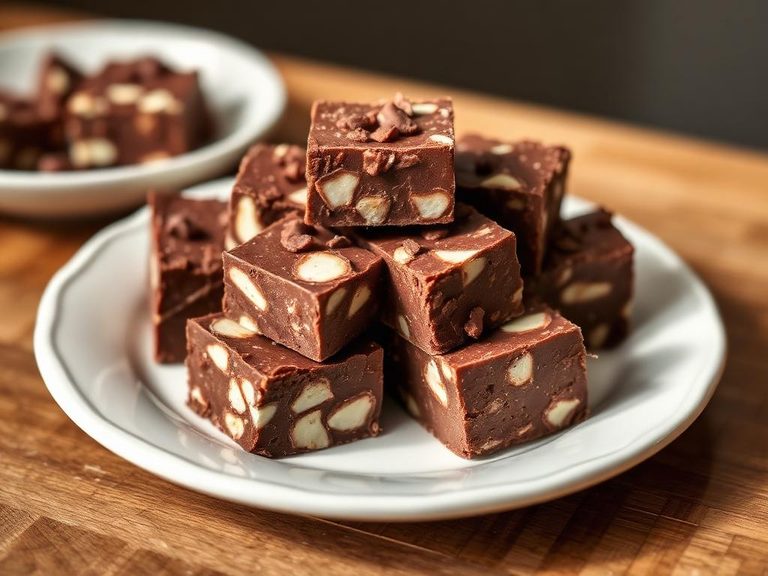


🌍 Where it's eaten
💡 Did you know?
The word 'fudge' is believed to have originated in the 19th century as a term for a 'cheat' or 'hoax,' possibly referring to a batch of candy that didn't turn out as intended.
Full nutrition (USDA data · scales with serving)
| Water | 10.3 g |
| Energy | 396 kcal |
| Protein | 1.7 g |
| Total lipid (fat) | 7.9 g |
| Carbohydrate, by difference | 79.4 g |
| Fiber, total dietary | 0.80 g |
| Total Sugars | 76.4 g |
| Calcium, Ca | 44.0 mg |
| Iron, Fe | 0.90 mg |
| Magnesium, Mg | 20.0 mg |
| Phosphorus, P | 50.0 mg |
| Potassium, K | 92.0 mg |
| Sodium, Na | 46.0 mg |
| Zinc, Zn | 0.63 mg |
| Copper, Cu | 0.17 mg |
| Selenium, Se | 2.1 ug |
| Vitamin C, total ascorbic acid | 0.00 mg |
| Thiamin | 0.02 mg |
| Riboflavin | 0.08 mg |
| Niacin | 0.11 mg |
| Vitamin B-6 | 0.01 mg |
| Folate, total | 2.0 ug |
| Folic acid | 0.00 ug |
| Folate, food | 2.0 ug |
| Folate, DFE | 2.0 ug |
| Choline, total | 7.6 mg |
| Vitamin B-12 | 0.08 ug |
| Vitamin B-12, added | 0.00 ug |
| Vitamin A, RAE | 45.0 ug |
| Retinol | 44.0 ug |
| Carotene, beta | 10.0 ug |
| Carotene, alpha | 0.00 ug |
| Cryptoxanthin, beta | 0.00 ug |
| Lycopene | 0.00 ug |
| Lutein + zeaxanthin | 2.0 ug |
| Vitamin E (alpha-tocopherol) | 0.16 mg |
| Vitamin E, added | 0.00 mg |
| Vitamin D (D2 + D3) | 0.00 ug |
| Vitamin K (phylloquinone) | 1.0 ug |
| Alcohol, ethyl | 0.00 g |
| Caffeine | 4.0 mg |
| Theobromine | 65.0 mg |
Fat & fatty acid profile (per 100g)
| Fatty acids, total saturated | 4.9 g |
| SFA 4:0 | 0.19 g |
| SFA 6:0 | 0.13 g |
| SFA 8:0 | 0.09 g |
| SFA 10:0 | 0.16 g |
| SFA 12:0 | 0.16 g |
| SFA 14:0 | 0.49 g |
| SFA 16:0 | 2.1 g |
| SFA 18:0 | 1.6 g |
| Fatty acids, total monounsaturated | 2.2 g |
| MUFA 16:1 | 0.06 g |
| MUFA 18:1 | 2.1 g |
| MUFA 20:1 | 0.01 g |
| MUFA 22:1 | 0.00 g |
| Fatty acids, total polyunsaturated | 0.30 g |
| PUFA 18:2 | 0.25 g |
| PUFA 18:3 | 0.05 g |
| PUFA 18:4 | 0.00 g |
| PUFA 20:4 | 0.00 g |
| PUFA 20:5 n-3 (EPA) | 0.00 g |
| PUFA 22:5 n-3 (DPA) | 0.00 g |
| PUFA 22:6 n-3 (DHA) | 0.00 g |
| Cholesterol | 14.0 mg |
FAQ
What is the difference between fudge and chocolate?
Fudge is a type of candy made by cooking sugar, butter, and milk to a specific temperature, resulting in a soft, creamy texture. Chocolate is made from cacao beans and can be used as an ingredient in fudge, but fudge itself is a confection.
Why does fudge sometimes become grainy?
Graininess occurs when sugar crystals form during cooking, often due to improper stirring or temperature control. To avoid this, use a candy thermometer and stir gently until the mixture reaches the soft-ball stage (around 235°F/112°C).
Can fudge be made without dairy?
Yes, dairy-free fudge can be made using plant-based milk (like coconut or almond milk) and vegan butter substitutes. The texture may vary slightly, but it remains a rich, sweet treat.
Nutrient density (calculated · NRF9.3)
Nutrient Rich Foods index: beneficial nutrients (protein, fiber, vitamins, minerals) minus saturated fat, added sugar & sodium, per 100 kcal.
NRF9.3 index — Fulgoni, Keast & Drewnowski, 2009. Computed from USDA nutrients.
Weight-loss friendliness (composite index)
Energy density 3.96 kcal/g · 2% calories from protein · 0.8 g fiber · 76.4 g sugar per 100 g.
Composite of energy density (Rolls et al., 1999), protein & fiber satiety, minus sugar. A calculated heuristic — ranks satiety-per-calorie, not a clinical measure.
Dietary load (calculated from USDA values)
Potential renal acid load. Positive = acid-forming, negative = alkaline-forming.
Sodium-to-potassium ratio: 0.50 (lower is better — aim for ≤ 1)
Sodium:potassium per WHO potassium guidance. Computed from USDA nutrients.