

Chocolate candy, candy shell
Common food
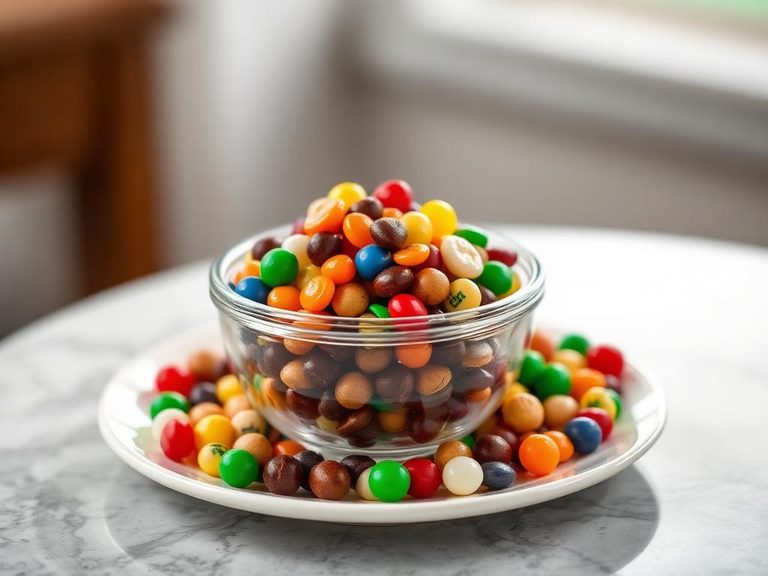
A classic candy featuring a solid milk chocolate center encased in a thin, crunchy, colorful sugar shell. The initial snap of the shell gives way to a smooth, sweet chocolate melt. Nutritionally, it's a high-energy treat, with over 70 grams of carbohydrates and nearly 64 grams of sugar per 100 grams.
Calorie split: 4% protein · 58% carbs · 39% fat
↓ Full nutrition💚 Why it's loved
People love the playful combination of a satisfying crunch followed by creamy chocolate, making it a nostalgic and fun treat for all ages. Its vibrant colors and association with holidays like Easter make it a festive staple.
⚠️ Watch-outs & how to enjoy it better
The extremely high sugar content can lead to rapid blood-sugar spikes and is a major concern for dental health and weight management. Those with milk allergies or sensitivities should avoid it. To mitigate, practice strict portion control (e.g., a small handful) and pair with a source of protein or fiber to slow sugar absorption.
Key benefits
- Provides a quick source of energy from carbohydrates
- Contains small amounts of calcium and phosphorus from milk chocolate
- The crunchy shell offers a satisfying textural contrast
- A popular treat for celebrations and holidays
🍽️ Popular dishes

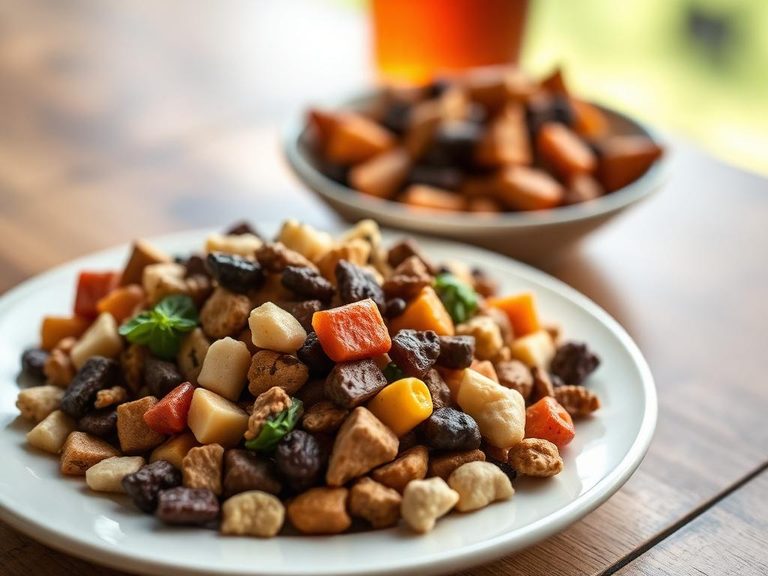
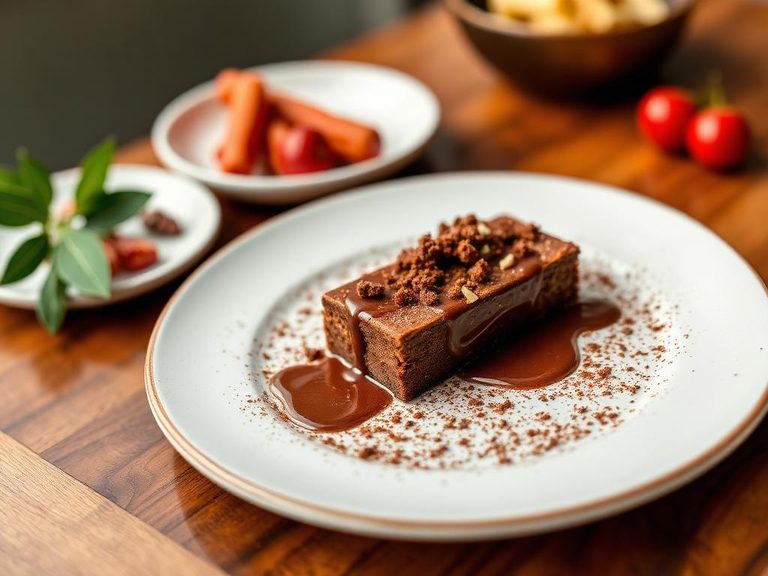
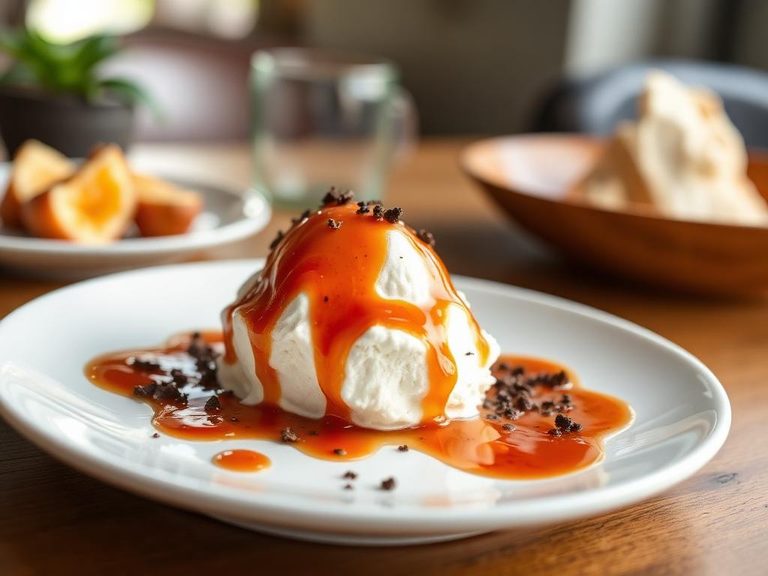
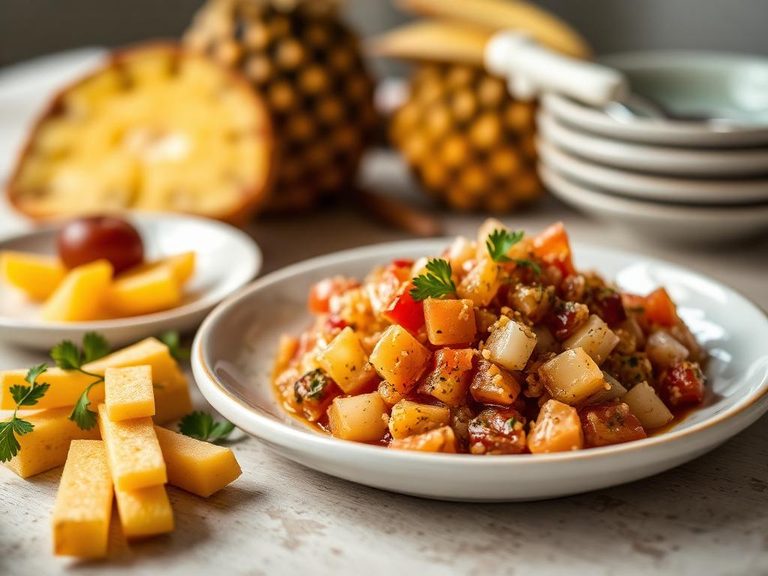
🌍 Where it's eaten
💡 Did you know?
The candy shell's vibrant colors are often achieved using food-grade confectioner's glaze and specific FD&C dyes, and the shell is built up in multiple layers through a process called 'panning'.
Full nutrition (USDA data · scales with serving)
| Water | 1.7 g |
| Energy | 492 kcal |
| Protein | 4.3 g |
| Total lipid (fat) | 21.1 g |
| Carbohydrate, by difference | 71.2 g |
| Fiber, total dietary | 2.8 g |
| Total Sugars | 63.7 g |
| Calcium, Ca | 105 mg |
| Iron, Fe | 1.1 mg |
| Magnesium, Mg | 44.0 mg |
| Phosphorus, P | 146 mg |
| Potassium, K | 261 mg |
| Sodium, Na | 61.0 mg |
| Zinc, Zn | 1.6 mg |
| Copper, Cu | 0.34 mg |
| Selenium, Se | 3.3 ug |
| Vitamin C, total ascorbic acid | 0.50 mg |
| Thiamin | 0.08 mg |
| Riboflavin | 0.21 mg |
| Niacin | 0.27 mg |
| Vitamin B-6 | 0.03 mg |
| Folate, total | 8.0 ug |
| Folic acid | 0.00 ug |
| Folate, food | 8.0 ug |
| Folate, DFE | 8.0 ug |
| Choline, total | 21.7 mg |
| Vitamin B-12 | 0.53 ug |
| Vitamin B-12, added | 0.00 ug |
| Vitamin A, RAE | 56.0 ug |
| Retinol | 56.0 ug |
| Carotene, beta | 0.00 ug |
| Carotene, alpha | 0.00 ug |
| Cryptoxanthin, beta | 0.00 ug |
| Lycopene | 0.00 ug |
| Lutein + zeaxanthin | 0.00 ug |
| Vitamin E (alpha-tocopherol) | 0.36 mg |
| Vitamin E, added | 0.00 mg |
| Vitamin D (D2 + D3) | 0.00 ug |
| Vitamin K (phylloquinone) | 4.0 ug |
| Alcohol, ethyl | 0.00 g |
| Caffeine | 14.0 mg |
| Theobromine | 143 mg |
Fat & fatty acid profile (per 100g)
| Fatty acids, total saturated | 13.1 g |
| SFA 4:0 | 0.46 g |
| SFA 6:0 | 0.17 g |
| SFA 8:0 | 0.10 g |
| SFA 10:0 | 0.18 g |
| SFA 12:0 | 0.20 g |
| SFA 14:0 | 0.61 g |
| SFA 16:0 | 5.5 g |
| SFA 18:0 | 5.6 g |
| Fatty acids, total monounsaturated | 5.2 g |
| MUFA 16:1 | 0.15 g |
| MUFA 18:1 | 4.9 g |
| MUFA 20:1 | 0.00 g |
| MUFA 22:1 | 0.00 g |
| Fatty acids, total polyunsaturated | 0.92 g |
| PUFA 18:2 | 0.86 g |
| PUFA 18:3 | 0.06 g |
| PUFA 18:4 | 0.00 g |
| PUFA 20:4 | 0.00 g |
| PUFA 20:5 n-3 (EPA) | 0.00 g |
| PUFA 22:5 n-3 (DPA) | 0.00 g |
| PUFA 22:6 n-3 (DHA) | 0.00 g |
| Cholesterol | 14.0 mg |
FAQ
How is the crunchy shell made?
The shell is created through 'panning,' where chocolate centers are tumbled in a large drum while being sprayed with a sugar syrup. The syrup dries into thin layers, which are built up and polished to a shine.
Are the colors natural?
Most commercial versions use artificial food dyes (like FD&C Blue 1, Yellow 5, Red 40) to achieve bright, consistent colors. Some specialty or organic brands may use natural colorants from sources like turmeric or beet juice.
What's the difference between this and a chocolate truffle?
A chocolate candy with a candy shell has a solid chocolate center and a hard sugar coating. A chocolate truffle typically has a soft, ganache-based center (chocolate and cream) and is often rolled in cocoa powder, nuts, or a thin chocolate coating, not a hard sugar shell.
Nutrient density (calculated · NRF9.3)
Nutrient Rich Foods index: beneficial nutrients (protein, fiber, vitamins, minerals) minus saturated fat, added sugar & sodium, per 100 kcal.
NRF9.3 index — Fulgoni, Keast & Drewnowski, 2009. Computed from USDA nutrients.
Weight-loss friendliness (composite index)
Energy density 4.92 kcal/g · 4% calories from protein · 2.8 g fiber · 63.7 g sugar per 100 g.
Composite of energy density (Rolls et al., 1999), protein & fiber satiety, minus sugar. A calculated heuristic — ranks satiety-per-calorie, not a clinical measure.
Dietary load (calculated from USDA values)
Potential renal acid load. Positive = acid-forming, negative = alkaline-forming.
Sodium-to-potassium ratio: 0.23 (lower is better — aim for ≤ 1)
Sodium:potassium per WHO potassium guidance. Computed from USDA nutrients.