

Chocolate candy
Common food
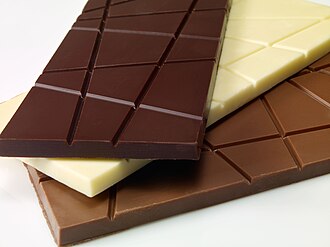
Photo: Wikipedia
Chocolate candy is a rich, indulgent confection made from cocoa solids, cocoa butter, sugar, and often milk or other flavorings. It delivers a smooth, creamy texture and a deep, sweet flavor that can range from milky and sweet to intensely bitter and complex. Nutritionally, it's energy-dense, providing a significant source of carbohydrates and fats in a small serving.
Calorie split: 6% protein · 44% carbs · 50% fat
↓ Full nutrition💚 Why it's loved
People love chocolate candy for its luxurious mouthfeel and complex flavor profile that satisfies deep cravings. It's a universal symbol of celebration, comfort, and affection, deeply embedded in cultural traditions from holidays to gifting.
⚠️ Watch-outs & how to enjoy it better
Its high sugar and fat content can lead to blood-sugar spikes and contribute to excess calorie intake, which is a concern for those managing weight or diabetes. The cocoa content also contains oxalates, which may be a consideration for individuals prone to certain types of kidney stones. To counteract this, practice strict portion control and pair a small piece with a source of protein or fiber (like nuts or fruit) to slow sugar absorption.
Key benefits
- Provides a quick source of energy from carbohydrates and fats.
- Contains antioxidants like flavonoids from cocoa.
- Can boost mood and satisfaction through sensory pleasure.
- Offers small amounts of minerals like iron and magnesium.
- Versatile ingredient in both sweet and savory cooking.
🍽️ Popular dishes

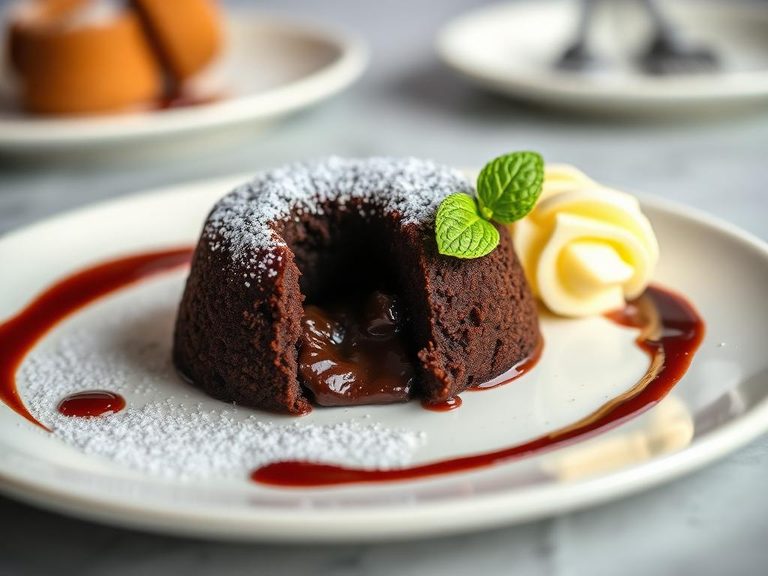
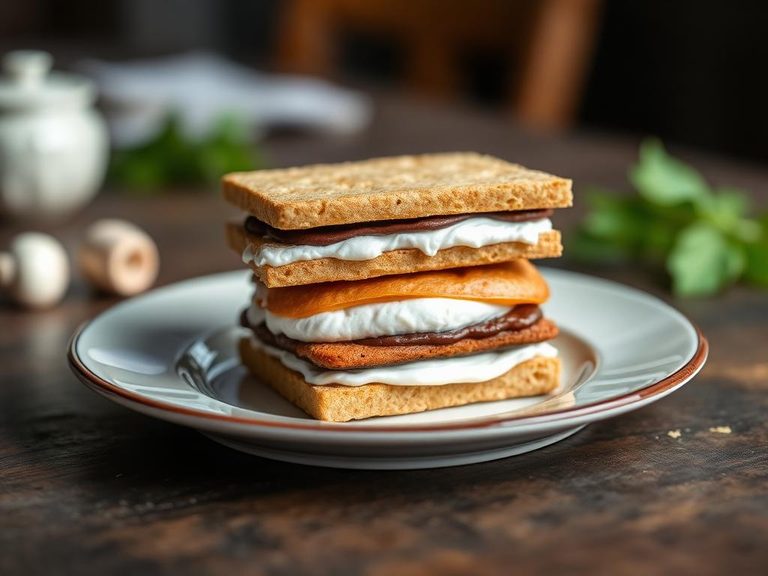

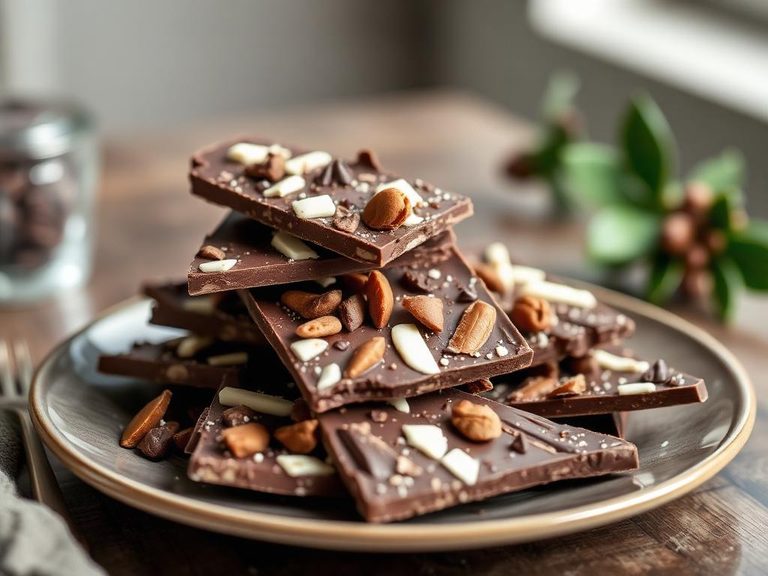

🌍 Where it's eaten
💡 Did you know?
The invention of the modern chocolate bar is credited to Joseph Fry, who in 1847 discovered he could make a moldable paste by combining cocoa powder, sugar, and melted cocoa butter.
Full nutrition (USDA data · scales with serving)
| Water | 1.5 g |
| Energy | 535 kcal |
| Protein | 7.7 g |
| Total lipid (fat) | 29.7 g |
| Carbohydrate, by difference | 59.4 g |
| Fiber, total dietary | 3.4 g |
| Total Sugars | 51.5 g |
| Calcium, Ca | 189 mg |
| Iron, Fe | 2.4 mg |
| Magnesium, Mg | 63.0 mg |
| Phosphorus, P | 208 mg |
| Potassium, K | 372 mg |
| Sodium, Na | 79.0 mg |
| Zinc, Zn | 2.3 mg |
| Copper, Cu | 0.49 mg |
| Selenium, Se | 4.5 ug |
| Vitamin C, total ascorbic acid | 0.00 mg |
| Thiamin | 0.11 mg |
| Riboflavin | 0.30 mg |
| Niacin | 0.39 mg |
| Vitamin B-6 | 0.04 mg |
| Folate, total | 12.0 ug |
| Folic acid | 0.00 ug |
| Folate, food | 11.0 ug |
| Folate, DFE | 11.0 ug |
| Choline, total | 46.1 mg |
| Vitamin B-12 | 0.75 ug |
| Vitamin B-12, added | 0.00 ug |
| Vitamin A, RAE | 59.0 ug |
| Retinol | 59.0 ug |
| Carotene, beta | 0.00 ug |
| Carotene, alpha | 0.00 ug |
| Cryptoxanthin, beta | 0.00 ug |
| Lycopene | 0.00 ug |
| Lutein + zeaxanthin | 6.0 ug |
| Vitamin E (alpha-tocopherol) | 0.51 mg |
| Vitamin E, added | 0.00 mg |
| Vitamin D (D2 + D3) | 0.00 ug |
| Vitamin K (phylloquinone) | 5.7 ug |
| Alcohol, ethyl | 0.00 g |
| Caffeine | 20.0 mg |
| Theobromine | 205 mg |
Fat & fatty acid profile (per 100g)
| Fatty acids, total saturated | 18.5 g |
| SFA 4:0 | 0.36 g |
| SFA 6:0 | 0.10 g |
| SFA 8:0 | 0.11 g |
| SFA 10:0 | 0.25 g |
| SFA 12:0 | 0.25 g |
| SFA 14:0 | 1.2 g |
| SFA 16:0 | 8.3 g |
| SFA 18:0 | 7.8 g |
| Fatty acids, total monounsaturated | 7.2 g |
| MUFA 16:1 | 0.41 g |
| MUFA 18:1 | 6.1 g |
| MUFA 20:1 | 0.00 g |
| MUFA 22:1 | 0.00 g |
| Fatty acids, total polyunsaturated | 1.4 g |
| PUFA 18:2 | 1.2 g |
| PUFA 18:3 | 0.12 g |
| PUFA 18:4 | 0.00 g |
| PUFA 20:4 | 0.00 g |
| PUFA 20:5 n-3 (EPA) | 0.00 g |
| PUFA 22:5 n-3 (DPA) | 0.00 g |
| PUFA 22:6 n-3 (DHA) | 0.00 g |
| Cholesterol | 23.0 mg |
FAQ
Is chocolate candy the same as chocolate?
Not exactly. 'Chocolate' often refers to the pure product from cacao beans, while 'chocolate candy' is a broader category that includes added sugars, milk, and other ingredients to create finished confections like bars, truffles, and bonbons.
What gives chocolate its smooth texture?
The key is cocoa butter, which is solid at room temperature but melts at body temperature (around 93°F/34°C), creating that signature 'melt-in-your-mouth' sensation.
Why does chocolate sometimes have a white coating on it?
That's called 'chocolate bloom.' It's harmless and happens when cocoa butter (fat bloom) or sugar (sugar bloom) migrates to the surface due to temperature fluctuations, affecting appearance but not safety.
Nutrient density (calculated · NRF9.3)
Nutrient Rich Foods index: beneficial nutrients (protein, fiber, vitamins, minerals) minus saturated fat, added sugar & sodium, per 100 kcal.
NRF9.3 index — Fulgoni, Keast & Drewnowski, 2009. Computed from USDA nutrients.
Weight-loss friendliness (composite index)
Energy density 5.35 kcal/g · 6% calories from protein · 3.4 g fiber · 51.5 g sugar per 100 g.
Composite of energy density (Rolls et al., 1999), protein & fiber satiety, minus sugar. A calculated heuristic — ranks satiety-per-calorie, not a clinical measure.
Dietary load (calculated from USDA values)
Potential renal acid load. Positive = acid-forming, negative = alkaline-forming.
Sodium-to-potassium ratio: 0.21 (lower is better — aim for ≤ 1)
Sodium:potassium per WHO potassium guidance. Computed from USDA nutrients.