

Chocolate Bark
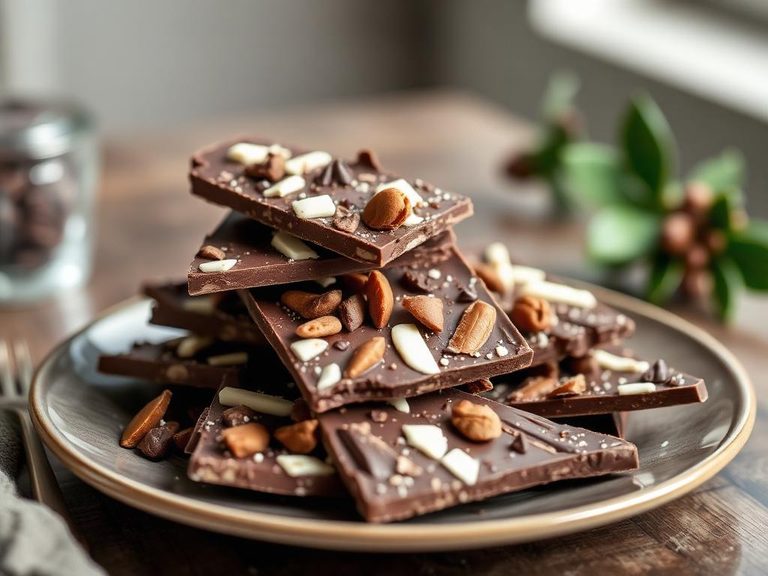
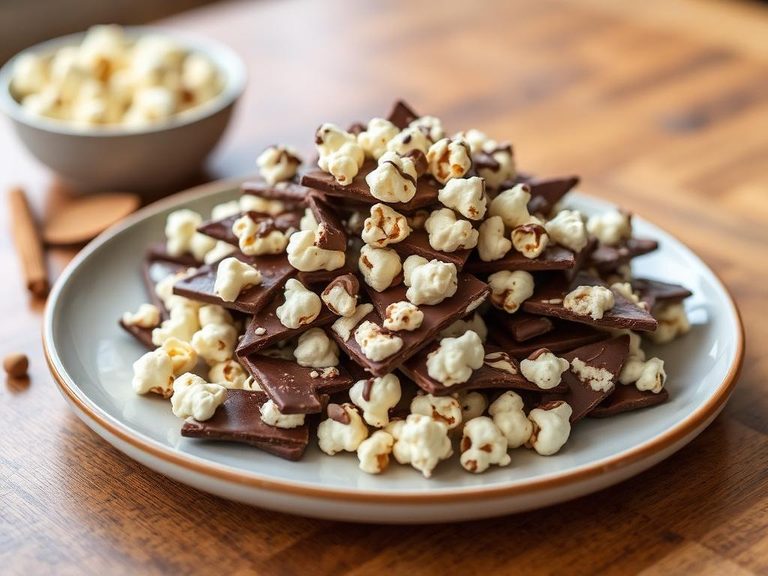
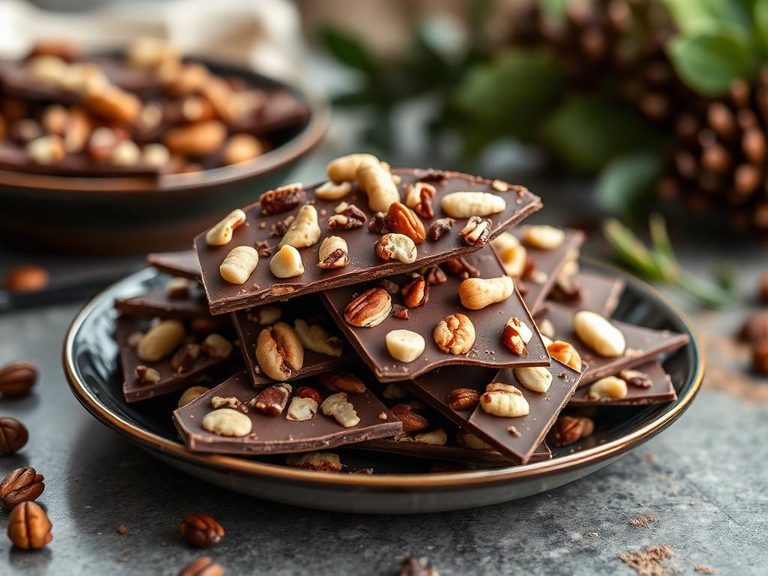
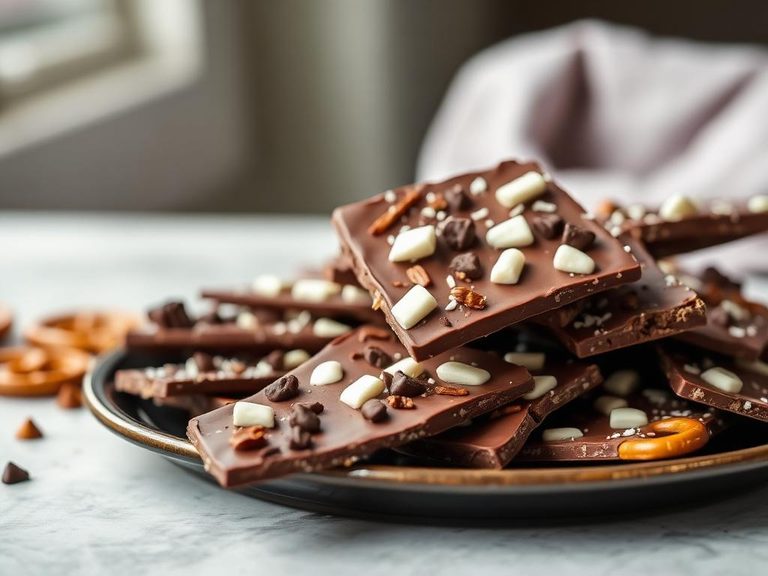
Chocolate Bark is a simple, no-bake confection made by spreading melted chocolate thin on a sheet, topping it with various mix-ins, and breaking it into irregular shards once set. It typically features a base of dark, milk, or white chocolate, generously studded with ingredients like nuts, dried fruits, seeds, or candy pieces. This versatile treat is a popular homemade creation, especially during holidays, and has roots in traditional European and American candy-making.
🍳 View the full Chocolate Bark recipe →
🍽️ Nutrition at a glance
As a confection, Chocolate Bark is generally high in fat and carbohydrates, with its nutritional profile varying greatly based on the chocolate type and toppings. A typical 1-ounce (28g) serving can range from 150 to 180 calories, providing quick energy from sugars and fats, along with some minerals like magnesium and iron if dark chocolate is used.
Nutrition breakdown
| Calories | 210 kcal |
| Protein | 2.5 g |
| Carbs | 22 g |
| Fat | 14 g |
| Fiber | 3 g |
| Sugar | 16 g |
| Sodium | 10 mg |
| Iron | 2.5 mg |
| Magnesium | 50 mg |
| Copper | 0.4 mg |
| Manganese | 0.5 mg |
| Phosphorus | 60 mg |
| Zinc | 0.8 mg |
| Potassium | 200 mg |
| Theobromine | 150 mg |
Per 1 piece (40 g) · estimated, varies by recipe
💡 What's interesting
Culturally, Chocolate Bark is celebrated for its complete customization, making it a popular DIY gift and a canvas for seasonal or themed creations. Nutritionally, when made with dark chocolate and nuts, it can offer beneficial antioxidants and healthy fats, making it a more nutrient-dense treat compared to many other candies.
🍽️ Related dishes


AI estimate may be inaccurate · Terms