

Cookie, chocolate chip, reduced fat
Common food

Photo: Wikipedia
A classic American cookie made with chocolate chips, engineered to cut fat while preserving the iconic soft, chewy texture and sweet, buttery flavor. The reduced-fat version often uses modified ingredients like applesauce or modified starches to mimic the richness of the original, resulting in a slightly less dense crumb. Nutritionally, it's a significant source of carbohydrates and sugar, providing a quick energy boost but with less fat than its traditional counterpart.
Calorie split: 5% protein · 59% carbs · 35% fat
↓ Full nutrition💚 Why it's loved
People love it for delivering the comforting, nostalgic taste of a chocolate chip cookie—sweet, buttery, with melty chocolate pockets—in a form perceived as a lighter indulgence. Its versatility makes it a staple for lunchboxes, coffee breaks, and dessert platters, deeply embedded in American snack culture.
⚠️ Watch-outs & how to enjoy it better
The high sugar content (over 30g per 100g) can lead to rapid blood-sugar spikes and subsequent energy crashes, and the refined carbs offer little satiety. It often contains common allergens like wheat, eggs, and soy, and may include added sodium. To counteract, pair one with a source of protein or healthy fat (like a handful of nuts or a glass of milk) to slow sugar absorption, and practice strict portion control.
Key benefits
- Provides a quick source of energy from carbohydrates.
- Lower in total fat than a standard chocolate chip cookie.
- Offers a small amount of dietary fiber.
- Contains some protein from flour and eggs.
- Satisfies a sweet craving in a portion-controlled format.
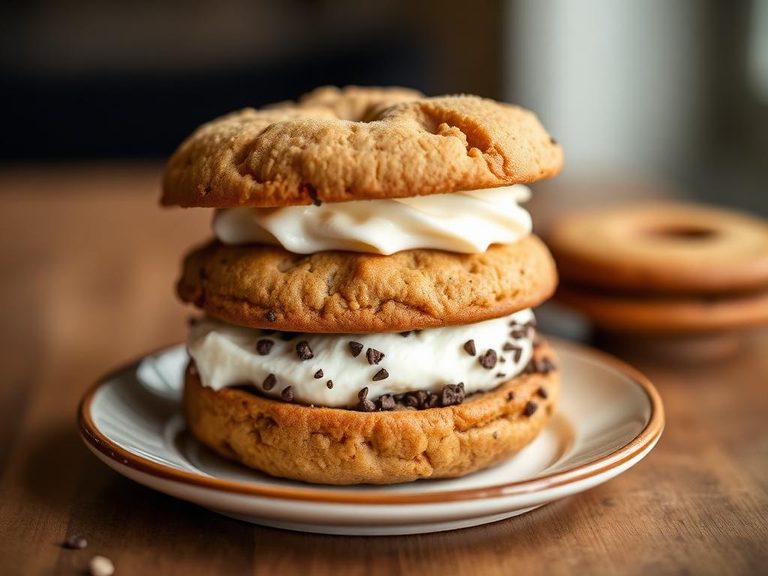
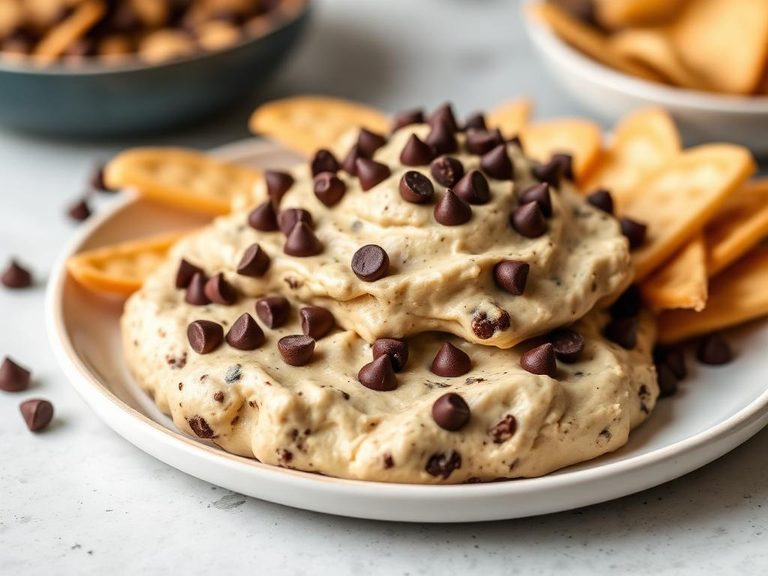
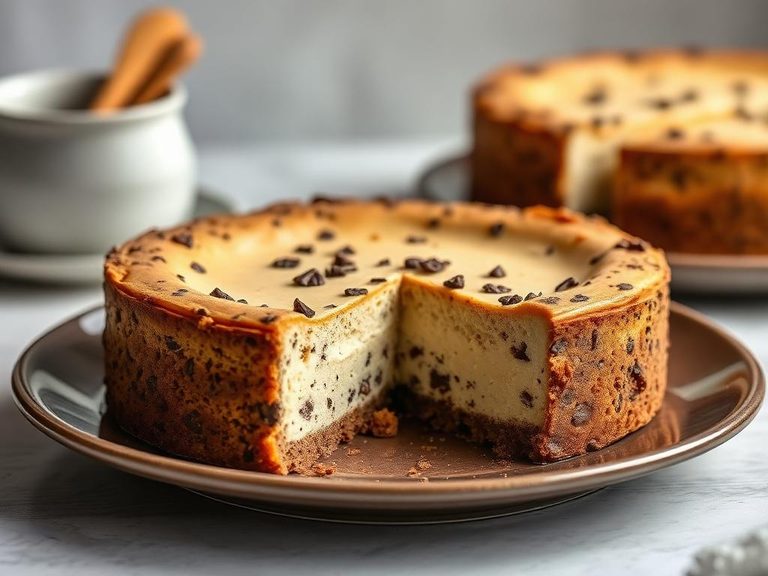
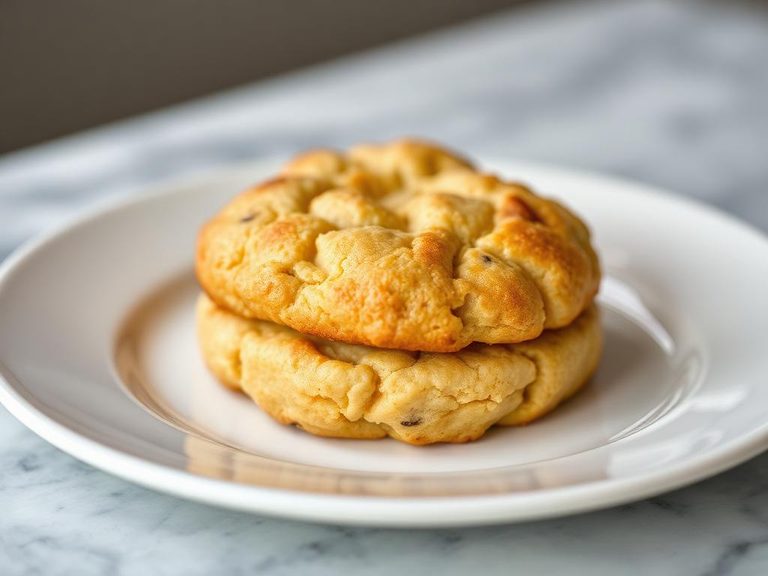
🍽️ Popular dishes
🌍 Where it's eaten
💡 Did you know?
The chocolate chip cookie was accidentally invented in the 1930s by Ruth Graves Wakefield, who expected chocolate chunks to melt and spread evenly throughout the dough, but they held their shape, creating the iconic chip.
Full nutrition (USDA data · scales with serving)
| Water | 7.4 g |
| Energy | 451 kcal |
| Protein | 6.0 g |
| Total lipid (fat) | 17.9 g |
| Carbohydrate, by difference | 67.5 g |
| Fiber, total dietary | 3.0 g |
| Total Sugars | 32.8 g |
| Calcium, Ca | 0.00 mg |
| Iron, Fe | 3.2 mg |
| Magnesium, Mg | 32.0 mg |
| Phosphorus, P | 63.0 mg |
| Potassium, K | 134 mg |
| Sodium, Na | 418 mg |
| Zinc, Zn | 0.59 mg |
| Copper, Cu | 0.20 mg |
| Selenium, Se | 6.0 ug |
| Vitamin C, total ascorbic acid | 0.00 mg |
| Thiamin | 0.26 mg |
| Riboflavin | 0.18 mg |
| Niacin | 2.0 mg |
| Vitamin B-6 | 0.02 mg |
| Folate, total | 62.0 ug |
| Folic acid | 49.0 ug |
| Folate, food | 12.0 ug |
| Folate, DFE | 96.0 ug |
| Choline, total | 4.9 mg |
| Vitamin B-12 | 0.00 ug |
| Vitamin B-12, added | 0.00 ug |
| Vitamin A, RAE | 0.00 ug |
| Retinol | 0.00 ug |
| Carotene, beta | 0.00 ug |
| Carotene, alpha | 0.00 ug |
| Cryptoxanthin, beta | 0.00 ug |
| Lycopene | 0.00 ug |
| Lutein + zeaxanthin | 29.0 ug |
| Vitamin E (alpha-tocopherol) | 1.5 mg |
| Vitamin E, added | 0.00 mg |
| Vitamin D (D2 + D3) | 0.00 ug |
| Vitamin K (phylloquinone) | 4.1 ug |
| Alcohol, ethyl | 0.00 g |
| Caffeine | 13.0 mg |
| Theobromine | 105 mg |
Fat & fatty acid profile (per 100g)
| Fatty acids, total saturated | 6.0 g |
| SFA 4:0 | 0.00 g |
| SFA 6:0 | 0.00 g |
| SFA 8:0 | 0.00 g |
| SFA 10:0 | 0.00 g |
| SFA 12:0 | 0.00 g |
| SFA 14:0 | 0.04 g |
| SFA 16:0 | 3.2 g |
| SFA 18:0 | 2.6 g |
| Fatty acids, total monounsaturated | 5.4 g |
| MUFA 16:1 | 0.04 g |
| MUFA 18:1 | 5.4 g |
| MUFA 20:1 | 0.00 g |
| MUFA 22:1 | 0.00 g |
| Fatty acids, total polyunsaturated | 5.6 g |
| PUFA 18:2 | 5.3 g |
| PUFA 18:3 | 0.33 g |
| PUFA 18:4 | 0.00 g |
| PUFA 20:4 | 0.00 g |
| PUFA 20:5 n-3 (EPA) | 0.00 g |
| PUFA 22:5 n-3 (DPA) | 0.00 g |
| PUFA 22:6 n-3 (DHA) | 0.00 g |
| Cholesterol | 0.00 mg |
Amino acid profile (per 100g)
Estimated from Pie Crust, Cookie-type, Chocolate, Ready Crust — USDA does not publish this profile for Cookie.
| Tryptophan | 0.08 g |
| Threonine | 0.20 g |
| Isoleucine | 0.23 g |
| Leucine | 0.38 g |
| Lysine | 0.24 g |
| Methionine | 0.07 g |
| Cystine | 0.11 g |
| Phenylalanine | 0.28 g |
| Tyrosine | 0.16 g |
| Valine | 0.32 g |
| Arginine | 0.29 g |
| Histidine | 0.11 g |
| Alanine | 0.24 g |
| Aspartic acid | 0.45 g |
| Glutamic acid | 1.3 g |
| Glycine | 0.24 g |
| Proline | 0.42 g |
| Serine | 0.26 g |
FAQ
How does a reduced-fat cookie differ nutritionally from a regular one?
Per 100g, this version has significantly less fat (17.91g vs. often 25g+ in regular) but similar or higher sugar and carbs, as manufacturers often add sugar or refined starches to compensate for flavor and texture lost from fat reduction.
Is it a good pre-workout snack?
Its high simple carbohydrate content can provide quick energy, but it lacks sufficient protein and may cause a sugar crash. A banana with a tablespoon of peanut butter would be a more balanced pre-workout option.
Why does it sometimes taste less rich than a traditional cookie?
Fat is a primary carrier of flavor and creates a tender, moist texture. Reducing it often results in a drier, more cake-like crumb and a less pronounced buttery flavor, even if the sugar content is high.
Nutrient density (calculated · NRF9.3)
Nutrient Rich Foods index: beneficial nutrients (protein, fiber, vitamins, minerals) minus saturated fat, added sugar & sodium, per 100 kcal.
NRF9.3 index — Fulgoni, Keast & Drewnowski, 2009. Computed from USDA nutrients.
Weight-loss friendliness (composite index)
Energy density 4.51 kcal/g · 5% calories from protein · 3.0 g fiber · 32.8 g sugar per 100 g.
Composite of energy density (Rolls et al., 1999), protein & fiber satiety, minus sugar. A calculated heuristic — ranks satiety-per-calorie, not a clinical measure.
Dietary load (calculated from USDA values)
Potential renal acid load. Positive = acid-forming, negative = alkaline-forming.
Sodium-to-potassium ratio: 3.12 (lower is better — aim for ≤ 1)
Sodium:potassium per WHO potassium guidance. Computed from USDA nutrients.