

Cookie, chocolate chip, reduced sugar
Common food

Photo: Wikipedia
A golden-brown, chewy cookie studded with semi-sweet chocolate chips, offering a satisfying contrast between the crisp edges and soft center. This reduced-sugar version delivers the classic chocolate chip experience with about 25% less sugar than traditional recipes, resulting in a slightly less sweet but still deeply satisfying treat. At 450 kcal per 100g, it remains a calorie-dense indulgence, with its primary energy coming from carbohydrates and fat.
Calorie split: 3% protein · 64% carbs · 33% fat
↓ Full nutrition💚 Why it's loved
People love it for the timeless, comforting combination of buttery dough and pockets of melted chocolate, which triggers a powerful sense of nostalgia and reward. Its portability and universal appeal make it a go-to snack for everything from office breaks to late-night study sessions.
⚠️ Watch-outs & how to enjoy it better
The high carbohydrate and added sugar content can cause rapid blood-sugar spikes, making it less suitable for individuals managing diabetes or insulin resistance. It is also a common carrier of allergens like wheat, milk, and soy, and its calorie density can contribute to weight gain if consumed in large portions. To mitigate blood-sugar impact, pair a single cookie with a source of protein or healthy fat (like a handful of nuts or a glass of milk) to slow digestion and increase satiety.
Key benefits
- Provides quick energy from carbohydrates
- Contains small amounts of protein and dietary fiber
- Offers a familiar, comforting sensory experience
- Reduced sugar content compared to standard versions
- Often made with enriched flour, adding some iron and B vitamins
🍽️ Popular dishes
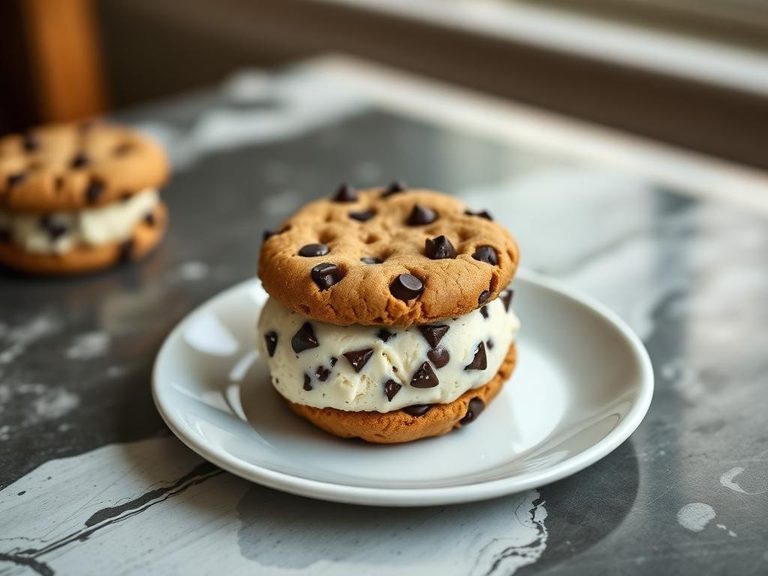
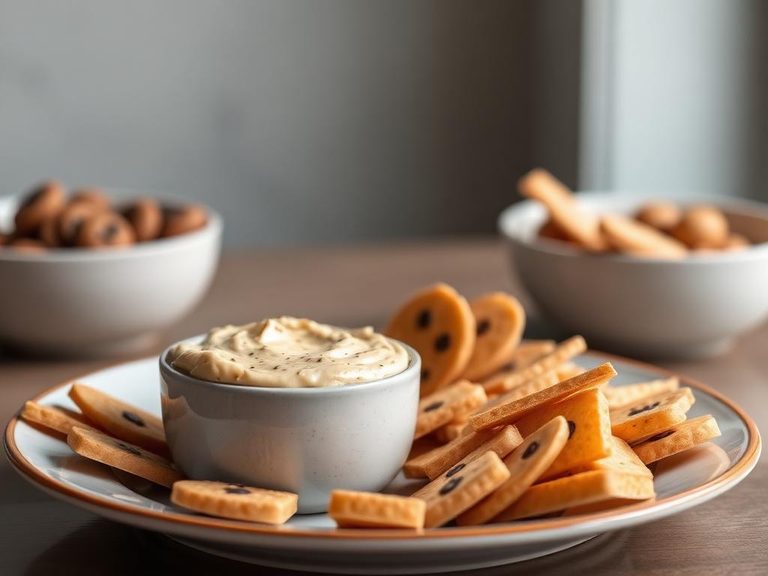
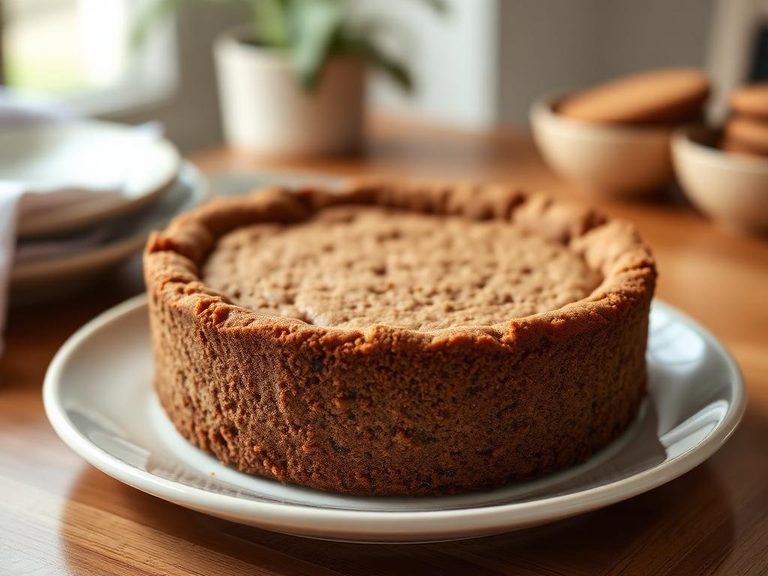
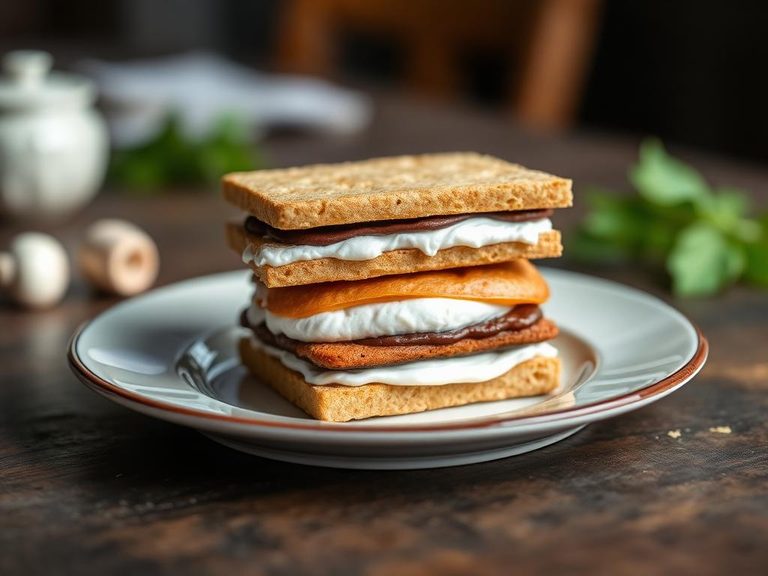
🌍 Where it's eaten
💡 Did you know?
The chocolate chip cookie was invented by accident in 1938 when Ruth Graves Wakefield, owner of the Toll House Inn in Massachusetts, chopped up a Nestlé chocolate bar expecting it to melt into the dough, but the pieces held their shape, creating the iconic chip.
Full nutrition (USDA data · scales with serving)
| Water | 5.1 g |
| Energy | 450 kcal |
| Protein | 3.9 g |
| Total lipid (fat) | 16.8 g |
| Carbohydrate, by difference | 73.4 g |
| Fiber, total dietary | 1.6 g |
| Total Sugars | 39.8 g |
| Calcium, Ca | 46.0 mg |
| Iron, Fe | 3.5 mg |
| Magnesium, Mg | 21.0 mg |
| Phosphorus, P | 109 mg |
| Potassium, K | 199 mg |
| Sodium, Na | 244 mg |
| Zinc, Zn | 0.47 mg |
| Copper, Cu | 0.22 mg |
| Selenium, Se | 2.6 ug |
| Vitamin C, total ascorbic acid | 0.00 mg |
| Thiamin | 0.37 mg |
| Riboflavin | 0.19 mg |
| Niacin | 2.8 mg |
| Vitamin B-6 | 0.02 mg |
| Folate, total | 54.0 ug |
| Folic acid | 48.0 ug |
| Folate, food | 6.0 ug |
| Folate, DFE | 87.0 ug |
| Choline, total | 6.7 mg |
| Vitamin B-12 | 0.00 ug |
| Vitamin B-12, added | 0.00 ug |
| Vitamin A, RAE | 1.0 ug |
| Retinol | 1.0 ug |
| Carotene, beta | 0.00 ug |
| Carotene, alpha | 0.00 ug |
| Cryptoxanthin, beta | 0.00 ug |
| Lycopene | 0.00 ug |
| Lutein + zeaxanthin | 3.0 ug |
| Vitamin E (alpha-tocopherol) | 1.1 mg |
| Vitamin E, added | 0.00 mg |
| Vitamin D (D2 + D3) | 0.00 ug |
| Vitamin K (phylloquinone) | 4.0 ug |
| Alcohol, ethyl | 0.00 g |
| Caffeine | 8.0 mg |
| Theobromine | 61.0 mg |
Fat & fatty acid profile (per 100g)
| Fatty acids, total saturated | 4.2 g |
| SFA 4:0 | 0.00 g |
| SFA 6:0 | 0.00 g |
| SFA 8:0 | 0.00 g |
| SFA 10:0 | 0.00 g |
| SFA 12:0 | 0.01 g |
| SFA 14:0 | 0.03 g |
| SFA 16:0 | 2.3 g |
| SFA 18:0 | 1.8 g |
| Fatty acids, total monounsaturated | 6.7 g |
| MUFA 16:1 | 0.06 g |
| MUFA 18:1 | 6.7 g |
| MUFA 20:1 | 0.00 g |
| MUFA 22:1 | 0.00 g |
| Fatty acids, total polyunsaturated | 5.0 g |
| PUFA 18:2 | 4.7 g |
| PUFA 18:3 | 0.35 g |
| PUFA 18:4 | 0.00 g |
| PUFA 20:4 | 0.00 g |
| PUFA 20:5 n-3 (EPA) | 0.00 g |
| PUFA 22:5 n-3 (DPA) | 0.00 g |
| PUFA 22:6 n-3 (DHA) | 0.00 g |
| Cholesterol | 0.00 mg |
Amino acid profile (per 100g)
Estimated from Pie Crust, Cookie-type, Chocolate, Ready Crust — USDA does not publish this profile for Cookie.
| Tryptophan | 0.08 g |
| Threonine | 0.20 g |
| Isoleucine | 0.23 g |
| Leucine | 0.38 g |
| Lysine | 0.24 g |
| Methionine | 0.07 g |
| Cystine | 0.11 g |
| Phenylalanine | 0.28 g |
| Tyrosine | 0.16 g |
| Valine | 0.32 g |
| Arginine | 0.29 g |
| Histidine | 0.11 g |
| Alanine | 0.24 g |
| Aspartic acid | 0.45 g |
| Glutamic acid | 1.3 g |
| Glycine | 0.24 g |
| Proline | 0.42 g |
| Serine | 0.26 g |
FAQ
How does reduced sugar affect the texture and taste?
Reducing sugar can lead to a less crisp texture and a more cake-like or dry consistency, as sugar contributes to moisture retention and browning. The taste will be noticeably less sweet, allowing the flavors of butter, vanilla, and chocolate to come forward more.
Can I freeze the cookie dough for later use?
Yes, cookie dough freezes exceptionally well. Portion the dough into balls, freeze on a baking sheet, then transfer to a freezer bag. Baked cookies from frozen dough may need an extra 1-2 minutes in the oven.
What makes a cookie 'chewy' versus 'crispy'?
Chewiness is promoted by using more brown sugar (which contains molasses), using melted butter, and slightly underbaking. Crispiness comes from using more white sugar, creaming softened butter with sugar, and baking until the edges are fully golden.
Nutrient density (calculated · NRF9.3)
Nutrient Rich Foods index: beneficial nutrients (protein, fiber, vitamins, minerals) minus saturated fat, added sugar & sodium, per 100 kcal.
NRF9.3 index — Fulgoni, Keast & Drewnowski, 2009. Computed from USDA nutrients.
Weight-loss friendliness (composite index)
Energy density 4.50 kcal/g · 3% calories from protein · 1.6 g fiber · 39.8 g sugar per 100 g.
Composite of energy density (Rolls et al., 1999), protein & fiber satiety, minus sugar. A calculated heuristic — ranks satiety-per-calorie, not a clinical measure.
Dietary load (calculated from USDA values)
Potential renal acid load. Positive = acid-forming, negative = alkaline-forming.
Sodium-to-potassium ratio: 1.23 (lower is better — aim for ≤ 1)
Sodium:potassium per WHO potassium guidance. Computed from USDA nutrients.