

Cookie, chocolate chip, made from home recipe or purchased at a bakery
Common food
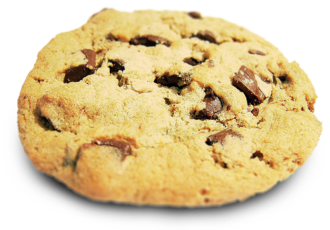
Photo: Wikipedia
A golden, buttery cookie studded with semi-sweet chocolate chips, offering a perfect contrast between a crisp edge and a chewy, tender center. Each 100g serving packs a significant 505 kcal, primarily from carbohydrates and fat, with a notable 41g of sugar.
Calorie split: 4% protein · 45% carbs · 50% fat
↓ Full nutrition💚 Why it's loved
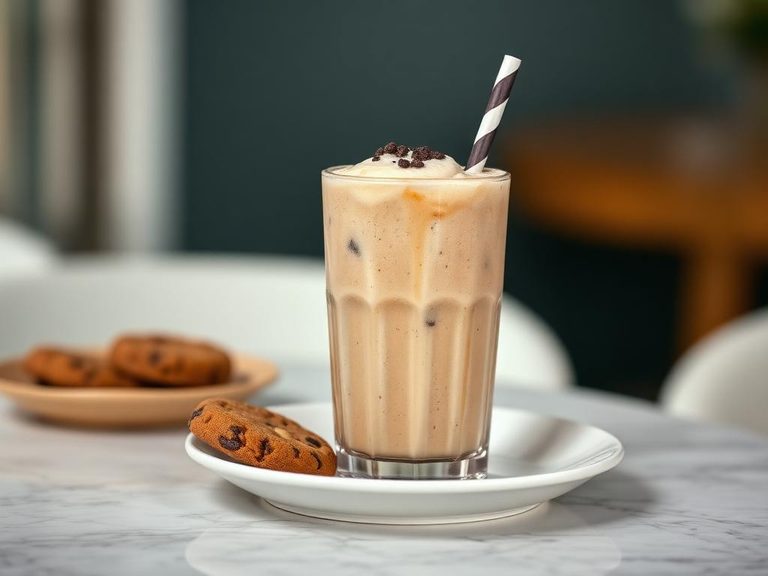
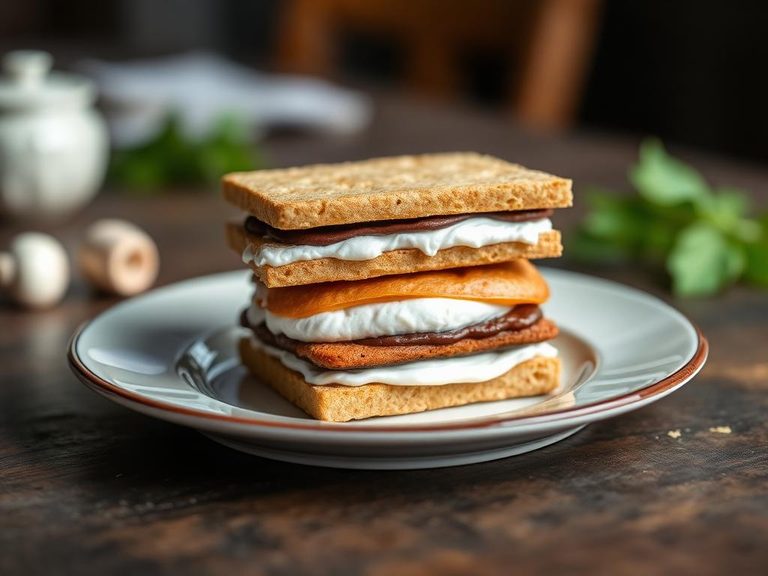
People adore the iconic combination of sweet, buttery dough and rich, melty chocolate, which delivers a powerful hit of comfort and nostalgia. Its versatility makes it a universal treat, perfect with milk, coffee, or as a base for ice cream sandwiches.
⚠️ Watch-outs & how to enjoy it better
The high sugar and refined carbohydrate content can lead to rapid blood-sugar spikes and subsequent energy crashes. To mitigate this, pair a single cookie with a source of protein (like a glass of milk or a handful of nuts) or fiber to slow absorption, and practice strict portion control. Those with gluten or dairy allergies must avoid traditional recipes.
Key benefits
- Quick source of energy from carbohydrates and fats
- Contains small amounts of protein and dietary fiber
- Often made with butter, a source of fat-soluble vitamins
- Can provide a psychological boost or comfort
- Easy to portion-control when baked in standard sizes
🍽️ Popular dishes
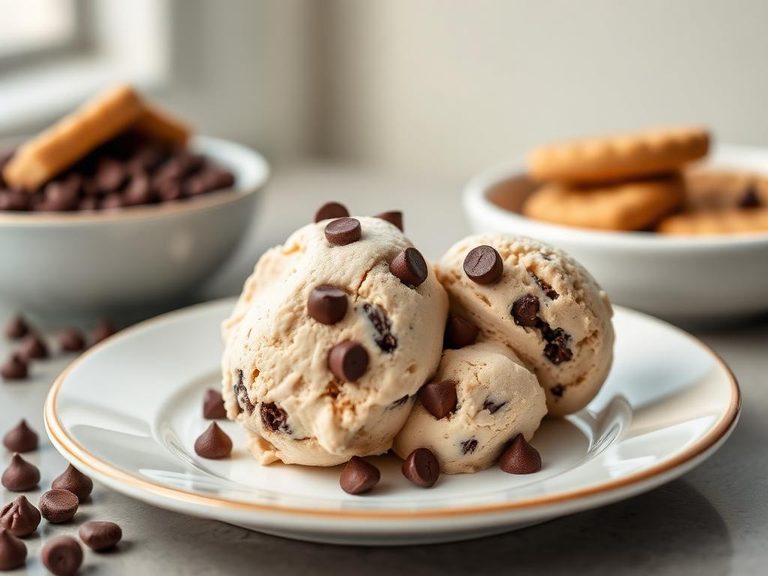
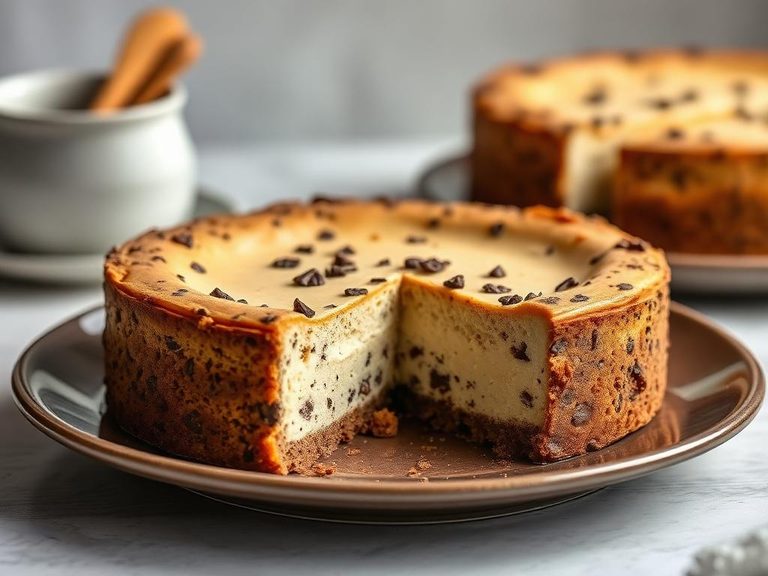
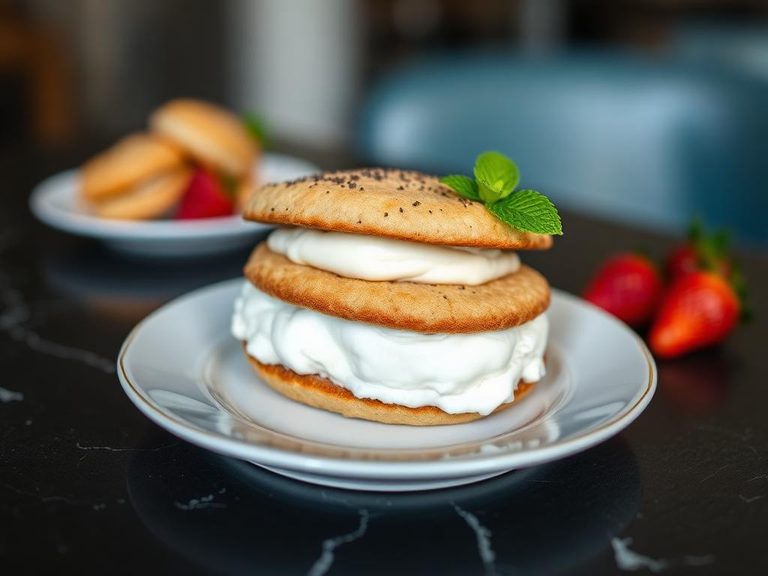
🌍 Where it's eaten
💡 Did you know?
The chocolate chip cookie was invented by accident in 1938 when Ruth Graves Wakefield, owner of the Toll House Inn, chopped up a Nestlé chocolate bar expecting it to melt into the dough, but it held its shape, creating the iconic chip.
Full nutrition (USDA data · scales with serving)
| Water | 4.6 g |
| Energy | 505 kcal |
| Protein | 5.8 g |
| Total lipid (fat) | 29.0 g |
| Carbohydrate, by difference | 59.2 g |
| Fiber, total dietary | 2.5 g |
| Total Sugars | 41.2 g |
| Calcium, Ca | 41.0 mg |
| Iron, Fe | 2.3 mg |
| Magnesium, Mg | 51.0 mg |
| Phosphorus, P | 112 mg |
| Potassium, K | 194 mg |
| Sodium, Na | 261 mg |
| Zinc, Zn | 0.95 mg |
| Copper, Cu | 0.35 mg |
| Selenium, Se | 7.0 ug |
| Vitamin C, total ascorbic acid | 0.10 mg |
| Thiamin | 0.18 mg |
| Riboflavin | 0.14 mg |
| Niacin | 1.4 mg |
| Vitamin B-6 | 0.11 mg |
| Folate, total | 39.0 ug |
| Folic acid | 18.0 ug |
| Folate, food | 20.0 ug |
| Folate, DFE | 51.0 ug |
| Choline, total | 33.2 mg |
| Vitamin B-12 | 0.06 ug |
| Vitamin B-12, added | 0.00 ug |
| Vitamin A, RAE | 128 ug |
| Retinol | 126 ug |
| Carotene, beta | 27.0 ug |
| Carotene, alpha | 0.00 ug |
| Cryptoxanthin, beta | 2.0 ug |
| Lycopene | 0.00 ug |
| Lutein + zeaxanthin | 43.0 ug |
| Vitamin E (alpha-tocopherol) | 0.23 mg |
| Vitamin E, added | 0.00 mg |
| Vitamin D (D2 + D3) | 0.20 ug |
| Vitamin K (phylloquinone) | 2.6 ug |
| Alcohol, ethyl | 0.00 g |
| Caffeine | 14.0 mg |
| Theobromine | 111 mg |
Fat & fatty acid profile (per 100g)
| Fatty acids, total saturated | 12.0 g |
| SFA 4:0 | 0.31 g |
| SFA 6:0 | 0.22 g |
| SFA 8:0 | 0.13 g |
| SFA 10:0 | 0.29 g |
| SFA 12:0 | 0.34 g |
| SFA 14:0 | 1.1 g |
| SFA 16:0 | 5.6 g |
| SFA 18:0 | 3.7 g |
| Fatty acids, total monounsaturated | 6.3 g |
| MUFA 16:1 | 0.18 g |
| MUFA 18:1 | 5.9 g |
| MUFA 20:1 | 0.03 g |
| MUFA 22:1 | 0.00 g |
| Fatty acids, total polyunsaturated | 6.9 g |
| PUFA 18:2 | 5.4 g |
| PUFA 18:3 | 1.2 g |
| PUFA 18:4 | 0.00 g |
| PUFA 20:4 | 0.02 g |
| PUFA 20:5 n-3 (EPA) | 0.00 g |
| PUFA 22:5 n-3 (DPA) | 0.01 g |
| PUFA 22:6 n-3 (DHA) | 0.00 g |
| Cholesterol | 64.0 mg |
Amino acid profile (per 100g)
Estimated from Pie Crust, Cookie-type, Chocolate, Ready Crust — USDA does not publish this profile for Cookie.
| Tryptophan | 0.08 g |
| Threonine | 0.20 g |
| Isoleucine | 0.23 g |
| Leucine | 0.38 g |
| Lysine | 0.24 g |
| Methionine | 0.07 g |
| Cystine | 0.11 g |
| Phenylalanine | 0.28 g |
| Tyrosine | 0.16 g |
| Valine | 0.32 g |
| Arginine | 0.29 g |
| Histidine | 0.11 g |
| Alanine | 0.24 g |
| Aspartic acid | 0.45 g |
| Glutamic acid | 1.3 g |
| Glycine | 0.24 g |
| Proline | 0.42 g |
| Serine | 0.26 g |
FAQ
Why do some chocolate chip cookies stay soft while others are crispy?
Texture depends on the ratio of fat, sugar, and flour, and the baking time. More brown sugar and butter create chewiness, while more white sugar and longer baking create crispness. Using melted butter versus creamed butter also makes a significant difference.
What's the best way to store homemade chocolate chip cookies?
Store them in an airtight container at room temperature for up to a week. To maintain chewiness, add a slice of white bread to the container; the cookies will absorb moisture from the bread. For longer storage, freeze baked cookies or unbaked dough balls for up to 3 months.
Can I reduce the sugar in a chocolate chip cookie recipe?
Yes, you can typically reduce the sugar by 25-30% without drastically affecting the structure, though the cookies will be less sweet and spread less. Using brown sugar helps retain some moisture. Increasing vanilla or adding a pinch of salt can enhance the perception of sweetness.
Nutrient density (calculated · NRF9.3)
Nutrient Rich Foods index: beneficial nutrients (protein, fiber, vitamins, minerals) minus saturated fat, added sugar & sodium, per 100 kcal.
NRF9.3 index — Fulgoni, Keast & Drewnowski, 2009. Computed from USDA nutrients.
Weight-loss friendliness (composite index)
Energy density 5.05 kcal/g · 5% calories from protein · 2.5 g fiber · 41.2 g sugar per 100 g.
Composite of energy density (Rolls et al., 1999), protein & fiber satiety, minus sugar. A calculated heuristic — ranks satiety-per-calorie, not a clinical measure.
Dietary load (calculated from USDA values)
Potential renal acid load. Positive = acid-forming, negative = alkaline-forming.
Sodium-to-potassium ratio: 1.35 (lower is better — aim for ≤ 1)
Sodium:potassium per WHO potassium guidance. Computed from USDA nutrients.