

Cookie, butterscotch, brownie
Common food
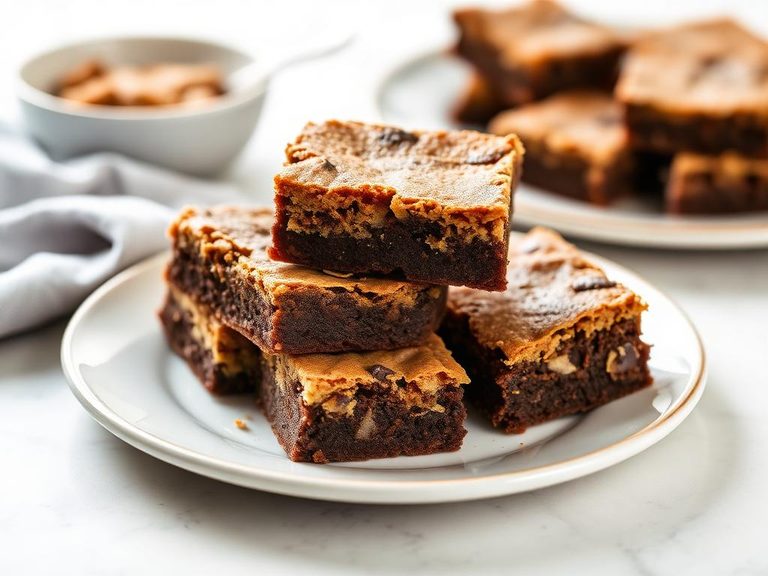
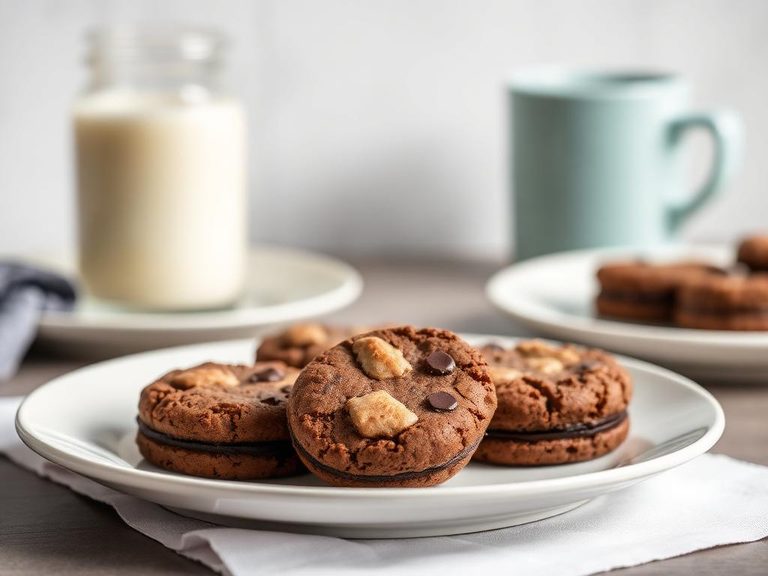
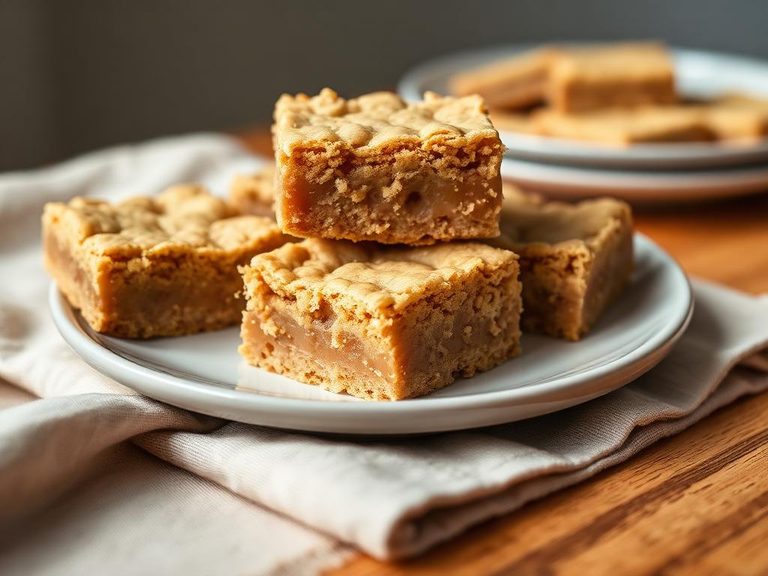
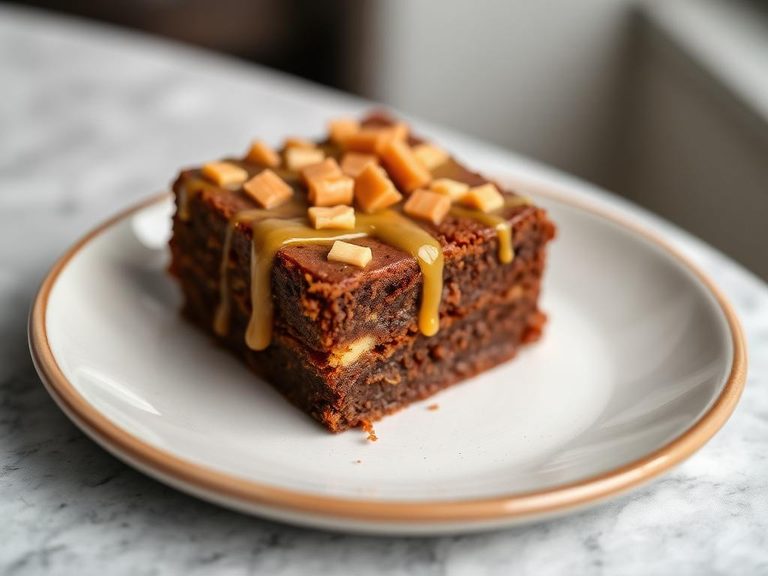
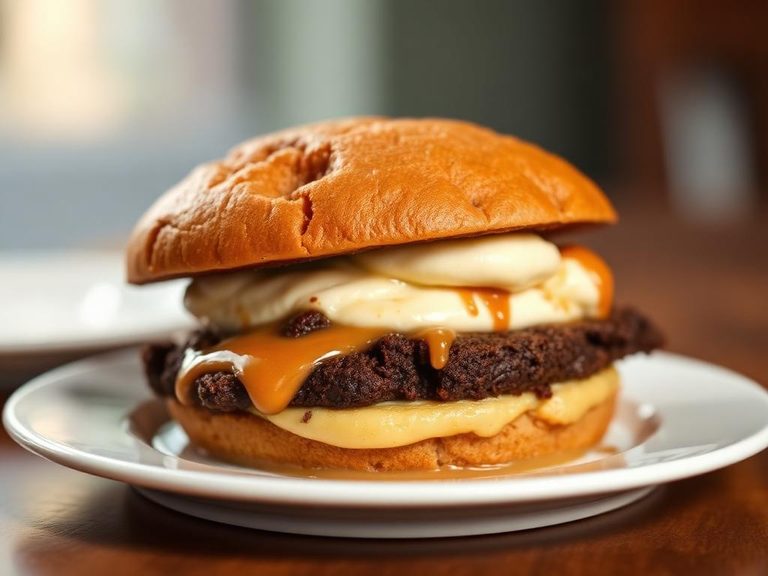
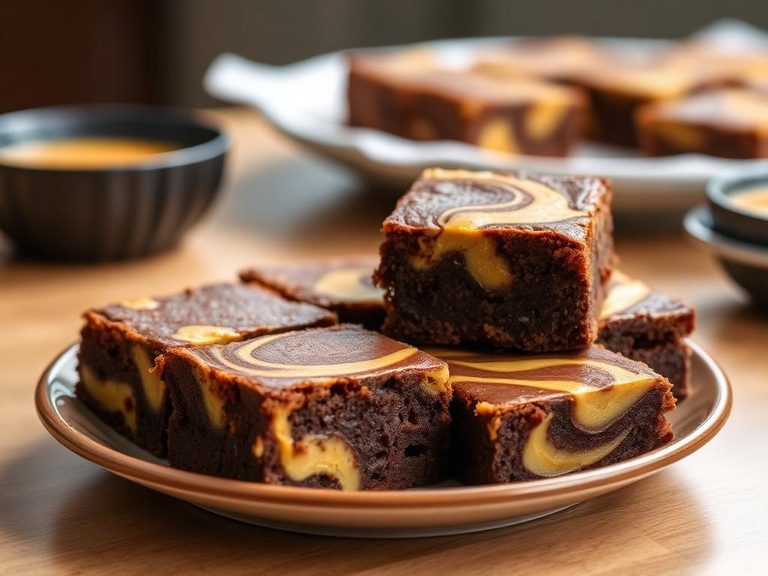
This is a decadent, hybrid dessert bar that marries the chewy, fudgy texture of a brownie with the buttery, caramel-like sweetness of butterscotch and the crisp edges of a cookie. Each bite delivers a rich, toffee-forward flavor with a satisfyingly dense crumb. Nutritionally, it's a high-energy treat, with a single 100g serving providing over 400 calories, primarily from carbohydrates and fats.
Calorie split: 5% protein · 61% carbs · 35% fat
↓ Full nutrition💚 Why it's loved
People adore this treat for its ultimate comfort-food trifecta: the deep chocolate notes of a brownie, the sweet, buttery warmth of butterscotch, and the satisfying texture of a cookie. It's a versatile crowd-pleaser, often served at bake sales, potlucks, and as a nostalgic homemade dessert.
⚠️ Watch-outs & how to enjoy it better
The very high sugar and refined carbohydrate content can lead to rapid blood-sugar spikes and subsequent energy crashes. It's also calorie-dense, making portion control key for those monitoring intake. To mitigate this, pair a small square with a source of protein (like a handful of nuts) or healthy fat (like Greek yogurt) to slow digestion and promote satiety.
Key benefits
- Quick source of energy due to high carbohydrate content
- Contains some dietary fiber from flour and potential oats
- Provides a small amount of plant-based protein
- Offers a satisfying treat that can support psychological well-being
🍽️ Popular dishes
🌍 Where it's eaten
💡 Did you know?
The classic 'butterscotch' flavor in these bars traditionally comes from brown sugar and butter, not actual scotch whisky, though some modern recipes do include a splash for depth.
Full nutrition (USDA data · scales with serving)
| Water | 13.6 g |
| Energy | 405 kcal |
| Protein | 4.8 g |
| Total lipid (fat) | 16.3 g |
| Carbohydrate, by difference | 63.9 g |
| Fiber, total dietary | 2.1 g |
| Total Sugars | 36.6 g |
| Calcium, Ca | 29.0 mg |
| Iron, Fe | 2.3 mg |
| Magnesium, Mg | 31.0 mg |
| Phosphorus, P | 101 mg |
| Potassium, K | 149 mg |
| Sodium, Na | 286 mg |
| Zinc, Zn | 0.72 mg |
| Copper, Cu | 0.22 mg |
| Selenium, Se | 6.3 ug |
| Vitamin C, total ascorbic acid | 0.00 mg |
| Thiamin | 0.26 mg |
| Riboflavin | 0.21 mg |
| Niacin | 1.7 mg |
| Vitamin B-6 | 0.04 mg |
| Folate, total | 47.0 ug |
| Folic acid | 35.0 ug |
| Folate, food | 12.0 ug |
| Folate, DFE | 72.0 ug |
| Choline, total | 10.0 mg |
| Vitamin B-12 | 0.07 ug |
| Vitamin B-12, added | 0.00 ug |
| Vitamin A, RAE | 20.0 ug |
| Retinol | 20.0 ug |
| Carotene, beta | 0.00 ug |
| Carotene, alpha | 0.00 ug |
| Cryptoxanthin, beta | 0.00 ug |
| Lycopene | 0.00 ug |
| Lutein + zeaxanthin | 6.0 ug |
| Vitamin E (alpha-tocopherol) | 0.15 mg |
| Vitamin E, added | 0.00 mg |
| Vitamin D (D2 + D3) | 0.00 ug |
| Vitamin K (phylloquinone) | 6.5 ug |
| Alcohol, ethyl | 0.00 g |
| Caffeine | 2.0 mg |
| Theobromine | 78.0 mg |
Fat & fatty acid profile (per 100g)
| Fatty acids, total saturated | 4.2 g |
| SFA 4:0 | 0.00 g |
| SFA 6:0 | 0.00 g |
| SFA 8:0 | 0.00 g |
| SFA 10:0 | 0.00 g |
| SFA 12:0 | 0.00 g |
| SFA 14:0 | 0.08 g |
| SFA 16:0 | 2.2 g |
| SFA 18:0 | 2.0 g |
| Fatty acids, total monounsaturated | 9.0 g |
| MUFA 16:1 | 0.01 g |
| MUFA 18:1 | 8.9 g |
| MUFA 20:1 | 0.01 g |
| MUFA 22:1 | 0.00 g |
| Fatty acids, total polyunsaturated | 2.3 g |
| PUFA 18:2 | 2.1 g |
| PUFA 18:3 | 0.16 g |
| PUFA 18:4 | 0.00 g |
| PUFA 20:4 | 0.00 g |
| PUFA 20:5 n-3 (EPA) | 0.00 g |
| PUFA 22:5 n-3 (DPA) | 0.00 g |
| PUFA 22:6 n-3 (DHA) | 0.00 g |
| Cholesterol | 17.0 mg |
Amino acid profile (per 100g)
Estimated from Pie Crust, Cookie-type, Chocolate, Ready Crust — USDA does not publish this profile for Cookie.
| Tryptophan | 0.08 g |
| Threonine | 0.20 g |
| Isoleucine | 0.23 g |
| Leucine | 0.38 g |
| Lysine | 0.24 g |
| Methionine | 0.07 g |
| Cystine | 0.11 g |
| Phenylalanine | 0.28 g |
| Tyrosine | 0.16 g |
| Valine | 0.32 g |
| Arginine | 0.29 g |
| Histidine | 0.11 g |
| Alanine | 0.24 g |
| Aspartic acid | 0.45 g |
| Glutamic acid | 1.3 g |
| Glycine | 0.24 g |
| Proline | 0.42 g |
| Serine | 0.26 g |
FAQ
What's the difference between a butterscotch brownie and a blondie?
A butterscotch brownie is essentially a type of blondie. Blondies are the vanilla-and-brown-sugar-based counterpart to chocolate brownies. The 'butterscotch' flavor comes from the brown sugar and butter base, which caramelizes to create that signature taste.
Can I make this gluten-free?
Yes, you can often substitute a 1:1 gluten-free flour blend for the all-purpose flour in the recipe. The dense, fudgy texture of brownies and blondies is generally forgiving with such substitutions.
Why are they sometimes called 'blondies'?
They're called 'blondies' because they are blonde in color, lacking the dark cocoa powder that defines a traditional brownie. The name highlights their lighter hue and different flavor profile.
Nutrient density (calculated · NRF9.3)
Nutrient Rich Foods index: beneficial nutrients (protein, fiber, vitamins, minerals) minus saturated fat, added sugar & sodium, per 100 kcal.
NRF9.3 index — Fulgoni, Keast & Drewnowski, 2009. Computed from USDA nutrients.
Weight-loss friendliness (composite index)
Energy density 4.05 kcal/g · 5% calories from protein · 2.1 g fiber · 36.6 g sugar per 100 g.
Composite of energy density (Rolls et al., 1999), protein & fiber satiety, minus sugar. A calculated heuristic — ranks satiety-per-calorie, not a clinical measure.
Dietary load (calculated from USDA values)
Potential renal acid load. Positive = acid-forming, negative = alkaline-forming.
Sodium-to-potassium ratio: 1.92 (lower is better — aim for ≤ 1)
Sodium:potassium per WHO potassium guidance. Computed from USDA nutrients.