

Coffee, Turkish
Common food

Photo: Wikipedia
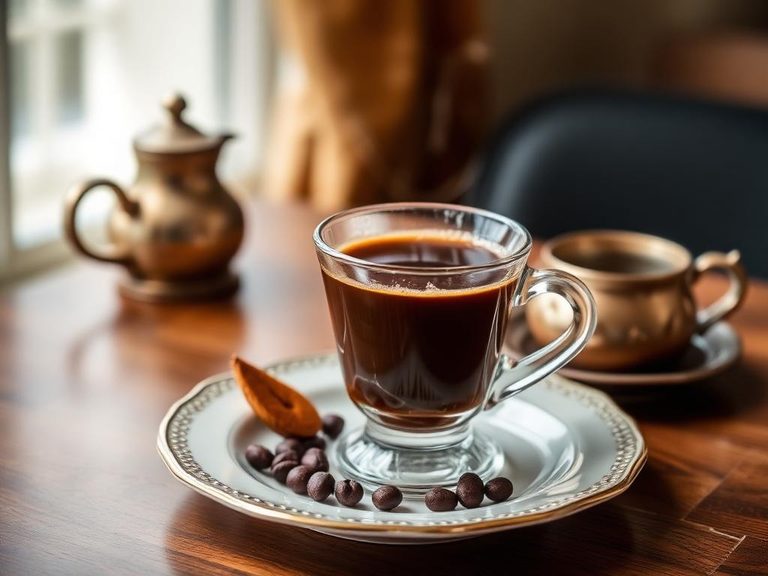
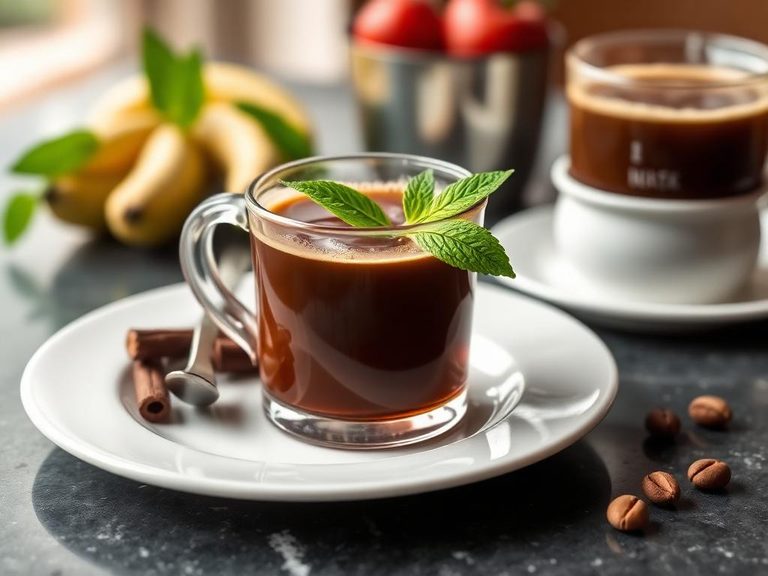
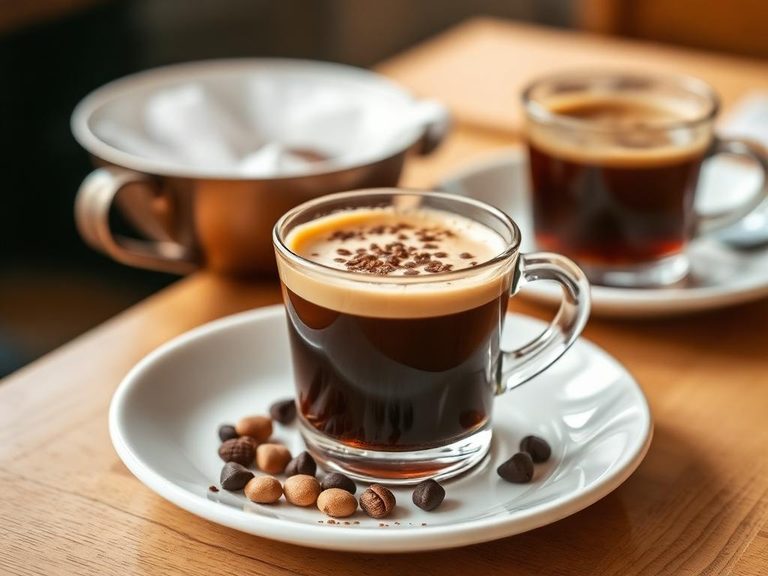
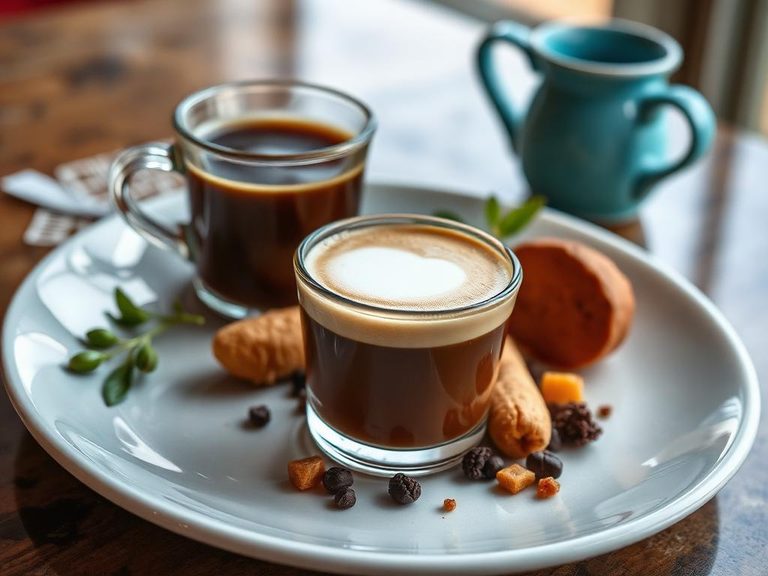
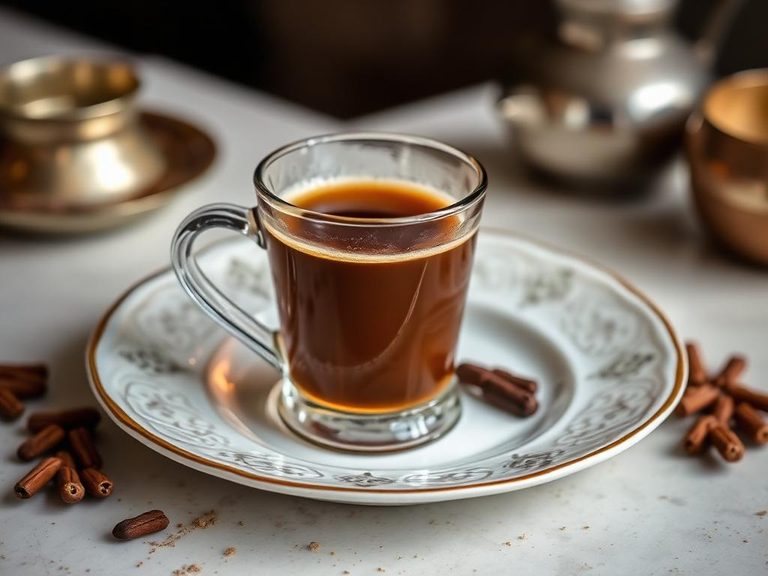
Turkish coffee is a method of preparing unfiltered coffee, where very finely ground beans are simmered with water (and often sugar) in a special pot called a cezve or ibrik, then served unfiltered in a small cup. It has a rich, thick, almost syrupy body with a layer of foam (kaimaki) on top and a strong, aromatic flavor that can range from sweet to intensely bitter. Nutritionally, it's very low in calories but provides a notable dose of quick-energy carbohydrates from the added sugar.
Calorie split: 2% protein · 97% carbs · 1% fat
↓ Full nutrition💚 Why it's loved
People love it for its deep, complex flavor profile and the theatrical, aromatic preparation that engages all the senses. It's also cherished as a centerpiece of hospitality and conversation in many cultures.
⚠️ Watch-outs & how to enjoy it better
The high sugar content (especially in traditional sweet preparations) can lead to rapid blood sugar spikes, making it less ideal for those managing diabetes. The unfiltered nature also means higher levels of cafestol, a compound that can raise LDL cholesterol, and the caffeine content can disrupt sleep or cause jitters in sensitive individuals. To counteract, opt for unsweetened ('sade') versions, pair with a source of fat or protein like a nut, or limit consumption to earlier in the day.
Key benefits
- Provides a quick energy boost from natural caffeine and added sugars
- Contains antioxidants from coffee beans, like chlorogenic acids
- Traditional preparation preserves aromatic oils and compounds
- Cultural ritual that promotes social connection and mindfulness
🍽️ Popular dishes
🌍 Where it's eaten
💡 Did you know?
The grounds left at the bottom of the cup are traditionally used for tasseography, or fortune-telling, by inverting the cup and reading the patterns the coffee leaves.
Full nutrition (USDA data · scales with serving)
| Water | 92.9 g |
| Energy | 27.0 kcal |
| Protein | 0.11 g |
| Total lipid (fat) | 0.04 g |
| Carbohydrate, by difference | 6.5 g |
| Fiber, total dietary | 0.00 g |
| Total Sugars | 6.5 g |
| Calcium, Ca | 2.0 mg |
| Iron, Fe | 0.01 mg |
| Magnesium, Mg | 3.0 mg |
| Phosphorus, P | 3.0 mg |
| Potassium, K | 46.0 mg |
| Sodium, Na | 2.0 mg |
| Zinc, Zn | 0.02 mg |
| Copper, Cu | 0.00 mg |
| Selenium, Se | 0.00 ug |
| Vitamin C, total ascorbic acid | 0.00 mg |
| Thiamin | 0.01 mg |
| Riboflavin | 0.07 mg |
| Niacin | 0.18 mg |
| Vitamin B-6 | 0.00 mg |
| Folate, total | 2.0 ug |
| Folic acid | 0.00 ug |
| Folate, food | 2.0 ug |
| Folate, DFE | 2.0 ug |
| Choline, total | 2.4 mg |
| Vitamin B-12 | 0.00 ug |
| Vitamin B-12, added | 0.00 ug |
| Vitamin A, RAE | 0.00 ug |
| Retinol | 0.00 ug |
| Carotene, beta | 0.00 ug |
| Carotene, alpha | 0.00 ug |
| Cryptoxanthin, beta | 0.00 ug |
| Lycopene | 0.00 ug |
| Lutein + zeaxanthin | 0.00 ug |
| Vitamin E (alpha-tocopherol) | 0.01 mg |
| Vitamin E, added | 0.00 mg |
| Vitamin D (D2 + D3) | 0.00 ug |
| Vitamin K (phylloquinone) | 0.10 ug |
| Alcohol, ethyl | 0.00 g |
| Caffeine | 37.0 mg |
| Theobromine | 0.00 mg |
Fat & fatty acid profile (per 100g)
| Fatty acids, total saturated | 0.00 g |
| SFA 4:0 | 0.00 g |
| SFA 6:0 | 0.00 g |
| SFA 8:0 | 0.00 g |
| SFA 10:0 | 0.00 g |
| SFA 12:0 | 0.00 g |
| SFA 14:0 | 0.00 g |
| SFA 16:0 | 0.00 g |
| SFA 18:0 | 0.00 g |
| Fatty acids, total monounsaturated | 0.01 g |
| MUFA 16:1 | 0.00 g |
| MUFA 18:1 | 0.00 g |
| MUFA 20:1 | 0.00 g |
| MUFA 22:1 | 0.00 g |
| Fatty acids, total polyunsaturated | 0.00 g |
| PUFA 18:2 | 0.00 g |
| PUFA 18:3 | 0.00 g |
| PUFA 18:4 | 0.00 g |
| PUFA 20:4 | 0.00 g |
| PUFA 20:5 n-3 (EPA) | 0.00 g |
| PUFA 22:5 n-3 (DPA) | 0.00 g |
| PUFA 22:6 n-3 (DHA) | 0.00 g |
| Cholesterol | 0.00 mg |
Amino acid profile (per 100g)
Estimated from Cream, fluid, light (coffee cream or table cream) — USDA does not publish this profile for Coffee.
| Tryptophan | 0.07 g |
| Threonine | 0.13 g |
| Isoleucine | 0.15 g |
| Leucine | 0.24 g |
| Lysine | 0.13 g |
| Methionine | 0.07 g |
| Cystine | 0.01 g |
| Phenylalanine | 0.14 g |
| Tyrosine | 0.14 g |
| Valine | 0.18 g |
| Arginine | 0.07 g |
| Histidine | 0.07 g |
| Alanine | 0.09 g |
| Aspartic acid | 0.22 g |
| Glutamic acid | 0.59 g |
| Glycine | 0.07 g |
| Proline | 0.31 g |
| Serine | 0.10 g |
FAQ
Is Turkish coffee the same as espresso?
No. Espresso is brewed by forcing hot water through finely-ground coffee under high pressure, resulting in a concentrated but filtered shot. Turkish coffee involves simmering very fine grounds in water, and the grounds are not filtered out before serving.
Why is there foam on top?
The foam, called 'kaimaki' or 'crema,' is formed by the fine coffee grounds and the simmering process. It's a sign of a well-made cup and is considered essential to the traditional experience.
How much caffeine is in a typical serving?
A standard 2-ounce (60ml) cup of Turkish coffee contains roughly 50-65 mg of caffeine, which is comparable to a single shot of espresso but less than a standard 8oz cup of drip coffee.
Nutrient density (calculated · NRF9.3)
Nutrient Rich Foods index: beneficial nutrients (protein, fiber, vitamins, minerals) minus saturated fat, added sugar & sodium, per 100 kcal.
NRF9.3 index — Fulgoni, Keast & Drewnowski, 2009. Computed from USDA nutrients.
Weight-loss friendliness (composite index)
Energy density 0.27 kcal/g · 2% calories from protein · 0.0 g fiber · 6.5 g sugar per 100 g.
Composite of energy density (Rolls et al., 1999), protein & fiber satiety, minus sugar. A calculated heuristic — ranks satiety-per-calorie, not a clinical measure.
Dietary load (calculated from USDA values)
Potential renal acid load. Positive = acid-forming, negative = alkaline-forming.
Sodium-to-potassium ratio: 0.04 (lower is better — aim for ≤ 1)
Sodium:potassium per WHO potassium guidance. Computed from USDA nutrients.