

Coffee, instant, reconstituted
Common food

Photo: Wikipedia
Instant coffee is a dehydrated, soluble coffee product made by brewing coffee beans and then freeze-drying or spray-drying the extract into a fine powder or granules. When reconstituted with hot water, it yields a light-bodied, slightly bitter brew with a distinct, often milder aroma compared to freshly brewed coffee. Nutritionally, it is extremely low in calories, providing only about 3 kcal per 100g of the prepared drink, with negligible protein, carbohydrates, and fat.
Calorie split: 14% protein · 86% carbs · 0% fat
↓ Full nutrition💚 Why it's loved
People love instant coffee for its unparalleled convenience and speed, allowing for a quick caffeine fix anywhere. Its mild, consistent flavor and versatility make it a staple in busy households, offices, and travel kits.
⚠️ Watch-outs & how to enjoy it better
Some find its flavor less complex and more bitter than freshly brewed coffee, and it may contain trace amounts of acrylamide from the drying process. To mitigate bitterness, add a small amount of milk or cream, and to manage caffeine intake, limit consumption to 1-2 cups per day and avoid adding excessive sugar.
Key benefits
- Extremely low in calories (3 kcal per 100g)
- Contains antioxidants like chlorogenic acid
- Provides a quick source of caffeine for alertness
- Requires no brewing equipment, just hot water
- Long shelf life and easy to store
🍽️ Popular dishes


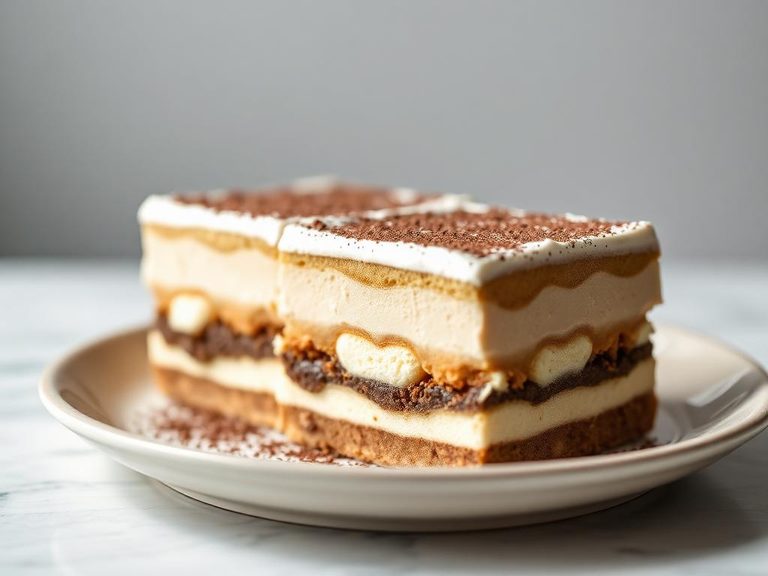


🌍 Where it's eaten
💡 Did you know?
Instant coffee was first patented in 1901 by Japanese-American chemist Satori Kato, but it was later popularized by the American company Nestlé under the brand Nescafé in 1938.
Full nutrition (USDA data · scales with serving)
| Water | 99.1 g |
| Energy | 3.0 kcal |
| Protein | 0.10 g |
| Total lipid (fat) | 0.00 g |
| Carbohydrate, by difference | 0.63 g |
| Fiber, total dietary | 0.00 g |
| Total Sugars | 0.00 g |
| Calcium, Ca | 4.0 mg |
| Iron, Fe | 0.04 mg |
| Magnesium, Mg | 4.0 mg |
| Phosphorus, P | 3.0 mg |
| Potassium, K | 30.0 mg |
| Sodium, Na | 4.0 mg |
| Zinc, Zn | 0.01 mg |
| Copper, Cu | 0.01 mg |
| Selenium, Se | 0.10 ug |
| Vitamin C, total ascorbic acid | 0.00 mg |
| Thiamin | 0.00 mg |
| Riboflavin | 0.00 mg |
| Niacin | 0.24 mg |
| Vitamin B-6 | 0.00 mg |
| Folate, total | 0.00 ug |
| Folic acid | 0.00 ug |
| Folate, food | 0.00 ug |
| Folate, DFE | 0.00 ug |
| Choline, total | 0.90 mg |
| Vitamin B-12 | 0.00 ug |
| Vitamin B-12, added | 0.00 ug |
| Vitamin A, RAE | 0.00 ug |
| Retinol | 0.00 ug |
| Carotene, beta | 0.00 ug |
| Carotene, alpha | 0.00 ug |
| Cryptoxanthin, beta | 0.00 ug |
| Lycopene | 0.00 ug |
| Lutein + zeaxanthin | 0.00 ug |
| Vitamin E (alpha-tocopherol) | 0.00 mg |
| Vitamin E, added | 0.00 mg |
| Vitamin D (D2 + D3) | 0.00 ug |
| Vitamin K (phylloquinone) | 0.00 ug |
| Alcohol, ethyl | 0.00 g |
| Caffeine | 26.0 mg |
| Theobromine | 0.00 mg |
Fat & fatty acid profile (per 100g)
| Fatty acids, total saturated | 0.00 g |
| SFA 4:0 | 0.00 g |
| SFA 6:0 | 0.00 g |
| SFA 8:0 | 0.00 g |
| SFA 10:0 | 0.00 g |
| SFA 12:0 | 0.00 g |
| SFA 14:0 | 0.00 g |
| SFA 16:0 | 0.00 g |
| SFA 18:0 | 0.00 g |
| Fatty acids, total monounsaturated | 0.00 g |
| MUFA 16:1 | 0.00 g |
| MUFA 18:1 | 0.00 g |
| MUFA 20:1 | 0.00 g |
| MUFA 22:1 | 0.00 g |
| Fatty acids, total polyunsaturated | 0.00 g |
| PUFA 18:2 | 0.00 g |
| PUFA 18:3 | 0.00 g |
| PUFA 18:4 | 0.00 g |
| PUFA 20:4 | 0.00 g |
| PUFA 20:5 n-3 (EPA) | 0.00 g |
| PUFA 22:5 n-3 (DPA) | 0.00 g |
| PUFA 22:6 n-3 (DHA) | 0.00 g |
| Cholesterol | 0.00 mg |
Amino acid profile (per 100g)
Estimated from Cream, fluid, light (coffee cream or table cream) — USDA does not publish this profile for Coffee.
| Tryptophan | 0.07 g |
| Threonine | 0.13 g |
| Isoleucine | 0.15 g |
| Leucine | 0.24 g |
| Lysine | 0.13 g |
| Methionine | 0.07 g |
| Cystine | 0.01 g |
| Phenylalanine | 0.14 g |
| Tyrosine | 0.14 g |
| Valine | 0.18 g |
| Arginine | 0.07 g |
| Histidine | 0.07 g |
| Alanine | 0.09 g |
| Aspartic acid | 0.22 g |
| Glutamic acid | 0.59 g |
| Glycine | 0.07 g |
| Proline | 0.31 g |
| Serine | 0.10 g |
FAQ
How is instant coffee made?
Instant coffee is made by brewing coffee beans to create a concentrated liquid, which is then dehydrated into a powder or granules through freeze-drying or spray-drying.
Is instant coffee as healthy as brewed coffee?
Yes, instant coffee contains similar antioxidants and caffeine levels to brewed coffee, though it may have slightly less caffeine per serving.
Can instant coffee be used in baking?
Yes, instant coffee is often used in baking to add coffee flavor to cakes, brownies, and frostings without adding extra liquid.
How should I store instant coffee?
Store instant coffee in a cool, dry place in an airtight container to preserve its flavor and prevent clumping.
Nutrient density (calculated · NRF9.3)
Nutrient Rich Foods index: beneficial nutrients (protein, fiber, vitamins, minerals) minus saturated fat, added sugar & sodium, per 100 kcal.
NRF9.3 index — Fulgoni, Keast & Drewnowski, 2009. Computed from USDA nutrients.
Weight-loss friendliness (composite index)
Energy density 0.03 kcal/g · 13% calories from protein · 0.0 g fiber · 0.0 g sugar per 100 g.
Composite of energy density (Rolls et al., 1999), protein & fiber satiety, minus sugar. A calculated heuristic — ranks satiety-per-calorie, not a clinical measure.
Dietary load (calculated from USDA values)
Potential renal acid load. Positive = acid-forming, negative = alkaline-forming.
Sodium-to-potassium ratio: 0.13 (lower is better — aim for ≤ 1)
Sodium:potassium per WHO potassium guidance. Computed from USDA nutrients.