

Coffee, Cappuccino
Common food

Photo: Wikipedia
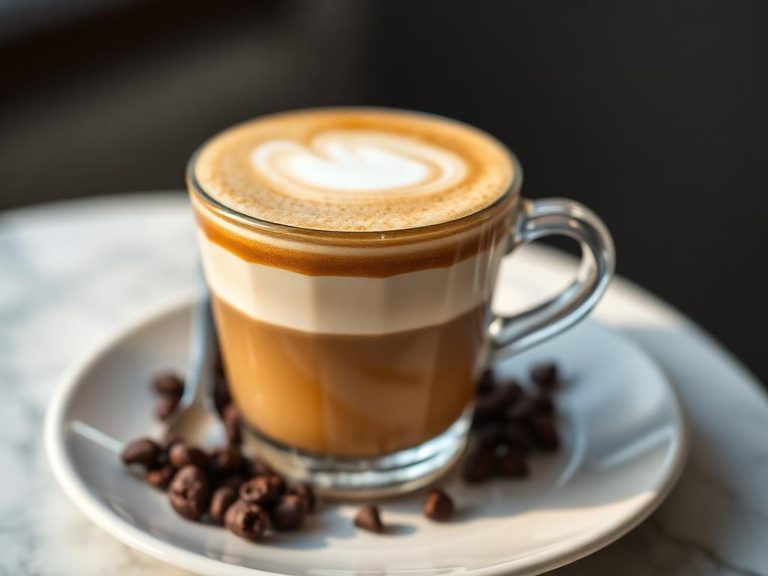
A cappuccino is a classic Italian espresso-based drink defined by its harmonious trio of espresso, steamed milk, and a thick layer of velvety milk foam. Its taste is a rich, bittersweet coffee balanced by the creamy sweetness of milk, creating a luxurious texture that is both light and indulgent. Nutritionally, it is a relatively low-calorie beverage, with a small but notable protein and fat contribution from the milk.
Calorie split: 26% protein · 41% carbs · 33% fat
↓ Full nutrition💚 Why it's loved
People adore the cappuccino for its perfect balance of robust coffee flavor and creamy, frothy texture, making it a comforting yet energizing treat. It's also deeply embedded in coffee culture, often enjoyed as a social ritual or a moment of personal indulgence.
⚠️ Watch-outs & how to enjoy it better
The milk content can cause digestive issues for those with lactose intolerance, and the caffeine may trigger jitters or disrupt sleep in sensitive individuals. To counteract lactose issues, opt for lactose-free milk or plant-based alternatives like oat or almond milk; for caffeine sensitivity, choose a smaller portion or enjoy it earlier in the day.
Key benefits
- Provides a quick energy boost from caffeine
- Contains calcium and protein from milk
- May enhance focus and alertness
- Low in calories compared to many sweetened coffee drinks
- Can be a comforting, ritualistic part of a morning routine
🍽️ Popular dishes
🌍 Where it's eaten
💡 Did you know?
The name 'cappuccino' comes from the Capuchin friars, whose brown robes resembled the drink's color when espresso is mixed with milk.
Full nutrition (USDA data · scales with serving)
| Water | 94.1 g |
| Energy | 27.0 kcal |
| Protein | 1.7 g |
| Total lipid (fat) | 0.99 g |
| Carbohydrate, by difference | 2.8 g |
| Fiber, total dietary | 0.00 g |
| Total Sugars | 2.5 g |
| Calcium, Ca | 65.0 mg |
| Iron, Fe | 0.02 mg |
| Magnesium, Mg | 20.0 mg |
| Phosphorus, P | 53.0 mg |
| Potassium, K | 100 mg |
| Sodium, Na | 23.0 mg |
| Zinc, Zn | 0.23 mg |
| Copper, Cu | 0.01 mg |
| Selenium, Se | 0.90 ug |
| Vitamin C, total ascorbic acid | 0.10 mg |
| Thiamin | 0.03 mg |
| Riboflavin | 0.10 mg |
| Niacin | 0.94 mg |
| Vitamin B-6 | 0.03 mg |
| Folate, total | 1.0 ug |
| Folic acid | 0.00 ug |
| Folate, food | 1.0 ug |
| Folate, DFE | 1.0 ug |
| Choline, total | 8.7 mg |
| Vitamin B-12 | 0.22 ug |
| Vitamin B-12, added | 0.00 ug |
| Vitamin A, RAE | 42.0 ug |
| Retinol | 42.0 ug |
| Carotene, beta | 2.0 ug |
| Carotene, alpha | 0.00 ug |
| Cryptoxanthin, beta | 0.00 ug |
| Lycopene | 0.00 ug |
| Lutein + zeaxanthin | 0.00 ug |
| Vitamin E (alpha-tocopherol) | 0.02 mg |
| Vitamin E, added | 0.00 mg |
| Vitamin D (D2 + D3) | 0.60 ug |
| Vitamin K (phylloquinone) | 0.10 ug |
| Alcohol, ethyl | 0.00 g |
| Caffeine | 36.0 mg |
| Theobromine | 0.00 mg |
Fat & fatty acid profile (per 100g)
| Fatty acids, total saturated | 0.57 g |
| SFA 4:0 | 0.02 g |
| SFA 6:0 | 0.02 g |
| SFA 8:0 | 0.01 g |
| SFA 10:0 | 0.03 g |
| SFA 12:0 | 0.03 g |
| SFA 14:0 | 0.09 g |
| SFA 16:0 | 0.27 g |
| SFA 18:0 | 0.09 g |
| Fatty acids, total monounsaturated | 0.20 g |
| MUFA 16:1 | 0.01 g |
| MUFA 18:1 | 0.21 g |
| MUFA 20:1 | 0.00 g |
| MUFA 22:1 | 0.00 g |
| Fatty acids, total polyunsaturated | 0.04 g |
| PUFA 18:2 | 0.05 g |
| PUFA 18:3 | 0.00 g |
| PUFA 18:4 | 0.00 g |
| PUFA 20:4 | 0.00 g |
| PUFA 20:5 n-3 (EPA) | 0.00 g |
| PUFA 22:5 n-3 (DPA) | 0.00 g |
| PUFA 22:6 n-3 (DHA) | 0.00 g |
| Cholesterol | 4.0 mg |
Amino acid profile (per 100g)
Estimated from Cream, fluid, light (coffee cream or table cream) — USDA does not publish this profile for Coffee.
| Tryptophan | 0.07 g |
| Threonine | 0.13 g |
| Isoleucine | 0.15 g |
| Leucine | 0.24 g |
| Lysine | 0.13 g |
| Methionine | 0.07 g |
| Cystine | 0.01 g |
| Phenylalanine | 0.14 g |
| Tyrosine | 0.14 g |
| Valine | 0.18 g |
| Arginine | 0.07 g |
| Histidine | 0.07 g |
| Alanine | 0.09 g |
| Aspartic acid | 0.22 g |
| Glutamic acid | 0.59 g |
| Glycine | 0.07 g |
| Proline | 0.31 g |
| Serine | 0.10 g |
FAQ
What is the difference between a cappuccino and a latte?
A cappuccino has equal parts espresso, steamed milk, and foam, while a latte has more steamed milk and less foam, making it creamier and less intense.
Can I make a cappuccino without an espresso machine?
Yes, you can use strong brewed coffee or a moka pot for espresso, and froth milk with a whisk, frother, or by shaking in a jar.
Is a cappuccino high in sugar?
A traditional cappuccino has minimal sugar, as it's made with espresso and milk; however, added syrups or sweeteners can increase sugar content.
Nutrient density (calculated · NRF9.3)
Nutrient Rich Foods index: beneficial nutrients (protein, fiber, vitamins, minerals) minus saturated fat, added sugar & sodium, per 100 kcal.
NRF9.3 index — Fulgoni, Keast & Drewnowski, 2009. Computed from USDA nutrients.
Weight-loss friendliness (composite index)
Energy density 0.27 kcal/g · 25% calories from protein · 0.0 g fiber · 2.5 g sugar per 100 g.
Composite of energy density (Rolls et al., 1999), protein & fiber satiety, minus sugar. A calculated heuristic — ranks satiety-per-calorie, not a clinical measure.
Dietary load (calculated from USDA values)
Potential renal acid load. Positive = acid-forming, negative = alkaline-forming.
Sodium-to-potassium ratio: 0.23 (lower is better — aim for ≤ 1)
Sodium:potassium per WHO potassium guidance. Computed from USDA nutrients.