

Chocolate milk, whole
Common food
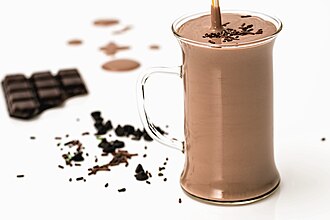
Photo: Wikipedia
Chocolate milk is a rich, creamy beverage made by blending cocoa or chocolate syrup into whole milk, creating a sweet, indulgent drink with a smooth, velvety texture. It delivers a comforting balance of dairy richness and cocoa depth, often enjoyed chilled. Nutritionally, it provides a solid mix of protein and carbohydrates, making it more than just a treat.
Calorie split: 15% protein · 49% carbs · 36% fat
↓ Full nutrition💚 Why it's loved
People love chocolate milk for its nostalgic, comforting flavor that perfectly balances sweetness with creamy dairy, making it a beloved post-workout recovery drink and a childhood favorite. Its versatility allows it to be enjoyed as a standalone beverage, a base for smoothies, or a dessert ingredient.
⚠️ Watch-outs & how to enjoy it better
The high sugar content can cause blood-sugar spikes, and it contains lactose, a common allergen. To counteract this, pair it with a source of fiber or protein (like a handful of nuts) to slow sugar absorption, or opt for a smaller portion (e.g., 150ml) as an occasional treat rather than a daily drink.
Key benefits
- Excellent source of calcium for bone health
- Provides complete protein for muscle recovery
- Contains phosphorus and potassium for electrolyte balance
- Offers a convenient source of carbohydrates for energy
🍽️ Popular dishes
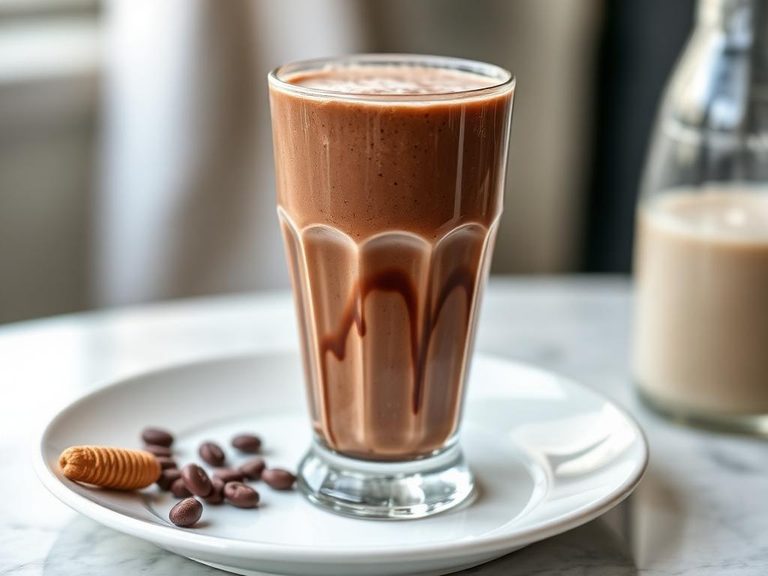
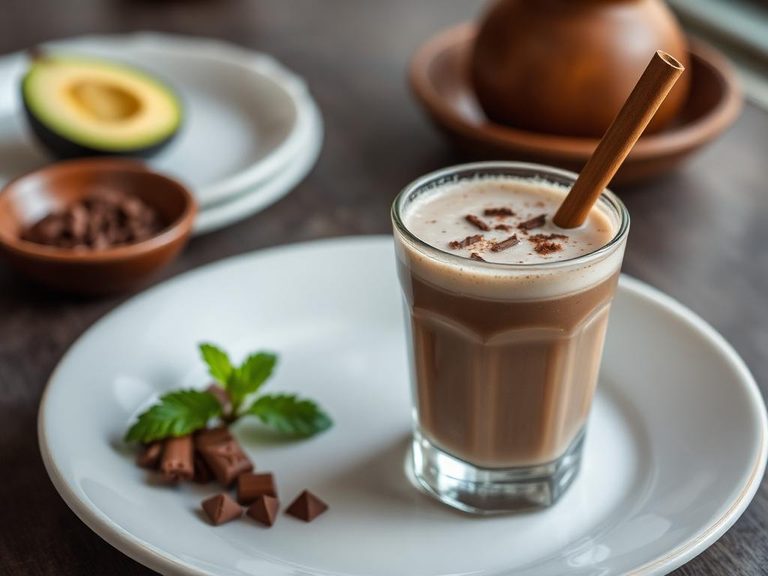



🌍 Where it's eaten
💡 Did you know?
In the U.S., chocolate milk accounts for about 7% of all milk sold in schools, and its formulation is often specifically designed to be less sweet than commercial versions.
Full nutrition (USDA data · scales with serving)
| Water | 82.3 g |
| Energy | 83.0 kcal |
| Protein | 3.2 g |
| Total lipid (fat) | 3.4 g |
| Carbohydrate, by difference | 10.3 g |
| Fiber, total dietary | 0.80 g |
| Total Sugars | 9.5 g |
| Calcium, Ca | 112 mg |
| Iron, Fe | 0.24 mg |
| Magnesium, Mg | 13.0 mg |
| Phosphorus, P | 101 mg |
| Potassium, K | 167 mg |
| Sodium, Na | 60.0 mg |
| Zinc, Zn | 0.41 mg |
| Copper, Cu | 0.07 mg |
| Selenium, Se | 1.9 ug |
| Vitamin C, total ascorbic acid | 0.90 mg |
| Thiamin | 0.04 mg |
| Riboflavin | 0.16 mg |
| Niacin | 0.13 mg |
| Vitamin B-6 | 0.04 mg |
| Folate, total | 5.0 ug |
| Folic acid | 0.00 ug |
| Folate, food | 5.0 ug |
| Folate, DFE | 5.0 ug |
| Choline, total | 17.0 mg |
| Vitamin B-12 | 0.33 ug |
| Vitamin B-12, added | 0.00 ug |
| Vitamin A, RAE | 27.0 ug |
| Retinol | 26.0 ug |
| Carotene, beta | 7.0 ug |
| Carotene, alpha | 0.00 ug |
| Cryptoxanthin, beta | 0.00 ug |
| Lycopene | 0.00 ug |
| Lutein + zeaxanthin | 0.00 ug |
| Vitamin E (alpha-tocopherol) | 0.07 mg |
| Vitamin E, added | 0.00 mg |
| Vitamin D (D2 + D3) | 1.3 ug |
| Vitamin K (phylloquinone) | 0.30 ug |
| Alcohol, ethyl | 0.00 g |
| Caffeine | 1.0 mg |
| Theobromine | 23.0 mg |
Fat & fatty acid profile (per 100g)
| Fatty acids, total saturated | 2.1 g |
| SFA 4:0 | 0.10 g |
| SFA 6:0 | 0.06 g |
| SFA 8:0 | 0.04 g |
| SFA 10:0 | 0.08 g |
| SFA 12:0 | 0.09 g |
| SFA 14:0 | 0.32 g |
| SFA 16:0 | 0.89 g |
| SFA 18:0 | 0.47 g |
| Fatty acids, total monounsaturated | 0.99 g |
| MUFA 16:1 | 0.07 g |
| MUFA 18:1 | 0.87 g |
| MUFA 20:1 | 0.00 g |
| MUFA 22:1 | 0.00 g |
| Fatty acids, total polyunsaturated | 0.12 g |
| PUFA 18:2 | 0.08 g |
| PUFA 18:3 | 0.05 g |
| PUFA 18:4 | 0.00 g |
| PUFA 20:4 | 0.00 g |
| PUFA 20:5 n-3 (EPA) | 0.00 g |
| PUFA 22:5 n-3 (DPA) | 0.00 g |
| PUFA 22:6 n-3 (DHA) | 0.00 g |
| Cholesterol | 12.0 mg |
Amino acid profile (per 100g)
Estimated from Snacks, granola bars, soft, coated, milk chocolate coating, chocolate chip — USDA does not publish this profile for Chocolate milk.
| Tryptophan | 0.07 g |
| Threonine | 0.23 g |
| Isoleucine | 0.27 g |
| Leucine | 0.47 g |
| Lysine | 0.29 g |
| Methionine | 0.11 g |
| Cystine | 0.06 g |
| Phenylalanine | 0.29 g |
| Tyrosine | 0.24 g |
| Valine | 0.34 g |
| Arginine | 0.24 g |
| Histidine | 0.10 g |
| Alanine | 0.22 g |
| Aspartic acid | 0.48 g |
| Glutamic acid | 1.1 g |
| Glycine | 0.18 g |
| Proline | 0.39 g |
| Serine | 0.25 g |
FAQ
Is chocolate milk good for post-workout recovery?
Yes, its 3:1 or 4:1 carbohydrate-to-protein ratio is considered effective for replenishing glycogen and aiding muscle repair, similar to many commercial recovery drinks.
How does the nutrition differ from plain whole milk?
Per 100g, chocolate milk has about 15-20 more calories, double the sugar, and slightly less protein and calcium due to dilution from added ingredients, while fat content remains similar.
Can I make a healthier version at home?
Absolutely. Blend whole milk with unsweetened cocoa powder and a natural sweetener like dates or a small amount of maple syrup to control sugar and avoid additives.
Nutrient density (calculated · NRF9.3)
Nutrient Rich Foods index: beneficial nutrients (protein, fiber, vitamins, minerals) minus saturated fat, added sugar & sodium, per 100 kcal.
NRF9.3 index — Fulgoni, Keast & Drewnowski, 2009. Computed from USDA nutrients.
Weight-loss friendliness (composite index)
Energy density 0.83 kcal/g · 15% calories from protein · 0.8 g fiber · 9.5 g sugar per 100 g.
Composite of energy density (Rolls et al., 1999), protein & fiber satiety, minus sugar. A calculated heuristic — ranks satiety-per-calorie, not a clinical measure.
Dietary load (calculated from USDA values)
Potential renal acid load. Positive = acid-forming, negative = alkaline-forming.
Sodium-to-potassium ratio: 0.36 (lower is better — aim for ≤ 1)
Sodium:potassium per WHO potassium guidance. Computed from USDA nutrients.