

Chickpeas, NFS
Common food
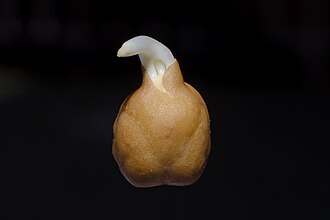
Photo: Wikipedia
Chickpeas, also known as garbanzo beans, are creamy, nutty legumes with a satisfyingly firm yet tender texture. They are a nutritional powerhouse, offering a balanced profile of plant-based protein, complex carbohydrates, and beneficial fiber. Their mild, slightly earthy flavor makes them a versatile canvas for a wide array of spices and cooking methods.
Calorie split: 15% protein · 47% carbs · 37% fat
↓ Full nutrition💚 Why it's loved
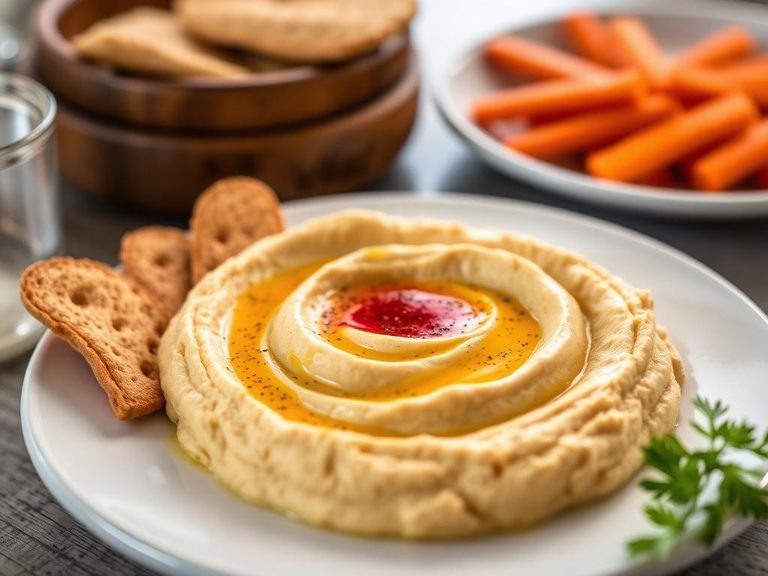
People love chickpeas for their incredible versatility and ability to absorb flavors, making them a staple in everything from creamy hummus to hearty stews. They are also cherished as a reliable, affordable, and satisfying source of nutrition across countless global cuisines.
⚠️ Watch-outs & how to enjoy it better
Some individuals may experience digestive discomfort like gas or bloating due to their high fiber and oligosaccharide content. To counteract this, start with smaller portions, ensure they are thoroughly cooked, and consider soaking dried chickpeas before cooking. They are also a common allergen, so those with legume allergies must avoid them.
Key benefits
- Excellent source of plant-based protein for muscle maintenance.
- High in dietary fiber, promoting digestive health and satiety.
- Provides complex carbohydrates for sustained energy release.
- Rich in essential minerals like folate, iron, and manganese.
- Low glycemic index, helping to manage blood sugar levels.
🍽️ Popular dishes



🌍 Where it's eaten
💡 Did you know?
Archaeological evidence suggests chickpeas were one of the earliest cultivated legumes, with remains found in the Middle East dating back over 10,000 years.
Full nutrition (USDA data · scales with serving)
| Water | 56.0 g |
| Energy | 211 kcal |
| Protein | 8.2 g |
| Total lipid (fat) | 8.9 g |
| Carbohydrate, by difference | 25.5 g |
| Fiber, total dietary | 7.1 g |
| Total Sugars | 4.5 g |
| Calcium, Ca | 46.0 mg |
| Iron, Fe | 2.7 mg |
| Magnesium, Mg | 45.0 mg |
| Phosphorus, P | 156 mg |
| Potassium, K | 270 mg |
| Sodium, Na | 222 mg |
| Zinc, Zn | 1.4 mg |
| Copper, Cu | 0.33 mg |
| Selenium, Se | 3.4 ug |
| Vitamin C, total ascorbic acid | 1.1 mg |
| Thiamin | 0.10 mg |
| Riboflavin | 0.06 mg |
| Niacin | 0.46 mg |
| Vitamin B-6 | 0.12 mg |
| Folate, total | 152 ug |
| Folic acid | 0.00 ug |
| Folate, food | 152 ug |
| Folate, DFE | 152 ug |
| Choline, total | 39.8 mg |
| Vitamin B-12 | 0.00 ug |
| Vitamin B-12, added | 0.00 ug |
| Vitamin A, RAE | 1.0 ug |
| Retinol | 0.00 ug |
| Carotene, beta | 15.0 ug |
| Carotene, alpha | 0.00 ug |
| Cryptoxanthin, beta | 0.00 ug |
| Lycopene | 0.00 ug |
| Lutein + zeaxanthin | 0.00 ug |
| Vitamin E (alpha-tocopherol) | 1.6 mg |
| Vitamin E, added | 0.00 mg |
| Vitamin D (D2 + D3) | 0.00 ug |
| Vitamin K (phylloquinone) | 10.3 ug |
| Alcohol, ethyl | 0.00 g |
| Caffeine | 0.00 mg |
| Theobromine | 0.00 mg |
Fat & fatty acid profile (per 100g)
| Fatty acids, total saturated | 1.1 g |
| SFA 4:0 | 0.00 g |
| SFA 6:0 | 0.00 g |
| SFA 8:0 | 0.00 g |
| SFA 10:0 | 0.00 g |
| SFA 12:0 | 0.00 g |
| SFA 14:0 | 0.01 g |
| SFA 16:0 | 0.82 g |
| SFA 18:0 | 0.22 g |
| Fatty acids, total monounsaturated | 3.3 g |
| MUFA 16:1 | 0.03 g |
| MUFA 18:1 | 3.2 g |
| MUFA 20:1 | 0.04 g |
| MUFA 22:1 | 0.00 g |
| Fatty acids, total polyunsaturated | 3.6 g |
| PUFA 18:2 | 3.2 g |
| PUFA 18:3 | 0.32 g |
| PUFA 18:4 | 0.00 g |
| PUFA 20:4 | 0.00 g |
| PUFA 20:5 n-3 (EPA) | 0.00 g |
| PUFA 22:5 n-3 (DPA) | 0.00 g |
| PUFA 22:6 n-3 (DHA) | 0.00 g |
| Cholesterol | 0.00 mg |
Amino acid profile (per 100g)
Estimated from Chickpeas (garbanzo beans, bengal gram), mature seeds, raw — USDA does not publish this profile for Chickpeas.
| Tryptophan | 0.20 g |
| Threonine | 0.77 g |
| Isoleucine | 0.88 g |
| Leucine | 1.5 g |
| Lysine | 1.4 g |
| Methionine | 0.27 g |
| Cystine | 0.28 g |
| Phenylalanine | 1.1 g |
| Tyrosine | 0.51 g |
| Valine | 0.86 g |
| Arginine | 1.9 g |
| Histidine | 0.57 g |
| Alanine | 0.88 g |
| Aspartic acid | 2.4 g |
| Glutamic acid | 3.6 g |
| Glycine | 0.86 g |
| Proline | 0.85 g |
| Serine | 1.0 g |
FAQ
Are canned chickpeas as nutritious as dried ones?
Yes, canned chickpeas are nutritionally comparable to home-cooked dried chickpeas. They are pre-cooked and convenient. The main difference is often a higher sodium content in the canning liquid, which can be reduced by rinsing and draining them thoroughly.
How can I make chickpeas easier to digest?
If using dried chickpeas, soak them in water for 8-12 hours, discard the soaking water, and cook them thoroughly until very tender. Adding a piece of kombu seaweed or a pinch of baking soda to the cooking water can also help break down compounds that cause gas.
What is the liquid in a can of chickpeas, and can I use it?
The liquid is called aquafaba. It's a starchy, protein-rich brine that has become popular as a vegan egg white substitute for whipping into meringues or binding in baking. It can also be used in soups and stews to add body.
Nutrient density (calculated · NRF9.3)
Nutrient Rich Foods index: beneficial nutrients (protein, fiber, vitamins, minerals) minus saturated fat, added sugar & sodium, per 100 kcal.
NRF9.3 index — Fulgoni, Keast & Drewnowski, 2009. Computed from USDA nutrients.
Weight-loss friendliness (composite index)
Energy density 2.11 kcal/g · 16% calories from protein · 7.1 g fiber · 4.5 g sugar per 100 g.
Composite of energy density (Rolls et al., 1999), protein & fiber satiety, minus sugar. A calculated heuristic — ranks satiety-per-calorie, not a clinical measure.
Dietary load (calculated from USDA values)
Potential renal acid load. Positive = acid-forming, negative = alkaline-forming.
Sodium-to-potassium ratio: 0.82 (lower is better — aim for ≤ 1)
Sodium:potassium per WHO potassium guidance. Computed from USDA nutrients.