

Chickpeas (garbanzo beans, bengal gram), mature seeds, cooked, boiled, with salt
Whole food · Legumes and Legume Products
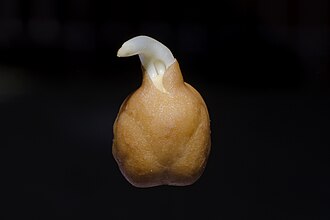
Photo: Wikipedia
These are the cooked, salted seeds of the chickpea plant, offering a satisfyingly firm, slightly nutty bite with a creamy interior. Nutritionally, they are a standout plant-based protein source, delivering nearly 9 grams per 100g, and are exceptionally rich in dietary fiber. Their warm, earthy flavor makes them a foundational ingredient in countless cuisines.
Calorie split: 21% protein · 65% carbs · 14% fat
↓ Full nutrition💚 Why it's loved
People adore chickpeas for their incredible versatility—they can be blended into creamy hummus, roasted for a crunchy snack, or simmered into hearty stews. Their mild, nutty flavor acts as a perfect canvas for a world of spices, while their satisfying texture adds substance to any dish.
⚠️ Watch-outs & how to enjoy it better
The added salt in canned or pre-cooked versions can be a concern for those monitoring sodium intake; rinsing them thoroughly can reduce sodium by up to 40%. As a legume, they contain oligosaccharides which may cause gas or bloating in some individuals; gradual introduction and thorough cooking can help. They are also a common allergen, and those with a legume allergy should avoid them.
Key benefits
- Excellent source of plant-based protein for muscle maintenance.
- High in dietary fiber, promoting digestive health and satiety.
- Provides a good amount of folate and manganese.
- Low in fat and contains no cholesterol.
- A sustainable and versatile protein source.
🍽️ Popular dishes
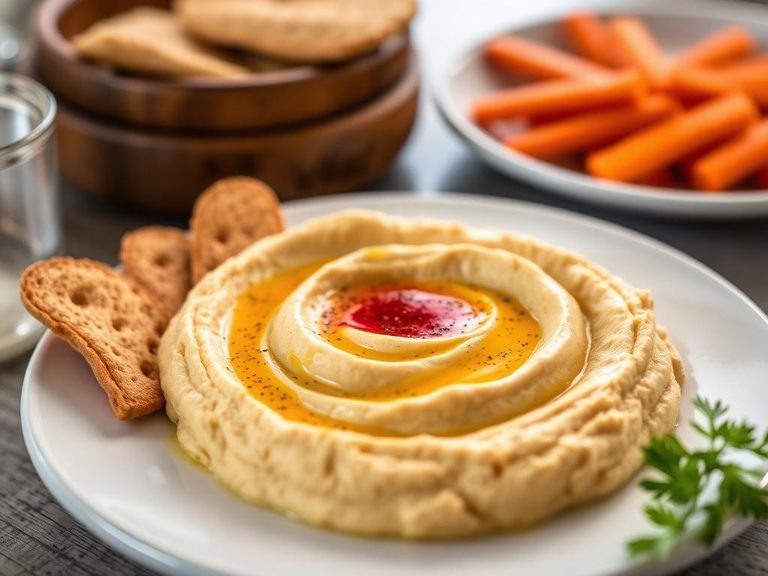
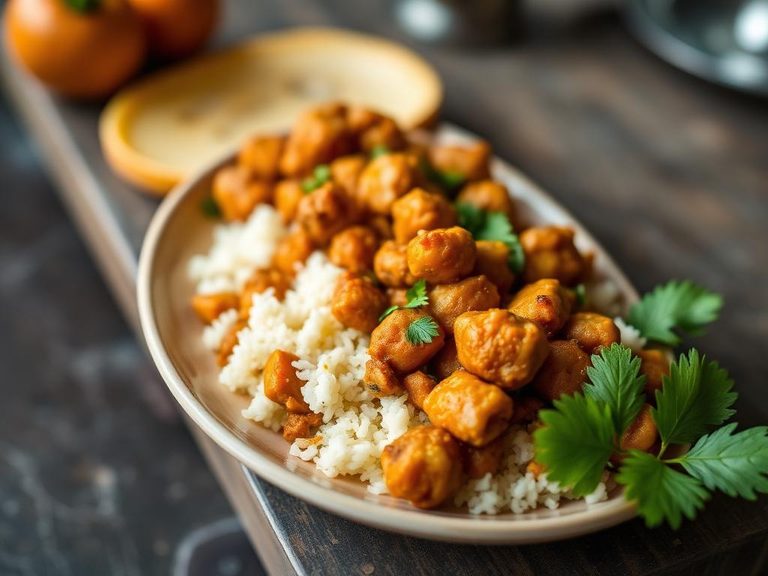
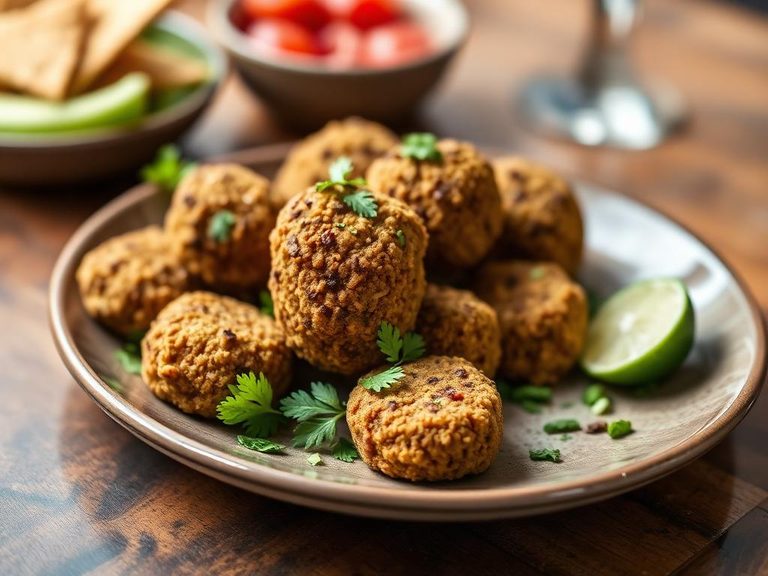


🌍 Where it's eaten
💡 Did you know?
Chickpeas are one of the earliest cultivated legumes, with evidence of their consumption dating back to 7,500 years ago in the Middle East.
Full nutrition (USDA data · scales with serving)
| Water | 60.2 g |
| Energy | 164 kcal |
| Energy | 686 kj |
| Protein | 8.9 g |
| Total lipid (fat) | 2.6 g |
| Ash | 0.92 g |
| Carbohydrate, by difference | 27.4 g |
| Fiber, total dietary | 7.6 g |
| Total Sugars | 4.8 g |
| Calcium, Ca | 49.0 mg |
| Iron, Fe | 2.9 mg |
| Magnesium, Mg | 48.0 mg |
| Phosphorus, P | 168 mg |
| Potassium, K | 291 mg |
| Sodium, Na | 243 mg |
| Zinc, Zn | 1.5 mg |
| Copper, Cu | 0.35 mg |
| Manganese, Mn | 1.0 mg |
| Selenium, Se | 3.7 ug |
| Vitamin C, total ascorbic acid | 1.3 mg |
| Thiamin | 0.12 mg |
| Riboflavin | 0.06 mg |
| Niacin | 0.53 mg |
| Pantothenic acid | 0.29 mg |
| Vitamin B-6 | 0.14 mg |
| Folate, total | 172 ug |
| Folic acid | 0.00 ug |
| Folate, food | 172 ug |
| Folate, DFE | 172 ug |
| Choline, total | 42.8 mg |
| Vitamin B-12 | 0.00 ug |
| Vitamin B-12, added | 0.00 ug |
| Vitamin A, RAE | 1.0 ug |
| Retinol | 0.00 ug |
| Carotene, beta | 16.0 ug |
| Carotene, alpha | 0.00 ug |
| Cryptoxanthin, beta | 0.00 ug |
| Vitamin A, IU | 27.0 iu |
| Lycopene | 0.00 ug |
| Lutein + zeaxanthin | 0.00 ug |
| Vitamin E (alpha-tocopherol) | 0.35 mg |
| Vitamin E, added | 0.00 mg |
| Vitamin D (D2 + D3), International Units | 0.00 iu |
| Vitamin D (D2 + D3) | 0.00 ug |
| Vitamin K (phylloquinone) | 4.0 ug |
Fat & fatty acid profile (per 100g)
| Fatty acids, total saturated | 0.27 g |
| SFA 14:0 | 0.00 g |
| SFA 16:0 | 0.21 g |
| SFA 18:0 | 0.04 g |
| Fatty acids, total monounsaturated | 0.58 g |
| MUFA 16:1 | 0.01 g |
| MUFA 18:1 | 0.58 g |
| Fatty acids, total polyunsaturated | 1.2 g |
| PUFA 18:2 | 1.1 g |
| PUFA 18:3 | 0.04 g |
| Fatty acids, total trans | 0.00 g |
| Cholesterol | 0.00 mg |
Amino acid profile (per 100g)
| Tryptophan | 0.09 g |
| Threonine | 0.33 g |
| Isoleucine | 0.38 g |
| Leucine | 0.63 g |
| Lysine | 0.59 g |
| Methionine | 0.12 g |
| Cystine | 0.12 g |
| Phenylalanine | 0.47 g |
| Tyrosine | 0.22 g |
| Valine | 0.37 g |
| Arginine | 0.83 g |
| Histidine | 0.24 g |
| Alanine | 0.38 g |
| Aspartic acid | 1.0 g |
| Glutamic acid | 1.6 g |
| Glycine | 0.37 g |
| Proline | 0.37 g |
| Serine | 0.45 g |
FAQ
Are canned chickpeas as nutritious as dried, cooked ones?
Yes, nutritionally they are very similar. Canned chickpeas are pre-cooked and often have added salt. Rinsing them under water can reduce the sodium content significantly without major nutrient loss.
How can I make chickpeas easier to digest?
If cooking from dried, soaking them for 8-12 hours and discarding the water can help reduce gas-causing compounds. Cooking them thoroughly until very tender also improves digestibility. Start with smaller portions to let your system adjust.
What's the best way to get crispy roasted chickpeas?
Pat them extremely dry after rinsing, toss with a small amount of oil and spices, and roast at a high temperature (around 400°F/200°C) on a single layer, shaking the pan occasionally, until golden and crunchy.
Nutrient density (calculated · NRF9.3)
Nutrient Rich Foods index: beneficial nutrients (protein, fiber, vitamins, minerals) minus saturated fat, added sugar & sodium, per 100 kcal.
NRF9.3 index — Fulgoni, Keast & Drewnowski, 2009. Computed from USDA nutrients.
Weight-loss friendliness (composite index)
Energy density 1.64 kcal/g · 22% calories from protein · 7.6 g fiber · 4.8 g sugar per 100 g.
Composite of energy density (Rolls et al., 1999), protein & fiber satiety, minus sugar. A calculated heuristic — ranks satiety-per-calorie, not a clinical measure.
Dietary load (calculated from USDA values)
Potential renal acid load. Positive = acid-forming, negative = alkaline-forming.
Sodium-to-potassium ratio: 0.84 (lower is better — aim for ≤ 1)
Sodium:potassium per WHO potassium guidance. Computed from USDA nutrients.