

Chicken wing, baked or broiled, from pre-cooked
Common food
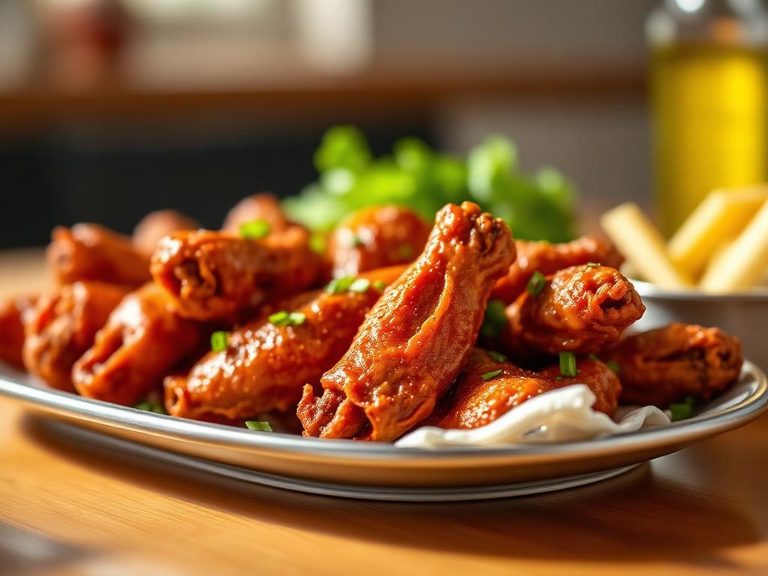
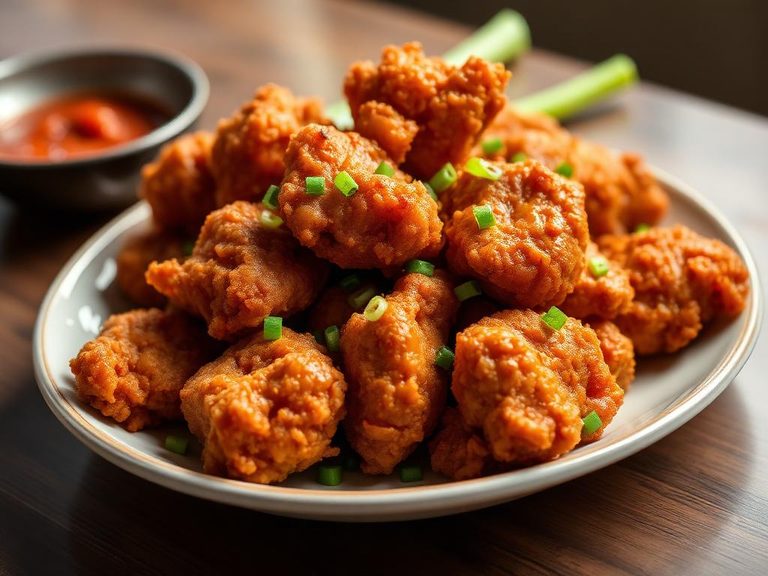
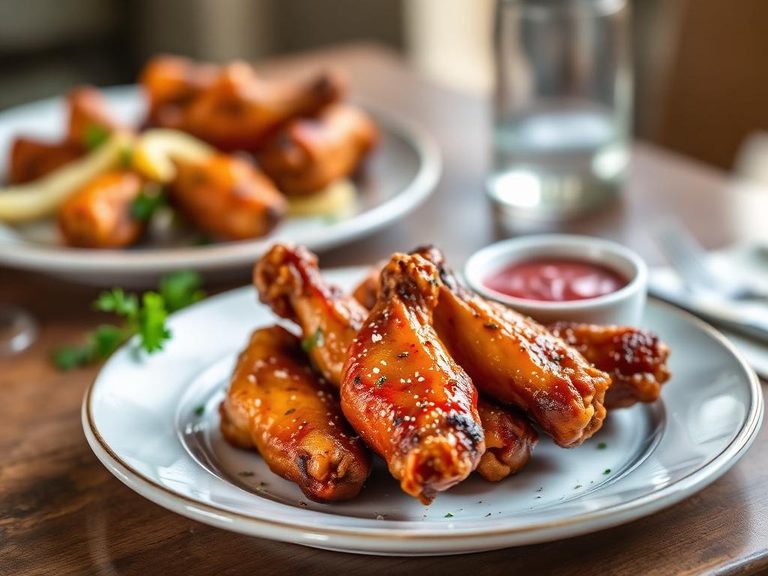
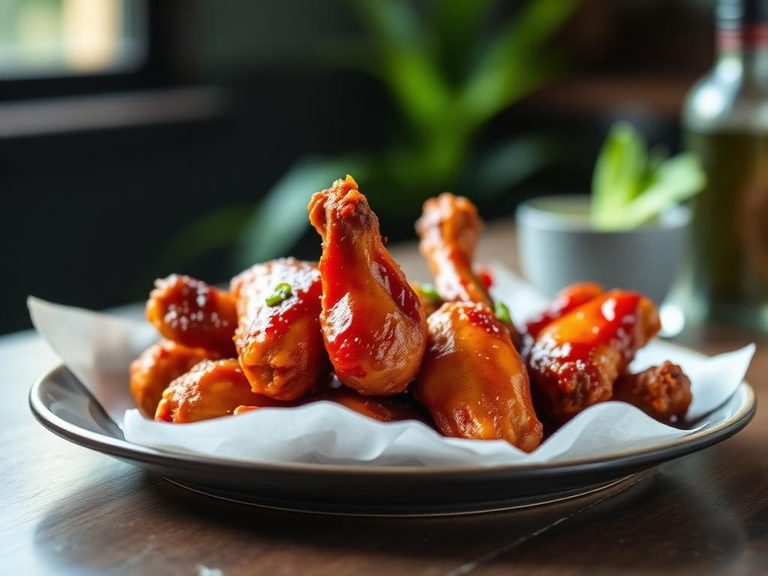
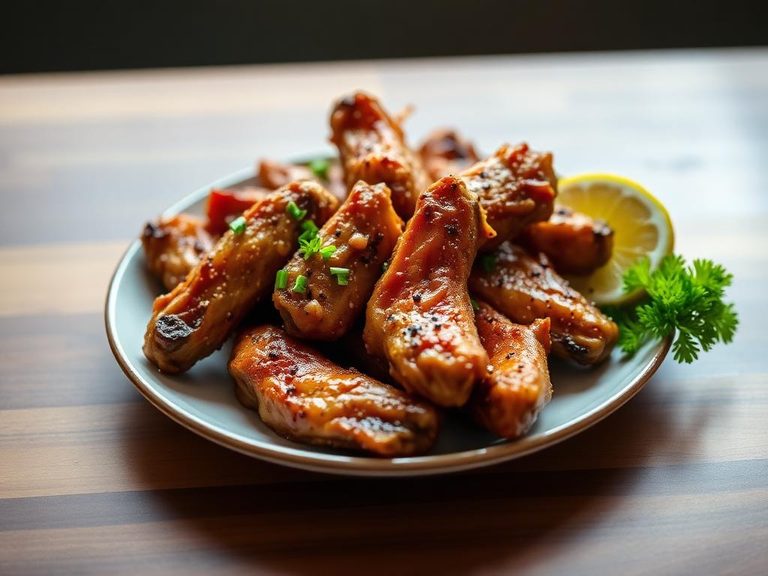
Baked or broiled chicken wings, often from pre-cooked, offer a satisfyingly crisp skin and tender, juicy meat with a savory, umami-rich flavor. Nutritionally, they are a high-protein, low-carb option, with most calories coming from the flavorful fat in the skin and meat. This preparation method concentrates their taste without the added oil of deep-frying.
Calorie split: 36% protein · 1% carbs · 63% fat
↓ Full nutrition💚 Why it's loved
People adore them for the perfect contrast between the crispy, seasoned skin and the succulent meat underneath. Their finger-food nature makes them a social, shareable staple at gatherings, game days, and casual meals across many cultures.
⚠️ Watch-outs & how to enjoy it better
The high fat content, especially from the skin, can be a concern for those monitoring saturated fat intake. They are also often seasoned with high-sodium sauces or rubs. To counteract, choose dry rubs over sugary sauces, pair with a vinegar-based dip or a fresh salad to cut richness, and practice portion control by enjoying a few wings alongside vegetable sides.
Key benefits
- Excellent source of complete protein for muscle maintenance.
- Very low in carbohydrates and sugars.
- Contains essential minerals like selenium and phosphorus.
- Provides B vitamins, particularly niacin (B3).
🍽️ Popular dishes
🌍 Where it's eaten
💡 Did you know?
The modern 'Buffalo wing' was reportedly invented in 1964 at the Anchor Bar in Buffalo, New York, when the owner's son and his friends requested a late-night snack, leading her to deep-fry some wings and toss them in a spicy sauce.
Full nutrition (USDA data · scales with serving)
| Water | 57.2 g |
| Energy | 257 kcal |
| Protein | 23.4 g |
| Total lipid (fat) | 18.0 g |
| Carbohydrate, by difference | 0.60 g |
| Fiber, total dietary | 0.00 g |
| Total Sugars | 0.60 g |
| Calcium, Ca | 33.0 mg |
| Iron, Fe | 0.93 mg |
| Magnesium, Mg | 23.0 mg |
| Phosphorus, P | 251 mg |
| Potassium, K | 285 mg |
| Sodium, Na | 579 mg |
| Zinc, Zn | 1.6 mg |
| Copper, Cu | 0.06 mg |
| Selenium, Se | 38.2 ug |
| Vitamin C, total ascorbic acid | 0.00 mg |
| Thiamin | 0.08 mg |
| Riboflavin | 0.16 mg |
| Niacin | 7.5 mg |
| Vitamin B-6 | 0.21 mg |
| Folate, total | 8.0 ug |
| Folic acid | 0.00 ug |
| Folate, food | 8.0 ug |
| Folate, DFE | 8.0 ug |
| Choline, total | 58.2 mg |
| Vitamin B-12 | 0.45 ug |
| Vitamin B-12, added | 0.00 ug |
| Vitamin A, RAE | 26.0 ug |
| Retinol | 26.0 ug |
| Carotene, beta | 0.00 ug |
| Carotene, alpha | 0.00 ug |
| Cryptoxanthin, beta | 0.00 ug |
| Lycopene | 0.00 ug |
| Lutein + zeaxanthin | 0.00 ug |
| Vitamin E (alpha-tocopherol) | 0.12 mg |
| Vitamin E, added | 0.00 mg |
| Vitamin D (D2 + D3) | 0.00 ug |
| Vitamin K (phylloquinone) | 0.00 ug |
| Alcohol, ethyl | 0.00 g |
| Caffeine | 0.00 mg |
| Theobromine | 0.00 mg |
Fat & fatty acid profile (per 100g)
| Fatty acids, total saturated | 4.6 g |
| SFA 4:0 | 0.00 g |
| SFA 6:0 | 0.00 g |
| SFA 8:0 | 0.00 g |
| SFA 10:0 | 0.00 g |
| SFA 12:0 | 0.00 g |
| SFA 14:0 | 0.09 g |
| SFA 16:0 | 3.7 g |
| SFA 18:0 | 0.82 g |
| Fatty acids, total monounsaturated | 7.3 g |
| MUFA 16:1 | 1.2 g |
| MUFA 18:1 | 6.1 g |
| MUFA 20:1 | 0.04 g |
| MUFA 22:1 | 0.00 g |
| Fatty acids, total polyunsaturated | 2.2 g |
| PUFA 18:2 | 2.0 g |
| PUFA 18:3 | 0.11 g |
| PUFA 18:4 | 0.00 g |
| PUFA 20:4 | 0.03 g |
| PUFA 20:5 n-3 (EPA) | 0.00 g |
| PUFA 22:5 n-3 (DPA) | 0.00 g |
| PUFA 22:6 n-3 (DHA) | 0.00 g |
| Cholesterol | 129 mg |
Amino acid profile (per 100g)
Estimated from Chicken, broiler, rotisserie, BBQ, wing, meat only — USDA does not publish this profile for Chicken wing.
| Tryptophan | 0.29 g |
| Threonine | 0.74 g |
| Isoleucine | 1.3 g |
| Leucine | 2.1 g |
| Lysine | 2.2 g |
| Methionine | 0.81 g |
| Cystine | 0.28 g |
| Phenylalanine | 1.1 g |
| Tyrosine | 0.83 g |
| Valine | 1.4 g |
| Arginine | 1.7 g |
| Histidine | 0.75 g |
| Alanine | 1.5 g |
| Aspartic acid | 2.5 g |
| Glutamic acid | 4.0 g |
| Glycine | 1.4 g |
| Proline | 1.7 g |
| Serine | 0.69 g |
FAQ
Are baked wings healthier than fried?
Yes, baking or broiling typically uses less added oil than deep-frying, resulting in a lower overall fat and calorie count per wing, while still achieving crispiness.
Why do pre-cooked wings sometimes get rubbery when reheated?
Overcooking or reheating too slowly can cause the proteins in the skin and meat to tighten and squeeze out moisture. To reheat, use a hot oven or air fryer for a short time to re-crisp the skin quickly.
Is most of the protein in the meat or the skin?
The majority of the protein is in the meat. The skin is primarily fat and connective tissue, though it does contain some protein.
Nutrient density (calculated · NRF9.3)
Nutrient Rich Foods index: beneficial nutrients (protein, fiber, vitamins, minerals) minus saturated fat, added sugar & sodium, per 100 kcal.
NRF9.3 index — Fulgoni, Keast & Drewnowski, 2009. Computed from USDA nutrients.
Weight-loss friendliness (composite index)
Energy density 2.57 kcal/g · 36% calories from protein · 0.0 g fiber · 0.6 g sugar per 100 g.
Composite of energy density (Rolls et al., 1999), protein & fiber satiety, minus sugar. A calculated heuristic — ranks satiety-per-calorie, not a clinical measure.
Dietary load (calculated from USDA values)
Potential renal acid load. Positive = acid-forming, negative = alkaline-forming.
Sodium-to-potassium ratio: 2.03 (lower is better — aim for ≤ 1)
Sodium:potassium per WHO potassium guidance. Computed from USDA nutrients.