

Chicken or turkey, potatoes, and vegetables including carrots, broccoli, and/or dark-green leafy; tomato-based sauce
Common food
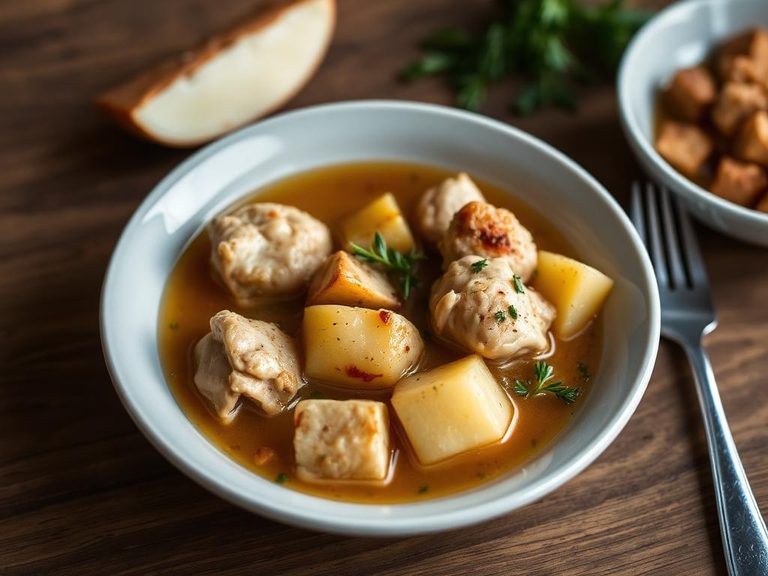
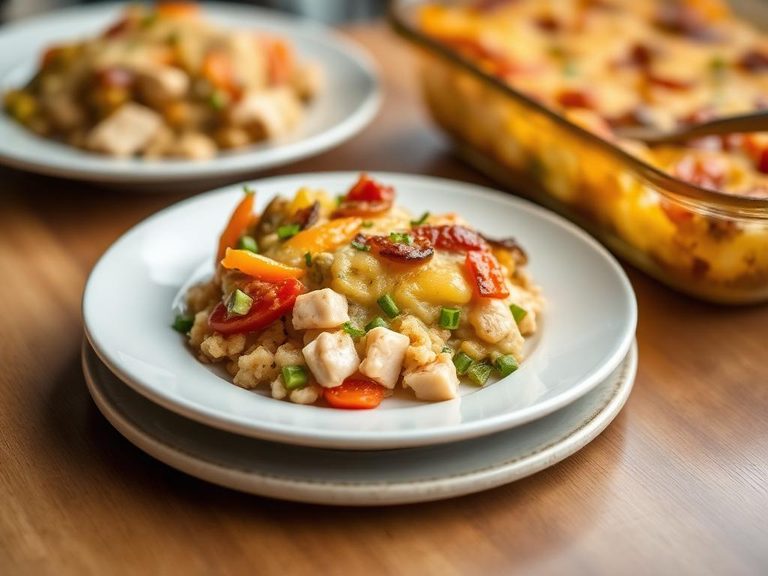
This is a hearty, savory one-pot meal where tender chunks of poultry and potatoes simmer in a rich, tangy tomato sauce, accented by the earthy sweetness of carrots and the fresh bite of broccoli or dark greens. The texture is a comforting mix of soft, yielding potatoes and fibrous vegetables, all coated in a velvety sauce. It's a nutritionally balanced, low-calorie staple that provides a solid source of protein and complex carbohydrates in every bite.
Calorie split: 15% protein · 35% carbs · 50% fat
↓ Full nutrition💚 Why it's loved
People adore this dish for its comforting, homestyle appeal and the way the flavors meld together during slow cooking, creating a deeply savory and satisfying meal. Its versatility is a huge draw, as it can be easily adapted with whatever poultry or seasonal vegetables are on hand.
⚠️ Watch-outs & how to enjoy it better
The dish can be high in sodium if made with commercial stocks or canned tomatoes, which may be a concern for those managing blood pressure. To counteract this, use low-sodium broth, rinse canned tomatoes, and season with herbs like oregano and basil instead of salt. The tomato sauce's acidity can also be a trigger for some with acid reflux; pairing it with a side of whole grains or a dairy-based sauce can help buffer the acidity.
Key benefits
- High protein-to-calorie ratio supports muscle maintenance and satiety.
- Rich in complex carbohydrates for sustained energy release.
- Contains a good mix of vitamins A, C, and K from the varied vegetables.
- Low in sugar, making it a stable choice for blood sugar management.
- The tomato base provides lycopene, a powerful antioxidant.
🍽️ Popular dishes
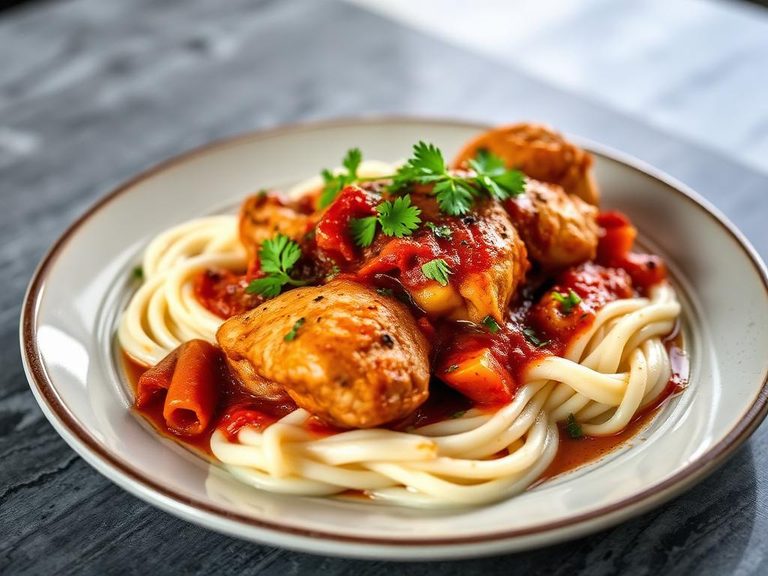
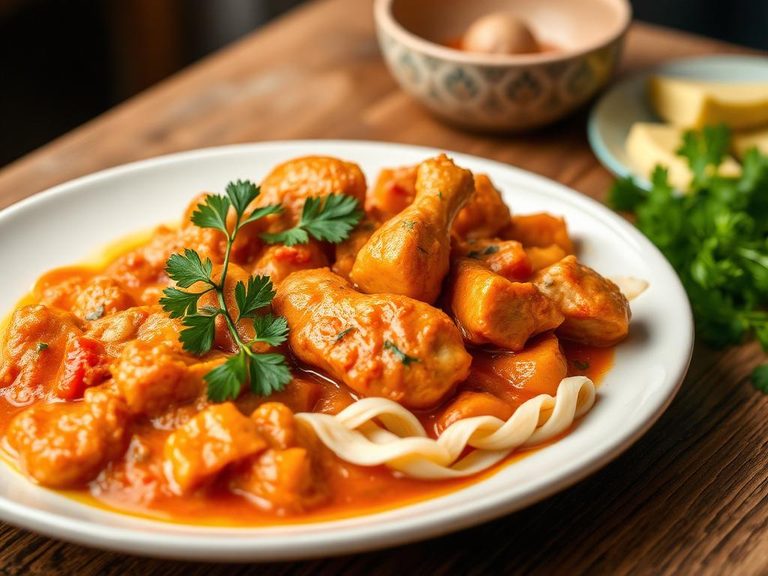
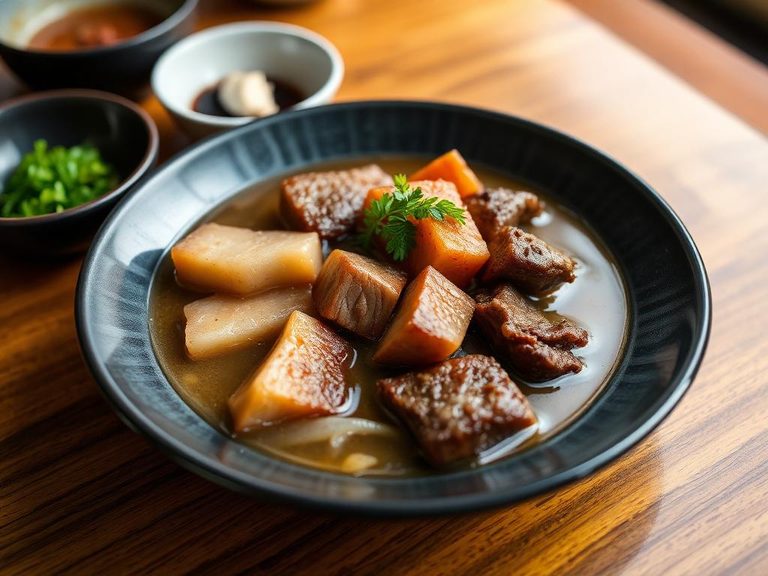
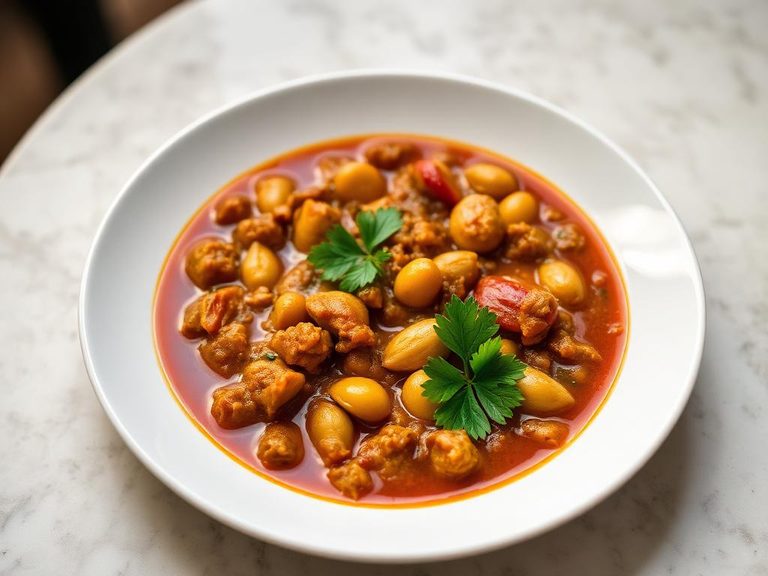
🌍 Where it's eaten
💡 Did you know?
The combination of tomatoes and potatoes in a single dish is a relatively modern culinary pairing, as both are New World ingredients that only became widespread in European and Asian cuisines after the 16th century.
Full nutrition (USDA data · scales with serving)
| Water | 75.6 g |
| Energy | 124 kcal |
| Protein | 4.8 g |
| Total lipid (fat) | 7.0 g |
| Carbohydrate, by difference | 11.1 g |
| Fiber, total dietary | 1.7 g |
| Total Sugars | 1.8 g |
| Calcium, Ca | 15.0 mg |
| Iron, Fe | 0.58 mg |
| Magnesium, Mg | 18.0 mg |
| Phosphorus, P | 62.0 mg |
| Potassium, K | 282 mg |
| Sodium, Na | 341 mg |
| Zinc, Zn | 0.43 mg |
| Copper, Cu | 0.12 mg |
| Selenium, Se | 3.5 ug |
| Vitamin C, total ascorbic acid | 8.6 mg |
| Thiamin | 0.07 mg |
| Riboflavin | 0.06 mg |
| Niacin | 1.9 mg |
| Vitamin B-6 | 0.19 mg |
| Folate, total | 13.0 ug |
| Folic acid | 0.00 ug |
| Folate, food | 13.0 ug |
| Folate, DFE | 13.0 ug |
| Choline, total | 18.9 mg |
| Vitamin B-12 | 0.05 ug |
| Vitamin B-12, added | 0.00 ug |
| Vitamin A, RAE | 84.0 ug |
| Retinol | 1.0 ug |
| Carotene, beta | 823 ug |
| Carotene, alpha | 321 ug |
| Cryptoxanthin, beta | 1.0 ug |
| Lycopene | 3582 ug |
| Lutein + zeaxanthin | 162 ug |
| Vitamin E (alpha-tocopherol) | 1.8 mg |
| Vitamin E, added | 0.00 mg |
| Vitamin D (D2 + D3) | 0.00 ug |
| Vitamin K (phylloquinone) | 16.4 ug |
| Alcohol, ethyl | 0.00 g |
| Caffeine | 0.00 mg |
| Theobromine | 0.00 mg |
Fat & fatty acid profile (per 100g)
| Fatty acids, total saturated | 1.0 g |
| SFA 4:0 | 0.00 g |
| SFA 6:0 | 0.00 g |
| SFA 8:0 | 0.00 g |
| SFA 10:0 | 0.00 g |
| SFA 12:0 | 0.00 g |
| SFA 14:0 | 0.01 g |
| SFA 16:0 | 0.77 g |
| SFA 18:0 | 0.21 g |
| Fatty acids, total monounsaturated | 2.9 g |
| MUFA 16:1 | 0.08 g |
| MUFA 18:1 | 2.8 g |
| MUFA 20:1 | 0.04 g |
| MUFA 22:1 | 0.00 g |
| Fatty acids, total polyunsaturated | 2.5 g |
| PUFA 18:2 | 2.2 g |
| PUFA 18:3 | 0.28 g |
| PUFA 18:4 | 0.00 g |
| PUFA 20:4 | 0.00 g |
| PUFA 20:5 n-3 (EPA) | 0.00 g |
| PUFA 22:5 n-3 (DPA) | 0.00 g |
| PUFA 22:6 n-3 (DHA) | 0.00 g |
| Cholesterol | 14.0 mg |
Amino acid profile (per 100g)
Estimated from Turnover, chicken- or turkey-, and vegetable-filled, reduced fat, frozen — USDA does not publish this profile for Chicken or turkey.
| Tryptophan | 0.16 g |
| Threonine | 0.41 g |
| Isoleucine | 0.47 g |
| Leucine | 0.80 g |
| Lysine | 0.61 g |
| Methionine | 0.23 g |
| Cystine | 0.13 g |
| Phenylalanine | 0.47 g |
| Tyrosine | 0.37 g |
| Valine | 0.53 g |
| Arginine | 0.51 g |
| Histidine | 0.30 g |
| Alanine | 0.45 g |
| Aspartic acid | 0.80 g |
| Glutamic acid | 2.2 g |
| Glycine | 0.38 g |
| Proline | 0.87 g |
| Serine | 0.42 g |
| Hydroxyproline | 0.00 g |
FAQ
Is this dish suitable for a low-carb diet?
It can be adapted by reducing the portion of potatoes and increasing the amount of non-starchy vegetables like broccoli and leafy greens, or substituting potatoes with cauliflower.
How can I make this dish more flavorful without adding extra salt?
Use fresh herbs like rosemary, thyme, and parsley, a splash of vinegar or lemon juice for brightness, and sauté onions and garlic to build a deep flavor base.
Can I use frozen vegetables in this recipe?
Yes, frozen carrots, broccoli, and spinach work well and retain most of their nutrients, though they may release more water during cooking, so adjust the sauce consistency accordingly.
Nutrient density (calculated · NRF9.3)
Nutrient Rich Foods index: beneficial nutrients (protein, fiber, vitamins, minerals) minus saturated fat, added sugar & sodium, per 100 kcal.
NRF9.3 index — Fulgoni, Keast & Drewnowski, 2009. Computed from USDA nutrients.
Weight-loss friendliness (composite index)
Energy density 1.24 kcal/g · 16% calories from protein · 1.7 g fiber · 1.8 g sugar per 100 g.
Composite of energy density (Rolls et al., 1999), protein & fiber satiety, minus sugar. A calculated heuristic — ranks satiety-per-calorie, not a clinical measure.
Dietary load (calculated from USDA values)
Potential renal acid load. Positive = acid-forming, negative = alkaline-forming.
Sodium-to-potassium ratio: 1.21 (lower is better — aim for ≤ 1)
Sodium:potassium per WHO potassium guidance. Computed from USDA nutrients.