

Chicken or turkey cacciatore
Common food

Photo: Wikipedia
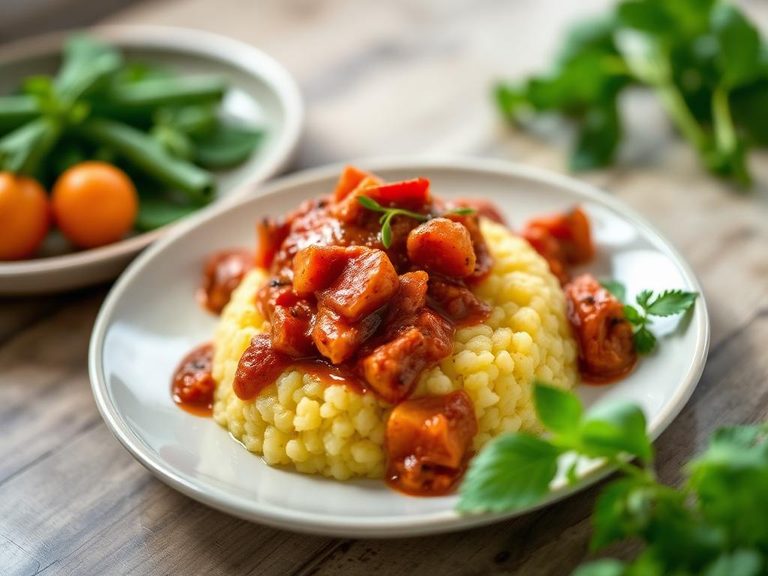
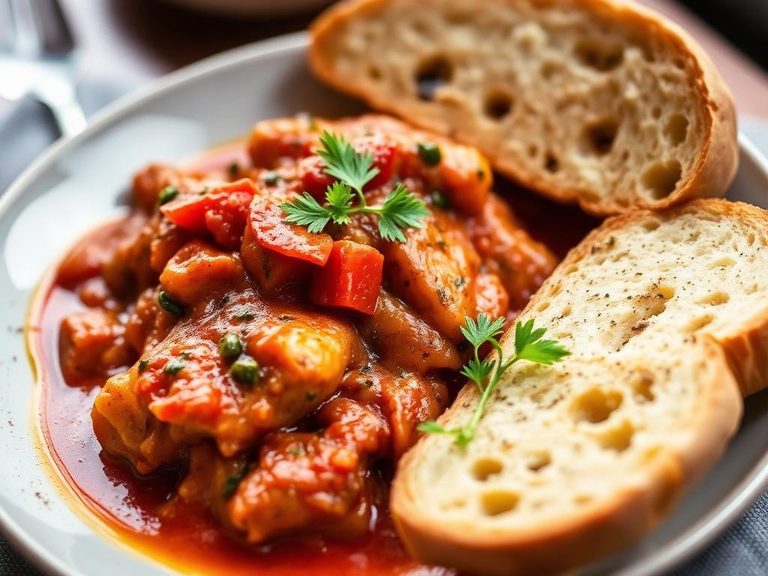
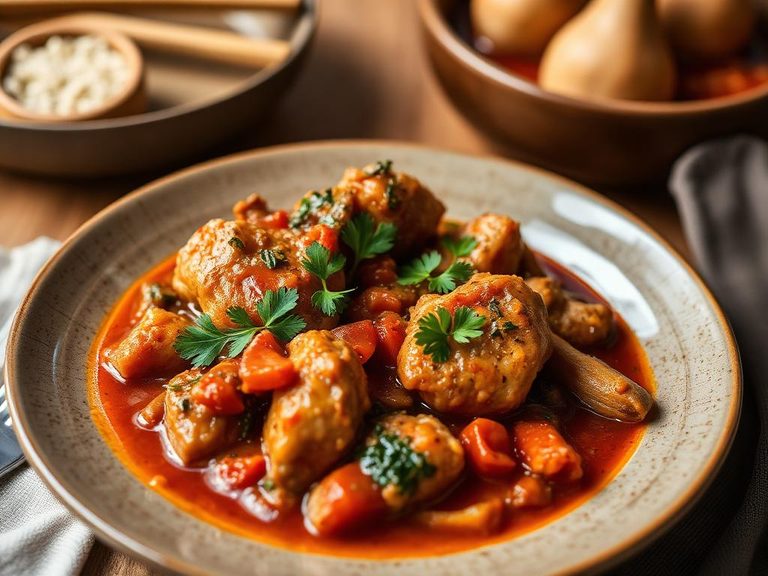
Chicken or turkey cacciatore is a rustic Italian hunter-style stew where poultry is braised in a vibrant, chunky tomato sauce with onions, herbs, and often bell peppers or mushrooms. The meat becomes tender and falls off the bone, absorbing the savory, slightly sweet, and acidic flavors of the sauce. It's a protein-rich dish with a moderate calorie count, making it a hearty yet balanced meal.
Calorie split: 30% protein · 16% carbs · 54% fat
↓ Full nutrition💚 Why it's loved
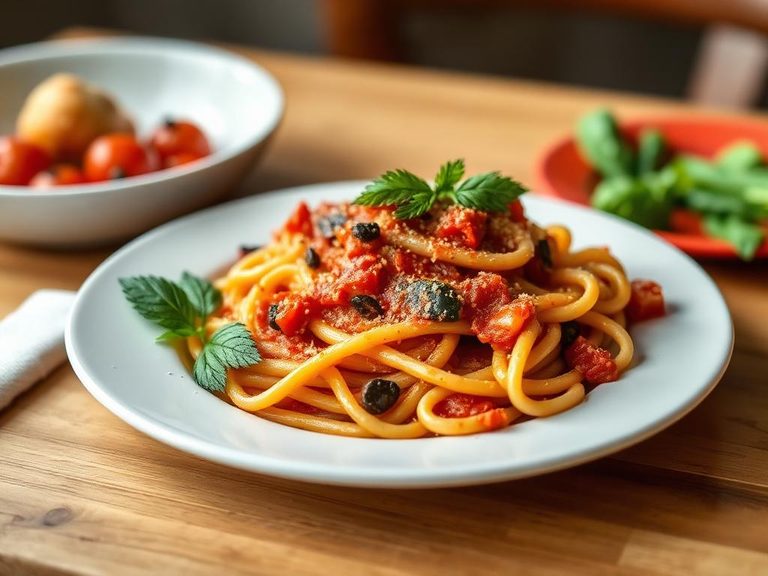
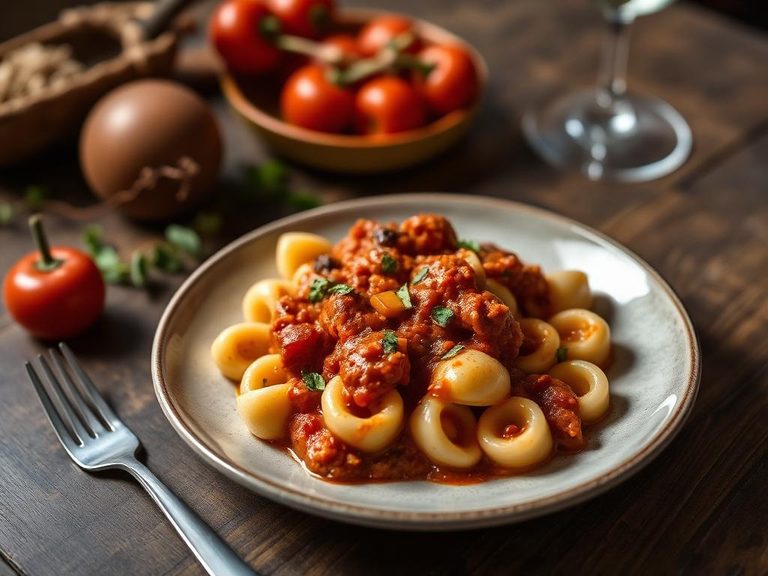
People adore cacciatore for its deep, comforting flavors that meld together during slow cooking, creating a rich sauce perfect for spooning over polenta or pasta. It's also celebrated for its versatility and rustic, home-cooked appeal that embodies traditional Italian cucina povera.
⚠️ Watch-outs & how to enjoy it better
The tomato-based sauce can be acidic for some, and store-bought or restaurant versions may be high in sodium. To counteract acidity, ensure the tomatoes are well-cooked and consider a pinch of sugar or a creamy side like polenta. For sodium, opt for homemade versions using low-sodium broth and canned tomatoes.
Key benefits
- High-quality protein source for muscle maintenance
- Rich in lycopene from cooked tomatoes, an antioxidant
- Contains B vitamins like niacin and B6 from poultry
- Provides fiber from vegetables in the sauce
- Naturally lower in saturated fat than red meat versions
🍽️ Popular dishes
🌍 Where it's eaten
💡 Did you know?
The name 'cacciatore' means 'hunter' in Italian, referring to the original method of preparing the dish with whatever game a hunter might bring home, often cooked over an open fire.
Full nutrition (USDA data · scales with serving)
| Water | 66.7 g |
| Energy | 174 kcal |
| Protein | 13.2 g |
| Total lipid (fat) | 10.6 g |
| Carbohydrate, by difference | 6.9 g |
| Fiber, total dietary | 1.1 g |
| Total Sugars | 1.6 g |
| Calcium, Ca | 42.0 mg |
| Iron, Fe | 1.0 mg |
| Magnesium, Mg | 21.0 mg |
| Phosphorus, P | 138 mg |
| Potassium, K | 290 mg |
| Sodium, Na | 664 mg |
| Zinc, Zn | 0.84 mg |
| Copper, Cu | 0.12 mg |
| Selenium, Se | 16.2 ug |
| Vitamin C, total ascorbic acid | 5.4 mg |
| Thiamin | 0.23 mg |
| Riboflavin | 0.17 mg |
| Niacin | 4.3 mg |
| Vitamin B-6 | 0.19 mg |
| Folate, total | 16.0 ug |
| Folic acid | 7.0 ug |
| Folate, food | 10.0 ug |
| Folate, DFE | 21.0 ug |
| Choline, total | 49.8 mg |
| Vitamin B-12 | 0.24 ug |
| Vitamin B-12, added | 0.00 ug |
| Vitamin A, RAE | 18.0 ug |
| Retinol | 8.0 ug |
| Carotene, beta | 121 ug |
| Carotene, alpha | 0.00 ug |
| Cryptoxanthin, beta | 0.00 ug |
| Lycopene | 4108 ug |
| Lutein + zeaxanthin | 25.0 ug |
| Vitamin E (alpha-tocopherol) | 1.1 mg |
| Vitamin E, added | 0.00 mg |
| Vitamin D (D2 + D3) | 0.10 ug |
| Vitamin K (phylloquinone) | 3.8 ug |
| Alcohol, ethyl | 0.00 g |
| Caffeine | 0.00 mg |
| Theobromine | 0.00 mg |
Fat & fatty acid profile (per 100g)
| Fatty acids, total saturated | 2.6 g |
| SFA 4:0 | 0.00 g |
| SFA 6:0 | 0.00 g |
| SFA 8:0 | 0.00 g |
| SFA 10:0 | 0.01 g |
| SFA 12:0 | 0.01 g |
| SFA 14:0 | 0.07 g |
| SFA 16:0 | 1.7 g |
| SFA 18:0 | 0.66 g |
| Fatty acids, total monounsaturated | 4.7 g |
| MUFA 16:1 | 0.38 g |
| MUFA 18:1 | 4.2 g |
| MUFA 20:1 | 0.07 g |
| MUFA 22:1 | 0.01 g |
| Fatty acids, total polyunsaturated | 2.4 g |
| PUFA 18:2 | 2.0 g |
| PUFA 18:3 | 0.23 g |
| PUFA 18:4 | 0.00 g |
| PUFA 20:4 | 0.04 g |
| PUFA 20:5 n-3 (EPA) | 0.00 g |
| PUFA 22:5 n-3 (DPA) | 0.00 g |
| PUFA 22:6 n-3 (DHA) | 0.00 g |
| Cholesterol | 58.0 mg |
Amino acid profile (per 100g)
Estimated from Turnover, chicken- or turkey-, and vegetable-filled, reduced fat, frozen — USDA does not publish this profile for Chicken or turkey cacciatore.
| Tryptophan | 0.16 g |
| Threonine | 0.41 g |
| Isoleucine | 0.47 g |
| Leucine | 0.80 g |
| Lysine | 0.61 g |
| Methionine | 0.23 g |
| Cystine | 0.13 g |
| Phenylalanine | 0.47 g |
| Tyrosine | 0.37 g |
| Valine | 0.53 g |
| Arginine | 0.51 g |
| Histidine | 0.30 g |
| Alanine | 0.45 g |
| Aspartic acid | 0.80 g |
| Glutamic acid | 2.2 g |
| Glycine | 0.38 g |
| Proline | 0.87 g |
| Serine | 0.42 g |
| Hydroxyproline | 0.00 g |
FAQ
Is chicken cacciatore gluten-free?
Traditionally, yes, as it's a stew. However, always check for thickeners in sauces or if it's served with pasta or polenta that may contain gluten.
Can I make cacciatore with other meats?
Absolutely. While chicken and turkey are common, the classic 'hunter' style can use rabbit, pork, or even game birds, adapting to what's available.
How do I store and reheat leftover cacciatore?
Cool it quickly, store in an airtight container in the fridge for up to 3-4 days. Reheat gently on the stovetop with a splash of water or broth to refresh the sauce.
Nutrient density (calculated · NRF9.3)
Nutrient Rich Foods index: beneficial nutrients (protein, fiber, vitamins, minerals) minus saturated fat, added sugar & sodium, per 100 kcal.
NRF9.3 index — Fulgoni, Keast & Drewnowski, 2009. Computed from USDA nutrients.
Weight-loss friendliness (composite index)
Energy density 1.74 kcal/g · 30% calories from protein · 1.1 g fiber · 1.6 g sugar per 100 g.
Composite of energy density (Rolls et al., 1999), protein & fiber satiety, minus sugar. A calculated heuristic — ranks satiety-per-calorie, not a clinical measure.
Dietary load (calculated from USDA values)
Potential renal acid load. Positive = acid-forming, negative = alkaline-forming.
Sodium-to-potassium ratio: 2.29 (lower is better — aim for ≤ 1)
Sodium:potassium per WHO potassium guidance. Computed from USDA nutrients.