

Chicken leg, drumstick and thigh, baked, coated, skin / coating not eaten
Common food

Photo: Wikipedia
This is a baked, coated chicken leg (drumstick and thigh) with the skin and crispy coating removed, revealing tender, juicy meat. The texture is succulent and slightly fibrous, with a mild, savory flavor that absorbs marinades well. Nutritionally, it's a lean protein powerhouse, delivering nearly 24 grams of protein with zero carbs per 100g.
Calorie split: 54% protein · 0% carbs · 46% fat
↓ Full nutrition💚 Why it's loved
People love it for its satisfying, hearty texture and the deep, savory flavor that comes from slow baking. It's a versatile comfort food that can be seasoned simply or boldly, fitting into countless global cuisines from weeknight dinners to festive meals.
⚠️ Watch-outs & how to enjoy it better
The primary downside is the high sodium content often found in pre-coated or seasoned versions, which can be a concern for blood pressure management. To counteract this, rinse the meat if pre-seasoned, use low-sodium homemade marinades, and pair it with potassium-rich vegetables like steamed broccoli or a side salad to help balance sodium levels.
Key benefits
- Excellent source of complete protein for muscle maintenance
- Very low in carbohydrates, suitable for low-carb diets
- Provides essential minerals like selenium and phosphorus
- Naturally gluten-free when coating is removed
- Good source of B vitamins, especially niacin and B6
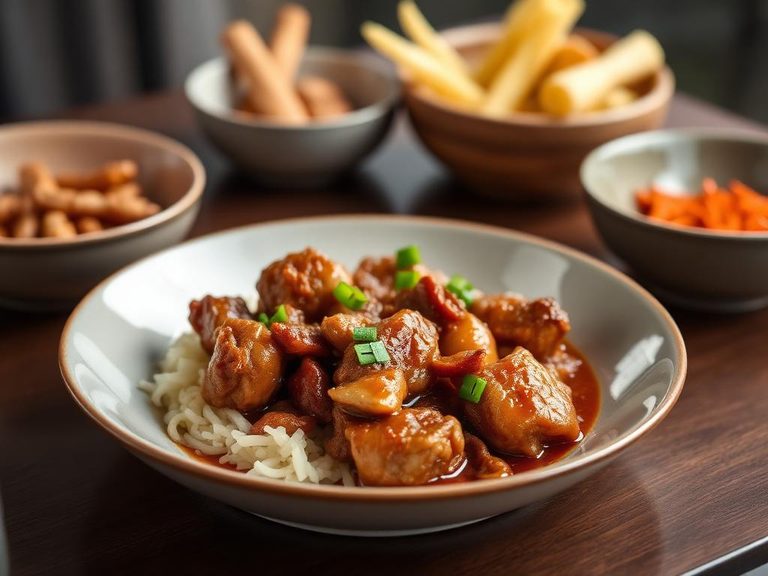
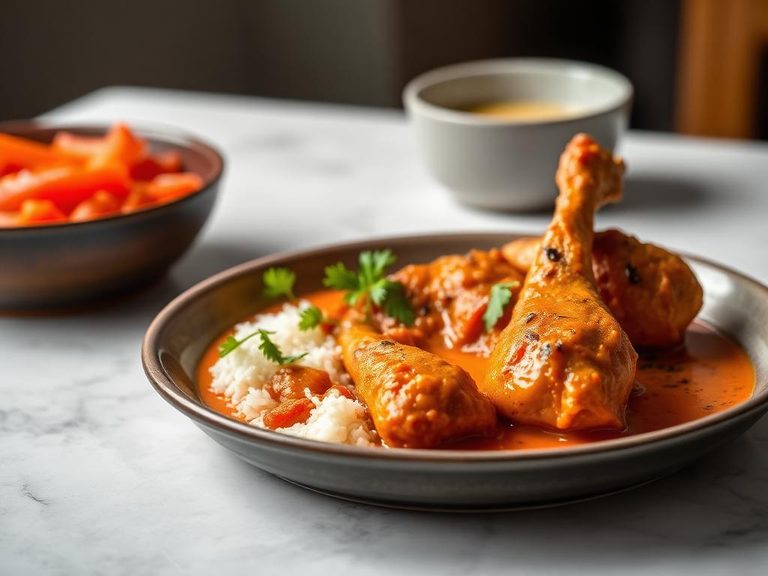
🍽️ Popular dishes




🌍 Where it's eaten
💡 Did you know?
The 'dark meat' of chicken legs and thighs gets its color from myoglobin, a protein that stores oxygen in muscle cells, which is why it's more flavorful and forgiving to cook than breast meat.
Full nutrition (USDA data · scales with serving)
| Water | 66.3 g |
| Energy | 183 kcal |
| Protein | 23.9 g |
| Total lipid (fat) | 9.0 g |
| Carbohydrate, by difference | 0.00 g |
| Fiber, total dietary | 0.00 g |
| Total Sugars | 0.00 g |
| Calcium, Ca | 10.0 mg |
| Iron, Fe | 1.1 mg |
| Magnesium, Mg | 23.0 mg |
| Phosphorus, P | 212 mg |
| Potassium, K | 257 mg |
| Sodium, Na | 419 mg |
| Zinc, Zn | 2.1 mg |
| Copper, Cu | 0.07 mg |
| Selenium, Se | 26.7 ug |
| Vitamin C, total ascorbic acid | 0.00 mg |
| Thiamin | 0.09 mg |
| Riboflavin | 0.21 mg |
| Niacin | 5.8 mg |
| Vitamin B-6 | 0.43 mg |
| Folate, total | 4.0 ug |
| Folic acid | 0.00 ug |
| Folate, food | 4.0 ug |
| Folate, DFE | 4.0 ug |
| Choline, total | 69.2 mg |
| Vitamin B-12 | 0.39 ug |
| Vitamin B-12, added | 0.00 ug |
| Vitamin A, RAE | 7.0 ug |
| Retinol | 7.0 ug |
| Carotene, beta | 0.00 ug |
| Carotene, alpha | 0.00 ug |
| Cryptoxanthin, beta | 0.00 ug |
| Lycopene | 0.00 ug |
| Lutein + zeaxanthin | 0.00 ug |
| Vitamin E (alpha-tocopherol) | 0.55 mg |
| Vitamin E, added | 0.00 mg |
| Vitamin D (D2 + D3) | 0.10 ug |
| Vitamin K (phylloquinone) | 5.6 ug |
| Alcohol, ethyl | 0.00 g |
| Caffeine | 0.00 mg |
| Theobromine | 0.00 mg |
Fat & fatty acid profile (per 100g)
| Fatty acids, total saturated | 2.2 g |
| SFA 4:0 | 0.00 g |
| SFA 6:0 | 0.00 g |
| SFA 8:0 | 0.00 g |
| SFA 10:0 | 0.00 g |
| SFA 12:0 | 0.00 g |
| SFA 14:0 | 0.04 g |
| SFA 16:0 | 1.6 g |
| SFA 18:0 | 0.47 g |
| Fatty acids, total monounsaturated | 3.7 g |
| MUFA 16:1 | 0.42 g |
| MUFA 18:1 | 3.2 g |
| MUFA 20:1 | 0.04 g |
| MUFA 22:1 | 0.00 g |
| Fatty acids, total polyunsaturated | 2.2 g |
| PUFA 18:2 | 1.9 g |
| PUFA 18:3 | 0.15 g |
| PUFA 18:4 | 0.00 g |
| PUFA 20:4 | 0.09 g |
| PUFA 20:5 n-3 (EPA) | 0.00 g |
| PUFA 22:5 n-3 (DPA) | 0.01 g |
| PUFA 22:6 n-3 (DHA) | 0.01 g |
| Cholesterol | 128 mg |
Amino acid profile (per 100g)
Estimated from Chicken, broilers or fryers, leg, meat only, cooked, fried — USDA does not publish this profile for Chicken leg.
| Tryptophan | 0.33 g |
| Threonine | 1.2 g |
| Isoleucine | 1.5 g |
| Leucine | 2.1 g |
| Lysine | 2.4 g |
| Methionine | 0.78 g |
| Cystine | 0.36 g |
| Phenylalanine | 1.1 g |
| Tyrosine | 0.96 g |
| Valine | 1.4 g |
| Arginine | 1.7 g |
| Histidine | 0.88 g |
| Alanine | 1.5 g |
| Aspartic acid | 2.5 g |
| Glutamic acid | 4.3 g |
| Glycine | 1.4 g |
| Proline | 1.2 g |
| Serine | 0.98 g |
FAQ
Is baked coated chicken healthy if I eat the coating?
The coating adds significant calories, carbs, and often sodium. Removing it, as in this preparation, substantially reduces these while retaining the protein benefit. Baking is generally healthier than frying.
How do I get the coating off easily?
If the coating is a dry breading, it can often be gently scraped off after cooking. For a wet batter, it's easier to remove before cooking. Alternatively, choose uncoated cuts and season them yourself.
Why does the nutrition show 0g for everything except protein and fat?
This reflects the specific preparation: a plain, baked chicken leg with skin/coating removed. The meat itself contains negligible carbs, fiber, and sugar. The values are for the edible portion only.
Nutrient density (calculated · NRF9.3)
Nutrient Rich Foods index: beneficial nutrients (protein, fiber, vitamins, minerals) minus saturated fat, added sugar & sodium, per 100 kcal.
NRF9.3 index — Fulgoni, Keast & Drewnowski, 2009. Computed from USDA nutrients.
Weight-loss friendliness (composite index)
Energy density 1.83 kcal/g · 52% calories from protein · 0.0 g fiber · 0.0 g sugar per 100 g.
Composite of energy density (Rolls et al., 1999), protein & fiber satiety, minus sugar. A calculated heuristic — ranks satiety-per-calorie, not a clinical measure.
Dietary load (calculated from USDA values)
Potential renal acid load. Positive = acid-forming, negative = alkaline-forming.
Sodium-to-potassium ratio: 1.63 (lower is better — aim for ≤ 1)
Sodium:potassium per WHO potassium guidance. Computed from USDA nutrients.