

Chicken drumstick, NS as to cooking method, skin eaten
Common food

Photo: Wikipedia
A chicken drumstick is a single, meaty leg portion with a central bone, offering a satisfying contrast between tender, juicy meat and a slightly crisp, flavorful skin. Its high protein content and moderate fat make it a filling, energy-dense food. The skin adds a significant portion of the fat and calories, contributing to its rich mouthfeel.
Calorie split: 50% protein · 0% carbs · 50% fat
↓ Full nutrition💚 Why it's loved
People love drumsticks for their deep, savory flavor and the satisfying experience of eating meat directly off the bone. Their versatility allows them to be the star of countless global cuisines, from backyard barbecues to elegant braises.
⚠️ Watch-outs & how to enjoy it better
The skin is high in saturated fat and calories, which may concern those monitoring heart health or calorie intake. To enjoy it mindfully, practice portion control or opt for skinless preparations. Additionally, if fried or heavily sauced, sodium content can be high; pairing with fresh vegetables or using dry rubs can help balance the meal.
Key benefits
- Excellent source of high-quality protein for muscle maintenance.
- Provides essential minerals like selenium and phosphorus.
- Contains B vitamins, particularly niacin and B6, for energy metabolism.
- The skin adds dietary fat, which aids in the absorption of fat-soluble vitamins.
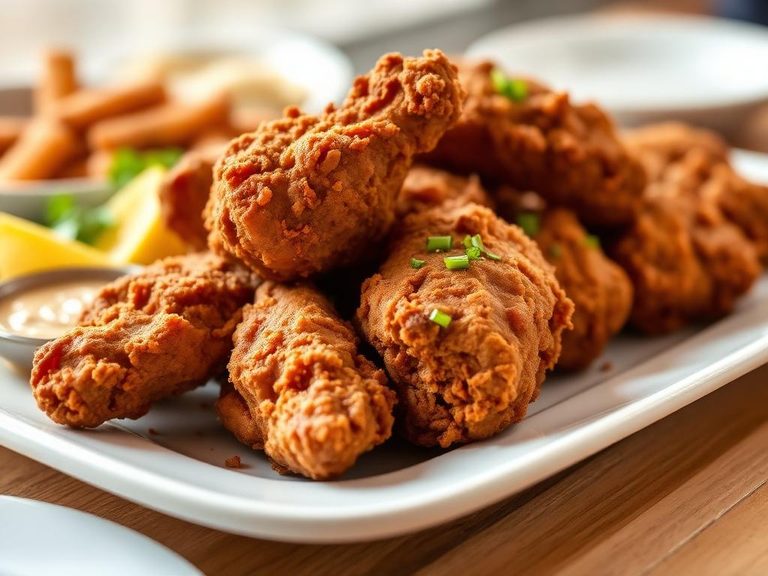
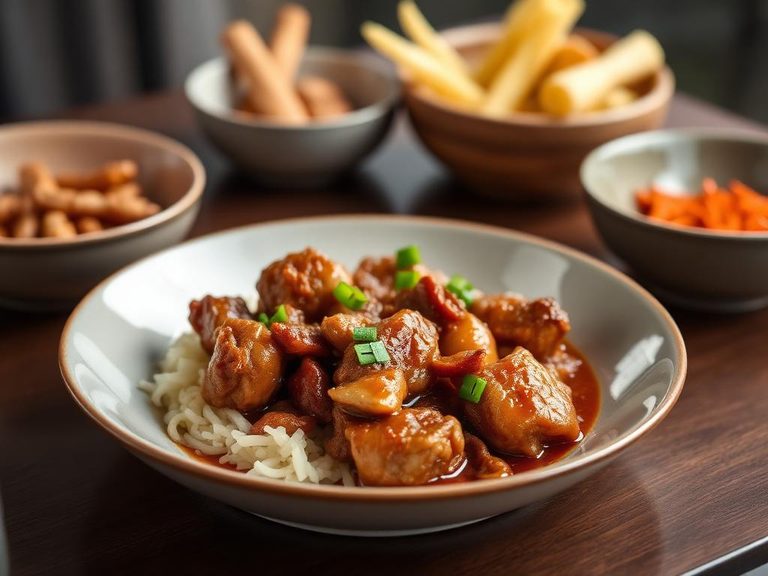
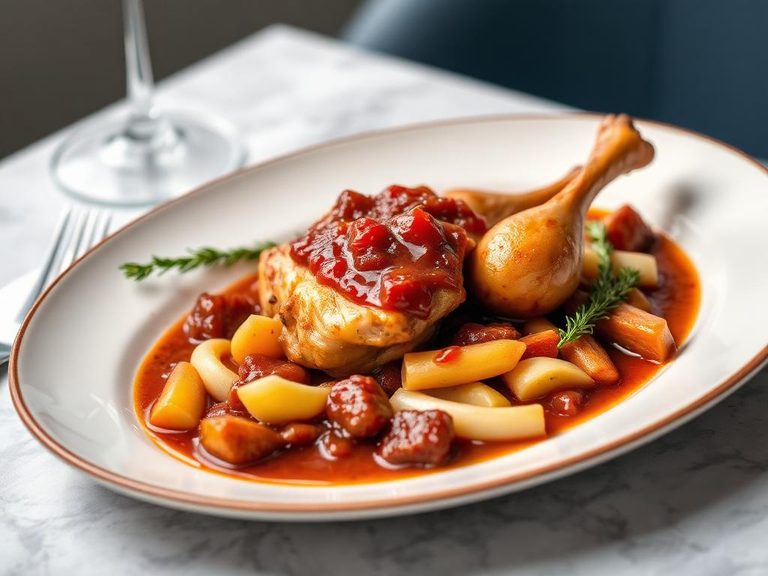
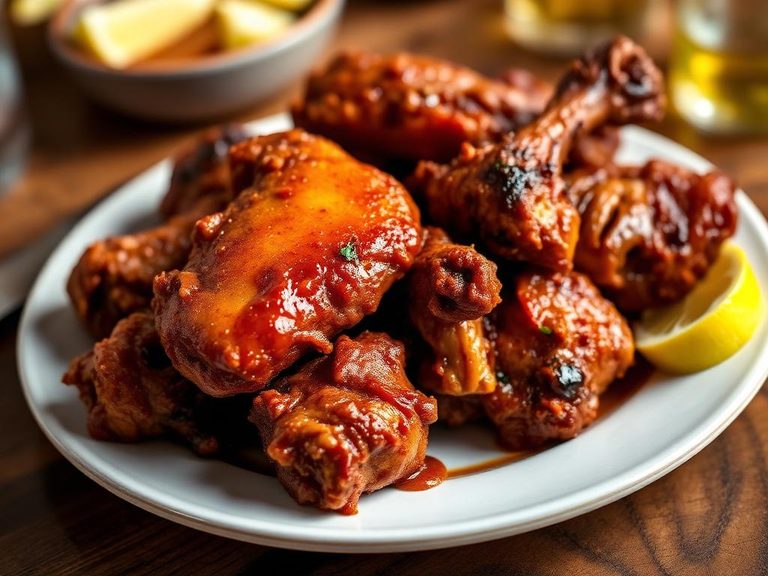
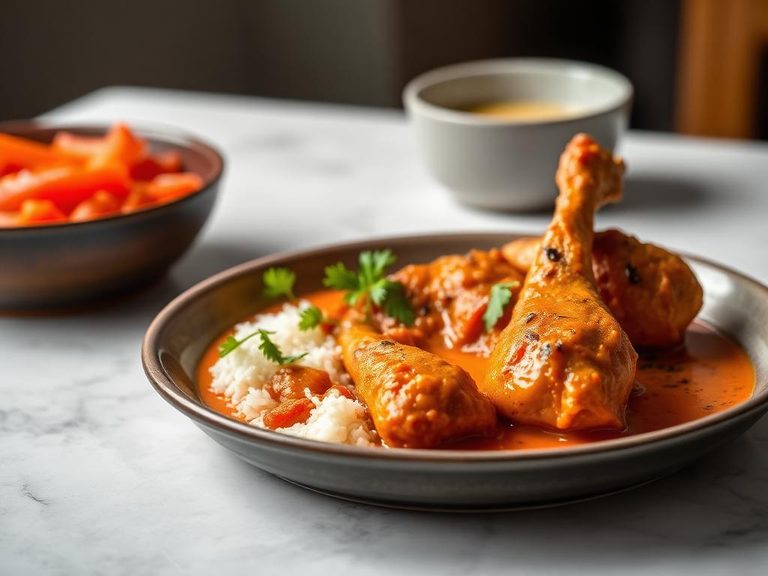
🍽️ Popular dishes

🌍 Where it's eaten
💡 Did you know?
The drumstick is anatomically the lower part of the chicken's leg (the tibia), and the muscle attached to it is one of the most exercised parts of the bird, which contributes to its denser texture and darker color compared to breast meat.
Full nutrition (USDA data · scales with serving)
| Water | 61.4 g |
| Energy | 206 kcal |
| Protein | 25.6 g |
| Total lipid (fat) | 11.5 g |
| Carbohydrate, by difference | 0.12 g |
| Fiber, total dietary | 0.00 g |
| Total Sugars | 0.12 g |
| Calcium, Ca | 22.0 mg |
| Iron, Fe | 1.0 mg |
| Magnesium, Mg | 23.0 mg |
| Phosphorus, P | 245 mg |
| Potassium, K | 279 mg |
| Sodium, Na | 392 mg |
| Zinc, Zn | 2.5 mg |
| Copper, Cu | 0.08 mg |
| Selenium, Se | 25.7 ug |
| Vitamin C, total ascorbic acid | 0.00 mg |
| Thiamin | 0.06 mg |
| Riboflavin | 0.22 mg |
| Niacin | 6.0 mg |
| Vitamin B-6 | 0.20 mg |
| Folate, total | 9.0 ug |
| Folic acid | 0.00 ug |
| Folate, food | 9.0 ug |
| Folate, DFE | 9.0 ug |
| Choline, total | 73.3 mg |
| Vitamin B-12 | 0.49 ug |
| Vitamin B-12, added | 0.00 ug |
| Vitamin A, RAE | 17.0 ug |
| Retinol | 17.0 ug |
| Carotene, beta | 0.00 ug |
| Carotene, alpha | 0.00 ug |
| Cryptoxanthin, beta | 0.00 ug |
| Lycopene | 0.00 ug |
| Lutein + zeaxanthin | 0.00 ug |
| Vitamin E (alpha-tocopherol) | 0.51 mg |
| Vitamin E, added | 0.00 mg |
| Vitamin D (D2 + D3) | 0.00 ug |
| Vitamin K (phylloquinone) | 0.00 ug |
| Alcohol, ethyl | 0.00 g |
| Caffeine | 0.00 mg |
| Theobromine | 0.00 mg |
Fat & fatty acid profile (per 100g)
| Fatty acids, total saturated | 2.9 g |
| SFA 4:0 | 0.00 g |
| SFA 6:0 | 0.00 g |
| SFA 8:0 | 0.00 g |
| SFA 10:0 | 0.00 g |
| SFA 12:0 | 0.00 g |
| SFA 14:0 | 0.06 g |
| SFA 16:0 | 2.3 g |
| SFA 18:0 | 0.50 g |
| Fatty acids, total monounsaturated | 4.8 g |
| MUFA 16:1 | 0.80 g |
| MUFA 18:1 | 3.9 g |
| MUFA 20:1 | 0.03 g |
| MUFA 22:1 | 0.00 g |
| Fatty acids, total polyunsaturated | 1.5 g |
| PUFA 18:2 | 1.4 g |
| PUFA 18:3 | 0.08 g |
| PUFA 18:4 | 0.00 g |
| PUFA 20:4 | 0.04 g |
| PUFA 20:5 n-3 (EPA) | 0.00 g |
| PUFA 22:5 n-3 (DPA) | 0.00 g |
| PUFA 22:6 n-3 (DHA) | 0.00 g |
| Cholesterol | 149 mg |
Amino acid profile (per 100g)
Estimated from Chicken, broilers or fryers, dark meat, drumstick, meat only, raw — USDA does not publish this profile for Chicken drumstick.
| Tryptophan | 0.22 g |
| Threonine | 0.92 g |
| Isoleucine | 0.93 g |
| Leucine | 1.7 g |
| Lysine | 1.8 g |
| Methionine | 0.56 g |
| Cystine | 0.23 g |
| Phenylalanine | 0.78 g |
| Tyrosine | 0.73 g |
| Valine | 0.94 g |
| Arginine | 1.4 g |
| Histidine | 0.58 g |
| Alanine | 1.2 g |
| Aspartic acid | 1.9 g |
| Glutamic acid | 3.2 g |
| Glycine | 0.89 g |
| Proline | 0.78 g |
| Serine | 0.81 g |
FAQ
Is chicken skin healthy to eat?
Chicken skin is high in fat, including saturated fat, and adds significant calories. While it contains some nutrients, it's best enjoyed in moderation as part of a balanced diet, especially for those managing weight or heart health.
How does the nutrition change if I remove the skin?
Removing the skin drastically reduces the fat and calorie content (by about half) while retaining most of the protein and minerals, making it a leaner protein choice.
What's the best way to cook a drumstick for maximum flavor?
Marinating before cooking, whether grilling, roasting, or braising, allows flavors to penetrate. Cooking with the bone in also helps keep the meat moist and adds depth to the flavor.
Nutrient density (calculated · NRF9.3)
Nutrient Rich Foods index: beneficial nutrients (protein, fiber, vitamins, minerals) minus saturated fat, added sugar & sodium, per 100 kcal.
NRF9.3 index — Fulgoni, Keast & Drewnowski, 2009. Computed from USDA nutrients.
Weight-loss friendliness (composite index)
Energy density 2.06 kcal/g · 50% calories from protein · 0.0 g fiber · 0.1 g sugar per 100 g.
Composite of energy density (Rolls et al., 1999), protein & fiber satiety, minus sugar. A calculated heuristic — ranks satiety-per-calorie, not a clinical measure.
Dietary load (calculated from USDA values)
Potential renal acid load. Positive = acid-forming, negative = alkaline-forming.
Sodium-to-potassium ratio: 1.41 (lower is better — aim for ≤ 1)
Sodium:potassium per WHO potassium guidance. Computed from USDA nutrients.