

Cherry pie filling
Common food

Photo: Wikipedia
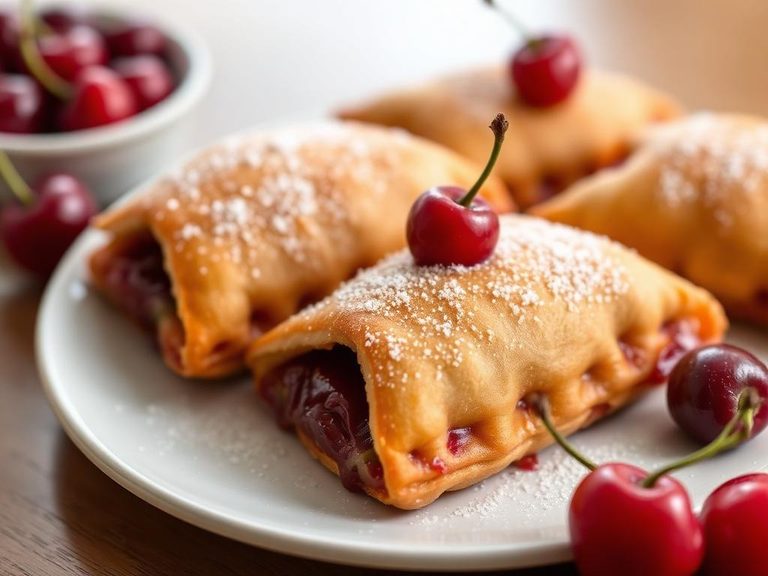
Cherry pie filling is a glossy, sweetened fruit preparation featuring cooked cherries suspended in a thick, gelatinous syrup. It offers a bright, tart-sweet flavor with a soft, yielding texture that bursts with fruitiness. Nutritionally, it is a concentrated source of carbohydrates, primarily from added sugars, with negligible protein and fat.
Calorie split: 2% protein · 92% carbs · 7% fat
↓ Full nutrition💚 Why it's loved
People love it for its intense, sweet-tart cherry flavor and the nostalgic comfort of classic desserts like cherry pie. Its thick, spoonable texture and vibrant red color make it a versatile and visually appealing topping or filling for countless treats.
⚠️ Watch-outs & how to enjoy it better
The high sugar content (nearly 25g per 100g) can cause rapid blood-sugar spikes, making it unsuitable for those managing diabetes or insulin resistance. To mitigate this, pair it with a source of protein or healthy fat (like nuts or Greek yogurt) to slow sugar absorption, and practice strict portion control. It may also contain added thickeners or preservatives that some individuals prefer to avoid.
Key benefits
- Provides a quick source of energy from carbohydrates
- Contains small amounts of dietary fiber from the cherries
- Offers a convenient, pre-made base for desserts and snacks
- Can be a source of antioxidants like anthocyanins from cherries
- Requires no preparation, saving time in cooking
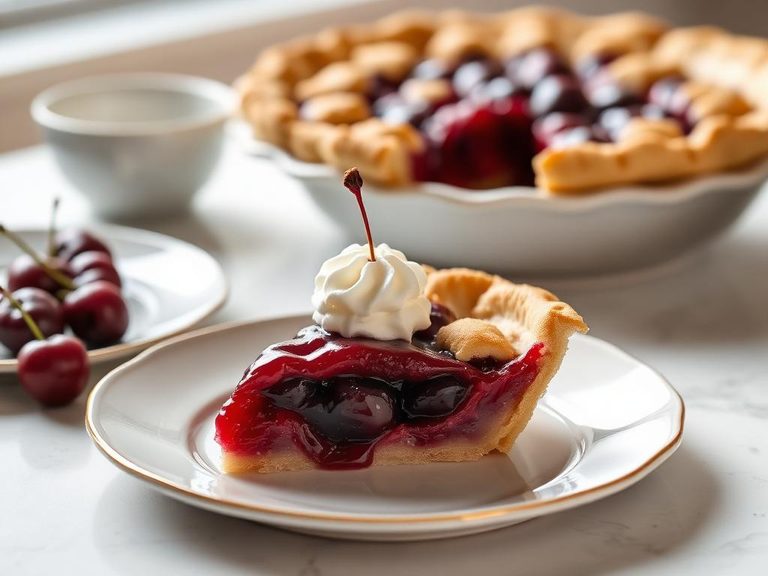
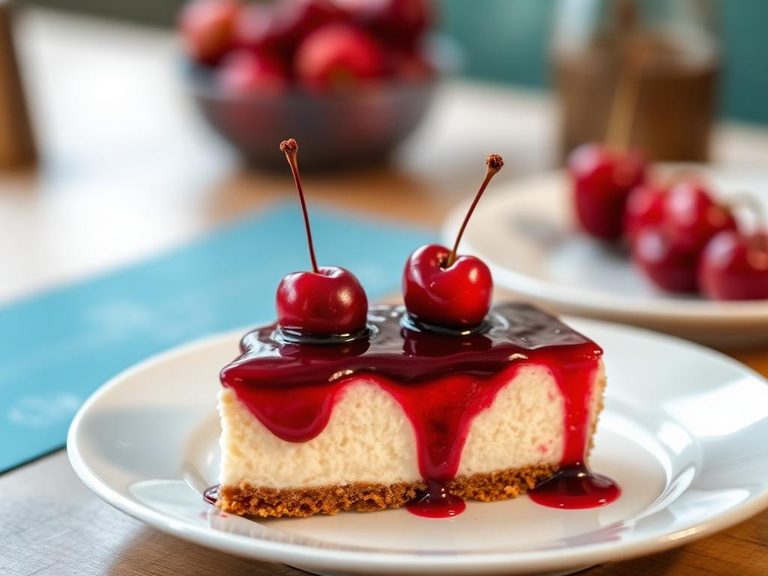
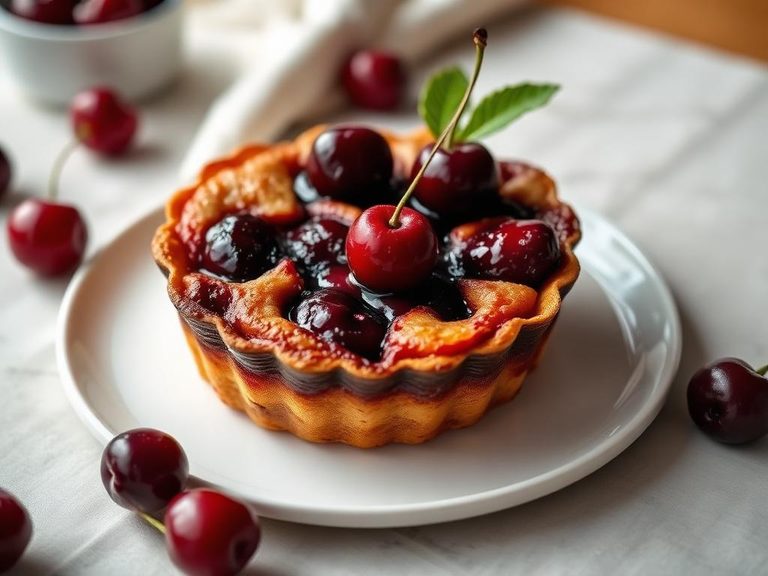
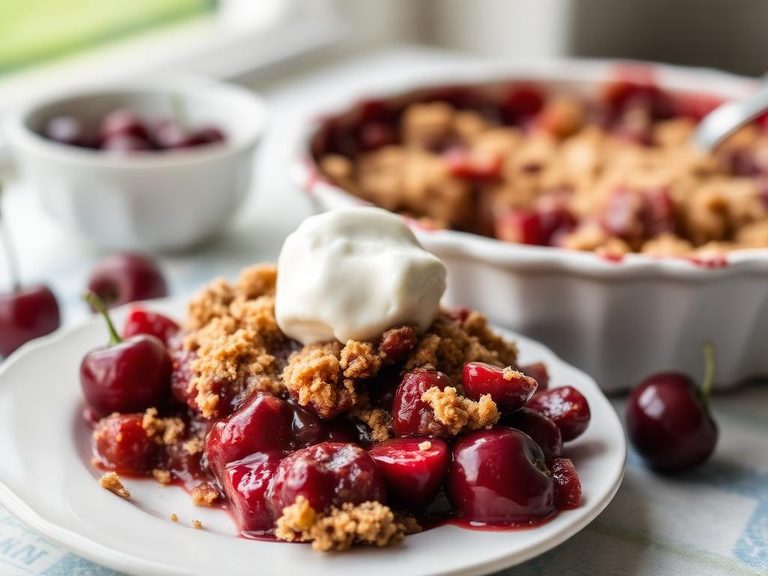
🍽️ Popular dishes
🌍 Where it's eaten
💡 Did you know?
The bright red color of commercial cherry pie filling is often enhanced with artificial dyes like Red 40, as the natural pigments in cooked cherries can fade to a duller hue.
Full nutrition (USDA data · scales with serving)
| Water | 69.6 g |
| Energy | 122 kcal |
| Protein | 0.60 g |
| Total lipid (fat) | 0.91 g |
| Carbohydrate, by difference | 28.6 g |
| Fiber, total dietary | 0.90 g |
| Total Sugars | 25.0 g |
| Calcium, Ca | 9.0 mg |
| Iron, Fe | 1.1 mg |
| Magnesium, Mg | 5.0 mg |
| Phosphorus, P | 8.0 mg |
| Potassium, K | 76.0 mg |
| Sodium, Na | 52.0 mg |
| Zinc, Zn | 0.06 mg |
| Copper, Cu | 0.06 mg |
| Selenium, Se | 0.20 ug |
| Vitamin C, total ascorbic acid | 1.6 mg |
| Thiamin | 0.01 mg |
| Riboflavin | 0.04 mg |
| Niacin | 0.14 mg |
| Vitamin B-6 | 0.03 mg |
| Folate, total | 6.0 ug |
| Folic acid | 0.00 ug |
| Folate, food | 6.0 ug |
| Folate, DFE | 6.0 ug |
| Choline, total | 3.3 mg |
| Vitamin B-12 | 0.00 ug |
| Vitamin B-12, added | 0.00 ug |
| Vitamin A, RAE | 37.0 ug |
| Retinol | 7.0 ug |
| Carotene, beta | 353 ug |
| Carotene, alpha | 0.00 ug |
| Cryptoxanthin, beta | 0.00 ug |
| Lycopene | 0.00 ug |
| Lutein + zeaxanthin | 44.0 ug |
| Vitamin E (alpha-tocopherol) | 0.26 mg |
| Vitamin E, added | 0.00 mg |
| Vitamin D (D2 + D3) | 0.00 ug |
| Vitamin K (phylloquinone) | 2.0 ug |
| Alcohol, ethyl | 0.00 g |
| Caffeine | 0.00 mg |
| Theobromine | 0.00 mg |
Fat & fatty acid profile (per 100g)
| Fatty acids, total saturated | 0.16 g |
| SFA 4:0 | 0.00 g |
| SFA 6:0 | 0.00 g |
| SFA 8:0 | 0.00 g |
| SFA 10:0 | 0.00 g |
| SFA 12:0 | 0.00 g |
| SFA 14:0 | 0.00 g |
| SFA 16:0 | 0.09 g |
| SFA 18:0 | 0.06 g |
| Fatty acids, total monounsaturated | 0.39 g |
| MUFA 16:1 | 0.00 g |
| MUFA 18:1 | 0.39 g |
| MUFA 20:1 | 0.00 g |
| MUFA 22:1 | 0.00 g |
| Fatty acids, total polyunsaturated | 0.26 g |
| PUFA 18:2 | 0.22 g |
| PUFA 18:3 | 0.03 g |
| PUFA 18:4 | 0.00 g |
| PUFA 20:4 | 0.00 g |
| PUFA 20:5 n-3 (EPA) | 0.00 g |
| PUFA 22:5 n-3 (DPA) | 0.00 g |
| PUFA 22:6 n-3 (DHA) | 0.00 g |
| Cholesterol | 0.00 mg |
Amino acid profile (per 100g)
Estimated from Pie fillings, canned, cherry — USDA does not publish this profile for Cherry pie filling.
| Tryptophan | 0.00 g |
| Threonine | 0.01 g |
| Isoleucine | 0.01 g |
| Leucine | 0.01 g |
| Lysine | 0.02 g |
| Methionine | 0.00 g |
| Cystine | 0.00 g |
| Phenylalanine | 0.01 g |
| Tyrosine | 0.01 g |
| Valine | 0.01 g |
| Arginine | 0.01 g |
| Histidine | 0.01 g |
| Alanine | 0.01 g |
| Aspartic acid | 0.25 g |
| Glutamic acid | 0.02 g |
| Glycine | 0.01 g |
| Proline | 0.01 g |
| Serine | 0.01 g |
FAQ
Is cherry pie filling the same as canned cherries?
No. Canned cherries are typically packed in water or light syrup, while pie filling is specifically thickened with starch (like cornstarch) and heavily sweetened to create a gel-like consistency suitable for baking.
Can I use cherry pie filling in savory dishes?
While uncommon, it can be used as a glaze for meats like pork or chicken in some fusion recipes, but its high sugar content makes it more suited for sweet applications.
How long does opened cherry pie filling last?
Once opened, it should be transferred to an airtight container and refrigerated, where it will keep for about 3-5 days. Freezing is not recommended as the texture may become watery.
Nutrient density (calculated · NRF9.3)
Nutrient Rich Foods index: beneficial nutrients (protein, fiber, vitamins, minerals) minus saturated fat, added sugar & sodium, per 100 kcal.
NRF9.3 index — Fulgoni, Keast & Drewnowski, 2009. Computed from USDA nutrients.
Weight-loss friendliness (composite index)
Energy density 1.22 kcal/g · 2% calories from protein · 0.9 g fiber · 25.0 g sugar per 100 g.
Composite of energy density (Rolls et al., 1999), protein & fiber satiety, minus sugar. A calculated heuristic — ranks satiety-per-calorie, not a clinical measure.
Dietary load (calculated from USDA values)
Potential renal acid load. Positive = acid-forming, negative = alkaline-forming.
Sodium-to-potassium ratio: 0.68 (lower is better — aim for ≤ 1)
Sodium:potassium per WHO potassium guidance. Computed from USDA nutrients.