

Pie fillings, canned, cherry
Whole food · Sweets

Photo: Wikipedia
Canned cherry pie filling is a glossy, ruby-red preserve of sweetened cherries suspended in a thick, gel-like syrup. It delivers a vibrant, candy-like cherry flavor and a soft, uniform texture with a slight pop from the fruit skins. Nutritionally, it is a concentrated source of quick energy from carbohydrates, with minimal protein or fat.
Calorie split: 1% protein · 98% carbs · 1% fat
↓ Full nutrition💚 Why it's loved
People love it for its intense, nostalgic sweetness and the ease of transforming it into a classic dessert in minutes. It's a beloved staple for its versatility, instantly filling a pie crust, topping cheesecake, or stirring into yogurt.
⚠️ Watch-outs & how to enjoy it better
The high sugar content and lack of protein/fat can lead to rapid blood-sugar spikes. To counteract this, pair a small portion with a source of protein (like Greek yogurt) or healthy fat (like nuts) to slow sugar absorption. Those monitoring sodium should check labels, as some brands add salt.
Key benefits
- Provides quick energy from simple carbohydrates
- Convenient and shelf-stable for long-term pantry storage
- Offers a consistent, ready-to-use cherry flavor year-round
- Low in fat and contains a small amount of dietary fiber
- Versatile base for both sweet and savory culinary applications
🍽️ Popular dishes
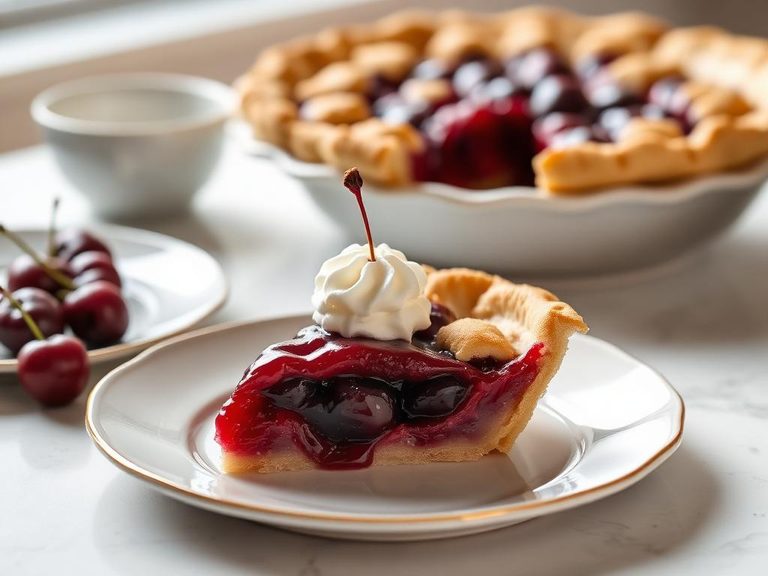
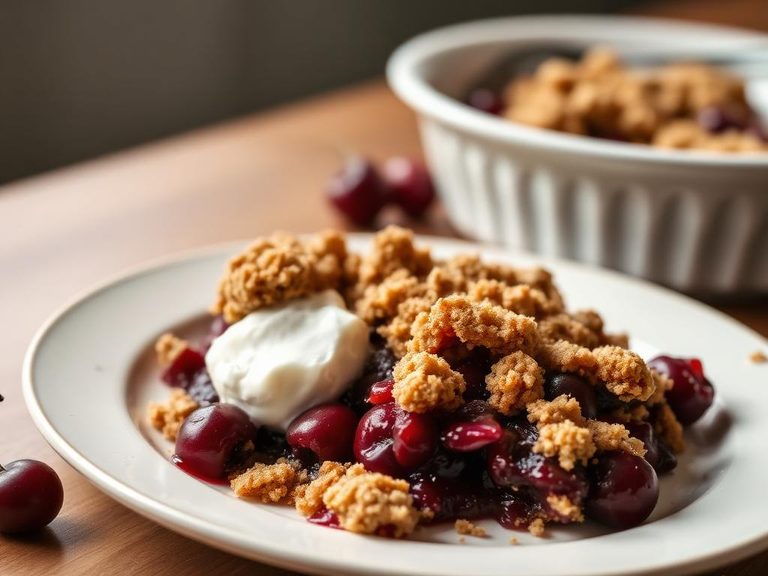
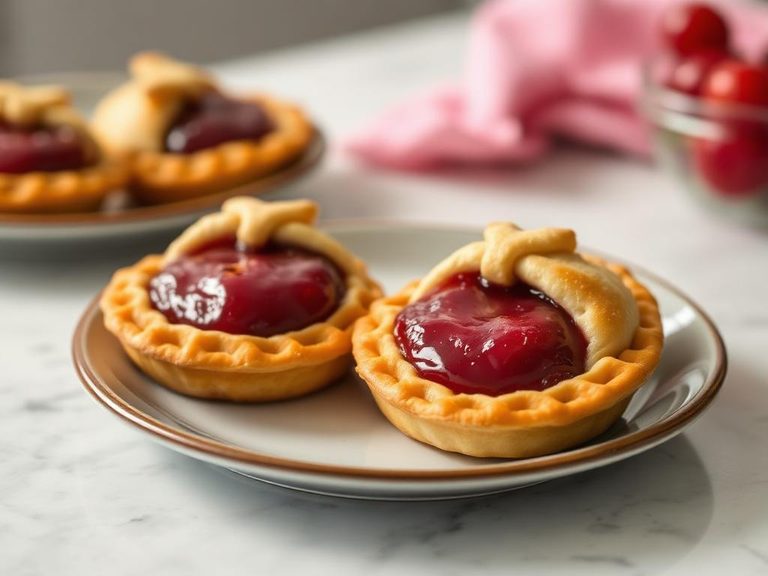
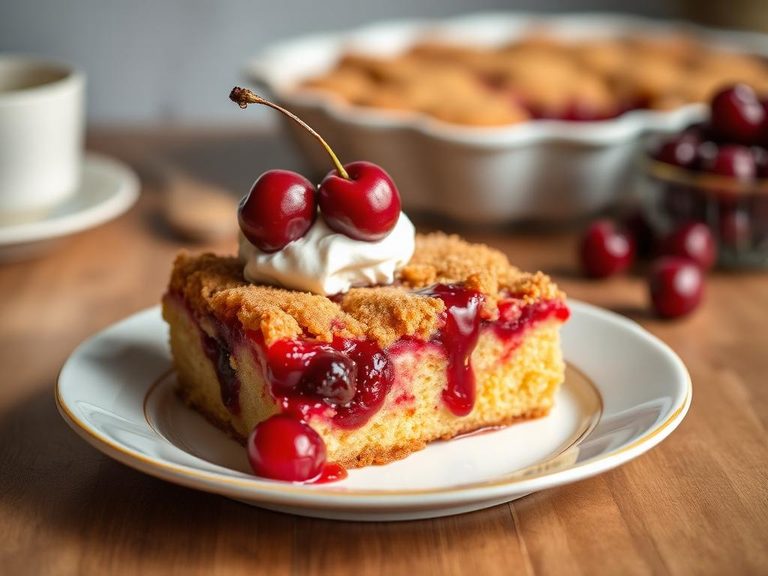

🌍 Where it's eaten
💡 Did you know?
The thick, glossy consistency of canned cherry pie filling is achieved using modified corn starch and sometimes red food dye (like Allura Red) to maintain its iconic, vibrant hue throughout its shelf life.
Full nutrition (USDA data · scales with serving)
| Water | 71.2 g |
| Energy | 115 kcal |
| Energy | 481 kj |
| Protein | 0.37 g |
| Total lipid (fat) | 0.07 g |
| Ash | 0.20 g |
| Carbohydrate, by difference | 28.0 g |
| Fiber, total dietary | 0.60 g |
| Calcium, Ca | 11.0 mg |
| Iron, Fe | 0.24 mg |
| Magnesium, Mg | 7.0 mg |
| Phosphorus, P | 15.0 mg |
| Potassium, K | 105 mg |
| Sodium, Na | 18.0 mg |
| Zinc, Zn | 0.05 mg |
| Copper, Cu | 0.08 mg |
| Manganese, Mn | 0.03 mg |
| Selenium, Se | 0.40 ug |
| Vitamin C, total ascorbic acid | 3.6 mg |
| Thiamin | 0.03 mg |
| Riboflavin | 0.02 mg |
| Niacin | 0.14 mg |
| Pantothenic acid | 0.06 mg |
| Vitamin B-6 | 0.04 mg |
| Folate, total | 4.0 ug |
| Folic acid | 0.00 ug |
| Folate, food | 4.0 ug |
| Folate, DFE | 4.0 ug |
| Vitamin B-12 | 0.00 ug |
| Vitamin A, RAE | 10.0 ug |
| Retinol | 0.00 ug |
| Vitamin A, IU | 205 iu |
| Vitamin D (D2 + D3), International Units | 0.00 iu |
| Vitamin D (D2 + D3) | 0.00 ug |
| Vitamin D3 (cholecalciferol) | 0.00 ug |
Fat & fatty acid profile (per 100g)
| Fatty acids, total saturated | 0.02 g |
| SFA 14:0 | 0.00 g |
| SFA 16:0 | 0.01 g |
| SFA 18:0 | 0.00 g |
| Fatty acids, total monounsaturated | 0.02 g |
| MUFA 16:1 | 0.00 g |
| MUFA 18:1 | 0.02 g |
| Fatty acids, total polyunsaturated | 0.02 g |
| PUFA 18:2 | 0.01 g |
| PUFA 18:3 | 0.01 g |
| Cholesterol | 0.00 mg |
Amino acid profile (per 100g)
| Tryptophan | 0.00 g |
| Threonine | 0.01 g |
| Isoleucine | 0.01 g |
| Leucine | 0.01 g |
| Lysine | 0.02 g |
| Methionine | 0.00 g |
| Cystine | 0.00 g |
| Phenylalanine | 0.01 g |
| Tyrosine | 0.01 g |
| Valine | 0.01 g |
| Arginine | 0.01 g |
| Histidine | 0.01 g |
| Alanine | 0.01 g |
| Aspartic acid | 0.25 g |
| Glutamic acid | 0.02 g |
| Glycine | 0.01 g |
| Proline | 0.01 g |
| Serine | 0.01 g |
FAQ
Is canned cherry pie filling the same as cherry pie?
No. The canned filling is just the pre-made fruit mixture. A cherry pie is the complete dessert, which typically consists of a pastry crust filled with this (or homemade) cherry filling and then baked.
Can I use this filling for things other than pie?
Absolutely! It's excellent as a topping for ice cream, pancakes, or cheesecake. You can also use it as a filling for crepes, Danish pastries, or thumbprint cookies, or even stir it into oatmeal.
How long does an opened can last in the fridge?
Once opened, transfer the filling to an airtight container and refrigerate. It will keep well for 3 to 5 days. Freezing is not recommended as the starch-based sauce may become watery upon thawing.
Nutrient density (calculated · NRF9.3)
Nutrient Rich Foods index: beneficial nutrients (protein, fiber, vitamins, minerals) minus saturated fat, added sugar & sodium, per 100 kcal.
NRF9.3 index — Fulgoni, Keast & Drewnowski, 2009. Computed from USDA nutrients.
Weight-loss friendliness (composite index)
Energy density 1.15 kcal/g · 1% calories from protein · 0.6 g fiber · 0.0 g sugar per 100 g.
Composite of energy density (Rolls et al., 1999), protein & fiber satiety, minus sugar. A calculated heuristic — ranks satiety-per-calorie, not a clinical measure.
Dietary load (calculated from USDA values)
Potential renal acid load. Positive = acid-forming, negative = alkaline-forming.
Sodium-to-potassium ratio: 0.17 (lower is better — aim for ≤ 1)
Sodium:potassium per WHO potassium guidance. Computed from USDA nutrients.