

Cheeseburger, on white bun, 1 small patty
Common food
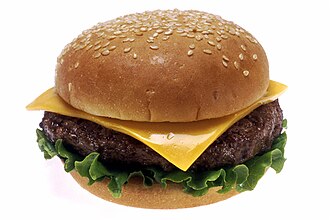
Photo: Wikipedia
A small, single-patty cheeseburger on a soft white bun is a compact, handheld classic, delivering a savory, juicy bite from the beef patty, a salty, creamy melt from the cheese, and the mild, pillowy texture of the bun. Nutritionally, it's a dense package of protein and fat for its size, with a notable carbohydrate load from the refined bun, making it a satisfying but energy-intensive treat.
Calorie split: 24% protein · 27% carbs · 49% fat
↓ Full nutrition💚 Why it's loved
People adore it for the iconic, comforting combination of savory beef, melted cheese, and soft bread—a flavor profile that's deeply ingrained in casual dining culture. Its simplicity and customizability make it a universally accessible and satisfying quick meal.
⚠️ Watch-outs & how to enjoy it better
The refined white bun can cause rapid blood-sugar spikes, and the meal is often high in sodium and saturated fat. To counteract this, pair it with a side of non-starchy vegetables (like a salad or pickles) to add fiber and slow digestion, and consider opting for a whole-grain bun or open-faced version to reduce the glycemic impact.
Key benefits
- Provides a solid dose of complete protein (17.6g per 100g) for muscle maintenance.
- Offers quick energy from its carbohydrate content.
- Contains essential nutrients like iron, zinc, and B vitamins from the beef.
- Can be a convenient, calorie-dense meal for high-energy needs.
🍽️ Popular dishes
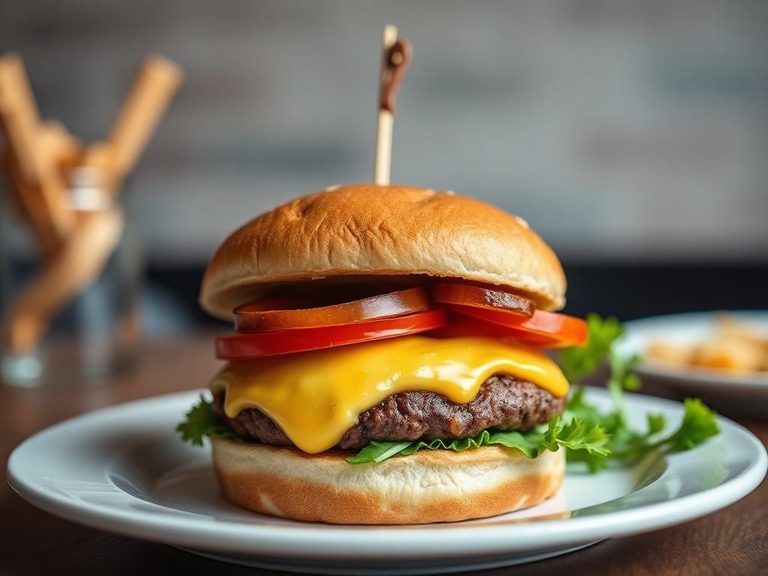
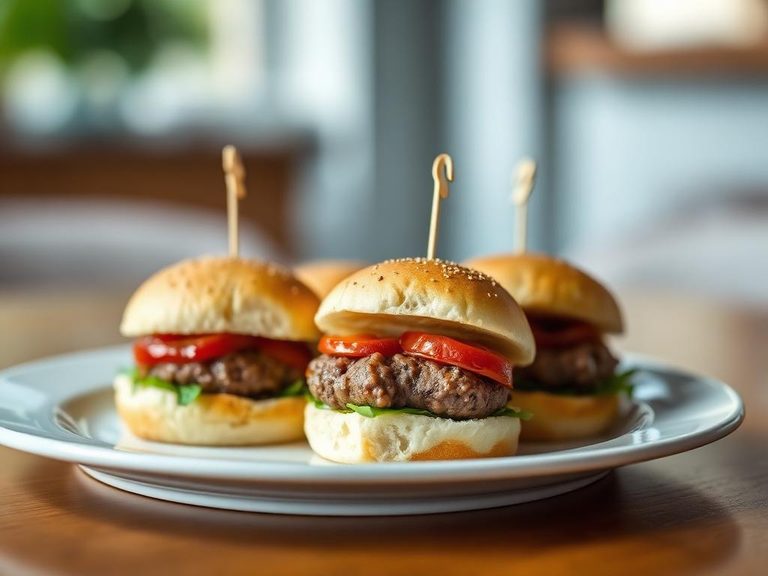
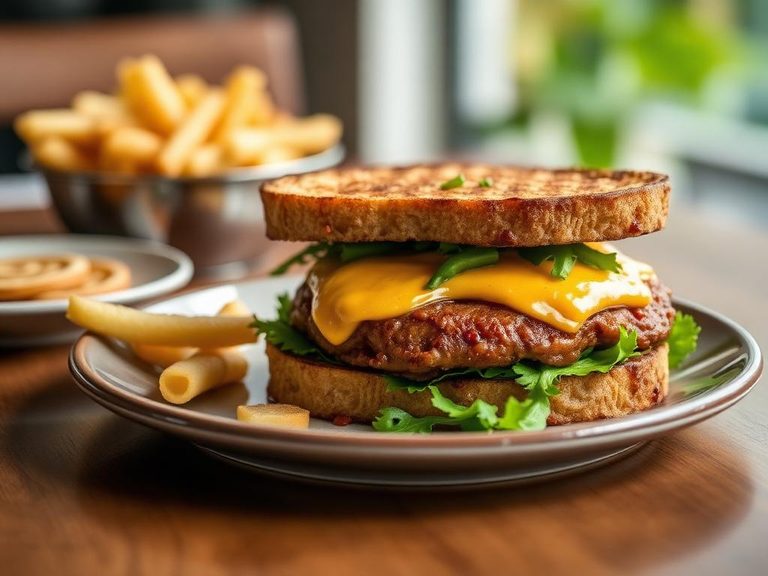
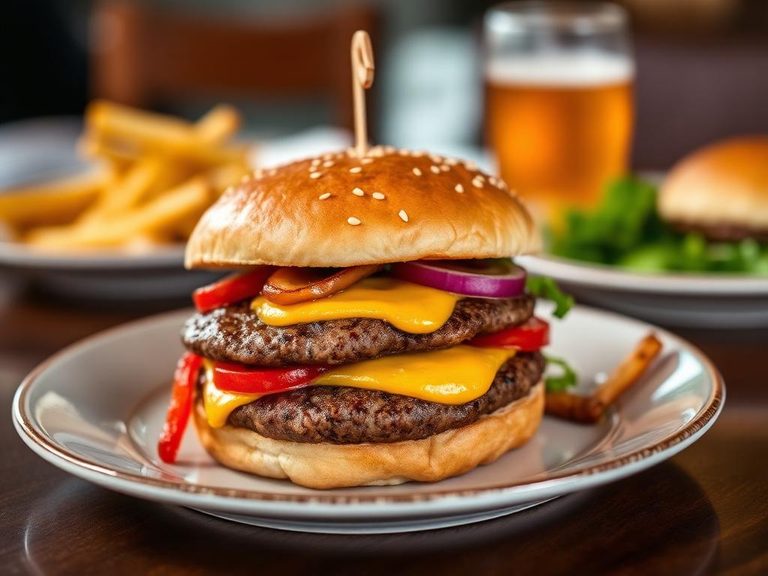
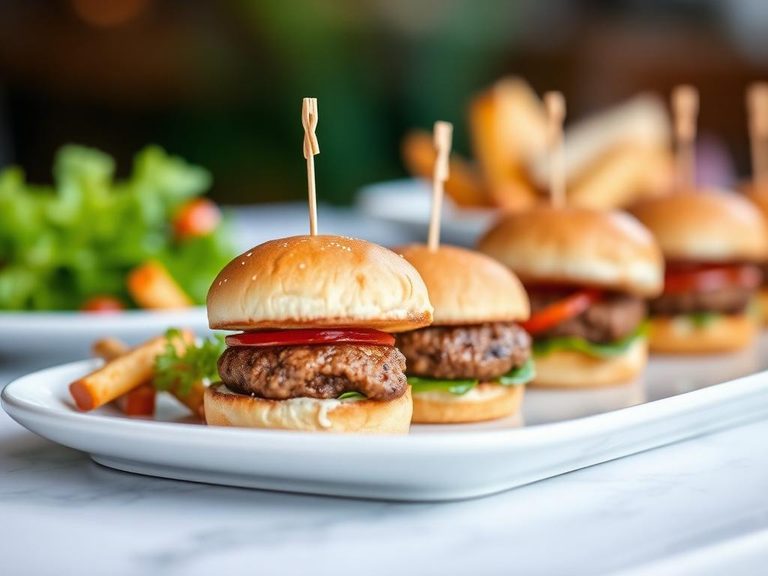
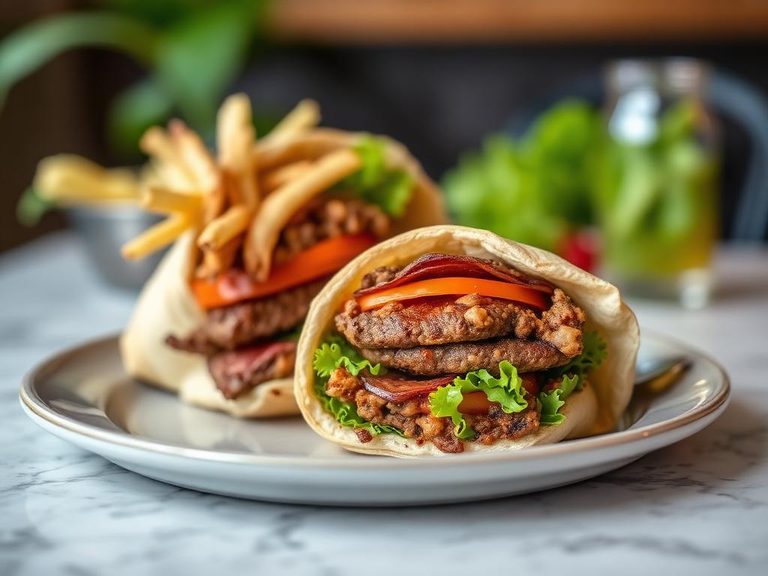
🌍 Where it's eaten
💡 Did you know?
The cheeseburger is believed to have been trademarked in 1935 by Louis Ballst of the Humpty Dumpty Drive-In in Denver, Colorado, though several other diners across the U.S. also claim to have invented it around the same time.
Full nutrition (USDA data · scales with serving)
| Water | 44.5 g |
| Energy | 298 kcal |
| Protein | 17.6 g |
| Total lipid (fat) | 16.1 g |
| Carbohydrate, by difference | 19.6 g |
| Fiber, total dietary | 0.70 g |
| Total Sugars | 3.2 g |
| Calcium, Ca | 196 mg |
| Iron, Fe | 2.5 mg |
| Magnesium, Mg | 22.0 mg |
| Phosphorus, P | 208 mg |
| Potassium, K | 212 mg |
| Sodium, Na | 459 mg |
| Zinc, Zn | 3.0 mg |
| Copper, Cu | 0.08 mg |
| Selenium, Se | 23.7 ug |
| Vitamin C, total ascorbic acid | 0.50 mg |
| Thiamin | 0.22 mg |
| Riboflavin | 0.25 mg |
| Niacin | 4.1 mg |
| Vitamin B-6 | 0.24 mg |
| Folate, total | 48.0 ug |
| Folic acid | 20.0 ug |
| Folate, food | 28.0 ug |
| Folate, DFE | 61.0 ug |
| Choline, total | 43.9 mg |
| Vitamin B-12 | 1.6 ug |
| Vitamin B-12, added | 0.00 ug |
| Vitamin A, RAE | 41.0 ug |
| Retinol | 40.0 ug |
| Carotene, beta | 12.0 ug |
| Carotene, alpha | 0.00 ug |
| Cryptoxanthin, beta | 1.0 ug |
| Lycopene | 0.00 ug |
| Lutein + zeaxanthin | 5.0 ug |
| Vitamin E (alpha-tocopherol) | 0.21 mg |
| Vitamin E, added | 0.00 mg |
| Vitamin D (D2 + D3) | 0.60 ug |
| Vitamin K (phylloquinone) | 3.3 ug |
| Alcohol, ethyl | 0.00 g |
| Caffeine | 0.00 mg |
| Theobromine | 0.00 mg |
Fat & fatty acid profile (per 100g)
| Fatty acids, total saturated | 6.9 g |
| SFA 4:0 | 0.09 g |
| SFA 6:0 | 0.07 g |
| SFA 8:0 | 0.04 g |
| SFA 10:0 | 0.11 g |
| SFA 12:0 | 0.13 g |
| SFA 14:0 | 0.73 g |
| SFA 16:0 | 3.7 g |
| SFA 18:0 | 1.8 g |
| Fatty acids, total monounsaturated | 5.7 g |
| MUFA 16:1 | 0.40 g |
| MUFA 18:1 | 5.2 g |
| MUFA 20:1 | 0.04 g |
| MUFA 22:1 | 0.00 g |
| Fatty acids, total polyunsaturated | 1.1 g |
| PUFA 18:2 | 1.0 g |
| PUFA 18:3 | 0.11 g |
| PUFA 18:4 | 0.00 g |
| PUFA 20:4 | 0.01 g |
| PUFA 20:5 n-3 (EPA) | 0.00 g |
| PUFA 22:5 n-3 (DPA) | 0.01 g |
| PUFA 22:6 n-3 (DHA) | 0.00 g |
| Cholesterol | 53.0 mg |
Amino acid profile (per 100g)
Estimated from Fast foods, cheeseburger; double, regular patty; double decker bun with condiments and special sauce — USDA does not publish this profile for Cheeseburger.
| Tryptophan | 0.11 g |
| Threonine | 0.39 g |
| Isoleucine | 0.44 g |
| Leucine | 0.81 g |
| Lysine | 0.67 g |
| Methionine | 0.24 g |
| Cystine | 0.15 g |
| Phenylalanine | 0.45 g |
| Tyrosine | 0.24 g |
| Valine | 0.52 g |
| Arginine | 0.58 g |
| Histidine | 0.29 g |
| Alanine | 0.61 g |
| Aspartic acid | 0.74 g |
| Glutamic acid | 2.4 g |
| Glycine | 0.70 g |
| Proline | 0.86 g |
| Serine | 0.44 g |
FAQ
Is a small cheeseburger a good source of protein?
Yes, at 17.6g of protein per 100g, a small cheeseburger provides a significant amount of high-quality, complete protein, making it effective for satiety and muscle support.
How does the white bun affect the nutrition?
The refined white bun contributes simple carbohydrates with little fiber (0.7g per 100g), which can lead to faster digestion and blood sugar elevation compared to whole-grain alternatives.
What's the best way to make it a more balanced meal?
Serve it with a large side salad or steamed vegetables to add fiber and volume, and consider adding lettuce, tomato, and onion directly on the burger to boost nutrient content without significantly increasing calories.
Nutrient density (calculated · NRF9.3)
Nutrient Rich Foods index: beneficial nutrients (protein, fiber, vitamins, minerals) minus saturated fat, added sugar & sodium, per 100 kcal.
NRF9.3 index — Fulgoni, Keast & Drewnowski, 2009. Computed from USDA nutrients.
Weight-loss friendliness (composite index)
Energy density 2.98 kcal/g · 24% calories from protein · 0.7 g fiber · 3.2 g sugar per 100 g.
Composite of energy density (Rolls et al., 1999), protein & fiber satiety, minus sugar. A calculated heuristic — ranks satiety-per-calorie, not a clinical measure.
Dietary load (calculated from USDA values)
Potential renal acid load. Positive = acid-forming, negative = alkaline-forming.
Sodium-to-potassium ratio: 2.17 (lower is better — aim for ≤ 1)
Sodium:potassium per WHO potassium guidance. Computed from USDA nutrients.