

Cheeseburger, from school cafeteria
Common food

Photo: Wikipedia
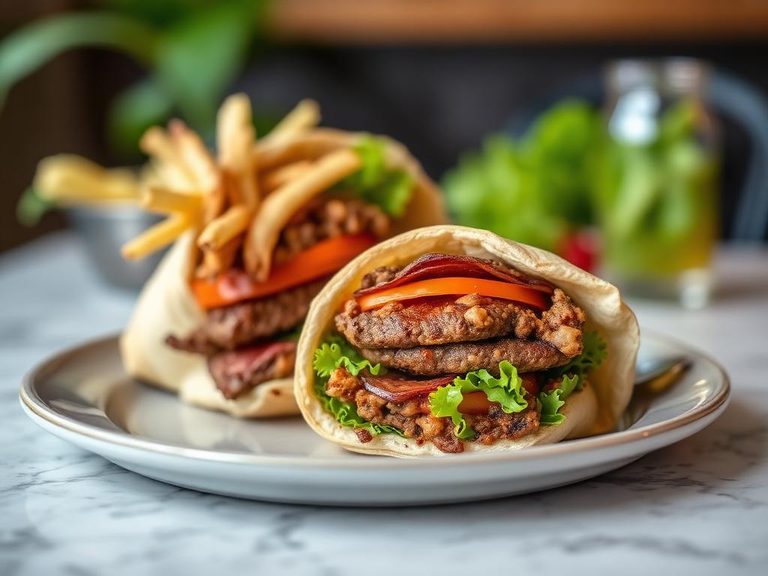
A school cafeteria cheeseburger is a compact, utilitarian sandwich featuring a thin beef patty, a slice of processed American cheese, and a soft, often steamed bun. Its flavor is a nostalgic blend of salty, savory beef, mild creamy cheese, and a hint of tang from condiments, with a texture that's uniformly soft and easy to eat. Nutritionally, it offers a solid protein punch for its size but is notably lean in fat compared to a standard diner burger, making it a surprisingly protein-dense, moderate-calorie meal.
Calorie split: 30% protein · 38% carbs · 32% fat
↓ Full nutrition💚 Why it's loved
People love it for its powerful nostalgia, instantly evoking memories of school days and childhood. The simple, predictable combination of salty beef and melted cheese on a soft bun is a universally comforting and satisfying flavor profile.
⚠️ Watch-outs & how to enjoy it better
The soft bun and processed cheese can cause a rapid blood-sugar spike, especially for those with insulin sensitivity. To counteract this, pair it with a side of raw vegetables or a salad to add fiber and slow digestion. The sodium content can also be high; drinking water and choosing a low-sodium side like fruit can help balance intake.
Key benefits
- Provides a high protein-to-calorie ratio, ideal for growing students.
- A convenient, single-serving source of energy and satiety.
- Contains calcium and phosphorus from the cheese for bone health.
- Offers a familiar, comforting meal that encourages eating in a school setting.
- The lean patty contributes iron and B vitamins.
🍽️ Popular dishes
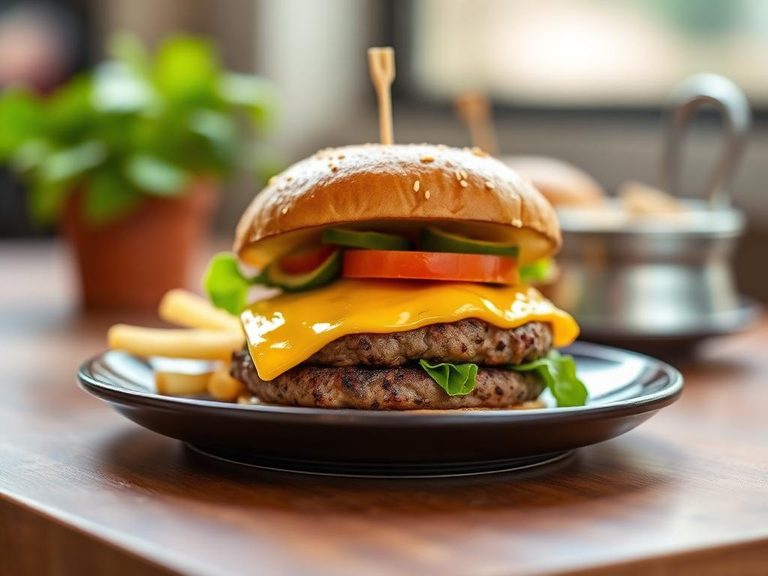
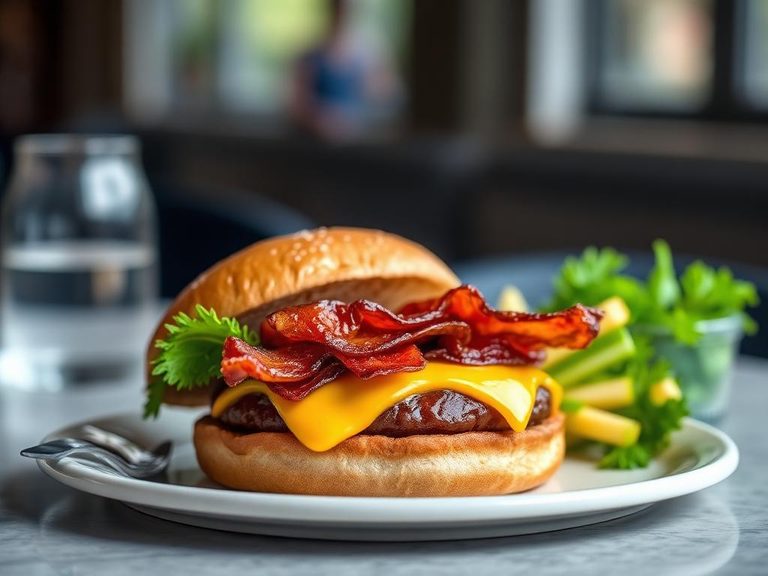
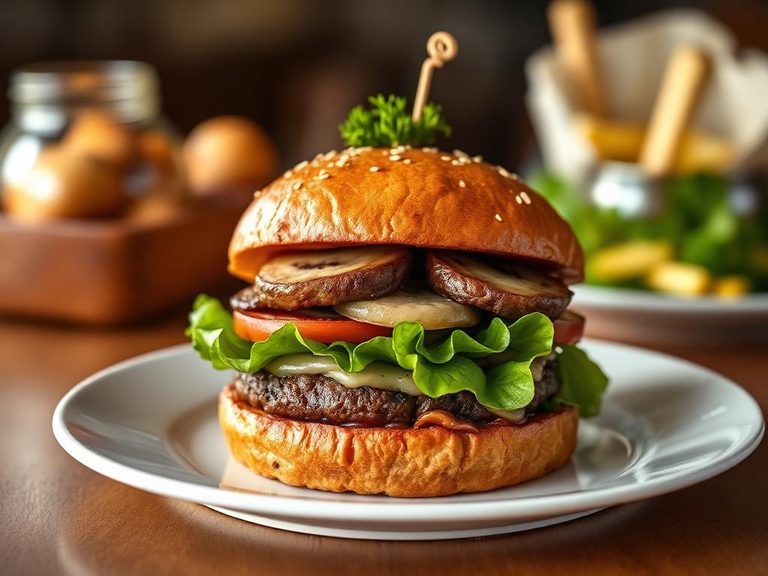
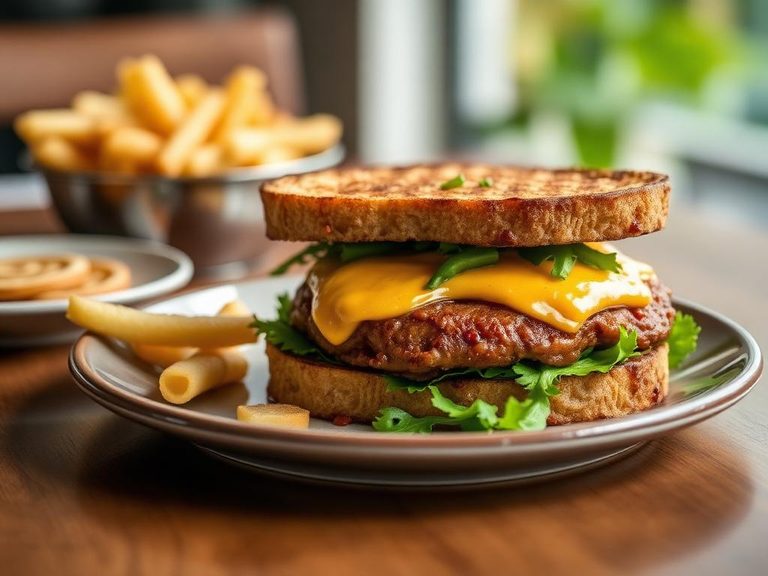
🌍 Where it's eaten
💡 Did you know?
The school cafeteria cheeseburger is often made with a 'commodity' beef patty, a standardized product from the USDA's commodity food program, ensuring consistency in size and nutrition across thousands of schools nationwide.
Full nutrition (USDA data · scales with serving)
| Water | 47.2 g |
| Energy | 250 kcal |
| Protein | 18.7 g |
| Total lipid (fat) | 8.6 g |
| Carbohydrate, by difference | 23.4 g |
| Fiber, total dietary | 2.7 g |
| Total Sugars | 2.7 g |
| Calcium, Ca | 162 mg |
| Iron, Fe | 2.7 mg |
| Magnesium, Mg | 40.0 mg |
| Phosphorus, P | 215 mg |
| Potassium, K | 233 mg |
| Sodium, Na | 313 mg |
| Zinc, Zn | 3.6 mg |
| Copper, Cu | 0.14 mg |
| Selenium, Se | 26.0 ug |
| Vitamin C, total ascorbic acid | 0.10 mg |
| Thiamin | 0.22 mg |
| Riboflavin | 0.22 mg |
| Niacin | 4.7 mg |
| Vitamin B-6 | 0.24 mg |
| Folate, total | 42.0 ug |
| Folic acid | 7.0 ug |
| Folate, food | 35.0 ug |
| Folate, DFE | 47.0 ug |
| Choline, total | 45.3 mg |
| Vitamin B-12 | 1.1 ug |
| Vitamin B-12, added | 0.00 ug |
| Vitamin A, RAE | 15.0 ug |
| Retinol | 15.0 ug |
| Carotene, beta | 4.0 ug |
| Carotene, alpha | 0.00 ug |
| Cryptoxanthin, beta | 0.00 ug |
| Lycopene | 0.00 ug |
| Lutein + zeaxanthin | 33.0 ug |
| Vitamin E (alpha-tocopherol) | 0.27 mg |
| Vitamin E, added | 0.00 mg |
| Vitamin D (D2 + D3) | 0.00 ug |
| Vitamin K (phylloquinone) | 3.4 ug |
| Alcohol, ethyl | 0.00 g |
| Caffeine | 0.00 mg |
| Theobromine | 0.00 mg |
Fat & fatty acid profile (per 100g)
| Fatty acids, total saturated | 3.4 g |
| SFA 4:0 | 0.04 g |
| SFA 6:0 | 0.04 g |
| SFA 8:0 | 0.02 g |
| SFA 10:0 | 0.06 g |
| SFA 12:0 | 0.07 g |
| SFA 14:0 | 0.33 g |
| SFA 16:0 | 1.8 g |
| SFA 18:0 | 0.96 g |
| Fatty acids, total monounsaturated | 2.8 g |
| MUFA 16:1 | 0.20 g |
| MUFA 18:1 | 2.5 g |
| MUFA 20:1 | 0.02 g |
| MUFA 22:1 | 0.00 g |
| Fatty acids, total polyunsaturated | 1.1 g |
| PUFA 18:2 | 0.92 g |
| PUFA 18:3 | 0.10 g |
| PUFA 18:4 | 0.00 g |
| PUFA 20:4 | 0.02 g |
| PUFA 20:5 n-3 (EPA) | 0.00 g |
| PUFA 22:5 n-3 (DPA) | 0.00 g |
| PUFA 22:6 n-3 (DHA) | 0.00 g |
| Cholesterol | 42.0 mg |
Amino acid profile (per 100g)
Estimated from Fast foods, cheeseburger; double, regular patty; double decker bun with condiments and special sauce — USDA does not publish this profile for Cheeseburger.
| Tryptophan | 0.11 g |
| Threonine | 0.39 g |
| Isoleucine | 0.44 g |
| Leucine | 0.81 g |
| Lysine | 0.67 g |
| Methionine | 0.24 g |
| Cystine | 0.15 g |
| Phenylalanine | 0.45 g |
| Tyrosine | 0.24 g |
| Valine | 0.52 g |
| Arginine | 0.58 g |
| Histidine | 0.29 g |
| Alanine | 0.61 g |
| Aspartic acid | 0.74 g |
| Glutamic acid | 2.4 g |
| Glycine | 0.70 g |
| Proline | 0.86 g |
| Serine | 0.44 g |
FAQ
Is a school cafeteria cheeseburger healthier than a fast-food burger?
Generally, yes. School meals are regulated to meet specific nutritional standards, often resulting in a leaner patty, less fat, and a more controlled calorie count compared to many fast-food options, which can be larger and higher in saturated fat and sodium.
What makes the cheese in a school cheeseburger different?
It's typically a pasteurized processed American cheese, which is formulated for excellent meltability, a mild flavor, and a long shelf life. It's a good source of calcium but can be higher in sodium than natural cheeses.
Can I make a similar cheeseburger at home with better nutrition?
Absolutely. Use a lean ground beef (90/10 or leaner), a whole-grain bun, a slice of real cheddar or Swiss cheese, and load it with lettuce, tomato, and onion. This boosts fiber, reduces sodium, and improves the overall nutrient profile.
Nutrient density (calculated · NRF9.3)
Nutrient Rich Foods index: beneficial nutrients (protein, fiber, vitamins, minerals) minus saturated fat, added sugar & sodium, per 100 kcal.
NRF9.3 index — Fulgoni, Keast & Drewnowski, 2009. Computed from USDA nutrients.
Weight-loss friendliness (composite index)
Energy density 2.50 kcal/g · 30% calories from protein · 2.7 g fiber · 2.7 g sugar per 100 g.
Composite of energy density (Rolls et al., 1999), protein & fiber satiety, minus sugar. A calculated heuristic — ranks satiety-per-calorie, not a clinical measure.
Dietary load (calculated from USDA values)
Potential renal acid load. Positive = acid-forming, negative = alkaline-forming.
Sodium-to-potassium ratio: 1.34 (lower is better — aim for ≤ 1)
Sodium:potassium per WHO potassium guidance. Computed from USDA nutrients.