

Cheese spread, pressurized can
Common food

Photo: Wikipedia
Cheese spread, pressurized can is a smooth, creamy, and salty dairy product designed for easy, mess-free dispensing. It has a soft, spreadable texture with a mild, tangy, and distinctly savory cheese flavor. Nutritionally, it's a dense source of calories and fat, providing a significant protein boost per serving.
Calorie split: 23% protein · 12% carbs · 66% fat
↓ Full nutrition💚 Why it's loved
People love its nostalgic, fun-to-use packaging and its mild, creamy flavor that pairs perfectly with crunchy snacks like crackers and chips. It's a versatile, no-fuss staple for quick snacks, camping trips, and kid-friendly meals.
⚠️ Watch-outs & how to enjoy it better
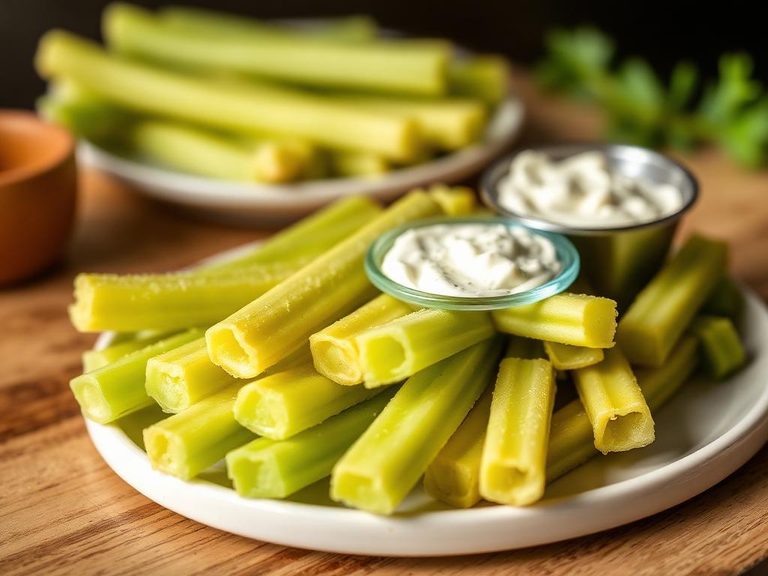
The product is typically high in sodium and saturated fat, which can be a concern for heart health. Its smooth texture and lack of fiber mean it can cause rapid blood sugar spikes when eaten alone. To counteract this, pair it with high-fiber foods like whole-grain crackers or fresh vegetables, and practice portion control by measuring a single serving.
Key benefits
- High in protein for muscle maintenance
- Convenient, shelf-stable, and portable
- No preparation or refrigeration needed before opening
- Provides a quick source of energy and calories
🍽️ Popular dishes




🌍 Where it's eaten
💡 Did you know?
The iconic pressurized can was first patented in 1963, but the concept of aerosol cheese was actually developed by a Swiss inventor in the 1950s.
Full nutrition (USDA data · scales with serving)
| Water | 47.6 g |
| Energy | 290 kcal |
| Protein | 16.4 g |
| Total lipid (fat) | 21.2 g |
| Carbohydrate, by difference | 8.7 g |
| Fiber, total dietary | 0.00 g |
| Total Sugars | 7.3 g |
| Calcium, Ca | 562 mg |
| Iron, Fe | 0.33 mg |
| Magnesium, Mg | 29.0 mg |
| Phosphorus, P | 875 mg |
| Potassium, K | 242 mg |
| Sodium, Na | 1625 mg |
| Zinc, Zn | 2.6 mg |
| Copper, Cu | 0.03 mg |
| Selenium, Se | 11.3 ug |
| Vitamin C, total ascorbic acid | 0.00 mg |
| Thiamin | 0.05 mg |
| Riboflavin | 0.43 mg |
| Niacin | 0.13 mg |
| Vitamin B-6 | 0.12 mg |
| Folate, total | 7.0 ug |
| Folic acid | 0.00 ug |
| Folate, food | 7.0 ug |
| Folate, DFE | 7.0 ug |
| Choline, total | 36.2 mg |
| Vitamin B-12 | 0.40 ug |
| Vitamin B-12, added | 0.00 ug |
| Vitamin A, RAE | 173 ug |
| Retinol | 168 ug |
| Carotene, beta | 55.0 ug |
| Carotene, alpha | 0.00 ug |
| Cryptoxanthin, beta | 0.00 ug |
| Lycopene | 0.00 ug |
| Lutein + zeaxanthin | 0.00 ug |
| Vitamin E (alpha-tocopherol) | 0.19 mg |
| Vitamin E, added | 0.00 mg |
| Vitamin D (D2 + D3) | 0.40 ug |
| Vitamin K (phylloquinone) | 1.8 ug |
| Alcohol, ethyl | 0.00 g |
| Caffeine | 0.00 mg |
| Theobromine | 0.00 mg |
Fat & fatty acid profile (per 100g)
| Fatty acids, total saturated | 13.3 g |
| SFA 4:0 | 0.69 g |
| SFA 6:0 | 0.41 g |
| SFA 8:0 | 0.31 g |
| SFA 10:0 | 0.51 g |
| SFA 12:0 | 0.63 g |
| SFA 14:0 | 2.2 g |
| SFA 16:0 | 5.9 g |
| SFA 18:0 | 2.4 g |
| Fatty acids, total monounsaturated | 6.2 g |
| MUFA 16:1 | 0.56 g |
| MUFA 18:1 | 5.2 g |
| MUFA 20:1 | 0.00 g |
| MUFA 22:1 | 0.00 g |
| Fatty acids, total polyunsaturated | 0.62 g |
| PUFA 18:2 | 0.40 g |
| PUFA 18:3 | 0.22 g |
| PUFA 18:4 | 0.00 g |
| PUFA 20:4 | 0.00 g |
| PUFA 20:5 n-3 (EPA) | 0.00 g |
| PUFA 22:5 n-3 (DPA) | 0.00 g |
| PUFA 22:6 n-3 (DHA) | 0.00 g |
| Cholesterol | 55.0 mg |
Amino acid profile (per 100g)
Estimated from Cheese spread, pasteurized process, American — USDA does not publish this profile for Cheese spread.
| Tryptophan | 0.24 g |
| Threonine | 0.63 g |
| Isoleucine | 0.83 g |
| Leucine | 1.8 g |
| Lysine | 1.5 g |
| Methionine | 0.54 g |
| Cystine | 0.10 g |
| Phenylalanine | 0.93 g |
| Tyrosine | 0.89 g |
| Valine | 1.4 g |
| Arginine | 0.55 g |
| Histidine | 0.51 g |
| Alanine | 0.60 g |
| Aspartic acid | 1.1 g |
| Glutamic acid | 3.5 g |
| Glycine | 0.31 g |
| Proline | 2.3 g |
| Serine | 1.0 g |
FAQ
Is cheese spread the same as processed cheese?
Yes, pressurized cheese spread is a type of processed cheese, meaning it's made from a blend of real cheese and other ingredients like emulsifiers, oils, and flavorings to achieve a uniform, smooth texture and extended shelf life.
Can I freeze cheese spread from a can?
Freezing is not recommended. The emulsifiers and water content in processed cheese spreads can break down upon thawing, resulting in a grainy, separated texture that won't be pleasant to eat.
What's the best way to store an opened can?
Once opened, the can should be capped and refrigerated. While the product is shelf-stable before opening, refrigeration after opening helps maintain its quality and slows spoilage for about 1-2 weeks.
Nutrient density (calculated · NRF9.3)
Nutrient Rich Foods index: beneficial nutrients (protein, fiber, vitamins, minerals) minus saturated fat, added sugar & sodium, per 100 kcal.
NRF9.3 index — Fulgoni, Keast & Drewnowski, 2009. Computed from USDA nutrients.
Weight-loss friendliness (composite index)
Energy density 2.90 kcal/g · 23% calories from protein · 0.0 g fiber · 7.3 g sugar per 100 g.
Composite of energy density (Rolls et al., 1999), protein & fiber satiety, minus sugar. A calculated heuristic — ranks satiety-per-calorie, not a clinical measure.
Dietary load (calculated from USDA values)
Potential renal acid load. Positive = acid-forming, negative = alkaline-forming.
Sodium-to-potassium ratio: 6.71 (lower is better — aim for ≤ 1)
Sodium:potassium per WHO potassium guidance. Computed from USDA nutrients.