

Carrots, canned, cooked with oil
Common food

Photo: Wikipedia
Canned carrots cooked with oil are tender, slightly sweet root vegetables that have been preserved in a can and then gently sautéed or simmered with a bit of oil, giving them a richer mouthfeel than plain boiled carrots. Their texture is soft and yielding, with a mild, earthy sweetness enhanced by the oil's richness. Nutritionally, they offer a moderate calorie source with a notable fat content from the oil, providing a balance of carbohydrates and healthy fats in a convenient, shelf-stable form.
Calorie split: 5% protein · 41% carbs · 54% fat
↓ Full nutrition💚 Why it's loved
People love canned carrots cooked with oil for their comforting, sweet flavor and the satisfying, soft texture that makes them easy to eat. They are incredibly versatile, fitting seamlessly into stews, salads, or as a simple side, and are a staple in many home kitchens for their convenience and nostalgic appeal.
⚠️ Watch-outs & how to enjoy it better
Some may find the texture of canned carrots too soft or mushy compared to fresh, and the added oil can increase the calorie and fat content, which might be a concern for those monitoring their intake. To counteract this, pair them with lean protein like chicken or fish to balance the meal, and be mindful of portion sizes to manage calorie consumption. Additionally, some canned products can be high in sodium, so rinsing the carrots before cooking can help reduce salt content.
Key benefits
- Provides a quick, energy-dense side dish with a good balance of carbs and fats.
- The added oil helps the body absorb fat-soluble vitamins like vitamin A from the carrots.
- Convenient and shelf-stable, requiring minimal preparation time.
- Offers a source of dietary fiber, supporting digestive health.
- The cooking method can enhance the natural sweetness of the carrots.
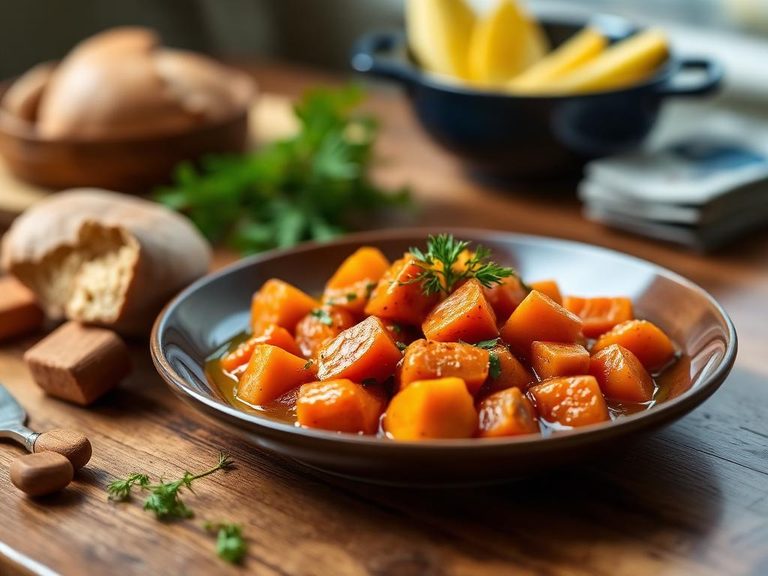
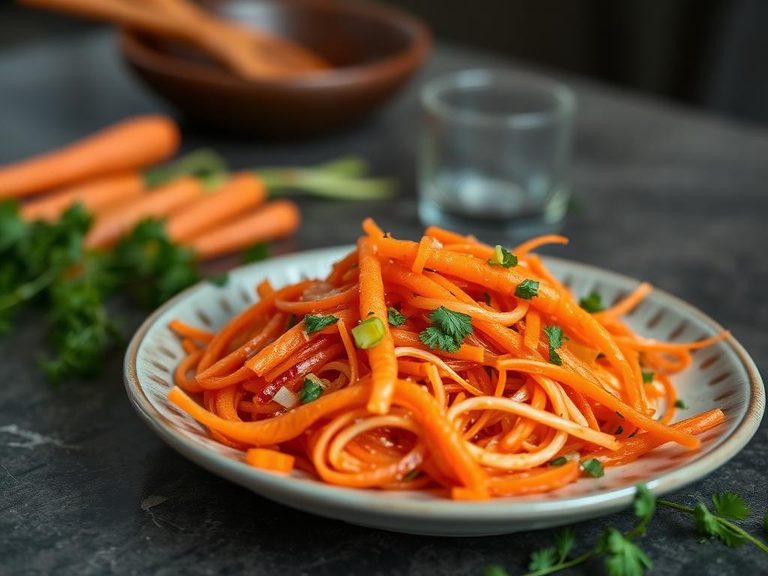
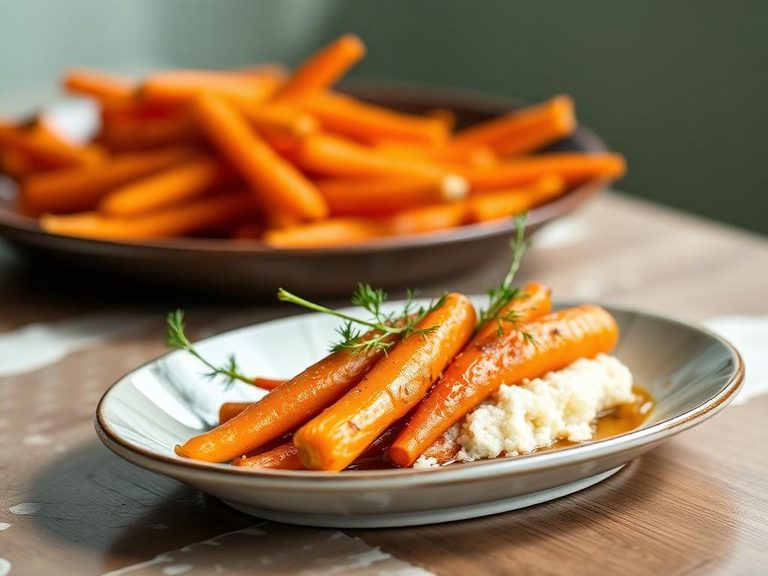
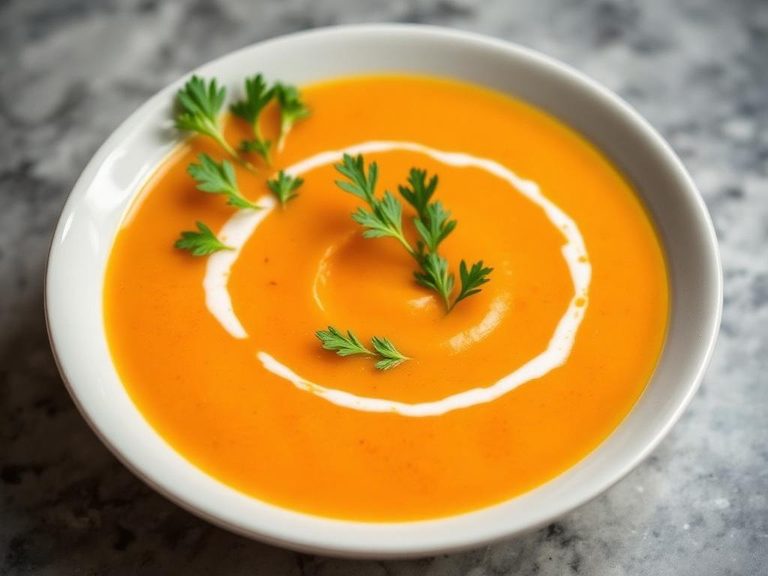
🍽️ Popular dishes

🌍 Where it's eaten
💡 Did you know?
Canning carrots was a popular method during World War II, as they were a key source of vitamin A for soldiers and civilians, and the process helped preserve their nutritional value for long periods.
Full nutrition (USDA data · scales with serving)
| Water | 90.2 g |
| Energy | 50.0 kcal |
| Protein | 0.62 g |
| Total lipid (fat) | 3.1 g |
| Carbohydrate, by difference | 5.4 g |
| Fiber, total dietary | 1.5 g |
| Total Sugars | 2.4 g |
| Calcium, Ca | 24.0 mg |
| Iron, Fe | 0.63 mg |
| Magnesium, Mg | 8.0 mg |
| Phosphorus, P | 23.0 mg |
| Potassium, K | 174 mg |
| Sodium, Na | 235 mg |
| Zinc, Zn | 0.25 mg |
| Copper, Cu | 0.10 mg |
| Selenium, Se | 0.40 ug |
| Vitamin C, total ascorbic acid | 2.4 mg |
| Thiamin | 0.02 mg |
| Riboflavin | 0.03 mg |
| Niacin | 0.54 mg |
| Vitamin B-6 | 0.11 mg |
| Folate, total | 8.0 ug |
| Folic acid | 0.00 ug |
| Folate, food | 8.0 ug |
| Folate, DFE | 8.0 ug |
| Choline, total | 6.1 mg |
| Vitamin B-12 | 0.00 ug |
| Vitamin B-12, added | 0.00 ug |
| Vitamin A, RAE | 542 ug |
| Retinol | 0.00 ug |
| Carotene, beta | 5176 ug |
| Carotene, alpha | 2663 ug |
| Cryptoxanthin, beta | 0.00 ug |
| Lycopene | 0.00 ug |
| Lutein + zeaxanthin | 0.00 ug |
| Vitamin E (alpha-tocopherol) | 1.3 mg |
| Vitamin E, added | 0.00 mg |
| Vitamin D (D2 + D3) | 0.00 ug |
| Vitamin K (phylloquinone) | 12.4 ug |
| Alcohol, ethyl | 0.00 g |
| Caffeine | 0.00 mg |
| Theobromine | 0.00 mg |
Fat & fatty acid profile (per 100g)
| Fatty acids, total saturated | 0.42 g |
| SFA 4:0 | 0.00 g |
| SFA 6:0 | 0.00 g |
| SFA 8:0 | 0.00 g |
| SFA 10:0 | 0.00 g |
| SFA 12:0 | 0.00 g |
| SFA 14:0 | 0.00 g |
| SFA 16:0 | 0.31 g |
| SFA 18:0 | 0.09 g |
| Fatty acids, total monounsaturated | 1.2 g |
| MUFA 16:1 | 0.01 g |
| MUFA 18:1 | 1.2 g |
| MUFA 20:1 | 0.02 g |
| MUFA 22:1 | 0.00 g |
| Fatty acids, total polyunsaturated | 1.2 g |
| PUFA 18:2 | 1.1 g |
| PUFA 18:3 | 0.14 g |
| PUFA 18:4 | 0.00 g |
| PUFA 20:4 | 0.00 g |
| PUFA 20:5 n-3 (EPA) | 0.00 g |
| PUFA 22:5 n-3 (DPA) | 0.00 g |
| PUFA 22:6 n-3 (DHA) | 0.00 g |
| Cholesterol | 0.00 mg |
Amino acid profile (per 100g)
Estimated from Carrots, canned, no salt added, drained solids — USDA does not publish this profile for Carrots.
| Tryptophan | 0.01 g |
| Threonine | 0.02 g |
| Isoleucine | 0.03 g |
| Leucine | 0.03 g |
| Lysine | 0.03 g |
| Methionine | 0.00 g |
| Cystine | 0.01 g |
| Phenylalanine | 0.02 g |
| Tyrosine | 0.01 g |
| Valine | 0.03 g |
| Arginine | 0.03 g |
| Histidine | 0.01 g |
| Alanine | 0.04 g |
| Aspartic acid | 0.08 g |
| Glutamic acid | 0.12 g |
| Glycine | 0.02 g |
| Proline | 0.02 g |
| Serine | 0.02 g |
FAQ
Are canned carrots cooked with oil as nutritious as fresh carrots?
Canned carrots retain most of their vitamins and minerals, but the canning process can reduce some heat-sensitive nutrients like vitamin C. The added oil helps with the absorption of fat-soluble vitamins like vitamin A, making them a nutritious option, though fresh carrots may have a slight edge in overall nutrient density.
How can I reduce the fat content in canned carrots cooked with oil?
To reduce fat, you can drain and rinse the carrots to remove excess oil, or use them in dishes where the oil is diluted, such as in soups or stews. Alternatively, you can opt for canned carrots without added oil and add a small amount of healthy oil yourself during cooking.
Can I use canned carrots cooked with oil in recipes that call for fresh carrots?
Yes, you can substitute canned carrots in many recipes, but be aware that their texture is softer and their flavor may be slightly different due to the canning process. Adjust cooking times and consider adding the carrots later in the recipe to prevent them from becoming too mushy.
Nutrient density (calculated · NRF9.3)
Nutrient Rich Foods index: beneficial nutrients (protein, fiber, vitamins, minerals) minus saturated fat, added sugar & sodium, per 100 kcal.
NRF9.3 index — Fulgoni, Keast & Drewnowski, 2009. Computed from USDA nutrients.
Weight-loss friendliness (composite index)
Energy density 0.50 kcal/g · 5% calories from protein · 1.5 g fiber · 2.4 g sugar per 100 g.
Composite of energy density (Rolls et al., 1999), protein & fiber satiety, minus sugar. A calculated heuristic — ranks satiety-per-calorie, not a clinical measure.
Dietary load (calculated from USDA values)
Potential renal acid load. Positive = acid-forming, negative = alkaline-forming.
Sodium-to-potassium ratio: 1.35 (lower is better — aim for ≤ 1)
Sodium:potassium per WHO potassium guidance. Computed from USDA nutrients.