

Candy, hard
Common food
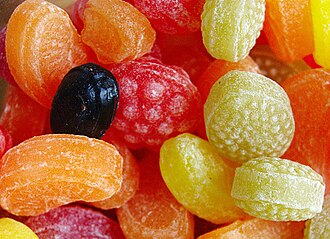
Photo: Wikipedia
Hard candy is a solid, translucent confection made by boiling sugar syrup to the 'hard crack' stage, then cooling it into a brittle, glass-like texture that dissolves slowly on the tongue. It delivers an intense, pure sweetness, often infused with fruit, mint, or sour flavors. Nutritionally, it is essentially pure carbohydrate, providing a quick burst of energy with no protein, fat, or fiber.
Calorie split: 0% protein · 100% carbs · 0% fat
↓ Full nutrition💚 Why it's loved
People love hard candy for its satisfying, long-lasting burst of flavor and the nostalgic comfort it brings, often associated with childhood, holidays, and grandmothers' candy dishes. Its sheer variety—from soothing menthol cough drops to tangy fruit sours—makes it a versatile treat for any mood.
⚠️ Watch-outs & how to enjoy it better
The primary downside is its extremely high sugar content (nearly 98g per 100g), which can cause rapid blood-sugar spikes and contribute to dental cavities. To mitigate this, enjoy it slowly to prolong the experience, consume it with or after a meal containing protein or fat to slow sugar absorption, and practice good oral hygiene afterward. Those managing diabetes or dental issues should exercise particular caution.
Key benefits
- Provides a rapid source of quick energy
- Long shelf life when stored properly
- Can help satisfy a strong sweet craving in a controlled portion
- Often used to soothe a sore throat or freshen breath
- Portable and requires no refrigeration
🍽️ Popular dishes
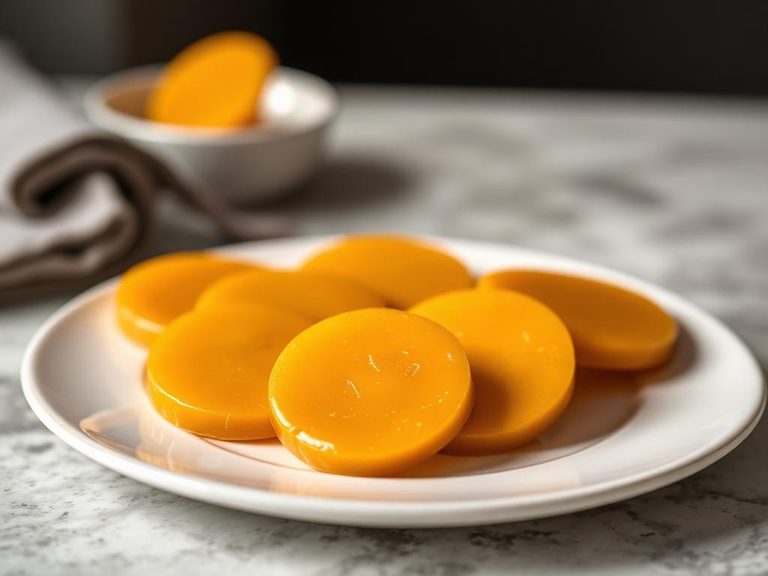
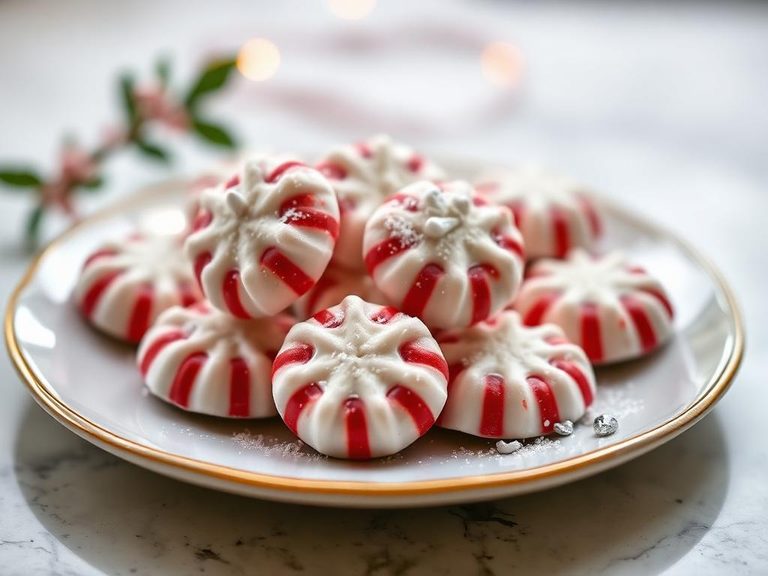
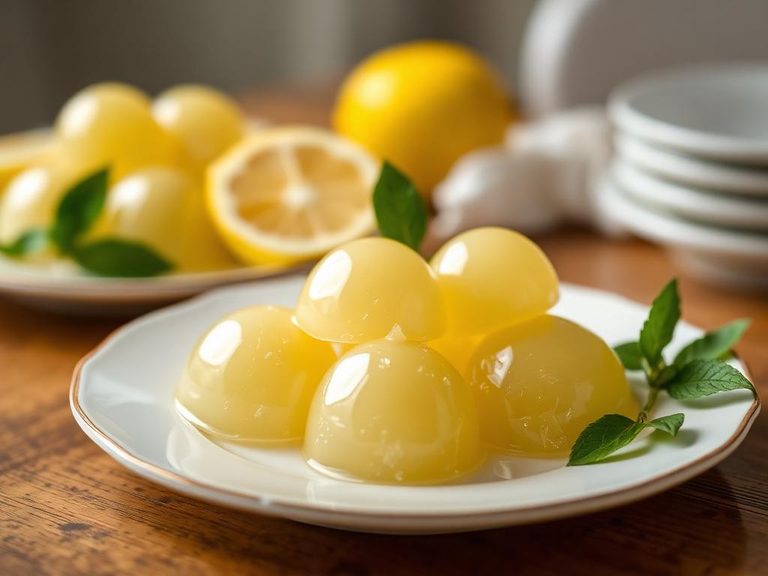
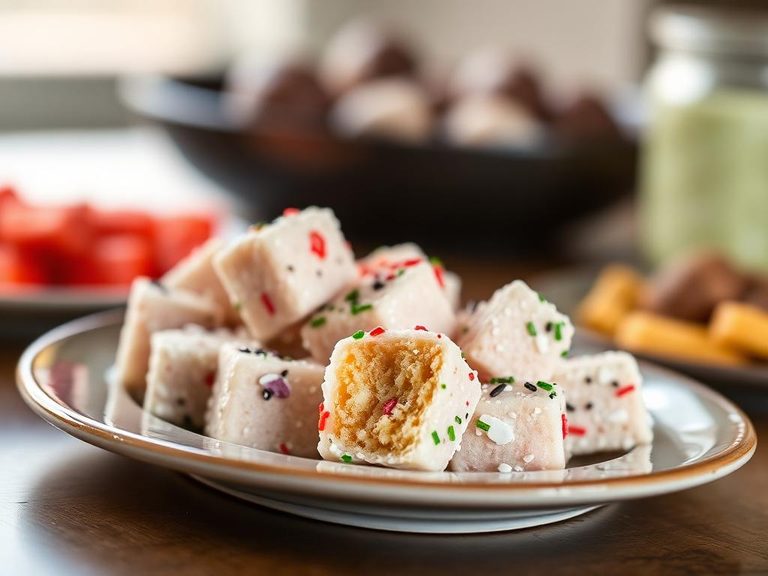

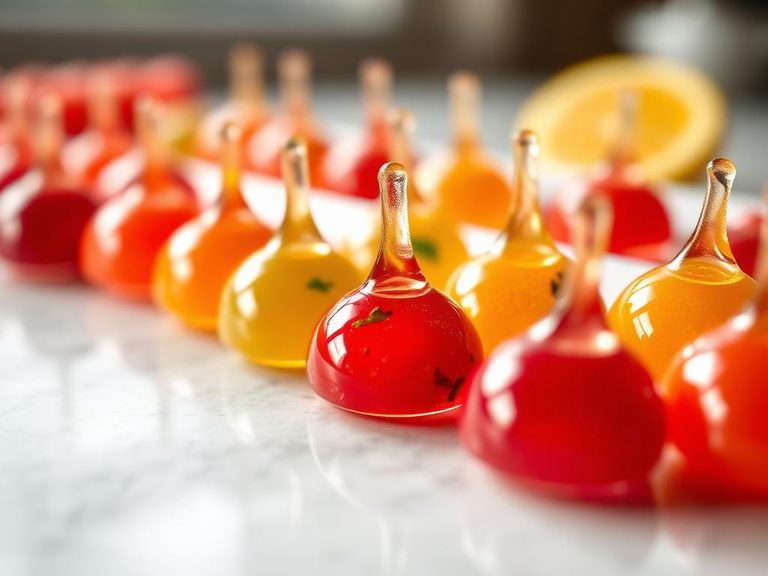
🌍 Where it's eaten
💡 Did you know?
The 'hard crack' stage of sugar cooking, which creates hard candy, requires heating a sugar syrup to exactly 149–154°C (300–310°F), at which point the sugar molecules form an amorphous, glassy solid upon cooling.
Full nutrition (USDA data · scales with serving)
| Water | 1.3 g |
| Energy | 394 kcal |
| Protein | 0.00 g |
| Total lipid (fat) | 0.20 g |
| Carbohydrate, by difference | 98.0 g |
| Fiber, total dietary | 0.00 g |
| Total Sugars | 62.9 g |
| Calcium, Ca | 3.0 mg |
| Iron, Fe | 0.30 mg |
| Magnesium, Mg | 3.0 mg |
| Phosphorus, P | 3.0 mg |
| Potassium, K | 5.0 mg |
| Sodium, Na | 38.0 mg |
| Zinc, Zn | 0.01 mg |
| Copper, Cu | 0.03 mg |
| Selenium, Se | 0.60 ug |
| Vitamin C, total ascorbic acid | 0.00 mg |
| Thiamin | 0.00 mg |
| Riboflavin | 0.00 mg |
| Niacin | 0.01 mg |
| Vitamin B-6 | 0.00 mg |
| Folate, total | 0.00 ug |
| Folic acid | 0.00 ug |
| Folate, food | 0.00 ug |
| Folate, DFE | 0.00 ug |
| Choline, total | 0.00 mg |
| Vitamin B-12 | 0.00 ug |
| Vitamin B-12, added | 0.00 ug |
| Vitamin A, RAE | 0.00 ug |
| Retinol | 0.00 ug |
| Carotene, beta | 0.00 ug |
| Carotene, alpha | 0.00 ug |
| Cryptoxanthin, beta | 0.00 ug |
| Lycopene | 0.00 ug |
| Lutein + zeaxanthin | 0.00 ug |
| Vitamin E (alpha-tocopherol) | 0.00 mg |
| Vitamin E, added | 0.00 mg |
| Vitamin D (D2 + D3) | 0.00 ug |
| Vitamin K (phylloquinone) | 0.00 ug |
| Alcohol, ethyl | 0.00 g |
| Caffeine | 0.00 mg |
| Theobromine | 0.00 mg |
Fat & fatty acid profile (per 100g)
| Fatty acids, total saturated | 0.00 g |
| SFA 4:0 | 0.00 g |
| SFA 6:0 | 0.00 g |
| SFA 8:0 | 0.00 g |
| SFA 10:0 | 0.00 g |
| SFA 12:0 | 0.00 g |
| SFA 14:0 | 0.00 g |
| SFA 16:0 | 0.00 g |
| SFA 18:0 | 0.00 g |
| Fatty acids, total monounsaturated | 0.00 g |
| MUFA 16:1 | 0.00 g |
| MUFA 18:1 | 0.00 g |
| MUFA 20:1 | 0.00 g |
| MUFA 22:1 | 0.00 g |
| Fatty acids, total polyunsaturated | 0.00 g |
| PUFA 18:2 | 0.00 g |
| PUFA 18:3 | 0.00 g |
| PUFA 18:4 | 0.00 g |
| PUFA 20:4 | 0.00 g |
| PUFA 20:5 n-3 (EPA) | 0.00 g |
| PUFA 22:5 n-3 (DPA) | 0.00 g |
| PUFA 22:6 n-3 (DHA) | 0.00 g |
| Cholesterol | 0.00 mg |
Amino acid profile (per 100g)
Estimated from Oil, industrial, coconut, principal uses candy coatings, oil sprays, roasting nuts — USDA does not publish this profile for Candy.
| Tryptophan | 0.00 g |
| Threonine | 0.00 g |
| Isoleucine | 0.00 g |
| Leucine | 0.00 g |
| Lysine | 0.00 g |
| Methionine | 0.00 g |
| Cystine | 0.00 g |
| Phenylalanine | 0.00 g |
| Tyrosine | 0.00 g |
| Valine | 0.00 g |
| Arginine | 0.00 g |
| Histidine | 0.00 g |
| Alanine | 0.00 g |
| Aspartic acid | 0.00 g |
| Glutamic acid | 0.00 g |
| Glycine | 0.00 g |
| Proline | 0.00 g |
| Serine | 0.00 g |
FAQ
Why does hard candy sometimes get sticky?
Hard candy is hygroscopic, meaning it absorbs moisture from the air. In humid conditions, this surface moisture dissolves a thin layer of sugar, creating a sticky film.
Is hard candy gluten-free?
Most pure hard candies are naturally gluten-free, as their main ingredients are sugar, corn syrup, and flavorings. However, always check labels for added ingredients or cross-contamination warnings if you have celiac disease.
How should hard candy be stored?
Store it in a cool, dry, airtight container to prevent moisture absorption and sticking. Avoid warm places like car dashboards, as heat can cause the candy to melt or become deformed.
Nutrient density (calculated · NRF9.3)
Nutrient Rich Foods index: beneficial nutrients (protein, fiber, vitamins, minerals) minus saturated fat, added sugar & sodium, per 100 kcal.
NRF9.3 index — Fulgoni, Keast & Drewnowski, 2009. Computed from USDA nutrients.
Weight-loss friendliness (composite index)
Energy density 3.94 kcal/g · 0% calories from protein · 0.0 g fiber · 62.9 g sugar per 100 g.
Composite of energy density (Rolls et al., 1999), protein & fiber satiety, minus sugar. A calculated heuristic — ranks satiety-per-calorie, not a clinical measure.
Dietary load (calculated from USDA values)
Potential renal acid load. Positive = acid-forming, negative = alkaline-forming.
Sodium-to-potassium ratio: 7.60 (lower is better — aim for ≤ 1)
Sodium:potassium per WHO potassium guidance. Computed from USDA nutrients.