

Brussels sprouts, frozen, cooked, boiled, drained, without salt
Whole food · Vegetables and Vegetable Products

Photo: Wikipedia
These are Brussels sprouts harvested at peak ripeness, flash-frozen, and then simply boiled until tender. They offer a mild, earthy flavor with a soft, slightly mushy texture compared to their fresh counterparts. Nutritionally, they are a low-calorie powerhouse, providing over 4 grams of fiber per 100g.
Calorie split: 28% protein · 65% carbs · 7% fat
↓ Full nutrition💚 Why it's loved
People appreciate frozen Brussels sprouts for their convenience and year-round availability, delivering consistent nutrition without prep work. Their mild flavor makes them a versatile canvas for bold seasonings like garlic, balsamic, or cheese.
⚠️ Watch-outs & how to enjoy it better
Boiling can lead to a soft texture and loss of water-soluble vitamins, and overcooking can enhance a sulfurous taste. To counteract this, try steaming or roasting from frozen for better texture, and pair with a source of fat like olive oil or nuts to enhance nutrient absorption.
Key benefits
- Excellent source of dietary fiber for digestive health
- Very low in fat and calories, aiding weight management
- Good source of plant-based protein
- Rich in vitamins K and C, and folate
- Contains glucosinolates, compounds studied for health benefits
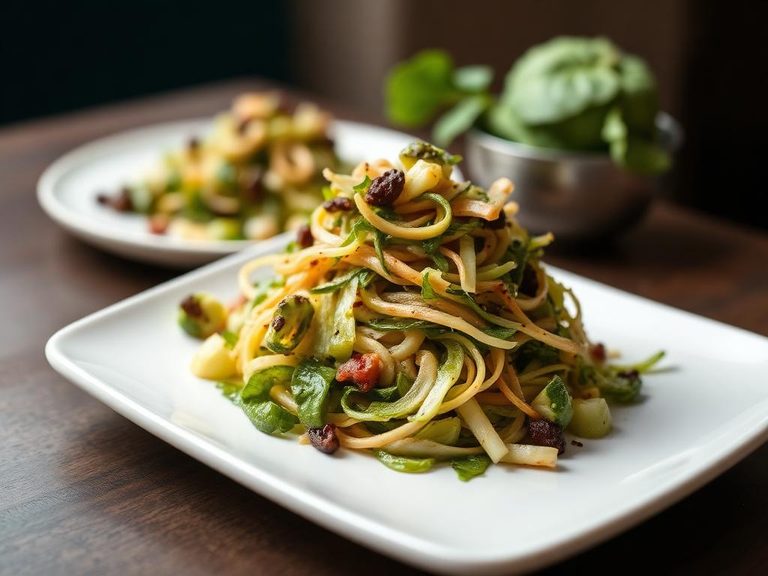
🍽️ Popular dishes
🌍 Where it's eaten
💡 Did you know?
The frozen variety is often blanched before freezing, a quick boil that locks in color and nutrients, which is why they cook faster than fresh sprouts.
Full nutrition (USDA data · scales with serving)
| Water | 86.7 g |
| Energy | 42.0 kcal |
| Energy | 175 kj |
| Protein | 3.6 g |
| Total lipid (fat) | 0.39 g |
| Ash | 0.91 g |
| Carbohydrate, by difference | 8.3 g |
| Fiber, total dietary | 4.1 g |
| Total Sugars | 2.1 g |
| Calcium, Ca | 26.0 mg |
| Iron, Fe | 0.48 mg |
| Magnesium, Mg | 18.0 mg |
| Phosphorus, P | 56.0 mg |
| Potassium, K | 290 mg |
| Sodium, Na | 15.0 mg |
| Zinc, Zn | 0.24 mg |
| Copper, Cu | 0.03 mg |
| Manganese, Mn | 0.21 mg |
| Selenium, Se | 0.60 ug |
| Vitamin C, total ascorbic acid | 45.7 mg |
| Thiamin | 0.10 mg |
| Riboflavin | 0.11 mg |
| Niacin | 0.54 mg |
| Pantothenic acid | 0.34 mg |
| Vitamin B-6 | 0.29 mg |
| Folate, total | 101 ug |
| Folic acid | 0.00 ug |
| Folate, food | 101 ug |
| Folate, DFE | 101 ug |
| Choline, total | 18.1 mg |
| Betaine | 0.70 mg |
| Vitamin B-12 | 0.00 ug |
| Vitamin B-12, added | 0.00 ug |
| Vitamin A, RAE | 46.0 ug |
| Retinol | 0.00 ug |
| Carotene, beta | 555 ug |
| Carotene, alpha | 0.00 ug |
| Cryptoxanthin, beta | 0.00 ug |
| Vitamin A, IU | 926 iu |
| Lycopene | 0.00 ug |
| Lutein + zeaxanthin | 1541 ug |
| Vitamin E (alpha-tocopherol) | 0.51 mg |
| Vitamin E, added | 0.00 mg |
| Vitamin D (D2 + D3), International Units | 0.00 iu |
| Vitamin D (D2 + D3) | 0.00 ug |
| Vitamin K (phylloquinone) | 194 ug |
| Alcohol, ethyl | 0.00 g |
| Caffeine | 0.00 mg |
| Theobromine | 0.00 mg |
Fat & fatty acid profile (per 100g)
| Fatty acids, total saturated | 0.08 g |
| SFA 4:0 | 0.00 g |
| SFA 6:0 | 0.00 g |
| SFA 8:0 | 0.00 g |
| SFA 10:0 | 0.00 g |
| SFA 12:0 | 0.00 g |
| SFA 14:0 | 0.00 g |
| SFA 16:0 | 0.07 g |
| SFA 18:0 | 0.00 g |
| Fatty acids, total monounsaturated | 0.03 g |
| MUFA 16:1 | 0.00 g |
| MUFA 18:1 | 0.03 g |
| MUFA 20:1 | 0.00 g |
| MUFA 22:1 | 0.00 g |
| Fatty acids, total polyunsaturated | 0.20 g |
| PUFA 18:2 | 0.06 g |
| PUFA 18:3 | 0.13 g |
| PUFA 18:4 | 0.00 g |
| PUFA 20:4 | 0.00 g |
| PUFA 20:5 n-3 (EPA) | 0.00 g |
| PUFA 22:5 n-3 (DPA) | 0.00 g |
| PUFA 22:6 n-3 (DHA) | 0.00 g |
| Fatty acids, total trans | 0.00 g |
| Cholesterol | 0.00 mg |
Amino acid profile (per 100g)
| Tryptophan | 0.04 g |
| Threonine | 0.13 g |
| Isoleucine | 0.14 g |
| Leucine | 0.16 g |
| Lysine | 0.17 g |
| Methionine | 0.04 g |
| Cystine | 0.02 g |
| Phenylalanine | 0.11 g |
| Valine | 0.17 g |
| Arginine | 0.22 g |
| Histidine | 0.08 g |
FAQ
How do frozen Brussels sprouts differ from fresh?
Frozen sprouts are picked and processed at peak freshness, often locking in nutrients better than 'fresh' ones that have traveled long distances. Texture-wise, they tend to be softer after cooking.
What's the best way to cook them from frozen?
For best texture, roast them directly from frozen at 400°F (200°C) with oil and seasoning. Steaming is another great method to preserve nutrients. Boiling is fastest but can make them waterlogged.
Are they as nutritious as fresh Brussels sprouts?
Yes, often more so. The flash-freezing process preserves vitamins and antioxidants very effectively. Fresh sprouts can lose nutrients during storage and transport.
Nutrient density (calculated · NRF9.3)
Nutrient Rich Foods index: beneficial nutrients (protein, fiber, vitamins, minerals) minus saturated fat, added sugar & sodium, per 100 kcal.
NRF9.3 index — Fulgoni, Keast & Drewnowski, 2009. Computed from USDA nutrients.
Weight-loss friendliness (composite index)
Energy density 0.42 kcal/g · 35% calories from protein · 4.1 g fiber · 2.1 g sugar per 100 g.
Composite of energy density (Rolls et al., 1999), protein & fiber satiety, minus sugar. A calculated heuristic — ranks satiety-per-calorie, not a clinical measure.
Dietary load (calculated from USDA values)
Potential renal acid load. Positive = acid-forming, negative = alkaline-forming.
Sodium-to-potassium ratio: 0.05 (lower is better — aim for ≤ 1)
Sodium:potassium per WHO potassium guidance. Computed from USDA nutrients.