

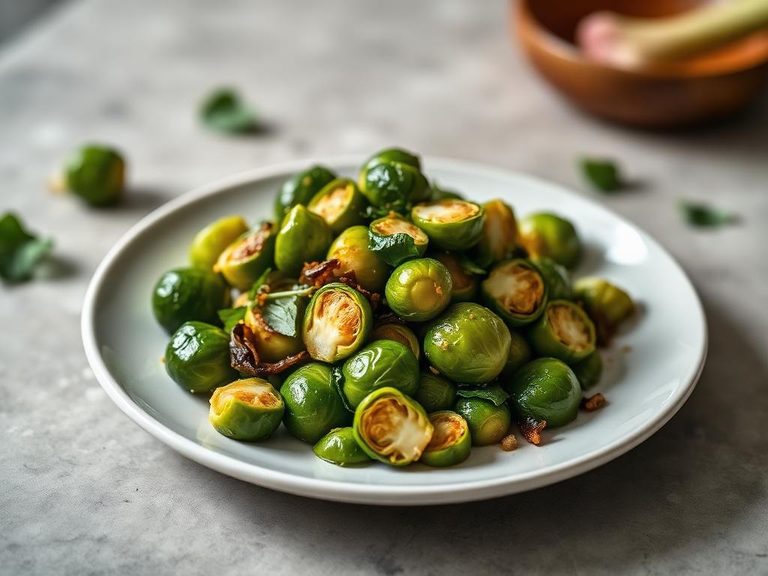
Brussels sprouts, cooked, boiled, drained, with salt
Whole food · Vegetables and Vegetable Products

Photo: Wikipedia
Brussels sprouts, when simply boiled and salted, transform from dense, bitter buds into tender, mild-flavored bites with a subtle, earthy sweetness. Their texture becomes pleasantly soft yet retains a slight firmness at the core, offering a satisfying mouthfeel. Nutritionally, they are a standout source of fiber and vitamin K, supporting digestive and bone health with very few calories.
Calorie split: 24% protein · 66% carbs · 10% fat
↓ Full nutrition💚 Why it's loved
People love them for their ability to absorb savory flavors like butter, bacon, or garlic, making them a versatile side dish. They are a staple in winter holiday meals, especially in European and American cuisine, symbolizing seasonal comfort.
⚠️ Watch-outs & how to enjoy it better
Over-boiling can make them mushy and release sulfurous compounds, intensifying a bitter taste. Those sensitive to FODMAPs or prone to digestive gas may want to start with smaller portions; pairing with a healthy fat like olive oil can improve nutrient absorption and flavor.
Key benefits
- Excellent source of vitamin K for bone health
- High in fiber to support digestion
- Very low in calories and fat
- Contains antioxidants like kaempferol
- Good plant-based source of protein
🍽️ Popular dishes
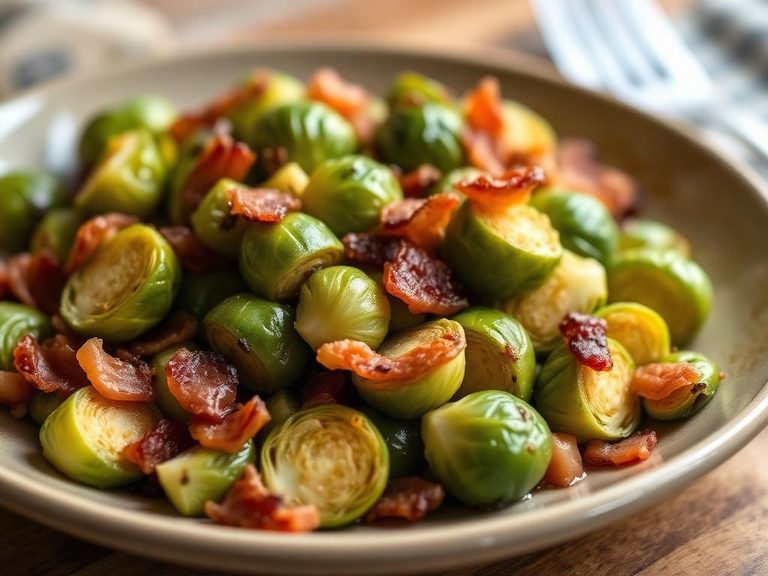
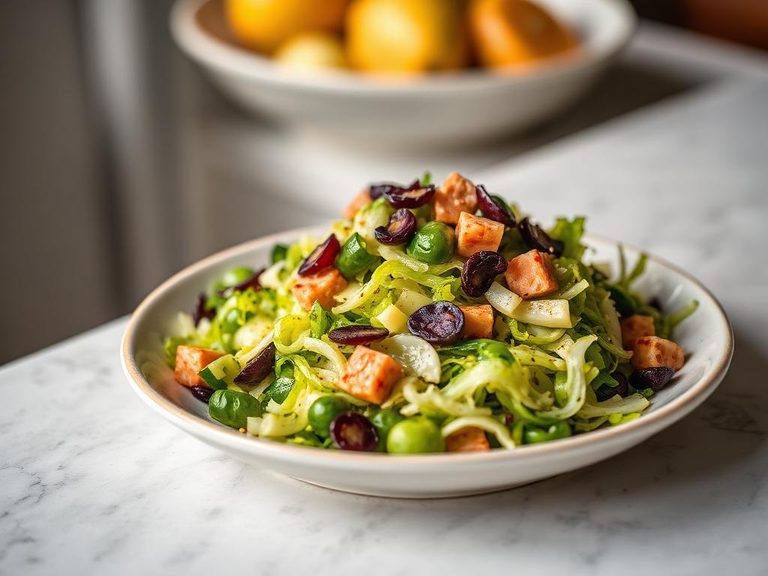
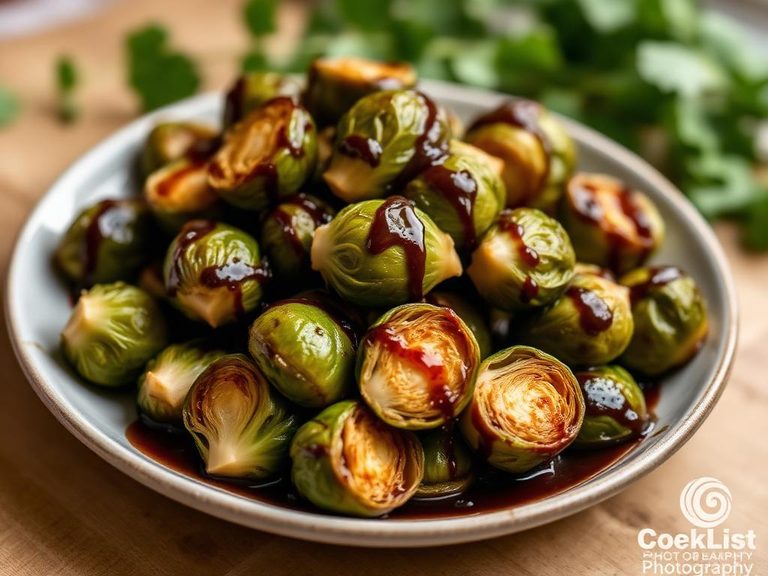
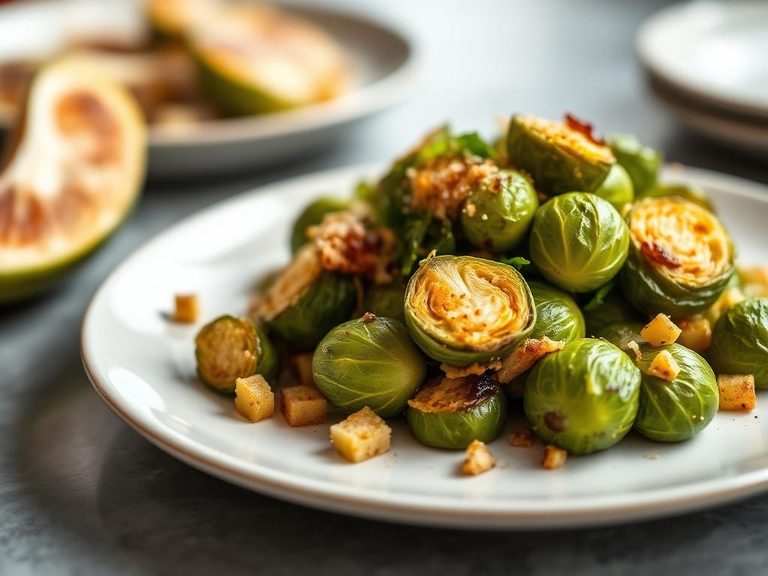
🌍 Where it's eaten
💡 Did you know?
Brussels sprouts are not miniature cabbages; they are a distinct cultivar group grown on a thick, upright stalk, with each sprout being a lateral bud along the stem.
Full nutrition (USDA data · scales with serving)
| Water | 88.9 g |
| Energy | 36.0 kcal |
| Energy | 150 kj |
| Protein | 2.5 g |
| Total lipid (fat) | 0.50 g |
| Ash | 0.95 g |
| Carbohydrate, by difference | 7.1 g |
| Fiber, total dietary | 2.6 g |
| Total Sugars | 1.7 g |
| Calcium, Ca | 36.0 mg |
| Iron, Fe | 1.2 mg |
| Magnesium, Mg | 20.0 mg |
| Phosphorus, P | 56.0 mg |
| Potassium, K | 317 mg |
| Sodium, Na | 257 mg |
| Zinc, Zn | 0.33 mg |
| Copper, Cu | 0.08 mg |
| Manganese, Mn | 0.23 mg |
| Selenium, Se | 1.5 ug |
| Vitamin C, total ascorbic acid | 62.0 mg |
| Thiamin | 0.11 mg |
| Riboflavin | 0.08 mg |
| Niacin | 0.61 mg |
| Pantothenic acid | 0.25 mg |
| Vitamin B-6 | 0.18 mg |
| Folate, total | 60.0 ug |
| Folic acid | 0.00 ug |
| Folate, food | 60.0 ug |
| Folate, DFE | 60.0 ug |
| Choline, total | 40.6 mg |
| Betaine | 0.20 mg |
| Vitamin B-12 | 0.00 ug |
| Vitamin A, RAE | 39.0 ug |
| Retinol | 0.00 ug |
| Carotene, beta | 465 ug |
| Carotene, alpha | 0.00 ug |
| Cryptoxanthin, beta | 0.00 ug |
| Vitamin A, IU | 775 iu |
| Lycopene | 0.00 ug |
| Lutein + zeaxanthin | 1290 ug |
| Vitamin E (alpha-tocopherol) | 0.43 mg |
| Tocopherol, beta | 0.00 mg |
| Tocopherol, gamma | 0.00 mg |
| Tocopherol, delta | 0.00 mg |
| Tocotrienol, alpha | 0.00 mg |
| Tocotrienol, beta | 0.00 mg |
| Tocotrienol, gamma | 0.00 mg |
| Tocotrienol, delta | 0.00 mg |
| Vitamin D (D2 + D3), International Units | 0.00 iu |
| Vitamin D (D2 + D3) | 0.00 ug |
| Vitamin K (phylloquinone) | 140 ug |
| Alcohol, ethyl | 0.00 g |
| Caffeine | 0.00 mg |
| Theobromine | 0.00 mg |
Fat & fatty acid profile (per 100g)
| Fatty acids, total saturated | 0.10 g |
| SFA 4:0 | 0.00 g |
| SFA 6:0 | 0.00 g |
| SFA 8:0 | 0.00 g |
| SFA 10:0 | 0.00 g |
| SFA 12:0 | 0.00 g |
| SFA 14:0 | 0.00 g |
| SFA 16:0 | 0.09 g |
| SFA 18:0 | 0.01 g |
| Fatty acids, total monounsaturated | 0.04 g |
| MUFA 16:1 | 0.00 g |
| MUFA 18:1 | 0.03 g |
| Fatty acids, total polyunsaturated | 0.26 g |
| PUFA 18:2 | 0.08 g |
| PUFA 18:3 | 0.17 g |
| PUFA 20:4 | 0.00 g |
| Fatty acids, total trans | 0.00 g |
| Cholesterol | 0.00 mg |
Amino acid profile (per 100g)
| Tryptophan | 0.03 g |
| Threonine | 0.09 g |
| Isoleucine | 0.10 g |
| Leucine | 0.11 g |
| Lysine | 0.12 g |
| Methionine | 0.02 g |
| Cystine | 0.02 g |
| Phenylalanine | 0.07 g |
| Valine | 0.12 g |
| Arginine | 0.15 g |
| Histidine | 0.06 g |
FAQ
How do I prevent a strong sulfurous smell when boiling?
Use a large pot of rapidly boiling salted water, add the sprouts, and cook for just 4-6 minutes until tender-crisp. Overcooking in a small amount of water concentrates the sulfur compounds.
Are boiled Brussels sprouts as nutritious as roasted?
Boiling can cause some water-soluble vitamins (like vitamin C) to leach into the cooking water. To retain more nutrients, cook them for a shorter time and consider using the cooking water in a soup or sauce.
Why are my boiled Brussels sprouts bitter?
Bitterness comes from glucosinolates, which break down with overcooking. For a milder taste, choose smaller sprouts, trim the base, and cook them quickly until just tender.
Nutrient density (calculated · NRF9.3)
Nutrient Rich Foods index: beneficial nutrients (protein, fiber, vitamins, minerals) minus saturated fat, added sugar & sodium, per 100 kcal.
NRF9.3 index — Fulgoni, Keast & Drewnowski, 2009. Computed from USDA nutrients.
Weight-loss friendliness (composite index)
Energy density 0.36 kcal/g · 28% calories from protein · 2.6 g fiber · 1.7 g sugar per 100 g.
Composite of energy density (Rolls et al., 1999), protein & fiber satiety, minus sugar. A calculated heuristic — ranks satiety-per-calorie, not a clinical measure.
Dietary load (calculated from USDA values)
Potential renal acid load. Positive = acid-forming, negative = alkaline-forming.
Sodium-to-potassium ratio: 0.81 (lower is better — aim for ≤ 1)
Sodium:potassium per WHO potassium guidance. Computed from USDA nutrients.