

Bread, white, toasted
Common food
A slice of white bread transformed by heat, its surface turns a deep golden-brown while the interior remains soft and airy. The toasting process creates a delightful crunch and a subtle, nutty sweetness through the Maillard reaction. Nutritionally, it's a quick source of carbohydrates, providing about 293 calories and 54 grams of carbs per 100 grams.
Calorie split: 14% protein · 74% carbs · 12% fat
↓ Full nutrition💚 Why it's loved
People love its comforting, warm aroma and the satisfying contrast between its crisp exterior and soft interior. It's the ultimate blank canvas, beloved for its versatility in everything from a simple buttered slice to a complex avocado toast.
⚠️ Watch-outs & how to enjoy it better
As a refined carbohydrate, it can cause rapid blood-sugar spikes and offers limited fiber (2.5g/100g). To counteract this, pair it with protein (like eggs or nut butter) or healthy fats (like avocado or olive oil) to slow digestion. Those watching sodium intake should be mindful, as some commercial breads are high in salt.
Key benefits
- Provides quick-release energy from carbohydrates
- The toasting process can make it easier to digest for some
- A versatile base for both sweet and savory toppings
- Low in fat, with less than 4g per 100g
- A common vehicle for other nutrient-dense foods
🍽️ Popular dishes
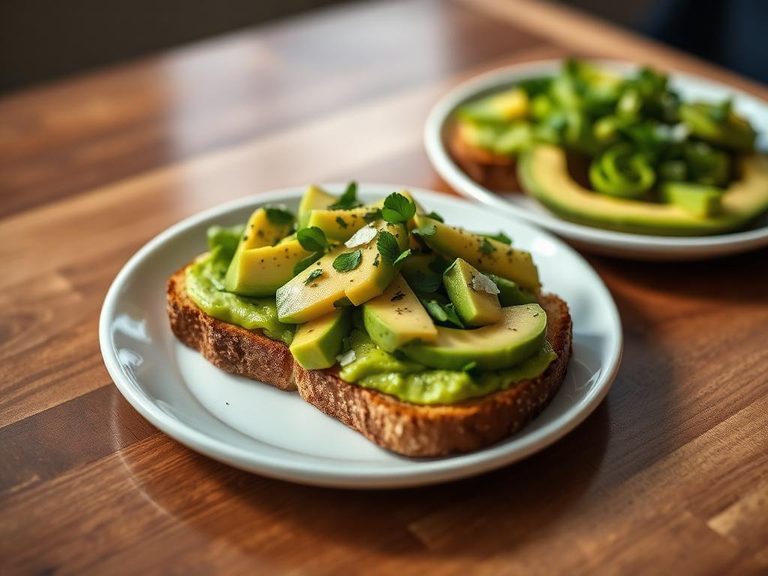
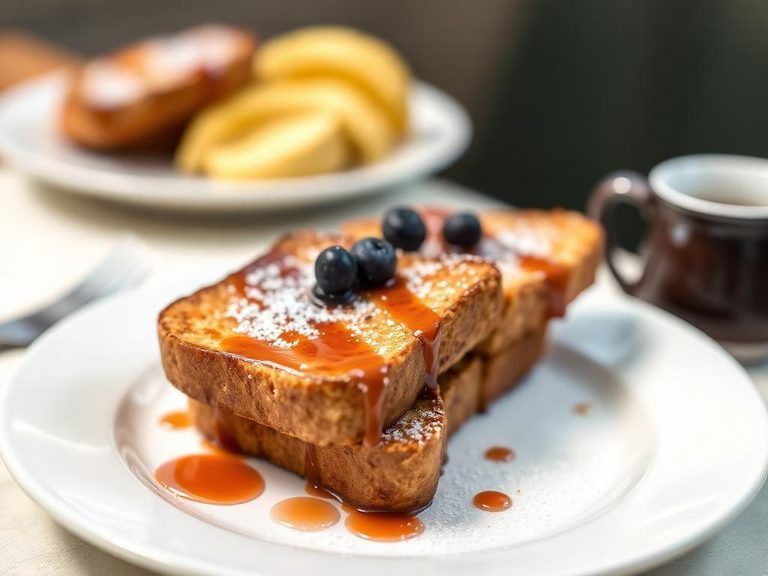
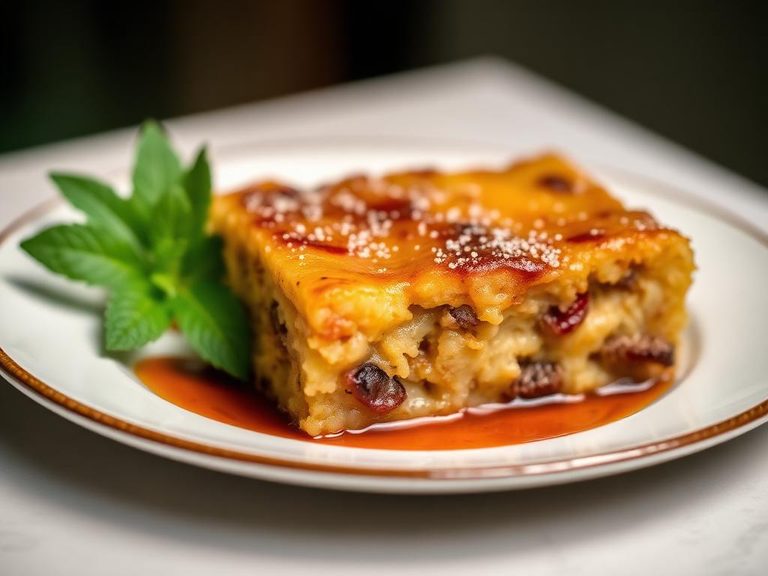
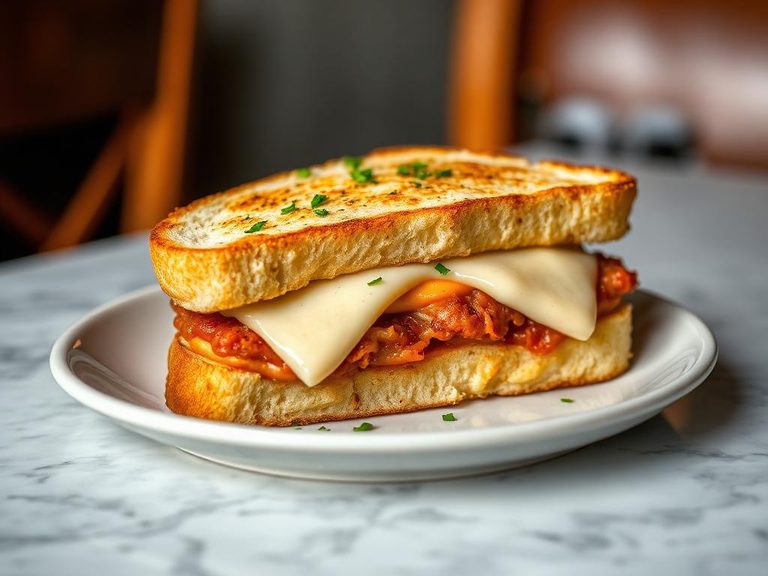
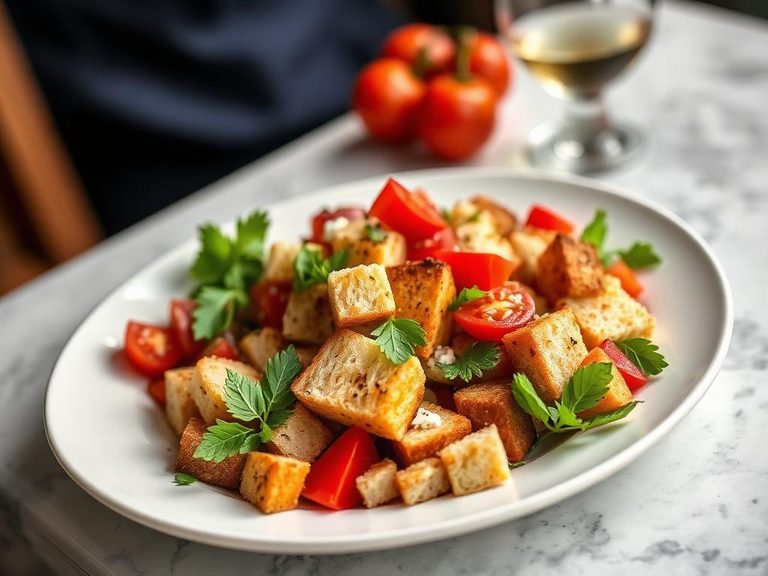
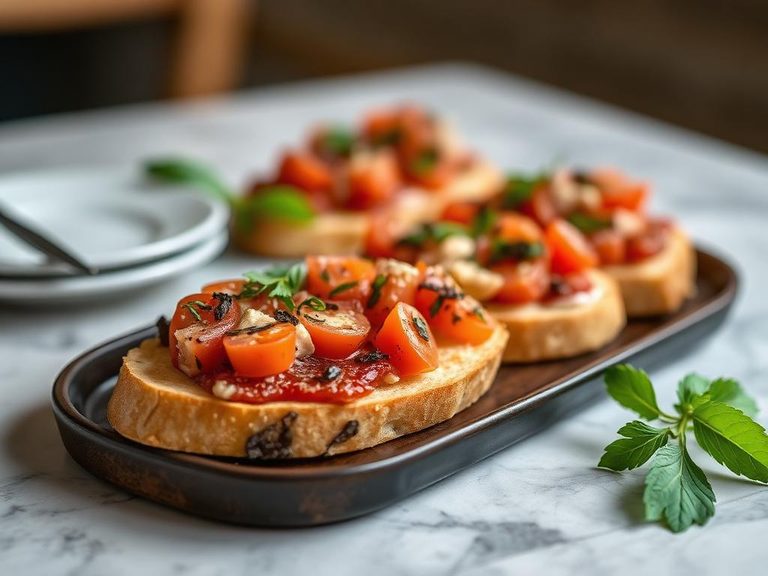
🌍 Where it's eaten
💡 Did you know?
The word 'toast' comes from the Latin 'tostus,' meaning 'scorched' or 'dried by heat,' reflecting its ancient origin as a way to preserve bread and improve its flavor.
Full nutrition (USDA data · scales with serving)
| Water | 29.3 g |
| Energy | 293 kcal |
| Protein | 10.4 g |
| Total lipid (fat) | 3.9 g |
| Carbohydrate, by difference | 54.1 g |
| Fiber, total dietary | 2.5 g |
| Total Sugars | 5.9 g |
| Calcium, Ca | 232 mg |
| Iron, Fe | 3.7 mg |
| Magnesium, Mg | 30.0 mg |
| Phosphorus, P | 124 mg |
| Potassium, K | 129 mg |
| Sodium, Na | 495 mg |
| Zinc, Zn | 0.97 mg |
| Copper, Cu | 0.14 mg |
| Selenium, Se | 25.5 ug |
| Vitamin C, total ascorbic acid | 0.00 mg |
| Thiamin | 0.45 mg |
| Riboflavin | 0.26 mg |
| Niacin | 5.2 mg |
| Vitamin B-6 | 0.10 mg |
| Folate, total | 104 ug |
| Folic acid | 80.0 ug |
| Folate, food | 23.0 ug |
| Folate, DFE | 160 ug |
| Choline, total | 16.0 mg |
| Vitamin B-12 | 0.00 ug |
| Vitamin B-12, added | 0.00 ug |
| Vitamin A, RAE | 0.00 ug |
| Retinol | 0.00 ug |
| Carotene, beta | 0.00 ug |
| Carotene, alpha | 0.00 ug |
| Cryptoxanthin, beta | 0.00 ug |
| Lycopene | 0.00 ug |
| Lutein + zeaxanthin | 46.0 ug |
| Vitamin E (alpha-tocopherol) | 0.24 mg |
| Vitamin E, added | 0.00 mg |
| Vitamin D (D2 + D3) | 0.00 ug |
| Vitamin K (phylloquinone) | 0.20 ug |
| Alcohol, ethyl | 0.00 g |
| Caffeine | 0.00 mg |
| Theobromine | 0.00 mg |
Fat & fatty acid profile (per 100g)
| Fatty acids, total saturated | 0.90 g |
| SFA 4:0 | 0.00 g |
| SFA 6:0 | 0.00 g |
| SFA 8:0 | 0.01 g |
| SFA 10:0 | 0.01 g |
| SFA 12:0 | 0.01 g |
| SFA 14:0 | 0.01 g |
| SFA 16:0 | 0.54 g |
| SFA 18:0 | 0.28 g |
| Fatty acids, total monounsaturated | 0.79 g |
| MUFA 16:1 | 0.02 g |
| MUFA 18:1 | 0.78 g |
| MUFA 20:1 | 0.01 g |
| MUFA 22:1 | 0.00 g |
| Fatty acids, total polyunsaturated | 2.1 g |
| PUFA 18:2 | 1.8 g |
| PUFA 18:3 | 0.22 g |
| PUFA 18:4 | 0.00 g |
| PUFA 20:4 | 0.00 g |
| PUFA 20:5 n-3 (EPA) | 0.00 g |
| PUFA 22:5 n-3 (DPA) | 0.00 g |
| PUFA 22:6 n-3 (DHA) | 0.00 g |
| Cholesterol | 0.00 mg |
Amino acid profile (per 100g)
Estimated from Bread, salvadoran sweet cheese (quesadilla salvadorena) — USDA does not publish this profile for Bread.
| Tryptophan | 0.07 g |
| Threonine | 0.21 g |
| Isoleucine | 0.30 g |
| Leucine | 0.65 g |
| Lysine | 0.50 g |
| Methionine | 0.28 g |
| Cystine | 0.06 g |
| Phenylalanine | 0.37 g |
| Tyrosine | 0.23 g |
| Valine | 0.43 g |
| Arginine | 0.25 g |
| Histidine | 0.15 g |
| Alanine | 0.36 g |
| Aspartic acid | 0.59 g |
| Glutamic acid | 1.3 g |
| Glycine | 0.20 g |
| Proline | 0.83 g |
| Serine | 0.45 g |
| Hydroxyproline | 0.00 g |
FAQ
Does toasting bread change its calorie content?
Toasting primarily removes water, so a slice of toast weighs less than the original bread. This means the calories per gram increase, but a single slice's total calorie count remains roughly the same as the untoasted slice it came from.
Is toasted bread healthier than untoasted?
The toasting process doesn't significantly alter the core nutritional profile. It can form a small amount of resistant starch, which may benefit gut health, but the primary health impact comes from the type of bread used and what you put on it.
Why does my toast sometimes taste bitter?
The bitter taste comes from the Maillard reaction and slight charring. If the bread is toasted at too high a temperature or for too long, compounds like acrylamide can form, contributing to bitterness and a less desirable flavor.
Nutrient density (calculated · NRF9.3)
Nutrient Rich Foods index: beneficial nutrients (protein, fiber, vitamins, minerals) minus saturated fat, added sugar & sodium, per 100 kcal.
NRF9.3 index — Fulgoni, Keast & Drewnowski, 2009. Computed from USDA nutrients.
Weight-loss friendliness (composite index)
Energy density 2.93 kcal/g · 14% calories from protein · 2.5 g fiber · 5.9 g sugar per 100 g.
Composite of energy density (Rolls et al., 1999), protein & fiber satiety, minus sugar. A calculated heuristic — ranks satiety-per-calorie, not a clinical measure.
Dietary load (calculated from USDA values)
Potential renal acid load. Positive = acid-forming, negative = alkaline-forming.
Sodium-to-potassium ratio: 3.84 (lower is better — aim for ≤ 1)
Sodium:potassium per WHO potassium guidance. Computed from USDA nutrients.