

Bread, pita
Common food
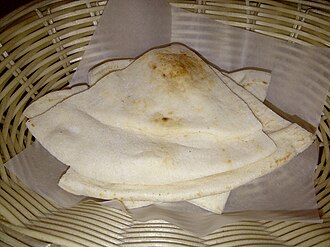
Photo: Wikipedia
Pita is a soft, slightly chewy flatbread made from wheat flour, famous for its signature pocket that forms during baking. It has a mild, subtly sweet flavor and a tender yet sturdy texture, perfect for holding fillings. Nutritionally, it's a solid source of carbohydrates for energy and provides a moderate amount of plant-based protein.
Calorie split: 13% protein · 83% carbs · 4% fat
↓ Full nutrition💚 Why it's loved
People adore pita for its incredible versatility—it acts as a blank canvas for dips, a pocket for sandwiches, or a crispy chip when baked. Its mild flavor complements bold, savory, and fresh ingredients, making it a staple in communal meals and street food cultures.
⚠️ Watch-outs & how to enjoy it better
As a refined wheat product, it can cause rapid blood sugar spikes, especially for those with insulin sensitivity. It also contains gluten, a common allergen. To counteract this, pair pita with protein (like hummus or grilled meat) and healthy fats (like olive oil or tahini) to slow digestion, and opt for whole-wheat versions when possible.
Key benefits
- Good source of complex carbohydrates for sustained energy
- Provides plant-based protein from wheat gluten
- Low in fat, especially saturated fat
- Contains dietary fiber for digestive health
- Versatile base for both hot and cold meals
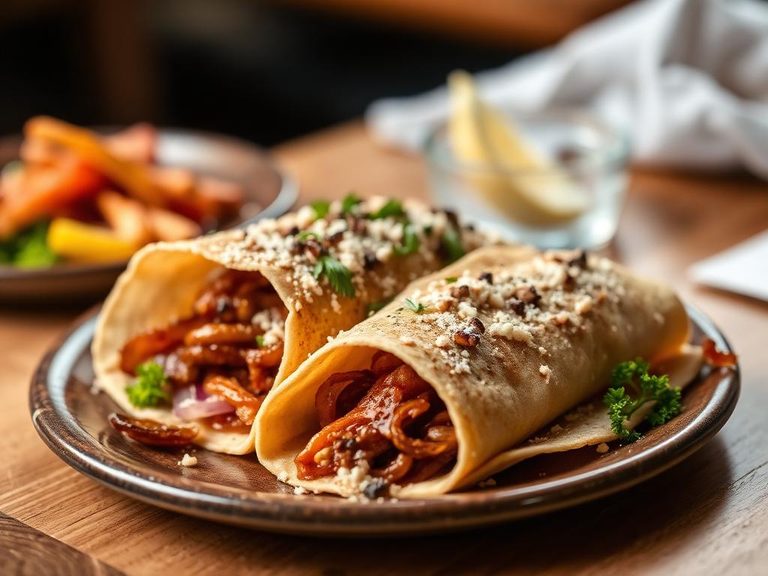
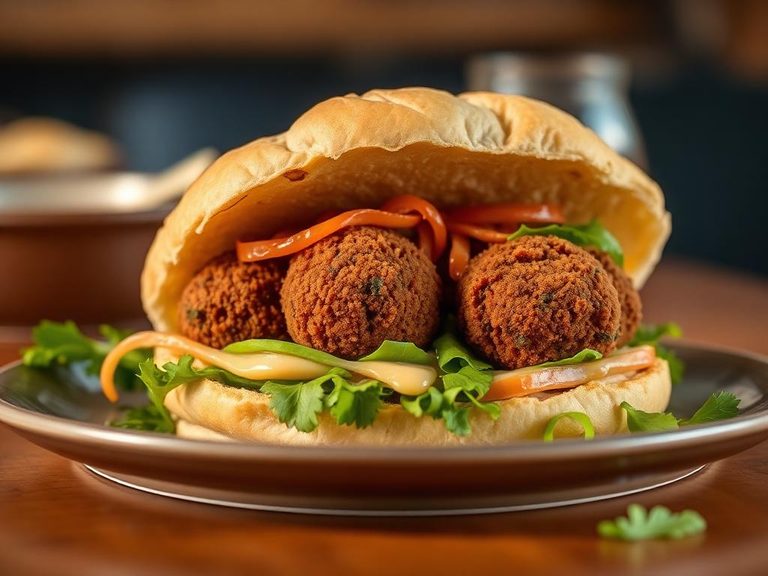
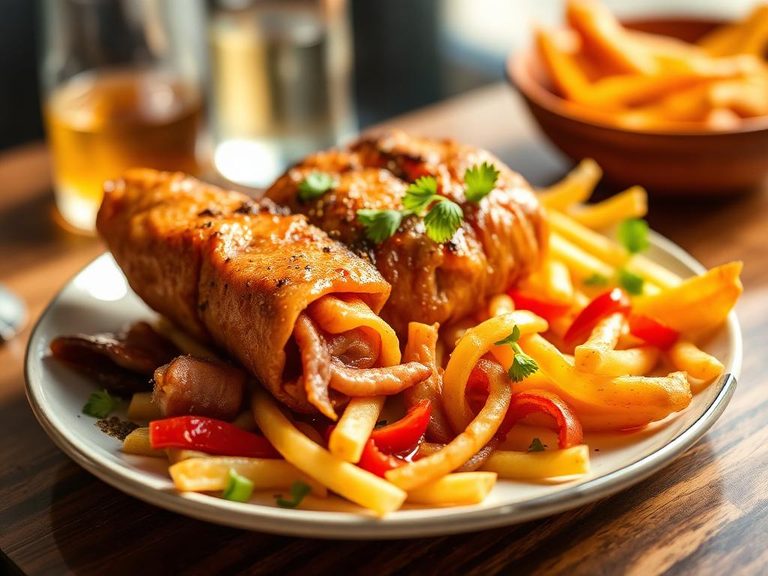
🍽️ Popular dishes
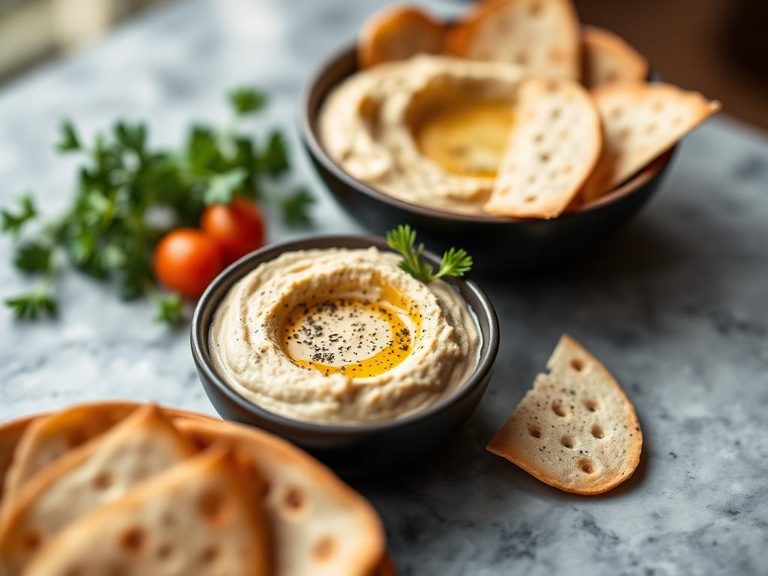
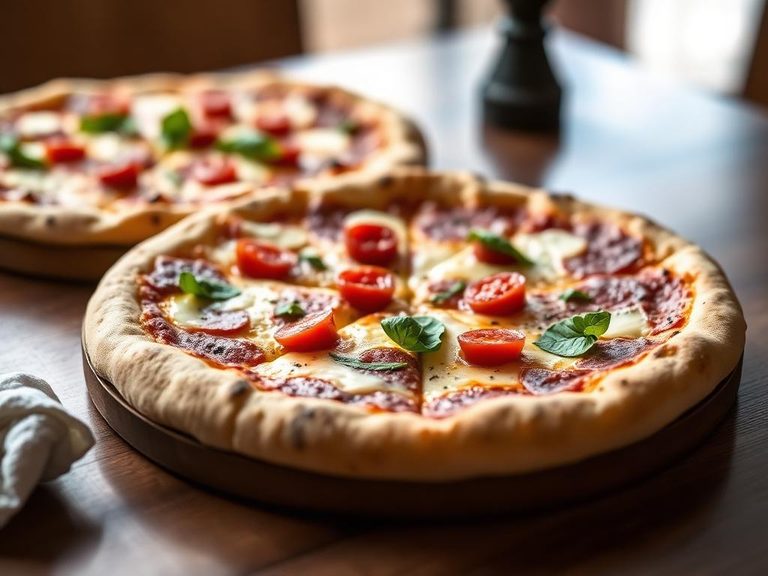
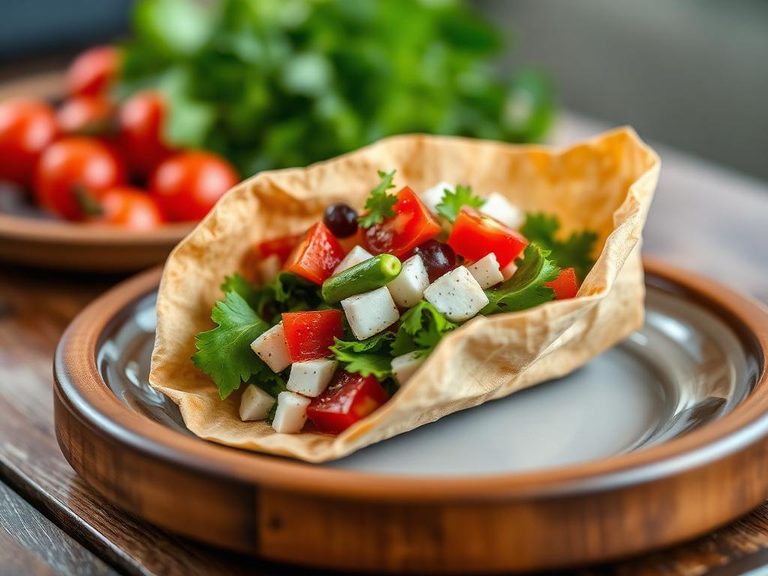
🌍 Where it's eaten
💡 Did you know?
The pocket in pita bread is not cut or folded—it's created by steam. When the dough hits the extremely hot oven, the water inside turns to steam and inflates the bread like a balloon, separating the top and bottom layers.
Full nutrition (USDA data · scales with serving)
| Water | 32.1 g |
| Energy | 275 kcal |
| Protein | 9.1 g |
| Total lipid (fat) | 1.2 g |
| Carbohydrate, by difference | 55.7 g |
| Fiber, total dietary | 2.2 g |
| Total Sugars | 1.3 g |
| Calcium, Ca | 86.0 mg |
| Iron, Fe | 2.6 mg |
| Magnesium, Mg | 26.0 mg |
| Phosphorus, P | 97.0 mg |
| Potassium, K | 120 mg |
| Sodium, Na | 536 mg |
| Zinc, Zn | 0.84 mg |
| Copper, Cu | 0.17 mg |
| Selenium, Se | 27.1 ug |
| Vitamin C, total ascorbic acid | 0.00 mg |
| Thiamin | 0.60 mg |
| Riboflavin | 0.33 mg |
| Niacin | 4.6 mg |
| Vitamin B-6 | 0.03 mg |
| Folate, total | 107 ug |
| Folic acid | 83.0 ug |
| Folate, food | 24.0 ug |
| Folate, DFE | 165 ug |
| Choline, total | 14.6 mg |
| Vitamin B-12 | 0.00 ug |
| Vitamin B-12, added | 0.00 ug |
| Vitamin A, RAE | 0.00 ug |
| Retinol | 0.00 ug |
| Carotene, beta | 0.00 ug |
| Carotene, alpha | 0.00 ug |
| Cryptoxanthin, beta | 0.00 ug |
| Lycopene | 0.00 ug |
| Lutein + zeaxanthin | 53.0 ug |
| Vitamin E (alpha-tocopherol) | 0.30 mg |
| Vitamin E, added | 0.00 mg |
| Vitamin D (D2 + D3) | 0.00 ug |
| Vitamin K (phylloquinone) | 0.20 ug |
| Alcohol, ethyl | 0.00 g |
| Caffeine | 0.00 mg |
| Theobromine | 0.00 mg |
Fat & fatty acid profile (per 100g)
| Fatty acids, total saturated | 0.17 g |
| SFA 4:0 | 0.00 g |
| SFA 6:0 | 0.00 g |
| SFA 8:0 | 0.00 g |
| SFA 10:0 | 0.00 g |
| SFA 12:0 | 0.00 g |
| SFA 14:0 | 0.00 g |
| SFA 16:0 | 0.16 g |
| SFA 18:0 | 0.01 g |
| Fatty acids, total monounsaturated | 0.10 g |
| MUFA 16:1 | 0.01 g |
| MUFA 18:1 | 0.09 g |
| MUFA 20:1 | 0.00 g |
| MUFA 22:1 | 0.00 g |
| Fatty acids, total polyunsaturated | 0.54 g |
| PUFA 18:2 | 0.51 g |
| PUFA 18:3 | 0.02 g |
| PUFA 18:4 | 0.00 g |
| PUFA 20:4 | 0.00 g |
| PUFA 20:5 n-3 (EPA) | 0.00 g |
| PUFA 22:5 n-3 (DPA) | 0.00 g |
| PUFA 22:6 n-3 (DHA) | 0.00 g |
| Cholesterol | 0.00 mg |
Amino acid profile (per 100g)
Estimated from Bread, salvadoran sweet cheese (quesadilla salvadorena) — USDA does not publish this profile for Bread.
| Tryptophan | 0.07 g |
| Threonine | 0.21 g |
| Isoleucine | 0.30 g |
| Leucine | 0.65 g |
| Lysine | 0.50 g |
| Methionine | 0.28 g |
| Cystine | 0.06 g |
| Phenylalanine | 0.37 g |
| Tyrosine | 0.23 g |
| Valine | 0.43 g |
| Arginine | 0.25 g |
| Histidine | 0.15 g |
| Alanine | 0.36 g |
| Aspartic acid | 0.59 g |
| Glutamic acid | 1.3 g |
| Glycine | 0.20 g |
| Proline | 0.83 g |
| Serine | 0.45 g |
| Hydroxyproline | 0.00 g |
FAQ
What's the difference between pita and naan?
Pita is typically leavened with yeast and baked at a very high heat to create a pocket, resulting in a lighter, chewier bread. Naan is also leavened but often includes yogurt or milk, is baked in a tandoor oven, and has a softer, more pillowy texture without a pocket.
Can I make pita without a special oven?
Yes, you can make pita in a standard home oven. The key is to preheat a baking stone or inverted baking sheet to a very high temperature (475-500°F or 245-260°C) to mimic the intense heat of a commercial oven and encourage the pocket to form.
Is pita bread healthy?
Pita can be part of a healthy diet. It's low in fat and provides protein and fiber, especially if made from whole wheat. Its healthiness depends on the portion size and what you fill it with—choosing lean proteins and vegetables makes for a balanced meal.
Nutrient density (calculated · NRF9.3)
Nutrient Rich Foods index: beneficial nutrients (protein, fiber, vitamins, minerals) minus saturated fat, added sugar & sodium, per 100 kcal.
NRF9.3 index — Fulgoni, Keast & Drewnowski, 2009. Computed from USDA nutrients.
Weight-loss friendliness (composite index)
Energy density 2.75 kcal/g · 13% calories from protein · 2.2 g fiber · 1.3 g sugar per 100 g.
Composite of energy density (Rolls et al., 1999), protein & fiber satiety, minus sugar. A calculated heuristic — ranks satiety-per-calorie, not a clinical measure.
Dietary load (calculated from USDA values)
Potential renal acid load. Positive = acid-forming, negative = alkaline-forming.
Sodium-to-potassium ratio: 4.47 (lower is better — aim for ≤ 1)
Sodium:potassium per WHO potassium guidance. Computed from USDA nutrients.