

Gyro

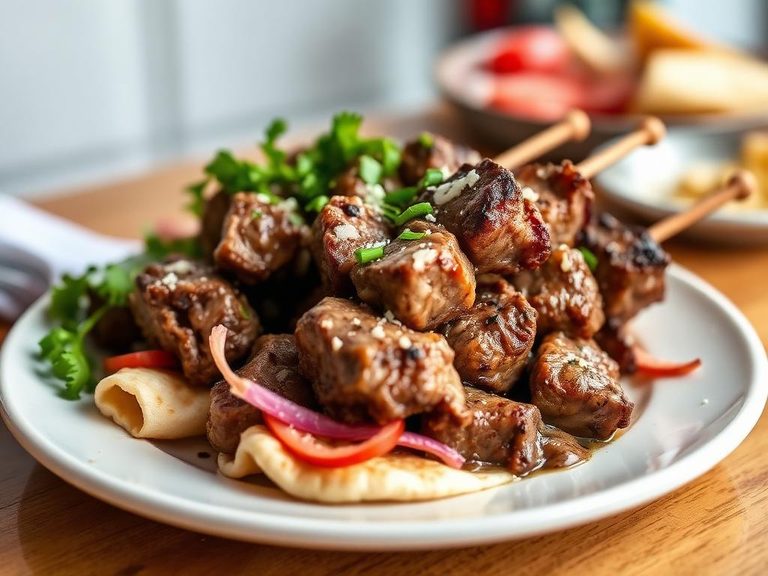
Gyro is a classic Greek dish featuring seasoned meat—typically a blend of lamb, beef, or chicken—slow-roasted on a vertical spit and thinly sliced. The meat is traditionally served in a warm pita wrap with fresh tomatoes, onions, and a generous dollop of creamy tzatziki sauce. It originated in Greece and has become a beloved street food staple across the Mediterranean and around the world.
🍽️ Nutrition at a glance
Gyro is a high-protein meal, with the meat providing a substantial amount of protein, while the pita bread and tzatziki add some carbohydrates and fats. A typical gyro wrap contains roughly 500-700 calories, offering key nutrients like iron, B vitamins, and calcium from the yogurt-based sauce.
Nutrition breakdown
| Calories | 450 kcal |
| Protein | 22 g |
| Carbs | 38 g |
| Fat | 24 g |
| Fiber | 3 g |
| Sugar | 6 g |
| Sodium | 980 mg |
| Iron | 3.2 mg |
| Potassium | 380 mg |
| Vitamin B12 | 1.8 mcg |
| Niacin (B3) | 5.5 mg |
| Vitamin B6 | 0.5 mg |
| Zinc | 4.1 mg |
| Phosphorus | 210 mg |
| Selenium | 22 mcg |
Per 1 sandwich (approximately 220 g) · estimated, varies by recipe
💡 What's interesting
The word 'gyro' comes from the Greek word for 'turn,' referring to the rotating vertical spit used to cook the meat. Nutritionally, the traditional preparation allows excess fat to drip away from the meat during cooking, and the tzatziki sauce adds probiotics and a cooling contrast to the savory flavors.
🍽️ Related dishes







AI estimate may be inaccurate · Terms