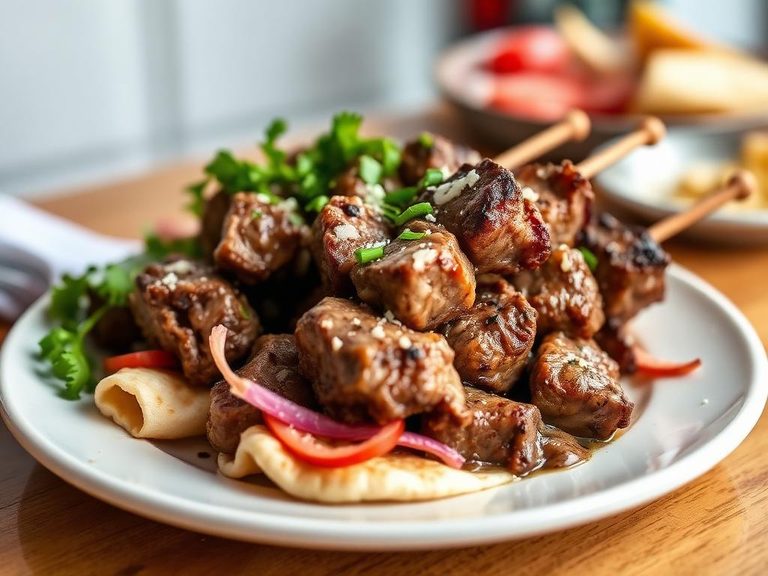
Greek Gyros

Greek Gyros is a beloved street food featuring seasoned meat, traditionally pork or chicken, cooked on a vertical rotisserie, sliced thin, and served in a warm pita with fresh vegetables and creamy tzatziki sauce. It originated in Greece and has become a global culinary icon, often enjoyed as a quick, satisfying meal.
🍽️ Nutrition at a glance
A typical gyros is high in protein from the meat and moderate in fat, especially from the tzatziki and any added sauces, with carbs primarily from the pita bread. It provides key nutrients like iron and B vitamins from the meat, along with some fiber and vitamins from the fresh veggies, generally ranging from 500 to 700 calories per serving.
Nutrition breakdown
| Calories | 550 kcal |
| Protein | 28 g |
| Carbs | 42 g |
| Fat | 30 g |
| Fiber | 3 g |
| Sugar | 5 g |
| Sodium | 1200 mg |
| Potassium | 380 mg |
| Iron | 3.5 mg |
| Vitamin B6 | 0.6 mg |
| Vitamin B12 | 2.1 mcg |
| Zinc | 4.2 mg |
| Phosphorus | 250 mg |
| Vitamin C | 8 mg |
| Calcium | 150 mg |
Per 1 gyro sandwich (approx. 250 g) · estimated, varies by recipe
💡 What's interesting
Culturally, gyros reflect Greece's rich tradition of rotisserie cooking, similar to Turkish döner kebab, showcasing the Mediterranean's love for communal, flavorful street food. Nutritionally, the combination of protein-rich meat with probiotic-rich tzatziki and fresh vegetables creates a balanced meal that supports both satiety and digestive health.