

Bread, cornbread, dry mix, enriched (includes corn muffin mix)
Whole food · Baked Products

Photo: Wikipedia
This is a shelf-stable, enriched dry mix designed for quick preparation of cornbread, corn muffins, or similar baked goods. It typically yields a crumbly, slightly coarse texture with a sweet, buttery, and distinctly corn-forward flavor profile. Nutritionally, it is a high-carbohydrate, energy-dense food with significant added sugars, providing quick fuel but little protein or fiber.
Calorie split: 7% protein · 67% carbs · 26% fat
↓ Full nutrition💚 Why it's loved
People love it for its comforting, nostalgic flavor and the ease of turning a simple mix into a warm, golden side dish or snack. Its inherent sweetness and tender crumb make it a crowd-pleaser, especially when paired with savory foods like chili or barbecue.
⚠️ Watch-outs & how to enjoy it better
The high sugar and refined carb content can lead to rapid blood-sugar spikes, making it less ideal for those managing diabetes or seeking sustained energy. To counteract this, pair it with a source of protein (like beans or meat) or healthy fat (like avocado or cheese) to slow digestion and stabilize blood sugar. Also, be mindful of portion sizes, as the mix is calorie-dense.
Key benefits
- Provides quick energy from carbohydrates
- Convenient and fast to prepare
- Enriched with B vitamins and iron
- Long shelf life for pantry storage
- Versatile base for sweet or savory dishes
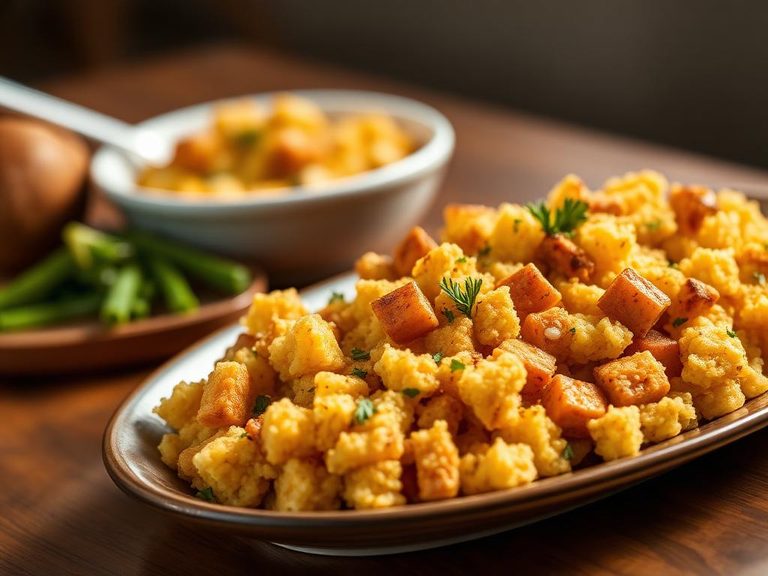
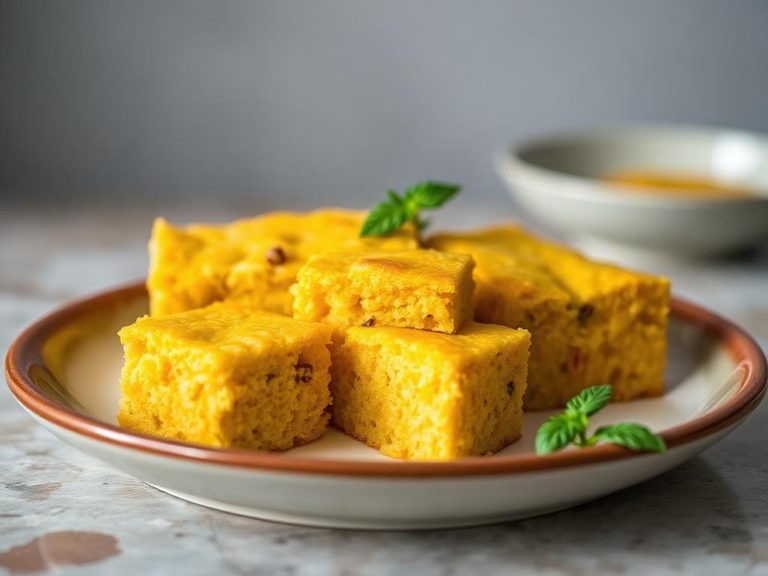
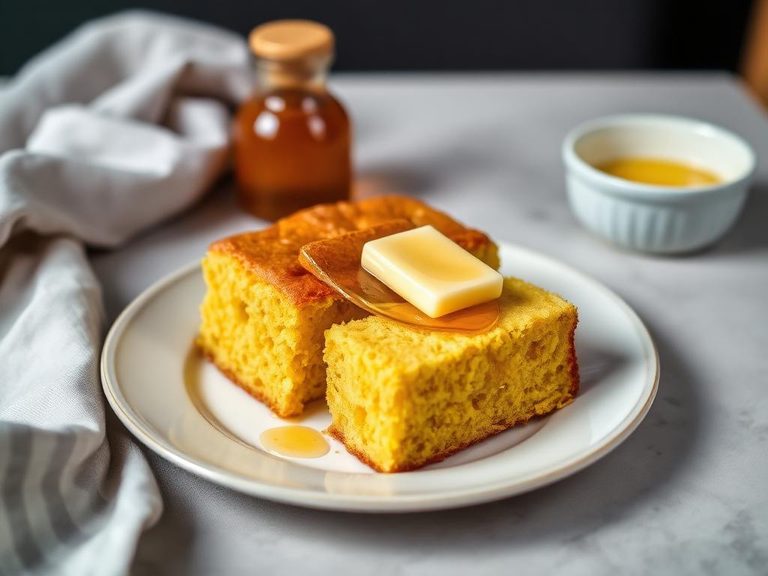
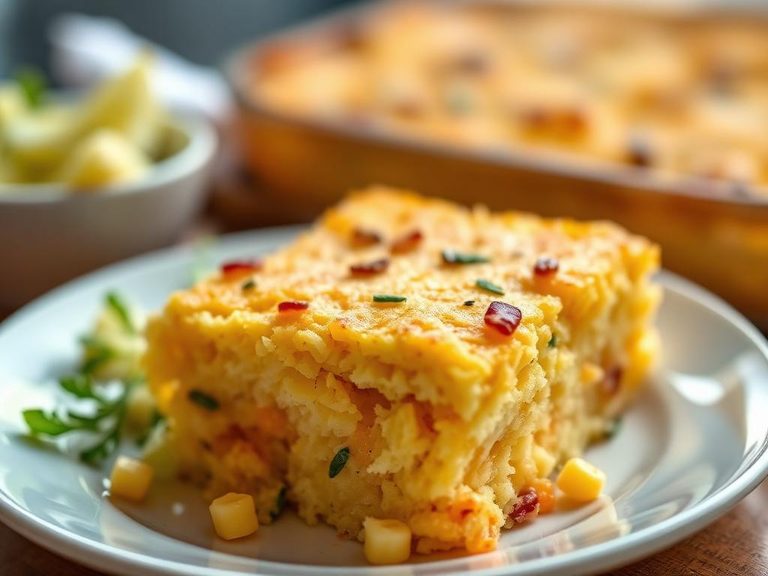
🍽️ Popular dishes


🌍 Where it's eaten
💡 Did you know?
The 'enriched' label means the mix has had specific B vitamins (like thiamin, riboflavin, niacin, folic acid) and iron added back after processing, a practice mandated in the U.S. since the 1940s to combat nutrient deficiencies.
Full nutrition (USDA data · scales with serving)
| Water | 7.8 g |
| Energy | 418 kcal |
| Energy | 1749 kj |
| Protein | 7.0 g |
| Total lipid (fat) | 12.2 g |
| Ash | 3.6 g |
| Carbohydrate, by difference | 69.5 g |
| Fiber, total dietary | 6.5 g |
| Total Sugars | 20.3 g |
| Calcium, Ca | 57.0 mg |
| Iron, Fe | 2.5 mg |
| Magnesium, Mg | 24.0 mg |
| Phosphorus, P | 489 mg |
| Potassium, K | 113 mg |
| Sodium, Na | 817 mg |
| Zinc, Zn | 0.57 mg |
| Copper, Cu | 0.09 mg |
| Manganese, Mn | 0.32 mg |
| Selenium, Se | 5.6 ug |
| Vitamin C, total ascorbic acid | 0.10 mg |
| Thiamin | 0.43 mg |
| Riboflavin | 0.27 mg |
| Niacin | 3.3 mg |
| Pantothenic acid | 0.48 mg |
| Vitamin B-6 | 0.13 mg |
| Folate, total | 93.0 ug |
| Folic acid | 82.0 ug |
| Folate, food | 11.0 ug |
| Folate, DFE | 150 ug |
| Choline, total | 7.1 mg |
| Vitamin B-12 | 0.09 ug |
| Vitamin B-12, added | 0.00 ug |
| Vitamin A, RAE | 19.0 ug |
| Retinol | 16.0 ug |
| Carotene, beta | 28.0 ug |
| Carotene, alpha | 18.0 ug |
| Cryptoxanthin, beta | 0.00 ug |
| Vitamin A, IU | 115 iu |
| Lycopene | 0.00 ug |
| Lutein + zeaxanthin | 391 ug |
| Vitamin E (alpha-tocopherol) | 0.16 mg |
| Vitamin E, added | 0.00 mg |
| Vitamin D (D2 + D3), International Units | 0.00 iu |
| Vitamin D (D2 + D3) | 0.00 ug |
| Vitamin K (phylloquinone) | 5.0 ug |
| Alcohol, ethyl | 0.00 g |
| Caffeine | 0.00 mg |
| Theobromine | 0.00 mg |
Fat & fatty acid profile (per 100g)
| Fatty acids, total saturated | 3.1 g |
| SFA 4:0 | 0.00 g |
| SFA 6:0 | 0.00 g |
| SFA 8:0 | 0.00 g |
| SFA 10:0 | 0.00 g |
| SFA 12:0 | 0.00 g |
| SFA 14:0 | 0.07 g |
| SFA 16:0 | 1.6 g |
| SFA 18:0 | 1.4 g |
| Fatty acids, total monounsaturated | 6.7 g |
| MUFA 16:1 | 0.00 g |
| MUFA 18:1 | 6.7 g |
| MUFA 20:1 | 0.00 g |
| MUFA 22:1 | 0.00 g |
| Fatty acids, total polyunsaturated | 1.7 g |
| PUFA 18:2 | 1.6 g |
| PUFA 18:3 | 0.08 g |
| PUFA 18:4 | 0.00 g |
| PUFA 20:4 | 0.00 g |
| PUFA 20:5 n-3 (EPA) | 0.00 g |
| PUFA 22:5 n-3 (DPA) | 0.00 g |
| PUFA 22:6 n-3 (DHA) | 0.00 g |
| Cholesterol | 2.0 mg |
Amino acid profile (per 100g)
| Tryptophan | 0.07 g |
| Threonine | 0.22 g |
| Isoleucine | 0.25 g |
| Leucine | 0.63 g |
| Lysine | 0.20 g |
| Methionine | 0.13 g |
| Cystine | 0.13 g |
| Phenylalanine | 0.34 g |
| Tyrosine | 0.24 g |
| Valine | 0.32 g |
| Arginine | 0.30 g |
| Histidine | 0.18 g |
| Alanine | 0.34 g |
| Aspartic acid | 0.38 g |
| Glutamic acid | 1.8 g |
| Glycine | 0.25 g |
| Proline | 0.71 g |
| Serine | 0.34 g |
FAQ
What is the difference between cornbread and corn muffin mix?
They are often the same base mix; the difference lies in the preparation method (baked in a skillet vs. muffin tin) and sometimes the ratio of sweetener and leavening agents. Muffin mixes tend to be sweeter and lighter.
Can I use this mix to make something other than bread or muffins?
Yes! It can be used as a coating for fried foods, a base for cornbread pancakes, or even incorporated into meatloaf or meatballs for added texture and flavor.
Why is the mix so high in sugar?
Many commercial mixes are formulated to be 'sweet cornbread,' a popular variation in the U.S. The sugar enhances flavor and browning, but it significantly increases the carbohydrate load. You can often reduce the added sugar in the recipe by 25-50% without ruining the texture.
Nutrient density (calculated · NRF9.3)
Nutrient Rich Foods index: beneficial nutrients (protein, fiber, vitamins, minerals) minus saturated fat, added sugar & sodium, per 100 kcal.
NRF9.3 index — Fulgoni, Keast & Drewnowski, 2009. Computed from USDA nutrients.
Weight-loss friendliness (composite index)
Energy density 4.18 kcal/g · 7% calories from protein · 6.5 g fiber · 20.3 g sugar per 100 g.
Composite of energy density (Rolls et al., 1999), protein & fiber satiety, minus sugar. A calculated heuristic — ranks satiety-per-calorie, not a clinical measure.
Dietary load (calculated from USDA values)
Potential renal acid load. Positive = acid-forming, negative = alkaline-forming.
Sodium-to-potassium ratio: 7.23 (lower is better — aim for ≤ 1)
Sodium:potassium per WHO potassium guidance. Computed from USDA nutrients.