

Bread, barley
Common food

Photo: Wikipedia
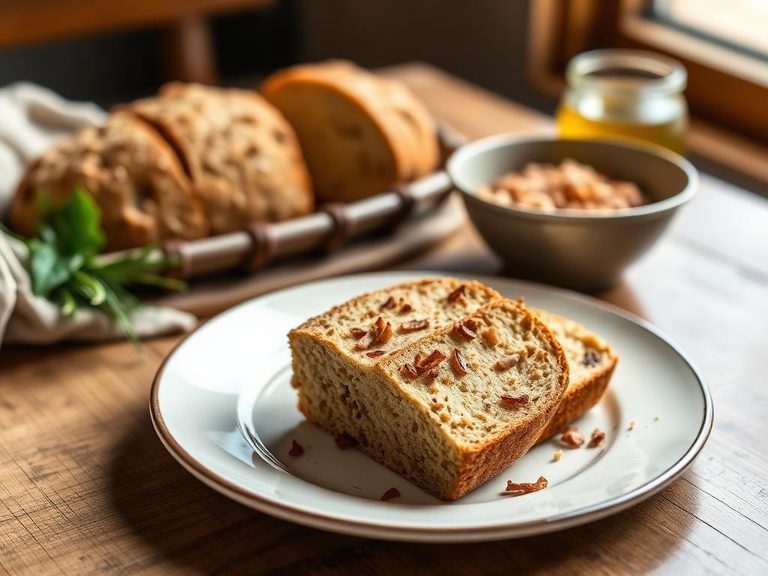
Barley bread is a hearty, dense loaf with a satisfyingly chewy texture and a deep, nutty, slightly earthy flavor. It's a nutritional powerhouse, offering a robust 4g of fiber per 100g, which supports digestion and sustained energy.
Calorie split: 16% protein · 70% carbs · 15% fat
↓ Full nutrition💚 Why it's loved
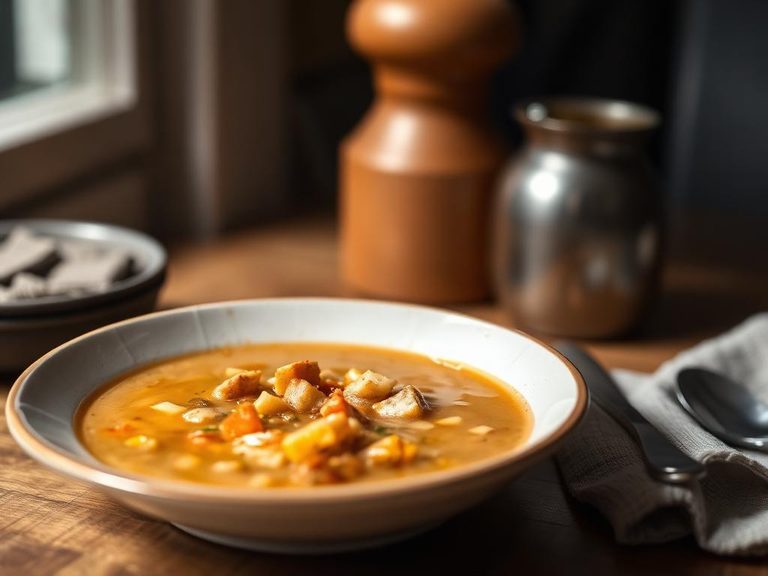
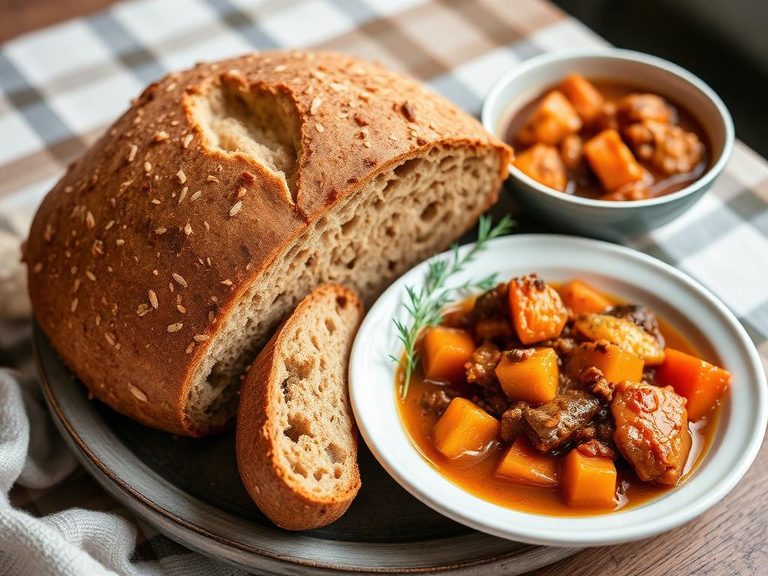
People love barley bread for its distinct, robust flavor that pairs beautifully with hearty soups, stews, and strong cheeses. It's a staple in many traditional cuisines, valued for its satisfying density and nutritional heft.
⚠️ Watch-outs & how to enjoy it better
Its dense, chewy texture can be tough for those accustomed to light, fluffy white bread. Barley contains gluten, making it unsuitable for people with celiac disease or gluten sensitivity. To enjoy it, pair slices with protein-rich toppings like smoked fish or legumes to balance its carbohydrate load and enhance satiety.
Key benefits
- High in soluble fiber (beta-glucan) for heart health
- Provides sustained energy due to complex carbohydrates
- Good source of plant-based protein
- Rich in minerals like selenium and manganese
- Supports digestive health with its fiber content
🍽️ Popular dishes


🌍 Where it's eaten
💡 Did you know?
Barley is one of the oldest cultivated grains, with evidence of its use dating back to 8000 BCE in the Fertile Crescent.
Full nutrition (USDA data · scales with serving)
| Water | 35.3 g |
| Energy | 274 kcal |
| Protein | 10.7 g |
| Total lipid (fat) | 4.5 g |
| Carbohydrate, by difference | 47.5 g |
| Fiber, total dietary | 4.0 g |
| Total Sugars | 5.7 g |
| Calcium, Ca | 125 mg |
| Iron, Fe | 3.6 mg |
| Magnesium, Mg | 41.0 mg |
| Phosphorus, P | 129 mg |
| Potassium, K | 141 mg |
| Sodium, Na | 450 mg |
| Zinc, Zn | 1.0 mg |
| Copper, Cu | 0.15 mg |
| Selenium, Se | 28.8 ug |
| Vitamin C, total ascorbic acid | 0.20 mg |
| Thiamin | 0.41 mg |
| Riboflavin | 0.25 mg |
| Niacin | 5.6 mg |
| Vitamin B-6 | 0.11 mg |
| Folate, total | 85.0 ug |
| Folic acid | 20.0 ug |
| Folate, food | 65.0 ug |
| Folate, DFE | 99.0 ug |
| Choline, total | 18.7 mg |
| Vitamin B-12 | 0.00 ug |
| Vitamin B-12, added | 0.00 ug |
| Vitamin A, RAE | 0.00 ug |
| Retinol | 0.00 ug |
| Carotene, beta | 1.0 ug |
| Carotene, alpha | 0.00 ug |
| Cryptoxanthin, beta | 0.00 ug |
| Lycopene | 0.00 ug |
| Lutein + zeaxanthin | 44.0 ug |
| Vitamin E (alpha-tocopherol) | 0.19 mg |
| Vitamin E, added | 0.00 mg |
| Vitamin D (D2 + D3) | 0.00 ug |
| Vitamin K (phylloquinone) | 4.9 ug |
| Alcohol, ethyl | 0.00 g |
| Caffeine | 0.00 mg |
| Theobromine | 0.00 mg |
Fat & fatty acid profile (per 100g)
| Fatty acids, total saturated | 0.70 g |
| SFA 4:0 | 0.00 g |
| SFA 6:0 | 0.00 g |
| SFA 8:0 | 0.00 g |
| SFA 10:0 | 0.00 g |
| SFA 12:0 | 0.01 g |
| SFA 14:0 | 0.01 g |
| SFA 16:0 | 0.44 g |
| SFA 18:0 | 0.21 g |
| Fatty acids, total monounsaturated | 0.61 g |
| MUFA 16:1 | 0.02 g |
| MUFA 18:1 | 0.58 g |
| MUFA 20:1 | 0.01 g |
| MUFA 22:1 | 0.00 g |
| Fatty acids, total polyunsaturated | 1.6 g |
| PUFA 18:2 | 1.4 g |
| PUFA 18:3 | 0.16 g |
| PUFA 18:4 | 0.00 g |
| PUFA 20:4 | 0.00 g |
| PUFA 20:5 n-3 (EPA) | 0.00 g |
| PUFA 22:5 n-3 (DPA) | 0.00 g |
| PUFA 22:6 n-3 (DHA) | 0.00 g |
| Cholesterol | 0.00 mg |
Amino acid profile (per 100g)
Estimated from Bread, salvadoran sweet cheese (quesadilla salvadorena) — USDA does not publish this profile for Bread.
| Tryptophan | 0.07 g |
| Threonine | 0.21 g |
| Isoleucine | 0.30 g |
| Leucine | 0.65 g |
| Lysine | 0.50 g |
| Methionine | 0.28 g |
| Cystine | 0.06 g |
| Phenylalanine | 0.37 g |
| Tyrosine | 0.23 g |
| Valine | 0.43 g |
| Arginine | 0.25 g |
| Histidine | 0.15 g |
| Alanine | 0.36 g |
| Aspartic acid | 0.59 g |
| Glutamic acid | 1.3 g |
| Glycine | 0.20 g |
| Proline | 0.83 g |
| Serine | 0.45 g |
| Hydroxyproline | 0.00 g |
FAQ
Is barley bread gluten-free?
No, barley contains gluten and is not suitable for individuals with celiac disease or gluten sensitivity.
How does barley bread affect blood sugar?
Its high fiber content, particularly beta-glucan, can help moderate blood sugar response compared to refined white bread, but it still contains carbohydrates.
What is the best way to store barley bread?
Store it in a cool, dry place in a bread box or paper bag for a few days, or slice and freeze it for longer storage.
Nutrient density (calculated · NRF9.3)
Nutrient Rich Foods index: beneficial nutrients (protein, fiber, vitamins, minerals) minus saturated fat, added sugar & sodium, per 100 kcal.
NRF9.3 index — Fulgoni, Keast & Drewnowski, 2009. Computed from USDA nutrients.
Weight-loss friendliness (composite index)
Energy density 2.74 kcal/g · 16% calories from protein · 4.0 g fiber · 5.7 g sugar per 100 g.
Composite of energy density (Rolls et al., 1999), protein & fiber satiety, minus sugar. A calculated heuristic — ranks satiety-per-calorie, not a clinical measure.
Dietary load (calculated from USDA values)
Potential renal acid load. Positive = acid-forming, negative = alkaline-forming.
Sodium-to-potassium ratio: 3.19 (lower is better — aim for ≤ 1)
Sodium:potassium per WHO potassium guidance. Computed from USDA nutrients.