

Beverages, Kiwi Strawberry Juice Drink
Whole food · Beverages

Photo: Wikipedia
This is a vibrant, sweet-tart beverage that blends the tropical tang of kiwi with the bright, familiar sweetness of strawberry. It pours as a smooth, slightly pulpy liquid with a refreshing pinkish-green hue, offering a quick burst of fruity flavor. Nutritionally, it's a low-calorie, fat-free drink that provides a quick source of carbohydrates, primarily from sugars.
Calorie split: 0% protein · 100% carbs · 0% fat
↓ Full nutrition💚 Why it's loved
People love it for its perfect balance of sweet and tart, capturing the essence of two popular fruits in one convenient drink. It's a go-to for a quick, refreshing pick-me-up, especially in warm weather, and its familiar flavor profile makes it a crowd-pleaser for all ages.
⚠️ Watch-outs & how to enjoy it better
The primary concern is its high sugar content (11.63g per 100g), which can contribute to rapid blood sugar spikes, making it less ideal for those managing diabetes or watching their sugar intake. To counteract this, consider pairing it with a source of protein or healthy fat (like a handful of nuts or yogurt) to slow sugar absorption, or strictly control the portion size. Some commercial versions may also contain added sodium or preservatives, so checking the label is advisable.
Key benefits
- Provides a quick source of energy from natural fruit sugars.
- Low in calories, making it a lighter alternative to sodas.
- Fat-free and cholesterol-free.
- Offers a convenient way to consume fruit flavors.
- Refreshing and hydrating.
🍽️ Popular dishes
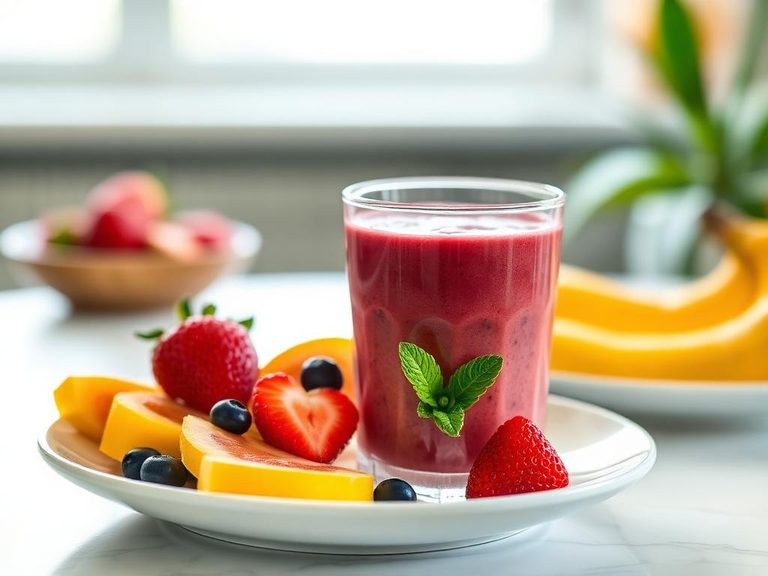
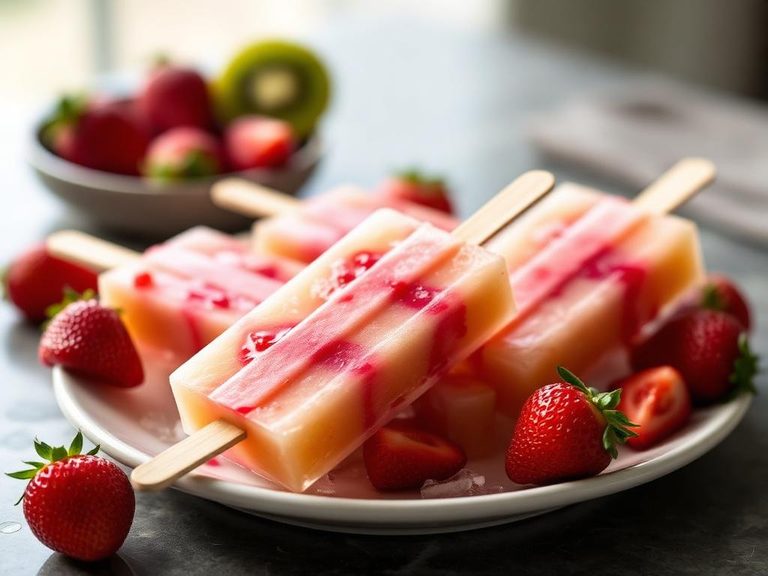
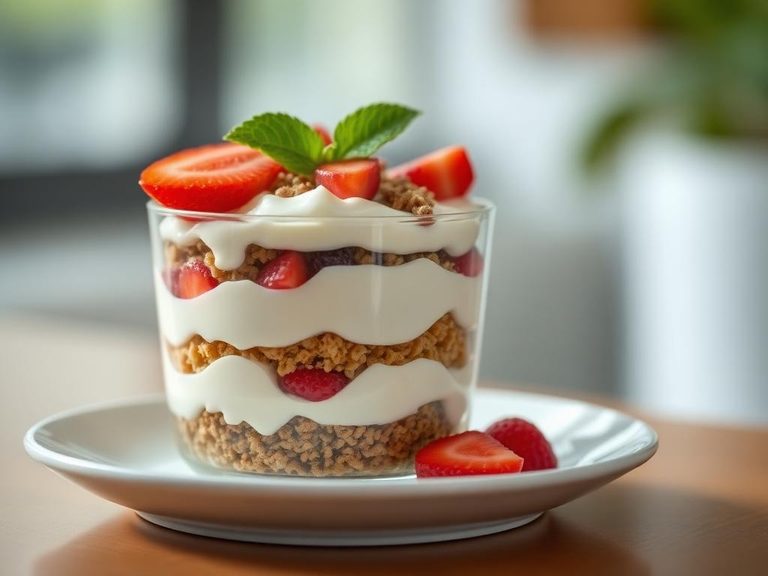
🌍 Where it's eaten
💡 Did you know?
The classic kiwi-strawberry pairing is a modern culinary creation, as the fuzzy brown kiwi fruit (originally from China) and the garden strawberry (from the Americas) never met in the wild before being cultivated and combined by humans.
Full nutrition (USDA data · scales with serving)
| Water | 87.7 g |
| Energy | 47.0 kcal |
| Energy | 195 kj |
| Protein | 0.00 g |
| Total lipid (fat) | 0.00 g |
| Ash | 0.00 g |
| Carbohydrate, by difference | 12.3 g |
| Fiber, total dietary | 0.00 g |
| Total Sugars | 11.6 g |
| Calcium, Ca | 0.00 mg |
| Iron, Fe | 0.15 mg |
| Magnesium, Mg | 0.00 mg |
| Phosphorus, P | 0.00 mg |
| Potassium, K | 14.0 mg |
| Sodium, Na | 11.0 mg |
| Zinc, Zn | 0.00 mg |
| Copper, Cu | 0.00 mg |
| Selenium, Se | 0.00 ug |
| Vitamin C, total ascorbic acid | 24.7 mg |
| Thiamin | 0.00 mg |
| Riboflavin | 0.00 mg |
| Niacin | 0.00 mg |
| Vitamin B-6 | 0.00 mg |
| Folate, total | 0.00 ug |
| Folic acid | 0.00 ug |
| Folate, food | 0.00 ug |
| Folate, DFE | 0.00 ug |
| Choline, total | 0.00 mg |
| Vitamin B-12 | 0.00 ug |
| Vitamin B-12, added | 0.00 ug |
| Vitamin A, RAE | 1.0 ug |
| Retinol | 0.00 ug |
| Carotene, beta | 9.0 ug |
| Carotene, alpha | 4.0 ug |
| Cryptoxanthin, beta | 1.0 ug |
| Vitamin A, IU | 20.0 iu |
| Lycopene | 0.00 ug |
| Lutein + zeaxanthin | 25.0 ug |
| Vitamin E (alpha-tocopherol) | 0.00 mg |
| Vitamin E, added | 0.00 mg |
| Vitamin D (D2 + D3), International Units | 0.00 iu |
| Vitamin D (D2 + D3) | 0.00 ug |
| Vitamin K (phylloquinone) | 0.00 ug |
| Alcohol, ethyl | 0.00 g |
| Caffeine | 0.00 mg |
| Theobromine | 0.00 mg |
Fat & fatty acid profile (per 100g)
| Fatty acids, total saturated | 0.00 g |
| SFA 4:0 | 0.00 g |
| SFA 6:0 | 0.00 g |
| SFA 8:0 | 0.00 g |
| SFA 10:0 | 0.00 g |
| SFA 12:0 | 0.00 g |
| SFA 14:0 | 0.00 g |
| SFA 16:0 | 0.00 g |
| SFA 18:0 | 0.00 g |
| Fatty acids, total monounsaturated | 0.00 g |
| MUFA 16:1 | 0.00 g |
| MUFA 18:1 | 0.00 g |
| MUFA 20:1 | 0.00 g |
| MUFA 22:1 | 0.00 g |
| Fatty acids, total polyunsaturated | 0.00 g |
| PUFA 18:2 | 0.00 g |
| PUFA 18:3 | 0.00 g |
| PUFA 18:4 | 0.00 g |
| PUFA 20:4 | 0.00 g |
| PUFA 20:5 n-3 (EPA) | 0.00 g |
| PUFA 22:5 n-3 (DPA) | 0.00 g |
| PUFA 22:6 n-3 (DHA) | 0.00 g |
| Cholesterol | 0.00 mg |
Amino acid profile (per 100g)
Estimated from Beverages, carbonated, tonic water — USDA does not publish this profile for Beverages.
| Tryptophan | 0.00 g |
| Threonine | 0.00 g |
| Isoleucine | 0.00 g |
| Leucine | 0.00 g |
| Lysine | 0.00 g |
| Methionine | 0.00 g |
| Cystine | 0.00 g |
| Phenylalanine | 0.00 g |
| Tyrosine | 0.00 g |
| Valine | 0.00 g |
| Arginine | 0.00 g |
| Histidine | 0.00 g |
| Alanine | 0.00 g |
| Aspartic acid | 0.00 g |
| Glutamic acid | 0.00 g |
| Glycine | 0.00 g |
| Proline | 0.00 g |
| Serine | 0.00 g |
FAQ
Is this juice drink the same as 100% fruit juice?
No. A 'juice drink' typically contains a blend of fruit juices, water, and often added sugars or sweeteners, whereas 100% fruit juice is made solely from pressed fruit with no added water or sugar.
Does it contain real kiwi and strawberry?
Most likely, yes, in the form of juice concentrates or purees. The exact composition depends on the brand, but the flavor is derived from these fruits.
Is it a good source of vitamins?
While it may contain some vitamin C from the fruits, it is generally not considered a significant source of vitamins or fiber compared to eating whole fruits, due to processing and dilution.
Nutrient density (calculated · NRF9.3)
Nutrient Rich Foods index: beneficial nutrients (protein, fiber, vitamins, minerals) minus saturated fat, added sugar & sodium, per 100 kcal.
NRF9.3 index — Fulgoni, Keast & Drewnowski, 2009. Computed from USDA nutrients.
Weight-loss friendliness (composite index)
Energy density 0.47 kcal/g · 0% calories from protein · 0.0 g fiber · 11.6 g sugar per 100 g.
Composite of energy density (Rolls et al., 1999), protein & fiber satiety, minus sugar. A calculated heuristic — ranks satiety-per-calorie, not a clinical measure.
Dietary load (calculated from USDA values)
Potential renal acid load. Positive = acid-forming, negative = alkaline-forming.
Sodium-to-potassium ratio: 0.79 (lower is better — aim for ≤ 1)
Sodium:potassium per WHO potassium guidance. Computed from USDA nutrients.