

Beets, pickled
Common food
Pickled beets are vibrant, ruby-red slices of beetroot preserved in a tangy, sweet-and-sour brine. They offer a satisfying crunch with a flavor that balances earthy sweetness against a sharp, acidic kick. Nutritionally, they are a low-calorie, high-fiber food with a notable natural sugar content.
Calorie split: 5% protein · 94% carbs · 1% fat
↓ Full nutrition💚 Why it's loved
People love pickled beets for their unique sweet-sour punch and brilliant color, which can elevate a simple plate. They are a versatile staple in salads, sandwiches, and charcuterie boards, offering a ready-to-eat burst of flavor.
⚠️ Watch-outs & how to enjoy it better
The primary concern is the high sugar content from the pickling brine, which can cause blood-sugar spikes if consumed in large amounts. They can also be high in sodium. To counteract this, practice portion control and pair them with a source of protein or healthy fat (like cheese or nuts) to slow sugar absorption.
Key benefits
- Low in calories and fat
- Good source of dietary fiber
- Contains natural nitrates from beets
- Provides antioxidants like betalains
- No cholesterol
🍽️ Popular dishes
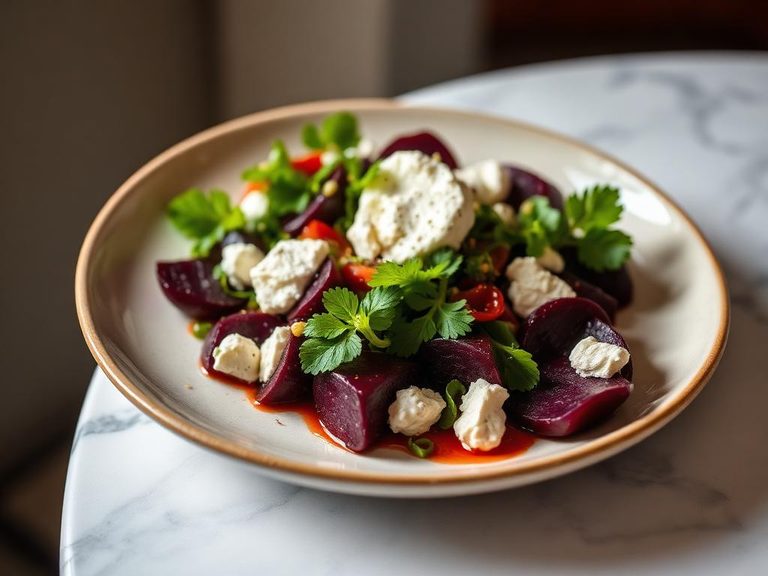
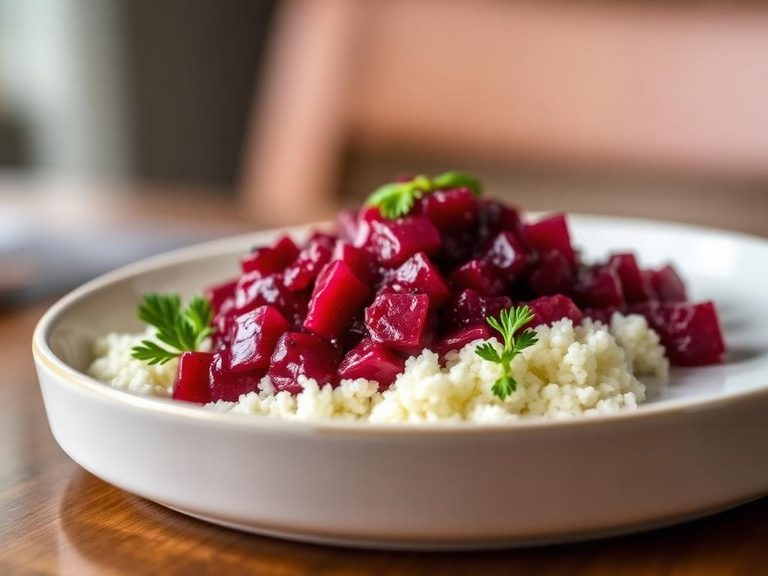
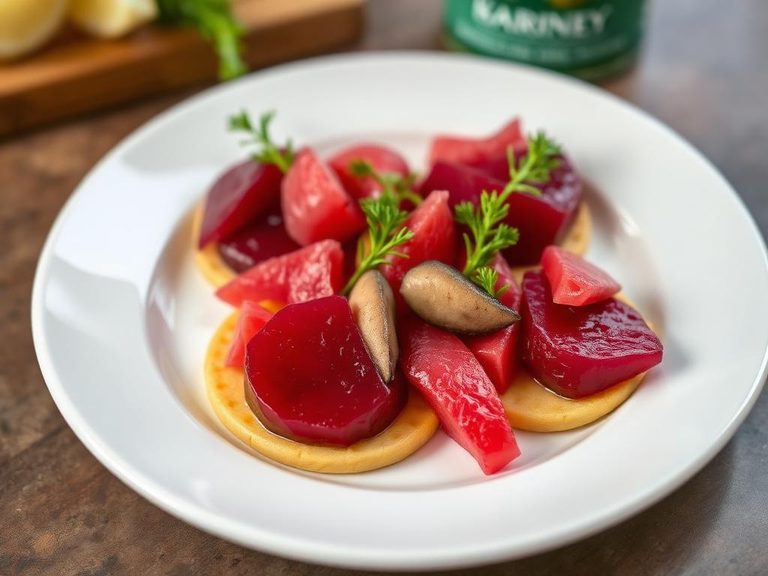
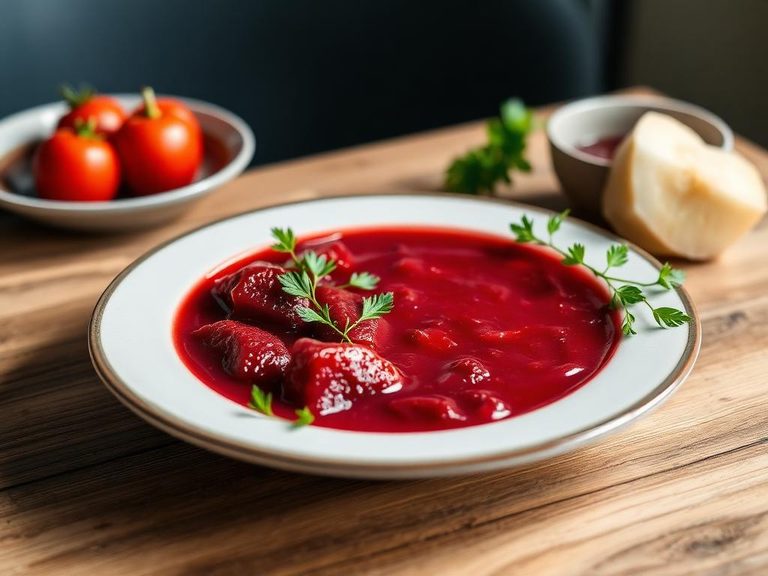
🌍 Where it's eaten
💡 Did you know?
The vivid red pigment in pickled beets, betalain, is so potent it was historically used as a natural food dye and can temporarily stain hands, cutting boards, and even teeth.
Full nutrition (USDA data · scales with serving)
| Water | 81.9 g |
| Energy | 65.0 kcal |
| Protein | 0.80 g |
| Total lipid (fat) | 0.08 g |
| Carbohydrate, by difference | 16.3 g |
| Fiber, total dietary | 0.80 g |
| Total Sugars | 11.1 g |
| Calcium, Ca | 11.0 mg |
| Iron, Fe | 0.41 mg |
| Magnesium, Mg | 15.0 mg |
| Phosphorus, P | 17.0 mg |
| Potassium, K | 115 mg |
| Sodium, Na | 149 mg |
| Zinc, Zn | 0.26 mg |
| Copper, Cu | 0.12 mg |
| Selenium, Se | 1.0 ug |
| Vitamin C, total ascorbic acid | 2.3 mg |
| Thiamin | 0.01 mg |
| Riboflavin | 0.05 mg |
| Niacin | 0.25 mg |
| Vitamin B-6 | 0.05 mg |
| Folate, total | 27.0 ug |
| Folic acid | 0.00 ug |
| Folate, food | 27.0 ug |
| Folate, DFE | 27.0 ug |
| Choline, total | 15.0 mg |
| Vitamin B-12 | 0.00 ug |
| Vitamin B-12, added | 0.00 ug |
| Vitamin A, RAE | 2.0 ug |
| Retinol | 0.00 ug |
| Carotene, beta | 29.0 ug |
| Carotene, alpha | 0.00 ug |
| Cryptoxanthin, beta | 0.00 ug |
| Lycopene | 0.00 ug |
| Lutein + zeaxanthin | 0.00 ug |
| Vitamin E (alpha-tocopherol) | 0.06 mg |
| Vitamin E, added | 0.00 mg |
| Vitamin D (D2 + D3) | 0.00 ug |
| Vitamin K (phylloquinone) | 0.30 ug |
| Alcohol, ethyl | 0.00 g |
| Caffeine | 0.00 mg |
| Theobromine | 0.00 mg |
Fat & fatty acid profile (per 100g)
| Fatty acids, total saturated | 0.01 g |
| SFA 4:0 | 0.00 g |
| SFA 6:0 | 0.00 g |
| SFA 8:0 | 0.00 g |
| SFA 10:0 | 0.00 g |
| SFA 12:0 | 0.00 g |
| SFA 14:0 | 0.00 g |
| SFA 16:0 | 0.01 g |
| SFA 18:0 | 0.00 g |
| Fatty acids, total monounsaturated | 0.02 g |
| MUFA 16:1 | 0.00 g |
| MUFA 18:1 | 0.02 g |
| MUFA 20:1 | 0.00 g |
| MUFA 22:1 | 0.00 g |
| Fatty acids, total polyunsaturated | 0.03 g |
| PUFA 18:2 | 0.03 g |
| PUFA 18:3 | 0.00 g |
| PUFA 18:4 | 0.00 g |
| PUFA 20:4 | 0.00 g |
| PUFA 20:5 n-3 (EPA) | 0.00 g |
| PUFA 22:5 n-3 (DPA) | 0.00 g |
| PUFA 22:6 n-3 (DHA) | 0.00 g |
| Cholesterol | 0.00 mg |
Amino acid profile (per 100g)
Estimated from Beets, cooked, boiled. drained, with salt — USDA does not publish this profile for Beets.
| Tryptophan | 0.02 g |
| Threonine | 0.05 g |
| Isoleucine | 0.05 g |
| Leucine | 0.07 g |
| Lysine | 0.06 g |
| Methionine | 0.02 g |
| Cystine | 0.02 g |
| Phenylalanine | 0.05 g |
| Tyrosine | 0.04 g |
| Valine | 0.06 g |
| Arginine | 0.04 g |
| Histidine | 0.02 g |
| Alanine | 0.06 g |
| Aspartic acid | 0.12 g |
| Glutamic acid | 0.45 g |
| Glycine | 0.03 g |
| Proline | 0.04 g |
| Serine | 0.06 g |
FAQ
Are pickled beets healthy?
They can be part of a healthy diet. They are low in calories and fat and provide fiber and antioxidants. However, their healthiness depends on the specific brine, which can be high in added sugar and sodium. Check labels and consume in moderation.
Why are my pickled beets not red?
The vibrant red color can fade if overcooked before pickling or if exposed to too much light. Using an acid like vinegar in the brine helps preserve the color. Ensure beets are cooked until just tender, not mushy.
How long do homemade pickled beets last?
When properly stored in a sealed container in the refrigerator, homemade pickled beets can last for 1 to 3 months. The flavor may continue to develop over time.
Nutrient density (calculated · NRF9.3)
Nutrient Rich Foods index: beneficial nutrients (protein, fiber, vitamins, minerals) minus saturated fat, added sugar & sodium, per 100 kcal.
NRF9.3 index — Fulgoni, Keast & Drewnowski, 2009. Computed from USDA nutrients.
Weight-loss friendliness (composite index)
Energy density 0.65 kcal/g · 5% calories from protein · 0.8 g fiber · 11.1 g sugar per 100 g.
Composite of energy density (Rolls et al., 1999), protein & fiber satiety, minus sugar. A calculated heuristic — ranks satiety-per-calorie, not a clinical measure.
Dietary load (calculated from USDA values)
Potential renal acid load. Positive = acid-forming, negative = alkaline-forming.
Sodium-to-potassium ratio: 1.30 (lower is better — aim for ≤ 1)
Sodium:potassium per WHO potassium guidance. Computed from USDA nutrients.