Beef, round, top round roast, boneless, separable lean only, trimmed to 0" fat, select, raw
Whole food · Beef Products
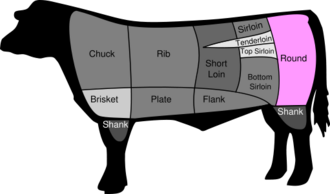
Photo: Wikipedia
This is a lean, boneless cut from the upper rear leg of the cow, prized for its deep red color and fine grain. When raw, it has a firm, dense texture with minimal marbling, promising a clean, beefy flavor that intensifies with cooking. Nutritionally, it's a powerhouse of high-quality protein with virtually no fat or carbohydrates.
💚 Why it's loved
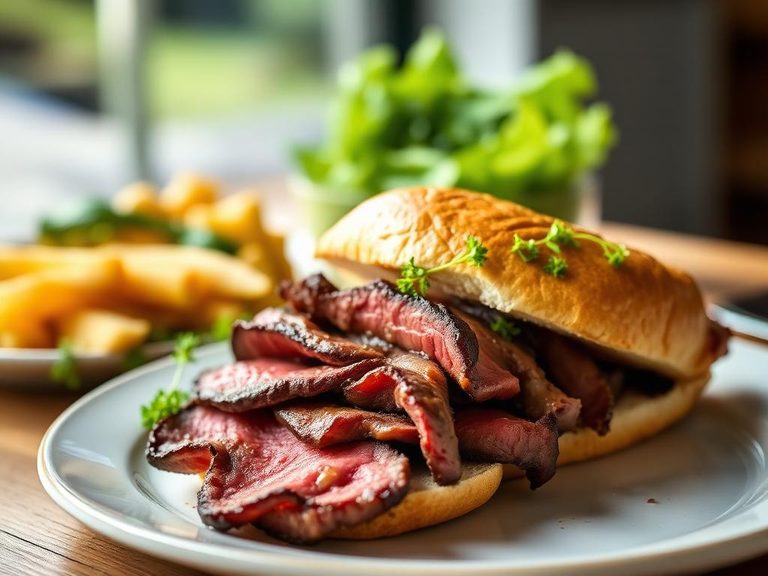
People love top round for its robust beefy taste and incredible versatility—it can be sliced thin for stir-fries, roasted whole for a Sunday dinner, or ground for lean burgers. It's a staple in home kitchens and delis alike, offering a reliable, hearty centerpiece for a meal.
⚠️ Watch-outs & how to enjoy it better
Its extreme leanness means it can easily become tough and dry if overcooked or prepared with high-heat methods without proper technique. To counteract this, always use a meat thermometer, consider marinating to add moisture and flavor, or employ slow, moist-heat cooking methods like braising. For those watching sodium intake, be mindful of pre-marinated or deli-sliced versions.
Key benefits
- Excellent source of complete protein for muscle repair and growth
- Very low in fat, especially saturated fat
- Zero carbohydrates, making it ideal for keto and low-carb diets
- Rich in essential minerals like iron, zinc, and selenium
- A lean choice for calorie-conscious meal planning
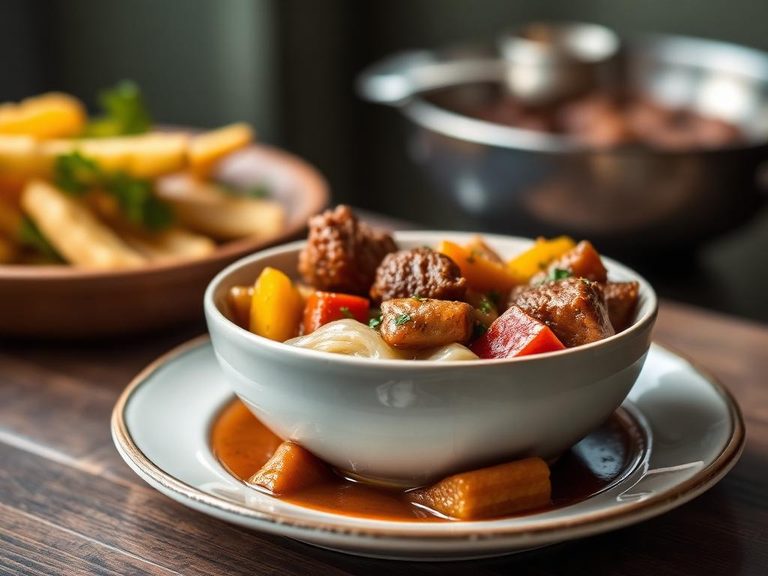
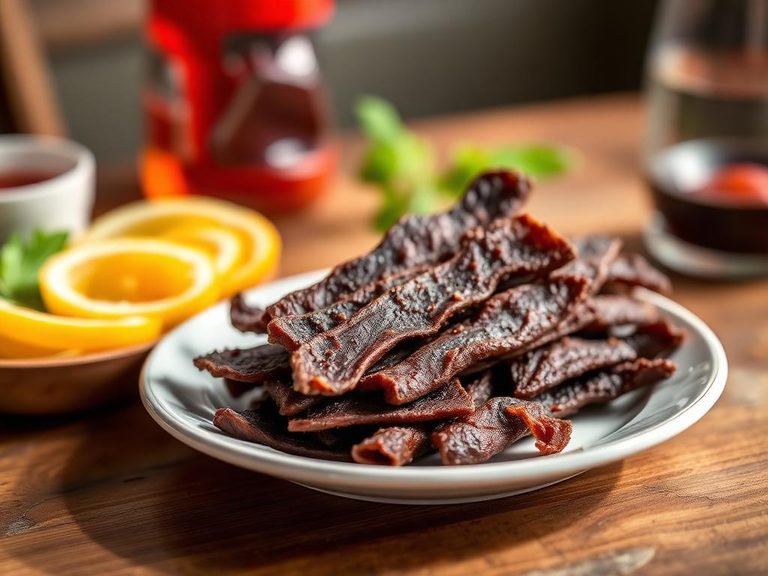
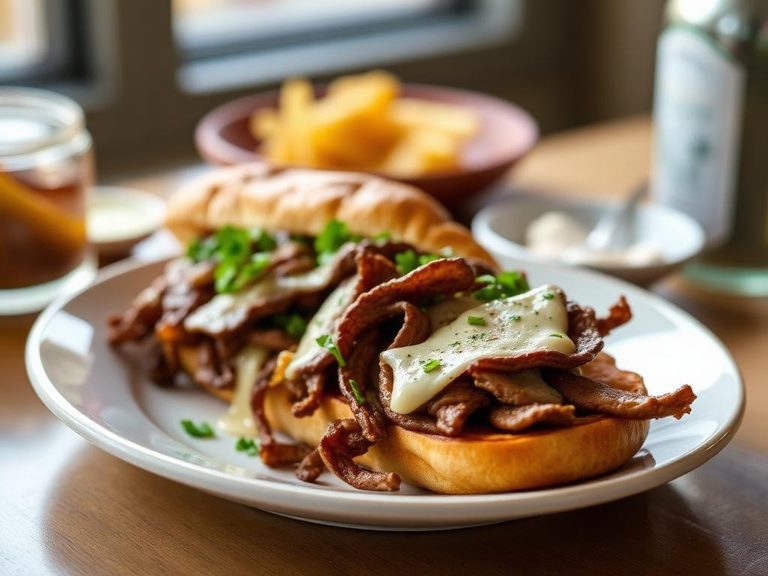
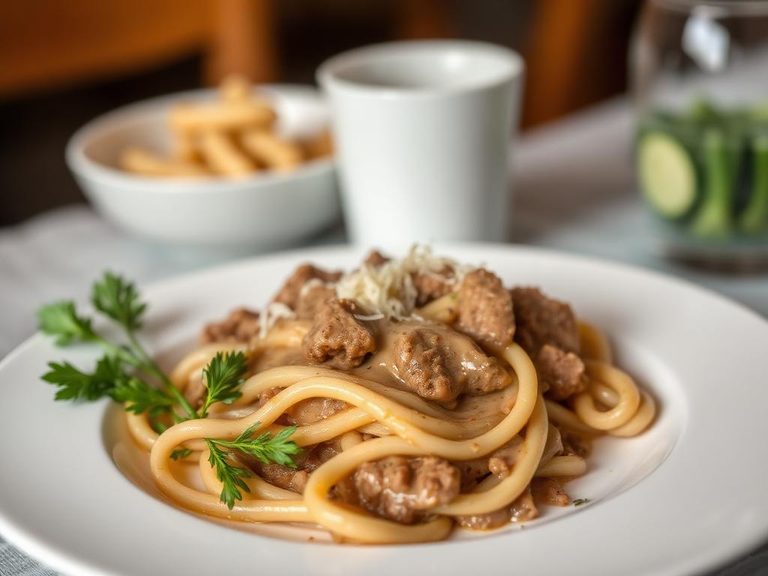
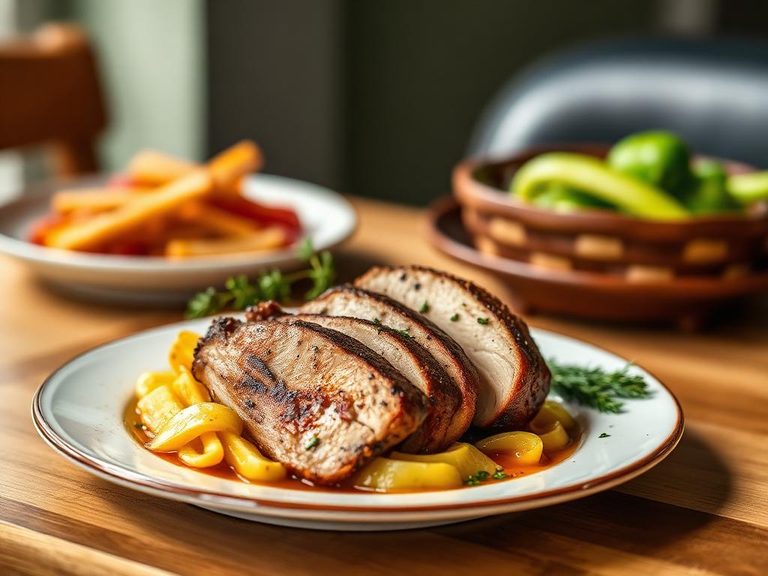
🍽️ Popular dishes
🌍 Where it's eaten
💡 Did you know?
The 'round' refers to the entire primal cut from the hind leg, and the 'top round' is the innermost, most tender portion of that large, tough muscle group, making it the premium choice from the leg.
Full nutrition (scales with serving)
| Water | 73.3 g |
| Energy (Atwater General Factors) | 116 kcal |
| Energy (Atwater Specific Factors) | 123 kcal |
| Energy | 123 kcal |
| Energy | 514 kj |
| Protein | 23.7 g |
| Total lipid (fat) | 2.4 g |
| Total fat (NLEA) | 2.1 g |
| Ash | 1.1 g |
| Carbohydrate, by difference | 0.00 g |
| Calcium, Ca | 13.0 mg |
| Iron, Fe | 2.3 mg |
| Magnesium, Mg | 11.9 mg |
| Phosphorus, P | 220 mg |
| Potassium, K | 316 mg |
| Sodium, Na | 55.0 mg |
| Zinc, Zn | 3.5 mg |
| Copper, Cu | 0.05 mg |
| Manganese, Mn | 0.00 mg |
| Selenium, Se | 22.7 ug |
| Thiamin | 0.06 mg |
| Riboflavin | 0.25 mg |
| Niacin | 6.2 mg |
| Pantothenic acid | 0.37 mg |
| Vitamin B-6 | 0.63 mg |
| Choline, total | 64.1 mg |
| Choline, free | 0.30 mg |
| Choline, from phosphocholine | 48.7 mg |
| Choline, from phosphotidyl choline | 0.50 mg |
| Choline, from glycerophosphocholine | 9.2 mg |
| Choline, from sphingomyelin | 5.3 mg |
| Betaine | 10.8 mg |
| Vitamin B-12 | 1.6 ug |
| Vitamin E (alpha-tocopherol) | 0.21 mg |
| Tocopherol, beta | 0.00 mg |
| Tocopherol, gamma | 0.04 mg |
| Tocopherol, delta | 0.00 mg |
| Tocotrienol, alpha | 0.00 mg |
| Tocotrienol, beta | 0.00 mg |
| Tocotrienol, gamma | 0.00 mg |
| Tocotrienol, delta | 0.00 mg |
| Vitamin D (D2 + D3), International Units | 0.00 iu |
| Vitamin D (D2 + D3) | 0.00 ug |
| Vitamin D2 (ergocalciferol) | 0.00 ug |
| Vitamin D3 (cholecalciferol) | 0.00 ug |
| 25-hydroxycholecalciferol | 0.18 ug |
| Fatty acids, total saturated | 0.92 g |
| SFA 10:0 | 0.00 g |
| SFA 12:0 | 0.00 g |
| SFA 14:0 | 0.05 g |
| SFA 15:0 | 0.01 g |
| SFA 16:0 | 0.52 g |
| SFA 17:0 | 0.03 g |
| SFA 18:0 | 0.31 g |
| SFA 20:0 | 0.00 g |
| SFA 24:0 | 0.00 g |
| Fatty acids, total monounsaturated | 0.89 g |
| MUFA 14:1 c | 0.01 g |
| MUFA 16:1 c | 0.06 g |
| MUFA 17:1 | 0.02 g |
| MUFA 17:1 c | 0.02 g |
| MUFA 18:1 c | 0.80 g |
| MUFA 20:1 | 0.00 g |
| MUFA 20:1 c | 0.00 g |
| Fatty acids, total polyunsaturated | 0.21 g |
| PUFA 18:2 c | 0.14 g |
| PUFA 18:2 n-6 c,c | 0.14 g |
| PUFA 18:2 CLAs | 0.01 g |
| PUFA 18:3 c | 0.00 g |
| PUFA 18:3 n-3 c,c,c (ALA) | 0.00 g |
| PUFA 20:2 c | 0.00 g |
| PUFA 20:2 n-6 c,c | 0.00 g |
| PUFA 20:3 c | 0.01 g |
| PUFA 20:3 n-6 | 0.01 g |
| PUFA 20:4 | 0.04 g |
| PUFA 20:4c | 0.04 g |
| PUFA 20:5c | 0.00 g |
| PUFA 20:5 n-3 (EPA) | 0.00 g |
| PUFA 22:5 c | 0.01 g |
| PUFA 22:5 n-3 (DPA) | 0.01 g |
| PUFA 22:6 c | 0.00 g |
| PUFA 22:6 n-3 (DHA) | 0.00 g |
| Fatty acids, total trans | 0.13 g |
| Fatty acids, total trans-monoenoic | 0.12 g |
| TFA 16:1 t | 0.01 g |
| TFA 18:1 t | 0.11 g |
| Fatty acids, total trans-dienoic | 0.01 g |
| TFA 18:2 t not further defined | 0.01 g |
| Cholesterol | 63.0 mg |
FAQ
What's the best way to cook top round to keep it tender?
For moist heat, braise it slowly in liquid. For dry heat, marinate it first, cook to medium-rare (135°F internal temp), and slice thinly against the grain. Avoid well-done.
Is top round the same as eye of round?
No. They are different muscles from the round primal. Top round is generally more tender and has a better shape for roasting, while eye of round is a smaller, very lean, and cylindrical muscle that can be tougher.
Can I use this cut for steak?
Yes, but it's not a prime steak cut. It's best when cut into steaks about 1-inch thick, marinated, and cooked quickly over high heat to medium-rare, then sliced thin for serving.