

Beef, Australian, imported, grass-fed, seam fat, raw
Whole food · Beef Products

Photo: Wikipedia
This is raw, imported Australian grass-fed beef with a prominent seam of fat running through it. The meat itself is deep red and lean, while the fat is creamy-white and firm, promising a rich, buttery flavor when cooked. Nutritionally, it's a powerhouse of energy and fat, with a modest protein content, making it a source of dense calories and essential fatty acids.
Calorie split: 7% protein · 1% carbs · 92% fat
↓ Full nutrition💚 Why it's loved
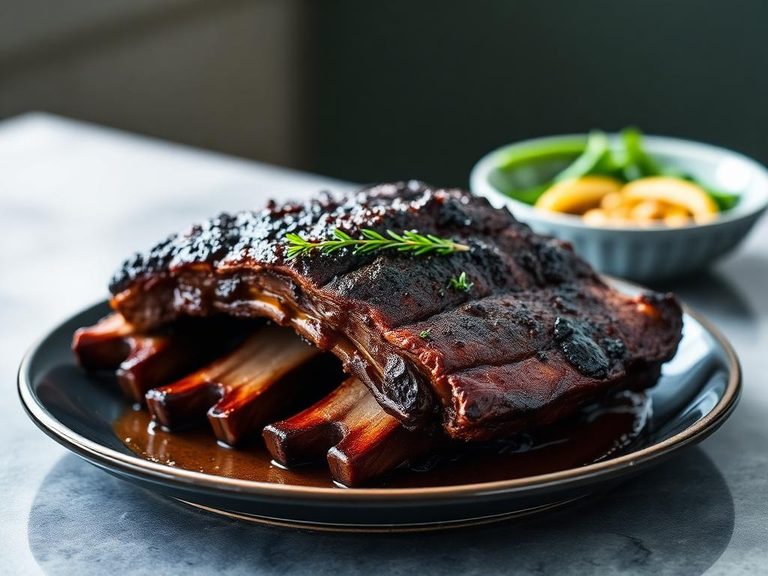
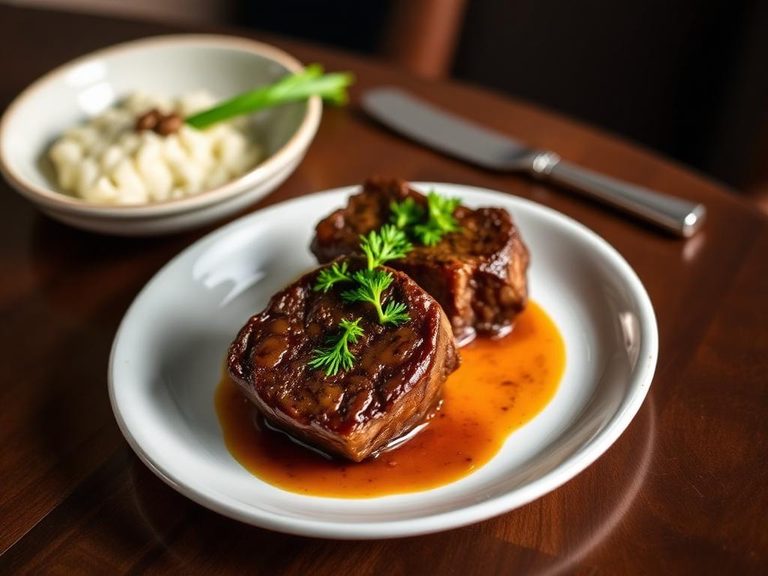
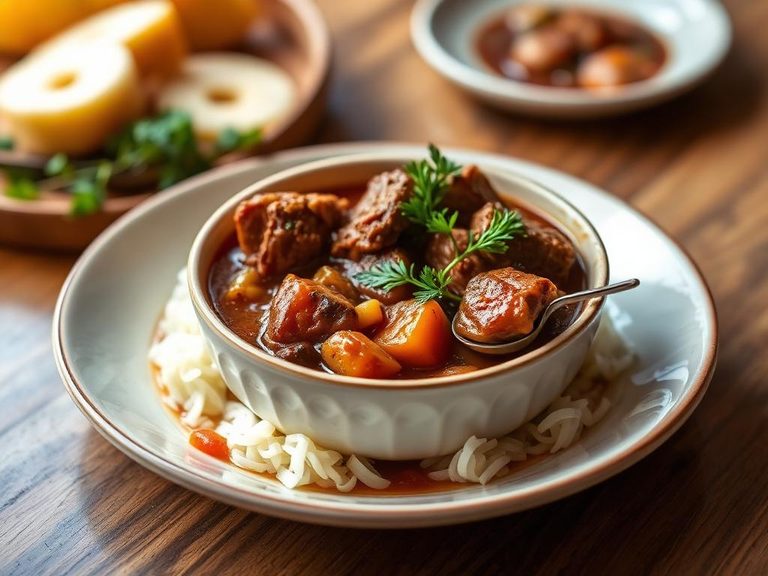
People love it for the deep, complex, and slightly gamey flavor imparted by the grass-fed diet, which is far more nuanced than grain-fed beef. The seam fat, when rendered, bastes the meat from within, creating an exceptionally juicy and tender result that's prized in slow-cooking and grilling.
⚠️ Watch-outs & how to enjoy it better
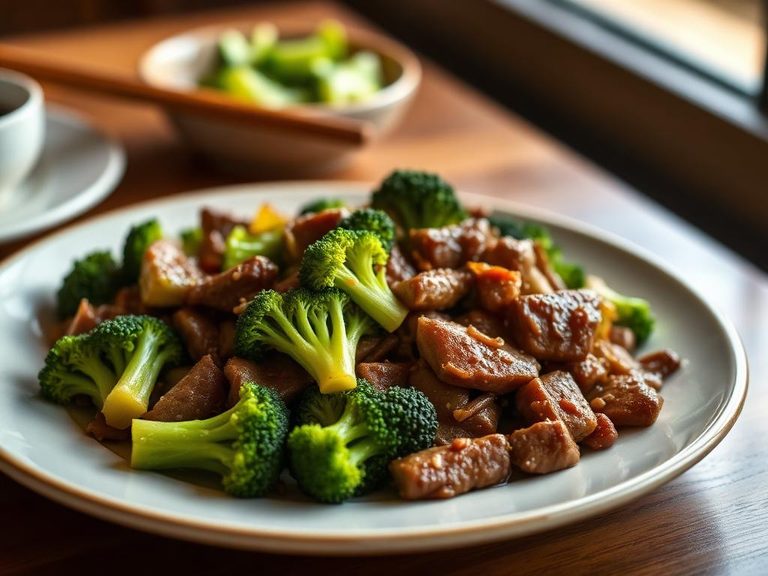
The high fat content (over 57g per 100g) makes it very calorie-dense and unsuitable for low-fat diets. Those monitoring saturated fat intake should consume it in moderation. To counteract this, practice strict portion control and pair it with large servings of fibrous vegetables like roasted broccoli or a vinegar-based slaw to add bulk and balance the meal.
Key benefits
- Rich in conjugated linoleic acid (CLA) from grass-feeding
- High in monounsaturated fats, particularly oleic acid
- Source of fat-soluble vitamins like A and E
- Contains bioavailable iron and zinc
- Grass-fed diet may result in a more favorable omega-3 to omega-6 ratio
🍽️ Popular dishes

🌍 Where it's eaten
💡 Did you know?
The 'seam' in seam fat refers to the natural connective tissue (fascia) that separates different muscle groups; this fat is not marbled within the muscle but lies between distinct muscles, making it ideal for slow cooking where it can melt and tenderize the surrounding meat.
Full nutrition (USDA data · scales with serving)
| Water | 31.2 g |
| Energy | 562 kcal |
| Energy | 2352 kj |
| Protein | 9.6 g |
| Total lipid (fat) | 57.7 g |
| Ash | 0.44 g |
| Carbohydrate, by difference | 1.1 g |
| Fiber, total dietary | 0.00 g |
| Total Sugars | 0.00 g |
| Sucrose | 0.00 g |
| Glucose | 0.00 g |
| Fructose | 0.00 g |
| Lactose | 0.00 g |
| Maltose | 0.00 g |
| Galactose | 0.00 g |
| Calcium, Ca | 3.0 mg |
| Iron, Fe | 0.89 mg |
| Sodium, Na | 34.0 mg |
| Vitamin C, total ascorbic acid | 0.00 mg |
| Vitamin A, RAE | 36.0 ug |
| Retinol | 36.0 ug |
| Vitamin A, IU | 120 iu |
Fat & fatty acid profile (per 100g)
| Fatty acids, total saturated | 26.6 g |
| SFA 10:0 | 0.03 g |
| SFA 12:0 | 0.05 g |
| SFA 14:0 | 1.9 g |
| SFA 15:0 | 0.36 g |
| SFA 16:0 | 13.7 g |
| SFA 17:0 | 0.76 g |
| SFA 18:0 | 9.6 g |
| SFA 20:0 | 0.12 g |
| SFA 22:0 | 0.05 g |
| SFA 24:0 | 0.01 g |
| Fatty acids, total monounsaturated | 22.9 g |
| MUFA 14:1 | 0.41 g |
| MUFA 16:1 | 1.6 g |
| MUFA 18:1 | 20.9 g |
| MUFA 18:1 c | 18.5 g |
| MUFA 18:1-11 t (18:1t n-7) | 2.0 g |
| MUFA 20:1 | 0.08 g |
| Fatty acids, total polyunsaturated | 1.6 g |
| PUFA 18:2 | 1.1 g |
| PUFA 18:2 n-6 c,c | 0.42 g |
| PUFA 18:3 | 0.32 g |
| PUFA 18:3 n-3 c,c,c (ALA) | 0.20 g |
| PUFA 18:3i | 0.11 g |
| PUFA 18:4 | 0.02 g |
| PUFA 20:2 n-6 c,c | 0.01 g |
| PUFA 20:3 | 0.01 g |
| PUFA 20:4 | 0.02 g |
| PUFA 20:5 n-3 (EPA) | 0.01 g |
| PUFA 22:5 n-3 (DPA) | 0.05 g |
| Fatty acids, total trans | 3.2 g |
| Fatty acids, total trans-monoenoic | 2.4 g |
| TFA 18:1 t | 2.4 g |
| TFA 18:2 t not further defined | 0.69 g |
| Fatty acids, total trans-polyenoic | 0.80 g |
| Cholesterol | 65.0 mg |
Amino acid profile (per 100g)
Estimated from Beef, variety meats and by-products, mechanically separated beef, raw — USDA does not publish this profile for Beef.
| Tryptophan | 0.17 g |
| Threonine | 0.47 g |
| Isoleucine | 0.58 g |
| Leucine | 1.2 g |
| Lysine | 1.2 g |
| Methionine | 0.43 g |
| Cystine | 0.23 g |
| Phenylalanine | 0.64 g |
| Tyrosine | 0.38 g |
| Valine | 0.92 g |
| Arginine | 1.2 g |
| Histidine | 0.44 g |
| Alanine | 1.0 g |
| Aspartic acid | 1.3 g |
| Glutamic acid | 2.1 g |
| Glycine | 1.2 g |
| Proline | 0.92 g |
| Serine | 0.57 g |
FAQ
What's the best way to cook a cut with this much seam fat?
Slow, moist-heat methods like braising or roasting at low temperatures are ideal. They allow the large pockets of fat to render slowly, basting the meat and breaking down connective tissue for maximum tenderness.
Is the fat from grass-fed beef healthier?
Grass-fed beef fat typically contains higher levels of omega-3 fatty acids and CLA compared to grain-fed, but it is still predominantly saturated fat and should be eaten in moderation as part of a balanced diet.
How does the taste differ from regular beef?
Grass-fed beef often has a more pronounced, mineral-rich, and slightly gamy or herbaceous flavor. The fat is firmer and has a cleaner, less 'beefy' taste than the softer fat from grain-finished cattle.
Nutrient density (calculated · NRF9.3)
Nutrient Rich Foods index: beneficial nutrients (protein, fiber, vitamins, minerals) minus saturated fat, added sugar & sodium, per 100 kcal.
NRF9.3 index — Fulgoni, Keast & Drewnowski, 2009. Computed from USDA nutrients.
Weight-loss friendliness (composite index)
Energy density 5.62 kcal/g · 7% calories from protein · 0.0 g fiber · 0.0 g sugar per 100 g.
Composite of energy density (Rolls et al., 1999), protein & fiber satiety, minus sugar. A calculated heuristic — ranks satiety-per-calorie, not a clinical measure.