

Beef, Australian, imported, grass-fed, external fat, raw
Whole food · Beef Products

Photo: Wikipedia
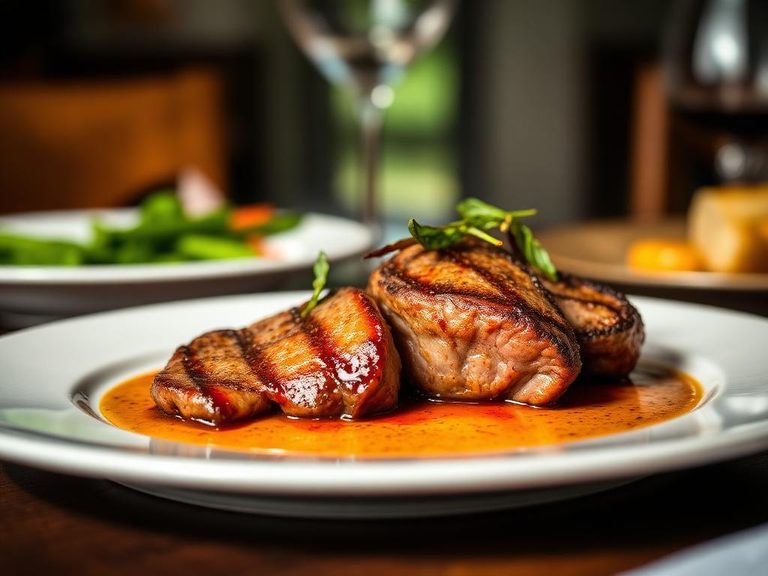
This is raw, grass-fed Australian beef with its external fat cap intact, prized for its rich, buttery marbling and deep, savory flavor. The high fat content (over 51g per 100g) gives it a luxuriously tender, melt-in-your-mouth texture when rendered down. It's a calorie-dense, nearly zero-carb protein source, with the fat providing essential fatty acids and a satisfying mouthfeel.
Calorie split: 9% protein · 0% carbs · 91% fat
↓ Full nutrition💚 Why it's loved
People love it for its unapologetically rich, beefy flavor and the incredible tenderness the fat cap provides when cooked low and slow. It's a cornerstone of hearty, rustic cooking, from classic Sunday roasts to sizzling steaks, offering a primal, satisfying eating experience.
⚠️ Watch-outs & how to enjoy it better
The extremely high fat content (over 50g per 100g) makes it very calorie-dense, which can be a concern for those managing weight or fat intake. To counteract this, practice strict portion control (e.g., 118g serving) and pair it with high-fiber, low-carb vegetables like roasted broccoli or a leafy green salad to add volume and nutrients without excessive calories.
Key benefits
- High in energy-dense fats for satiety
- Source of conjugated linoleic acid (CLA) from grass-fed cattle
- Rich in fat-soluble vitamins like A and E
- Contains minerals like zinc and iron
- Zero carbohydrates, suitable for ketogenic diets
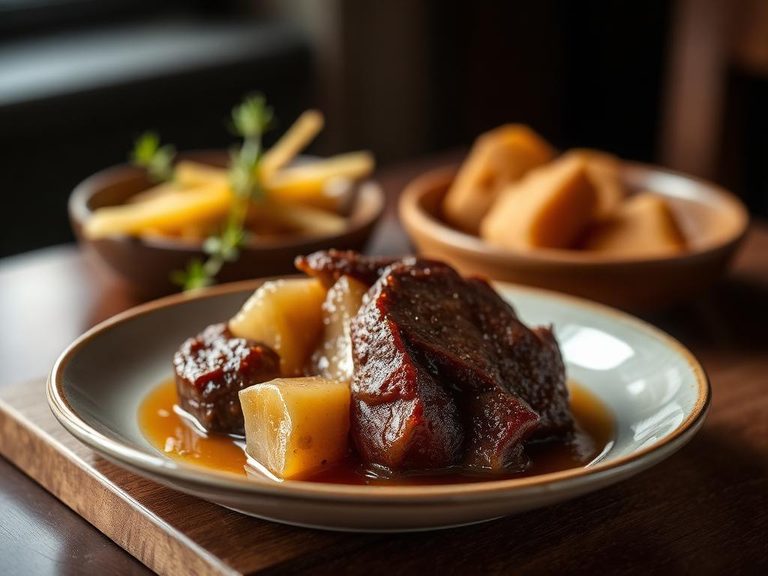
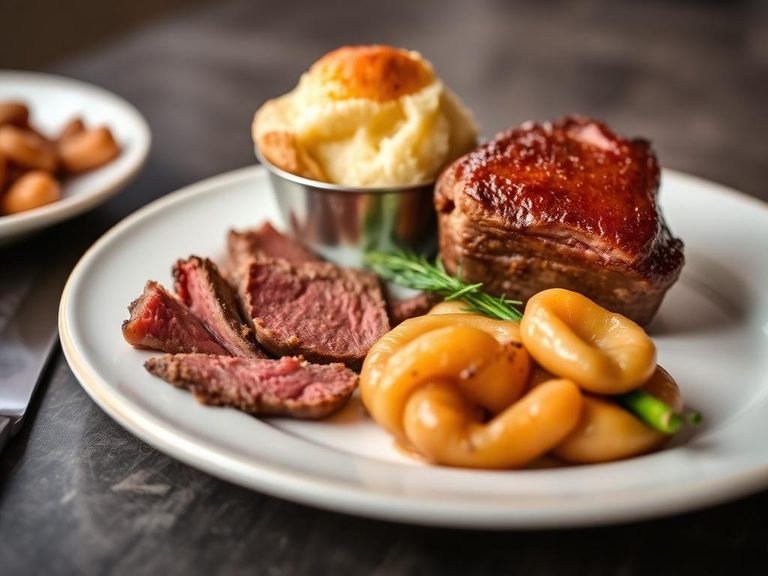
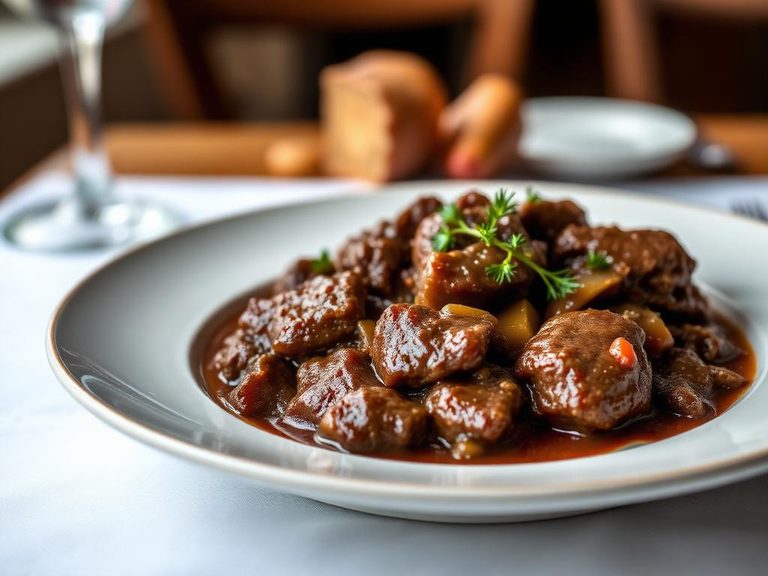
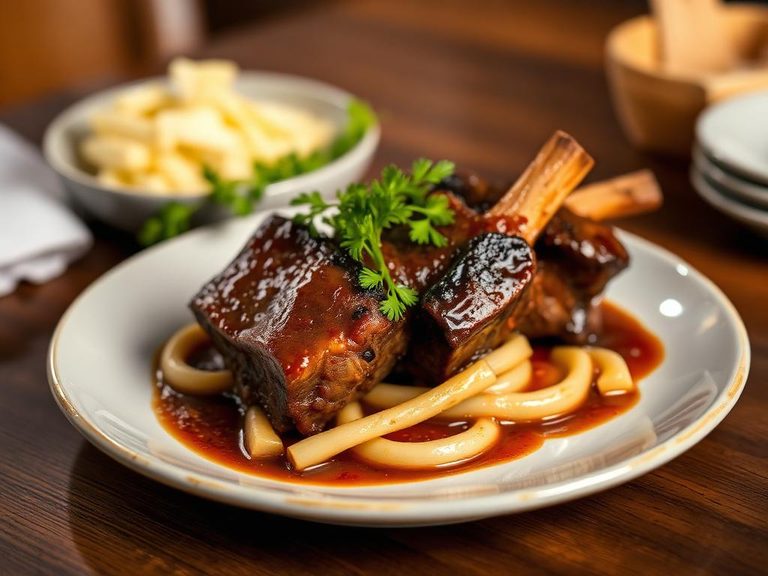
🍽️ Popular dishes
🌍 Where it's eaten
💡 Did you know?
The external fat cap, often called the 'fat cap' or 'bark,' is a natural insulator that protects the meat during slow cooking, basting it from the outside in and creating a flavorful, crispy crust when seared.
Full nutrition (USDA data · scales with serving)
| Water | 36.5 g |
| Energy | 509 kcal |
| Energy | 2130 kj |
| Protein | 11.3 g |
| Total lipid (fat) | 51.4 g |
| Ash | 0.42 g |
| Carbohydrate, by difference | 0.39 g |
| Fiber, total dietary | 0.00 g |
| Total Sugars | 0.00 g |
| Sucrose | 0.00 g |
| Glucose | 0.00 g |
| Fructose | 0.00 g |
| Lactose | 0.00 g |
| Maltose | 0.00 g |
| Galactose | 0.00 g |
| Calcium, Ca | 6.0 mg |
| Iron, Fe | 0.95 mg |
| Sodium, Na | 36.0 mg |
| Vitamin C, total ascorbic acid | 0.00 mg |
| Vitamin A, RAE | 36.0 ug |
| Retinol | 36.0 ug |
| Vitamin A, IU | 121 iu |
Fat & fatty acid profile (per 100g)
| Fatty acids, total saturated | 22.6 g |
| SFA 10:0 | 0.03 g |
| SFA 12:0 | 0.04 g |
| SFA 14:0 | 1.7 g |
| SFA 15:0 | 0.31 g |
| SFA 16:0 | 12.4 g |
| SFA 17:0 | 0.63 g |
| SFA 18:0 | 7.4 g |
| SFA 20:0 | 0.09 g |
| SFA 22:0 | 0.04 g |
| SFA 24:0 | 0.01 g |
| Fatty acids, total monounsaturated | 21.4 g |
| MUFA 14:1 | 0.48 g |
| MUFA 16:1 | 1.7 g |
| MUFA 18:1 | 19.2 g |
| MUFA 18:1 c | 17.1 g |
| MUFA 18:1-11 t (18:1t n-7) | 1.7 g |
| MUFA 20:1 | 0.07 g |
| Fatty acids, total polyunsaturated | 1.4 g |
| PUFA 18:2 | 1.0 g |
| PUFA 18:2 n-6 c,c | 0.37 g |
| PUFA 18:3 | 0.29 g |
| PUFA 18:3 n-3 c,c,c (ALA) | 0.19 g |
| PUFA 18:3i | 0.10 g |
| PUFA 18:4 | 0.02 g |
| PUFA 20:2 n-6 c,c | 0.01 g |
| PUFA 20:3 | 0.01 g |
| PUFA 20:4 | 0.02 g |
| PUFA 20:5 n-3 (EPA) | 0.01 g |
| PUFA 22:5 n-3 (DPA) | 0.04 g |
| Fatty acids, total trans | 2.8 g |
| Fatty acids, total trans-monoenoic | 2.0 g |
| TFA 18:1 t | 2.0 g |
| TFA 18:2 t not further defined | 0.65 g |
| Fatty acids, total trans-polyenoic | 0.74 g |
| Cholesterol | 66.0 mg |
Amino acid profile (per 100g)
Estimated from Beef, variety meats and by-products, mechanically separated beef, raw — USDA does not publish this profile for Beef.
| Tryptophan | 0.17 g |
| Threonine | 0.47 g |
| Isoleucine | 0.58 g |
| Leucine | 1.2 g |
| Lysine | 1.2 g |
| Methionine | 0.43 g |
| Cystine | 0.23 g |
| Phenylalanine | 0.64 g |
| Tyrosine | 0.38 g |
| Valine | 0.92 g |
| Arginine | 1.2 g |
| Histidine | 0.44 g |
| Alanine | 1.0 g |
| Aspartic acid | 1.3 g |
| Glutamic acid | 2.1 g |
| Glycine | 1.2 g |
| Proline | 0.92 g |
| Serine | 0.57 g |
FAQ
What does 'grass-fed' mean for this beef?
It means the cattle were raised on a diet of grass and forage, which can result in a leaner meat with a slightly different fat profile (higher in omega-3s and CLA) compared to grain-fed beef.
Is this the same as 'marbled' beef?
Not exactly. Marbling refers to intramuscular fat (fat within the muscle), while this is external fat (fat on the outside). Both contribute to flavor and tenderness, but the external fat cap is often trimmed or rendered separately.
How should I cook this cut to handle the high fat content?
Low and slow cooking methods like braising, roasting, or slow-roasting are ideal. They allow the fat to render slowly, basting the meat and resulting in a tender, flavorful dish. High-heat searing can also be used to crisp the fat cap before slower cooking.
Nutrient density (calculated · NRF9.3)
Nutrient Rich Foods index: beneficial nutrients (protein, fiber, vitamins, minerals) minus saturated fat, added sugar & sodium, per 100 kcal.
NRF9.3 index — Fulgoni, Keast & Drewnowski, 2009. Computed from USDA nutrients.
Weight-loss friendliness (composite index)
Energy density 5.09 kcal/g · 9% calories from protein · 0.0 g fiber · 0.0 g sugar per 100 g.
Composite of energy density (Rolls et al., 1999), protein & fiber satiety, minus sugar. A calculated heuristic — ranks satiety-per-calorie, not a clinical measure.