

Beef and rice with tomato-based sauce
Common food
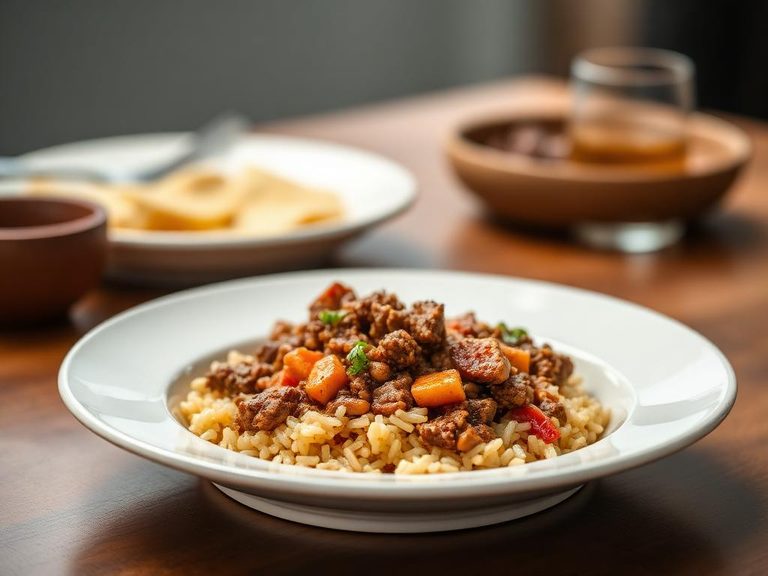
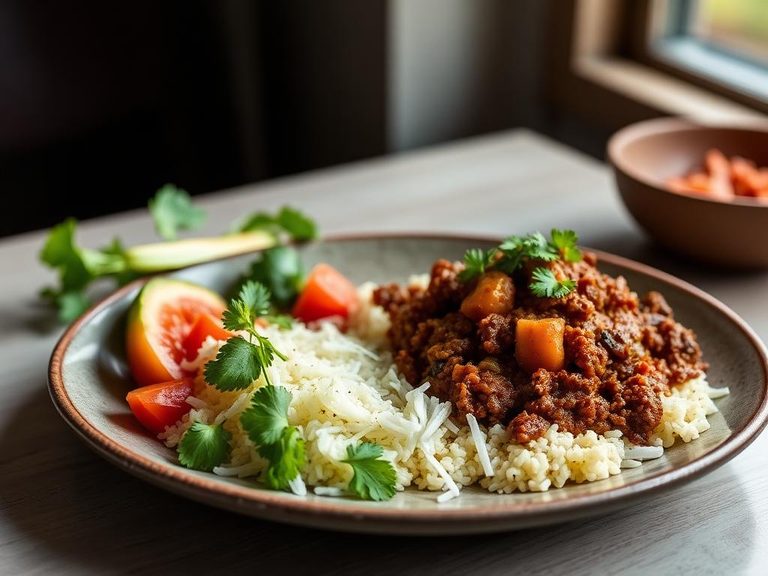
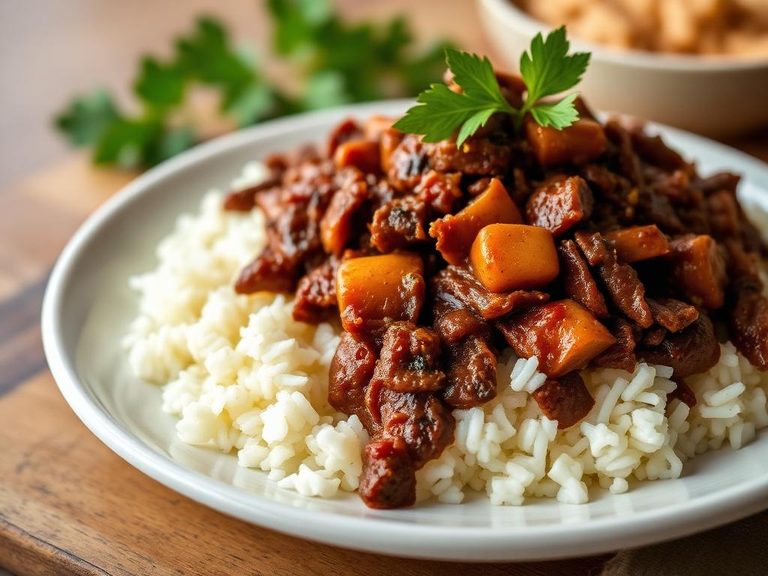
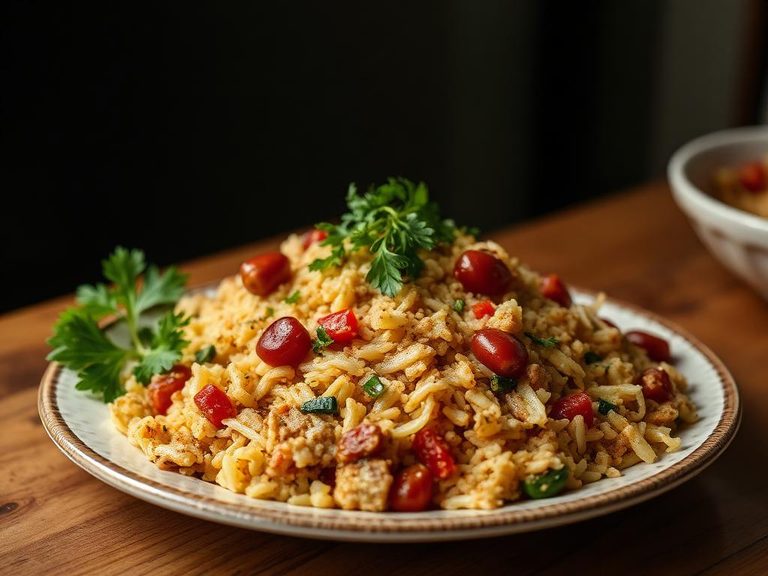
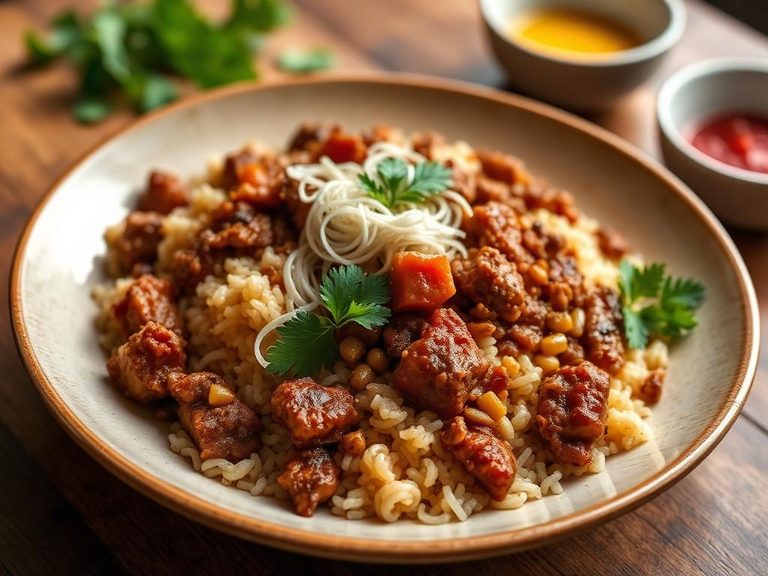
A comforting, savory skillet staple where tender beef and fluffy rice are simmered in a rich, tangy tomato-based sauce. The texture is soft and cohesive, with the sauce binding the grains and meat into a hearty, one-pot meal. It provides a solid source of protein and energy, making it a satisfying, balanced option for any time of day.
Calorie split: 19% protein · 47% carbs · 34% fat
↓ Full nutrition💚 Why it's loved
People love it for its deep, savory umami flavor and the comforting, familiar texture of a warm, saucy rice dish. It's a cultural staple in many cuisines, often evoking feelings of home cooking and family meals, and it's incredibly versatile for adding spices or vegetables.
⚠️ Watch-outs & how to enjoy it better
The dish can be high in sodium, especially if using canned tomatoes or pre-made sauces, which may be a concern for those monitoring blood pressure. To counteract this, use low-sodium tomatoes, rinse canned goods, and flavor with herbs and spices like garlic, oregano, and black pepper instead of extra salt. Additionally, the combination of white rice and sauce can cause a blood-sugar spike; pairing it with a side of non-starchy vegetables or adding a small amount of healthy fat (like avocado) can help slow digestion.
Key benefits
- Provides a good balance of protein and complex carbohydrates for sustained energy.
- The tomato-based sauce offers a source of lycopene, an antioxidant associated with heart health.
- A versatile, one-pot meal that is easy to prepare and can be customized with various vegetables.
- A relatively low-calorie, filling option that supports portion control and weight management.
🍽️ Popular dishes
🌍 Where it's eaten
💡 Did you know?
The combination of beef, rice, and tomato sauce is a global culinary constant, with similar dishes appearing independently in cultures from the Mediterranean to Southeast Asia, often as a practical way to stretch meat and create a filling meal.
Full nutrition (USDA data · scales with serving)
| Water | 71.3 g |
| Energy | 136 kcal |
| Protein | 6.4 g |
| Total lipid (fat) | 5.2 g |
| Carbohydrate, by difference | 15.9 g |
| Fiber, total dietary | 0.70 g |
| Total Sugars | 1.1 g |
| Calcium, Ca | 11.0 mg |
| Iron, Fe | 1.3 mg |
| Magnesium, Mg | 14.0 mg |
| Phosphorus, P | 59.0 mg |
| Potassium, K | 146 mg |
| Sodium, Na | 308 mg |
| Zinc, Zn | 1.1 mg |
| Copper, Cu | 0.08 mg |
| Selenium, Se | 8.8 ug |
| Vitamin C, total ascorbic acid | 2.1 mg |
| Thiamin | 0.10 mg |
| Riboflavin | 0.05 mg |
| Niacin | 1.9 mg |
| Vitamin B-6 | 0.14 mg |
| Folate, total | 34.0 ug |
| Folic acid | 28.0 ug |
| Folate, food | 6.0 ug |
| Folate, DFE | 53.0 ug |
| Choline, total | 21.8 mg |
| Vitamin B-12 | 0.26 ug |
| Vitamin B-12, added | 0.00 ug |
| Vitamin A, RAE | 7.0 ug |
| Retinol | 0.00 ug |
| Carotene, beta | 79.0 ug |
| Carotene, alpha | 0.00 ug |
| Cryptoxanthin, beta | 1.0 ug |
| Lycopene | 4223 ug |
| Lutein + zeaxanthin | 7.0 ug |
| Vitamin E (alpha-tocopherol) | 1.2 mg |
| Vitamin E, added | 0.00 mg |
| Vitamin D (D2 + D3) | 0.00 ug |
| Vitamin K (phylloquinone) | 4.6 ug |
| Alcohol, ethyl | 0.00 g |
| Caffeine | 0.00 mg |
| Theobromine | 0.00 mg |
Fat & fatty acid profile (per 100g)
| Fatty acids, total saturated | 1.0 g |
| SFA 4:0 | 0.00 g |
| SFA 6:0 | 0.00 g |
| SFA 8:0 | 0.00 g |
| SFA 10:0 | 0.00 g |
| SFA 12:0 | 0.00 g |
| SFA 14:0 | 0.04 g |
| SFA 16:0 | 0.71 g |
| SFA 18:0 | 0.26 g |
| Fatty acids, total monounsaturated | 2.1 g |
| MUFA 16:1 | 0.07 g |
| MUFA 18:1 | 2.0 g |
| MUFA 20:1 | 0.03 g |
| MUFA 22:1 | 0.00 g |
| Fatty acids, total polyunsaturated | 1.5 g |
| PUFA 18:2 | 1.3 g |
| PUFA 18:3 | 0.18 g |
| PUFA 18:4 | 0.00 g |
| PUFA 20:4 | 0.00 g |
| PUFA 20:5 n-3 (EPA) | 0.00 g |
| PUFA 22:5 n-3 (DPA) | 0.00 g |
| PUFA 22:6 n-3 (DHA) | 0.00 g |
| Cholesterol | 14.0 mg |
Amino acid profile (per 100g)
Estimated from Babyfood, dinner, beef and rice, toddler — USDA does not publish this profile for Beef and rice with tomato-based sauce.
| Tryptophan | 0.05 g |
| Threonine | 0.20 g |
| Isoleucine | 0.24 g |
| Leucine | 0.39 g |
| Lysine | 0.38 g |
| Methionine | 0.12 g |
| Cystine | 0.05 g |
| Phenylalanine | 0.20 g |
| Tyrosine | 0.16 g |
| Valine | 0.28 g |
| Arginine | 0.34 g |
| Histidine | 0.13 g |
| Alanine | 0.34 g |
| Aspartic acid | 0.46 g |
| Glutamic acid | 0.87 g |
| Glycine | 0.36 g |
| Proline | 0.31 g |
| Serine | 0.18 g |
FAQ
Is this dish suitable for a low-carb diet?
Traditional beef and rice with tomato sauce is not low-carb due to the rice. However, you can substitute cauliflower rice or shirataki rice to significantly reduce the carbohydrate content while keeping the protein and flavor.
Can I make this dish ahead of time?
Yes, it stores well in the refrigerator for 3-4 days and can be reheated in the microwave or on the stovetop. The flavors often meld and improve overnight.
What can I add to increase the fiber content?
To boost fiber, add diced vegetables like bell peppers, zucchini, carrots, or peas during cooking. You can also use brown rice instead of white rice for a higher fiber and nutrient content.
Nutrient density (calculated · NRF9.3)
Nutrient Rich Foods index: beneficial nutrients (protein, fiber, vitamins, minerals) minus saturated fat, added sugar & sodium, per 100 kcal.
NRF9.3 index — Fulgoni, Keast & Drewnowski, 2009. Computed from USDA nutrients.
Weight-loss friendliness (composite index)
Energy density 1.36 kcal/g · 19% calories from protein · 0.7 g fiber · 1.1 g sugar per 100 g.
Composite of energy density (Rolls et al., 1999), protein & fiber satiety, minus sugar. A calculated heuristic — ranks satiety-per-calorie, not a clinical measure.
Dietary load (calculated from USDA values)
Potential renal acid load. Positive = acid-forming, negative = alkaline-forming.
Sodium-to-potassium ratio: 2.11 (lower is better — aim for ≤ 1)
Sodium:potassium per WHO potassium guidance. Computed from USDA nutrients.